



























Free Civil War Docs Word Search | Grades 6–7 Social Studies
Paste this activity's link or code into your existing LMS (Google Classroom, Canvas, Teams, Schoology, Moodle, etc.).
Students can open and work on the activity right away, with no student login required.
You'll still be able to track student progress and results from your teacher account.
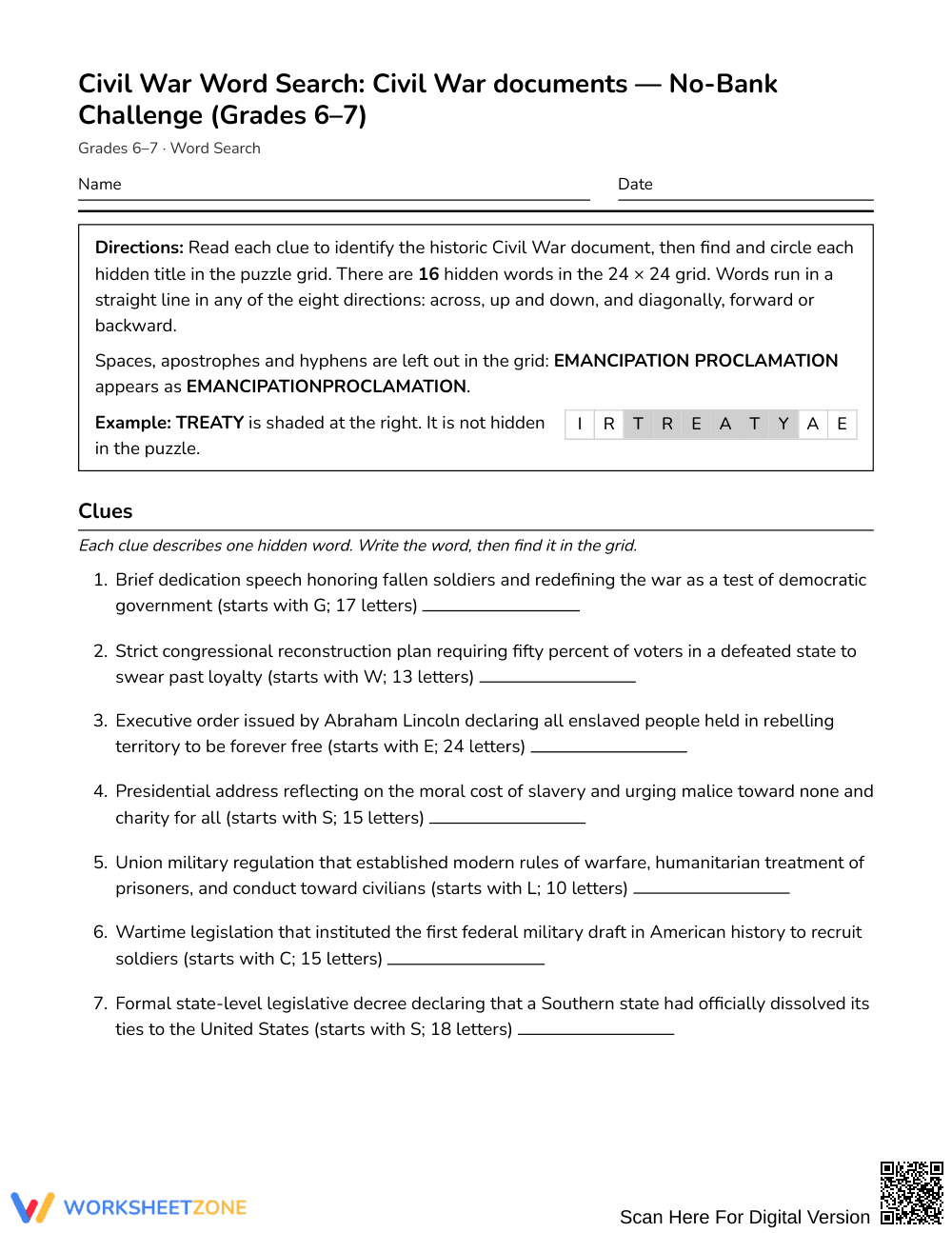
This Grades 6–7 Civil War documents word search reinforces foundational historical literacy through clue-based retrieval. Students examine historical descriptions of significant wartime legislation, presidential speeches, and military orders to identify 16 words hidden across the puzzle grid. The activity strengthens document recall and critical terminology while providing an engaging, content-driven review for middle school history learners.
At a Glance
- Grade: Grades 6–7 · Subject: Social Studies
- Standard: Not standards-assessed — vocabulary enrichment
- Skill Focus: Civil war documents, executive orders, and legislation
- Format: 3 student pages · 16 hidden words · Full answer key included · PDF
- Best For: Civil War unit vocabulary review and historical document reinforcement
- Time: 25–35 minutes
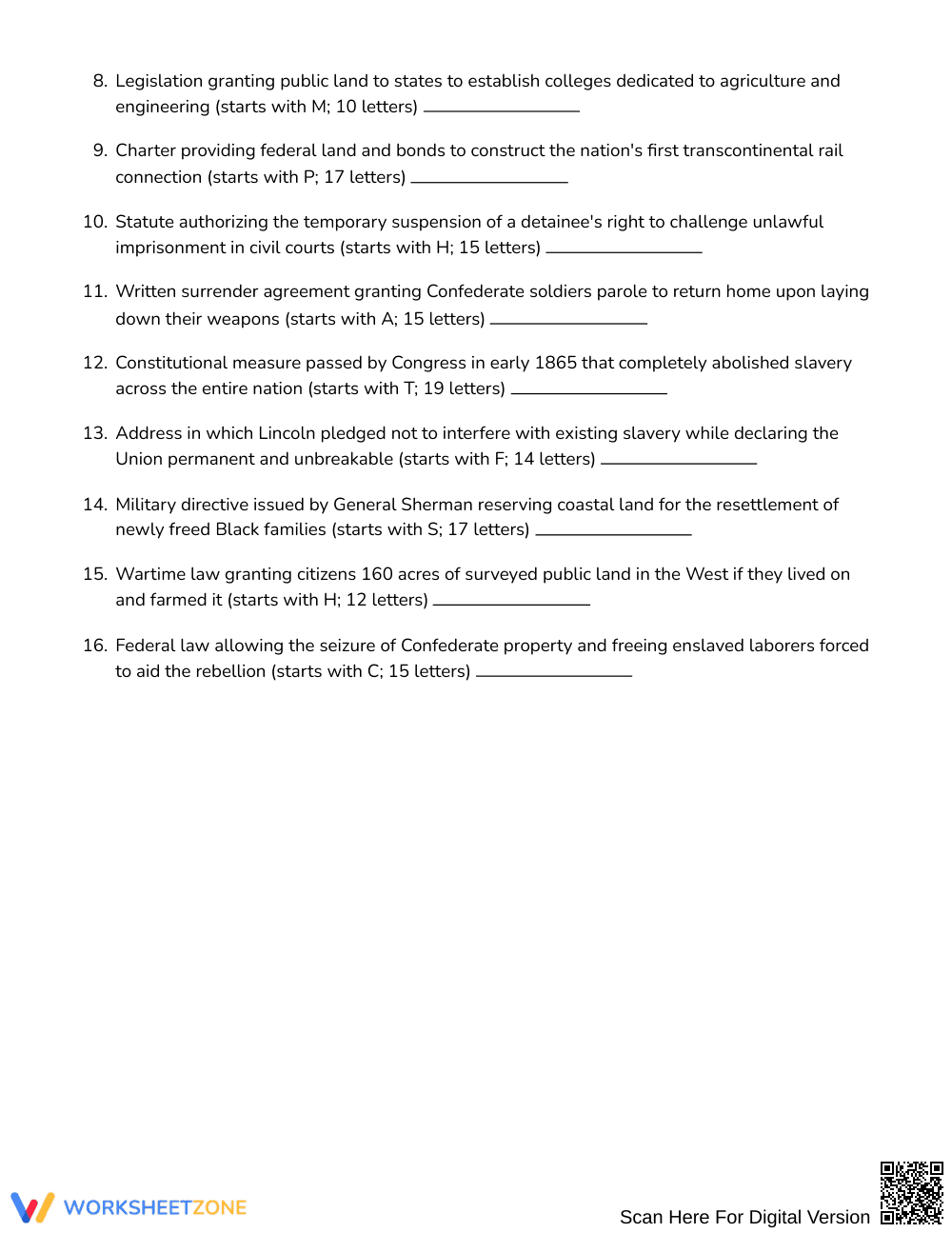
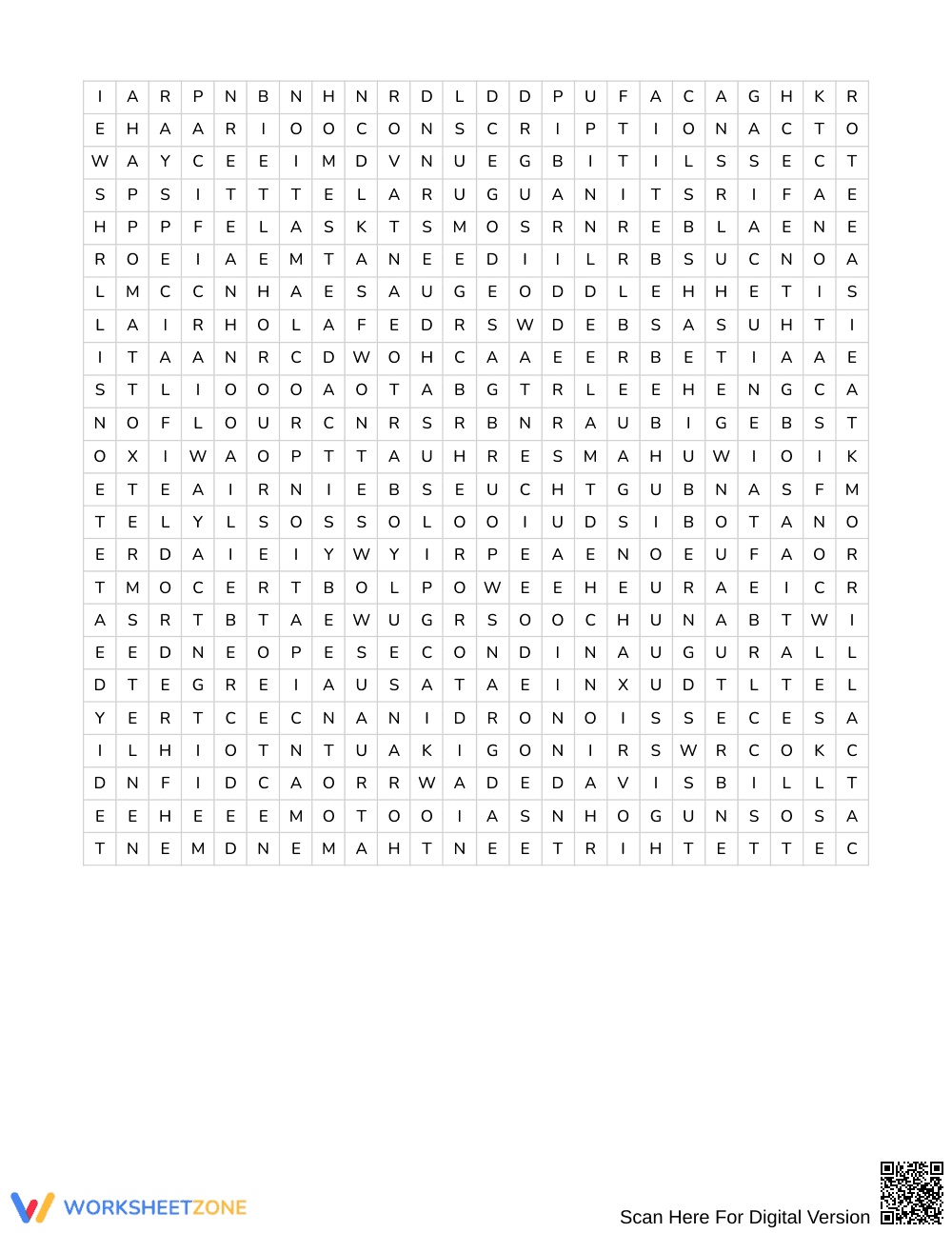
This 3-page printable resource features a challenging 24 by 24 letter grid paired with 16 comprehensive document clues rather than a simple word bank. Students read historical summaries of pivotal milestones—such as the Emancipation Proclamation, Gettysburg Address, and Thirteenth Amendment—and determine the correct title before searching. A complete 4-page answer key provides clear solution pathways for swift verification.
This word search operates as a no-bank challenge designed to test document identification. Students must analyze 16 descriptive historical clues to determine the exact titles of Union legislation, executive actions, and military orders. Once identified, students locate the terms hidden within a dense 24 by 24 grid where words run in all eight possible directions: North, Northeast, East, Southeast, South, Southwest, West, and Northwest.
This learning resource serves as targeted vocabulary enrichment and is not aligned to a specific academic standard. By focusing on primary historical titles and landmark legislation from the American Civil War era, the puzzle builds domain-specific background knowledge that directly supports wider United States history coursework and historical reading comprehension.
Deploy this activity as an independent synthesis task after direct instruction on wartime governance, allowing learners 25 to 35 minutes to match descriptions with key policies. Alternatively, assign the puzzle as an engaging partner warm-up before a primary-source seminar. During work time, observe whether students identify acts by their legislative purpose or rely strictly on letter searching, providing targeted hints on key legislative terms when necessary.
This activity is designed for Grades 6–7 social studies students studying the American Civil War. Teachers can differentiate by providing a small-group reference sheet with document dates for students needing extra support. Pair this puzzle with an introductory anchor chart on wartime executive actions or a curated document analysis gallery walk to deepen contextual understanding.
According to Fisher & Frey (2014), purposeful vocabulary acquisition in content-area disciplines requires active semantic processing rather than passive rote memorization. This Civil War documents word search operationalizes that principle by removing the traditional word bank and requiring Grades 6–7 social studies learners to retrieve technical historical titles from descriptive context clues. As students analyze historical definitions of wartime legislation, executive orders, and legal statutes, they consolidate mental models of nineteenth-century American governance. Searching for 16 hidden words across an eight-directional 24 by 24 grid reinforces orthographic recall and document familiarity. Fisher & Frey (2014) emphasize that integrating clue-based retrieval tasks with disciplinary literacy builds durable cognitive connections necessary for subsequent primary-source analysis. Consequently, this targeted vocabulary enrichment activity provides structured, low-stakes cognitive practice that prepares middle school students for complex historical inquiries and sustained document-based evaluations.


