































Free China Writing Word Search | Grades 5–6 Social Studies

Paste this activity's link or code into your existing LMS (Google Classroom, Canvas, Teams, Schoology, Moodle, etc.).
Students can open and work on the activity right away, with no student login required.
You'll still be able to track student progress and results from your teacher account.
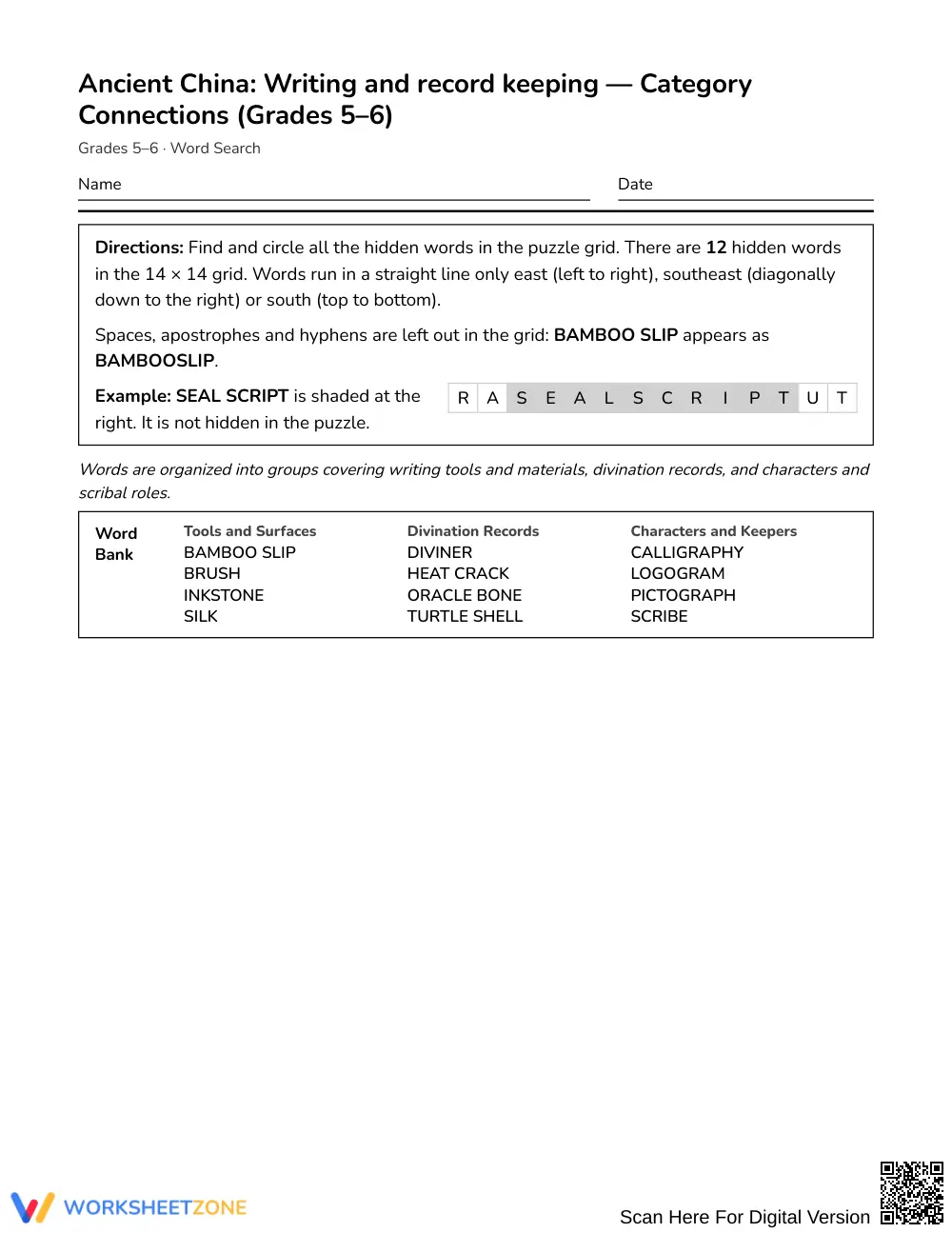
This Ancient China writing and record keeping word search reinforces essential historical vocabulary through targeted term recognition and contextual definitions. Students in Grades 5–6 locate 12 specialized terms related to Shang dynasty scribal traditions, divination practices, and early materials, building content-area schema while strengthening domain-specific reading comprehension across ancient world history curriculum units.
At a Glance
- Grade: Grades 5–6 · Subject: Social Studies
- Standard: Not standards-assessed — Ancient world history vocabulary enrichment and concept reinforcement
- Skill Focus: Writing and record keeping terminology
- Format: 2 student pages · 12 words · Full answer key included · Printable PDF
- Best For: World history unit vocabulary review and reinforcement
- Time: 20–30 minutes
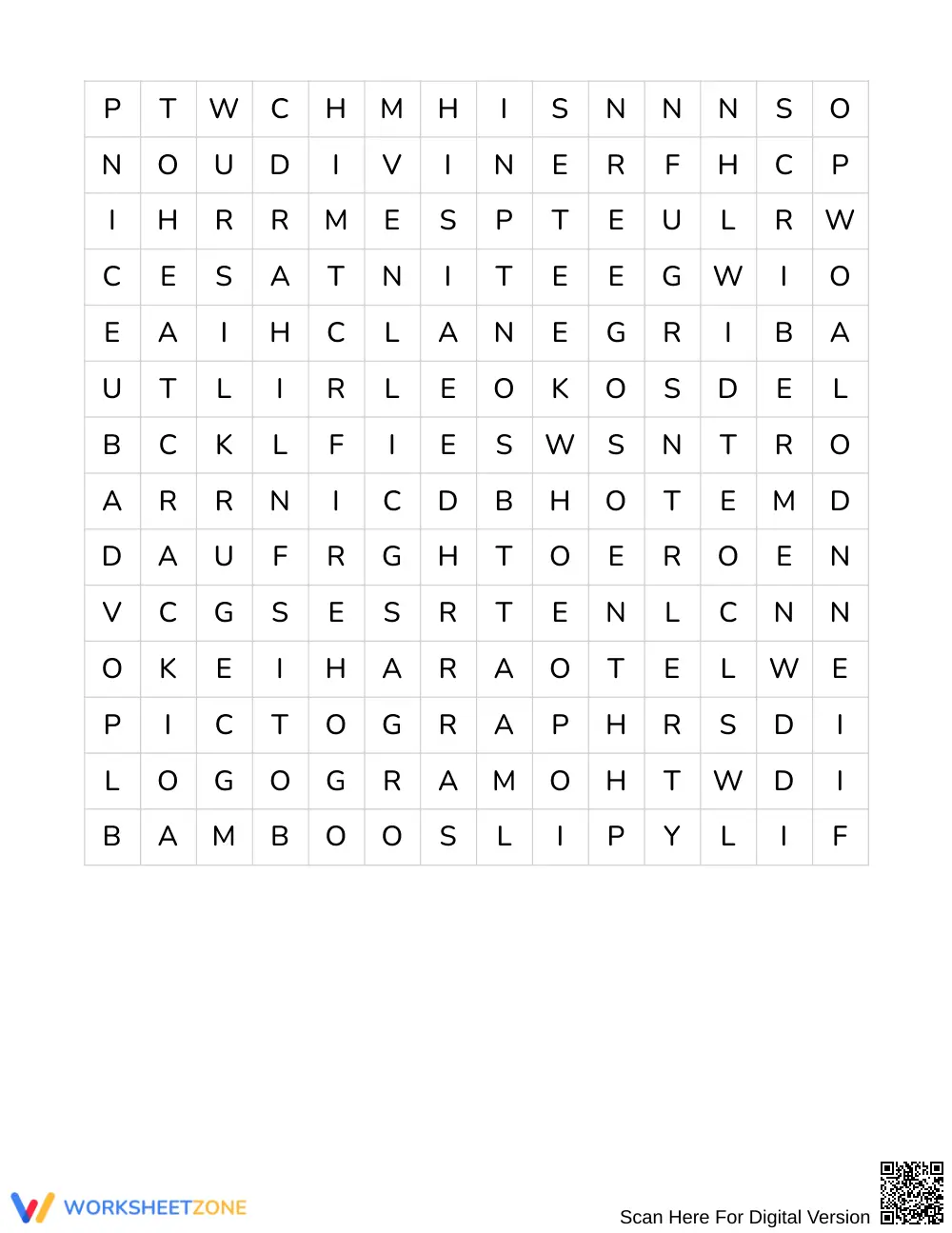
This 2-page instructional resource features a clean 14-by-14 letter grid paired with categorized word lists and historical definition clues. The 12 target words are sorted into three distinct thematic clusters: Tools and Surfaces, Divination Records, and Characters and Keepers. Each vocabulary entry includes an explanatory clue detailing how ancient scribes and diviners utilized materials like oracle bones and bamboo slips. A 3-page answer key provides clear solution paths for efficient grading.
Puzzle Structure and Search Mechanics
The activity operates across a 14-by-14 letter grid designed specifically for intermediate learners. Hidden terms run in three designated orientations: horizontally from left to right (East), diagonally downward (Southeast), and vertically downward (South). Students reference a categorized word bank rather than an unstructured list, connecting terms like brush, inkstone, and silk to physical writing tools, while identifying diviner and heat crack within ceremonial record keeping. Text-based clues define each term to support reading comprehension during the search.
Standards Alignment
This resource serves as supplemental vocabulary enrichment and is not aligned to a specific state or national content standard. It reinforces essential social studies terminology, supporting reading comprehension of informational texts in world history units without requiring standard-specific assessment tracking.
How to Use It
Deploy this activity during direct instruction as an engaging mid-unit check, or after completing a lesson on Shang dynasty writing systems as an independent consolidation task. During independent seatwork, circulate to observe whether students use the thematic categories and historical definitions to guide their search, noting learners who may confuse physical recording media with scribal roles. The puzzle typically requires 20 to 30 minutes for complete individual or partner completion.
Who It's For
This word search is tailored for Grades 5–6 social studies classrooms exploring early river valley civilizations. It offers accessible terminology reinforcement for general education students, English language learners, and students needing visual retrieval scaffolds. For maximum instructional impact, pair this activity with an informational reading passage on early Chinese pictographs or an artifact study of Shang dynasty oracle bones.
Explicit domain-specific vocabulary acquisition plays a foundational role in middle-grade historical literacy and text comprehension. According to Fisher & Frey (2014), intentional exposure to academic terminology within structured, thematic contexts enables upper elementary and early middle school students to bridge the gap between basic decoding and complex conceptual understanding. This Ancient China writing and record keeping activity reinforces twelve specialized vocabulary terms by organizing them into conceptual categories including writing media, royal divination practices, and scribal functions. Integrating definitional clues alongside visual word retrieval aids long-term semantic storage, allowing learners to contextualize historical innovations such as bamboo slips, oracle bones, and logograms. By linking precise terminology to material culture and governmental administration, this resource builds the background knowledge necessary for students in Grades 5–6 to interpret informational world history texts and analyze primary source evidence effectively across diverse instructional settings.


