































Free Boundaries Word Search | Grades 4–5 Behavior Worksheets

Paste this activity's link or code into your existing LMS (Google Classroom, Canvas, Teams, Schoology, Moodle, etc.).
Students can open and work on the activity right away, with no student login required.
You'll still be able to track student progress and results from your teacher account.
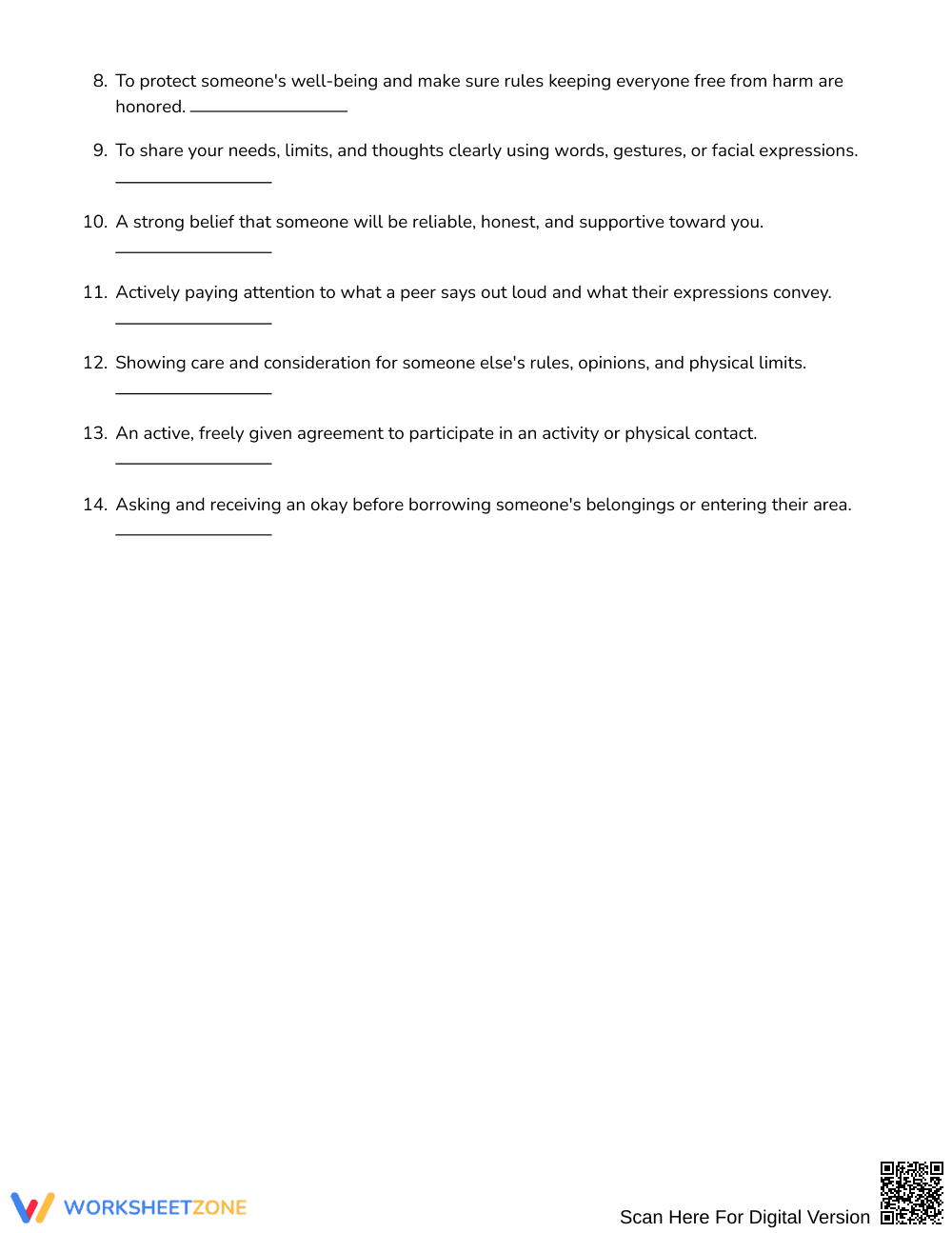
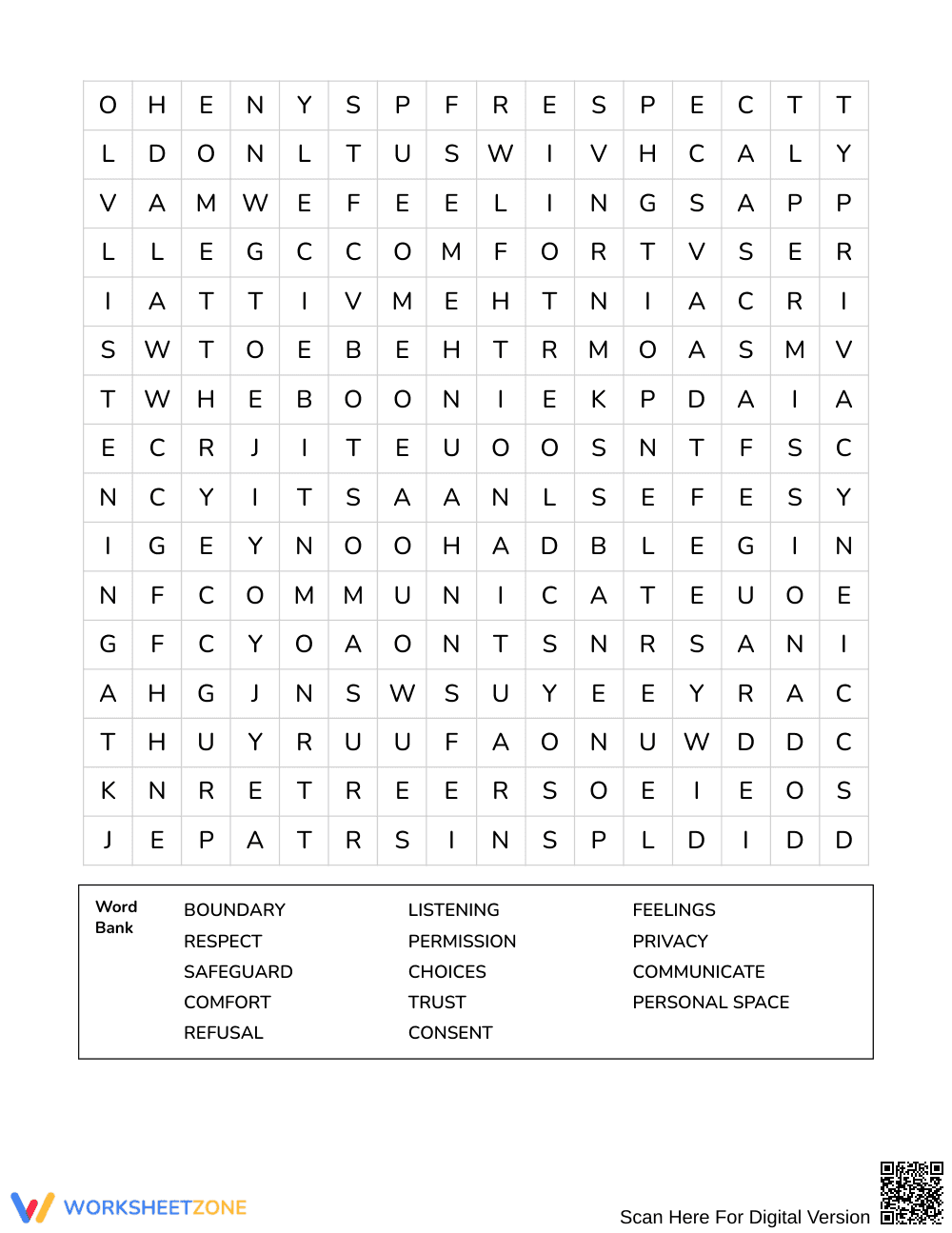
This printable word search helps Grades 4–5 learners strengthen personal‑boundary vocabulary while practicing reading comprehension of health‑related clues. Completing the activity builds confidence in recognizing consent language and respectful communication. Students locate fourteen hidden terms, then discuss how each word applies to everyday interactions, reinforcing safe‑space concepts.
At a Glance
- Grade: Grades 4–5 · Subject: Health and Wellness
- Standard:
Not standards-assessed — vocabulary enrichment— find and circle words that describe personal boundaries, students actively match definitions in context- Skill Focus: personal boundaries and consent vocabulary
- Format: 3 pages · 14 words · Answer key included · PDF
- Best For: quick vocabulary review or enrichment activity for health class
- Time: 5–10 minutes
The activity spans three PDF pages, each featuring a 16 × 16 grid with words running northeast, east, southeast, and south. A shuffled word bank and clear clues guide learners, and an answer key on the final page shows each hidden term.
Zero‑prep workflow makes classroom implementation effortless:
- Print: Open the PDF and print all three pages (under 30 seconds).
- Distribute: Hand each student a copy; the activity runs in 5–10 minutes.
- Review: Collect answer sheets, discuss a few key terms, and reinforce respectful language (total prep under 2 minutes).
This quick setup fits perfectly into a health sub‑plan or a transition period.
This word search is designed for vocabulary enrichment and is not aligned to any state or district standard. It simply expands students' personal‑boundary language awareness.
Use Case 1: Begin a health lesson on personal space by having students complete the search, then discuss how each term relates to daily interactions. Observe quick verbal responses to gauge understanding.
Use Case 2: Use the activity as a closing reinforcement after a lesson on consent, allowing students to self‑check vocabulary retention before moving to a reflective writing prompt.
Designed for Grades 4–5 learners in health or wellness classes, this resource supports diverse learners with a clear word bank and visual clues. Pair it with a short anchor chart on consent vocabulary for a seamless lesson.
Research shows that targeted vocabulary activities improve students' ability to articulate personal boundaries and consent concepts, leading to safer interpersonal interactions (Fisher & Frey, 2014). This printable word search offers 14 carefully chosen terms that reflect essential health‑and‑wellness language. By engaging learners in clue‑based discovery, the activity reinforces comprehension and retention without requiring direct instruction time. Educators can quickly integrate this tool into any health curriculum, providing immediate practice that aligns with evidence‑based recommendations for language development. The inclusion of an answer key ensures accurate self‑assessment, supporting both formative feedback and independent learning. Students who regularly practice such vocabulary tasks demonstrate higher confidence when discussing personal limits and are more likely to seek help when boundaries are crossed. The activity also promotes peer discussion, encouraging collaborative learning and reinforcing social‑emotional skills that are critical at the elementary level.


