


























Views
Plays


Fictional Narrative Writing — Essential Grade 2 Worksheet
Paste this activity's link or code into your existing LMS (Google Classroom, Canvas, Teams, Schoology, Moodle, etc.).
Students can open and work on the activity right away, with no student login required.
You'll still be able to track student progress and results from your teacher account.
This Grade 2 fictional narrative writing worksheet helps students identify core story elements and master chronological sequencing. By analyzing short passages, learners practice recognizing characters, settings, and the logical flow of events. It provides a structured way to transition from reading comprehension to active narrative construction, ensuring students understand how stories are built before they begin writing their own.
At a Glance
- Grade: 2 · Subject: ELA
- Standard:
CCSS.ELA-LITERACY.W.2.3— Recount a sequence of events with details and temporal words- Skill Focus: Narrative Elements & Sequencing
- Format: 2 pages · 10 problems · Answer key included · PDF
- Best For: Quick formative assessment or sub plans
- Time: 15–20 minutes
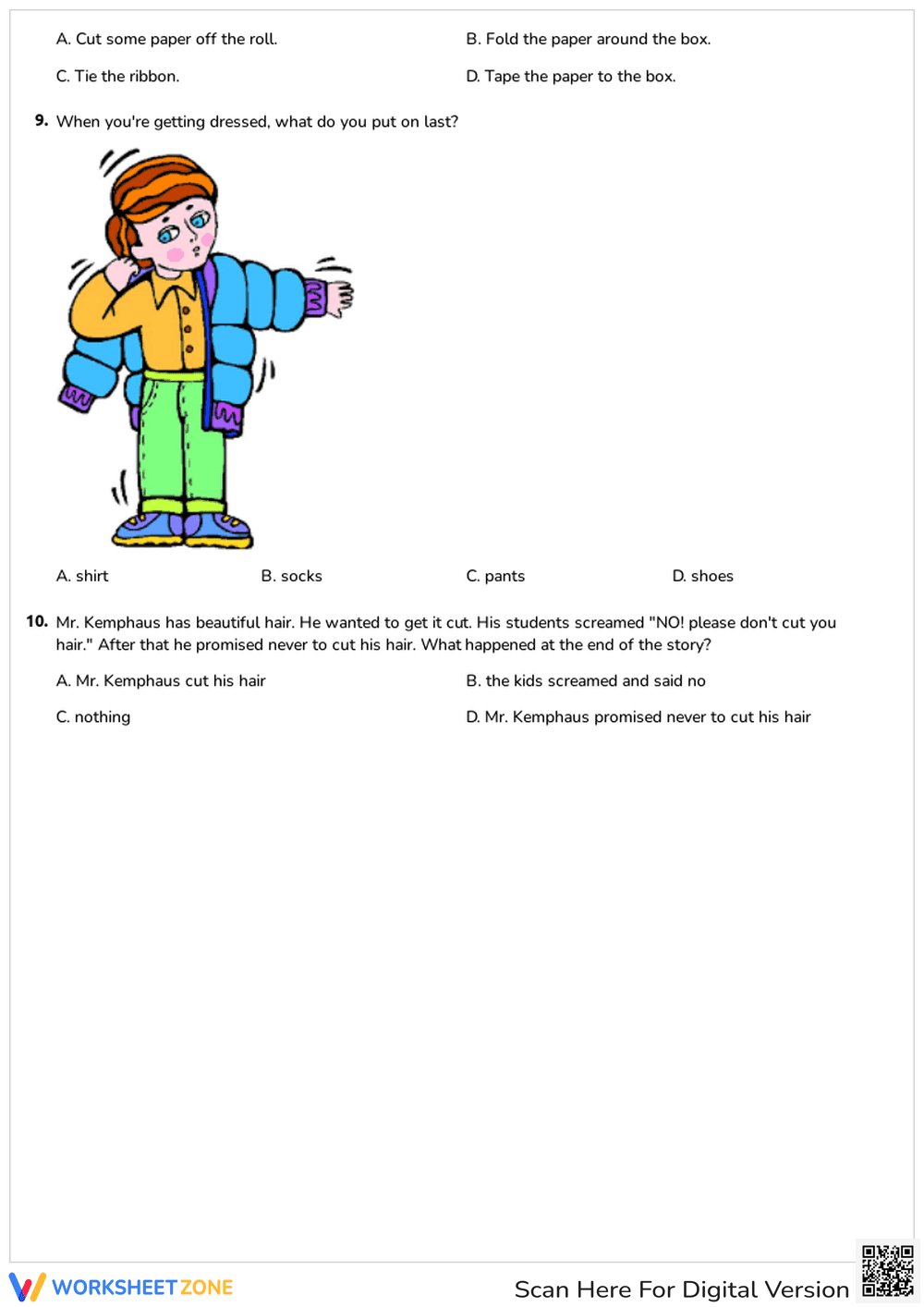
The resource contains a two-page assessment featuring 10 multiple-choice questions. It begins with vocabulary definitions for narrative terms like "character" and "setting," followed by short-form reading passages. Students must identify specific details, such as what happened first or last in a sequence. The layout includes visual aids for sequencing tasks, such as gift wrapping and dressing up, to support diverse learners.
This worksheet is designed for immediate classroom integration with a total teacher prep time of under 2 minutes. Simply print the two-page PDF and distribute it to students during your writing block or as a morning work assignment. Reviewing the 10 multiple-choice answers takes less than 5 minutes using the included key, making it an ideal choice for emergency sub plans or busy grading periods.
The primary focus is `CCSS.ELA-LITERACY.W.2.3`, which requires students to write narratives that recount a well-elaborated event or short sequence of events. This worksheet scaffolds that skill by testing the recognition of temporal order and descriptive details. It also supports `CCSS.ELA-LITERACY.RL.2.3` by asking students to identify how characters participate in the action. Both standard codes can be copied directly into lesson plans, IEP goals, or district curriculum mapping tools.
Use this worksheet as a mid-unit formative assessment after teaching the basic components of a story. It works well during the "You Do" phase of a gradual release model. Teachers should observe if students struggle with the "what happened just before" questions, as this indicates a need for more practice with temporal transition words. Expect completion in approximately 15 to 20 minutes.
This resource is tailored for Grade 2 students, though it serves as an excellent challenge for Grade 1 or a review for Grade 3. It is particularly helpful for English Language Learners (ELLs) who benefit from the clear, multiple-choice format and visual sequencing cues. Pair this with a narrative anchor chart or a mentor text to reinforce story structure.
Narrative writing proficiency in early elementary grades is a critical predictor of later literacy success. According to Fisher & Frey (2014), the gradual release of responsibility—moving from identifying story elements to independent writing—is essential for mastery. This worksheet aligns with CCSS.ELA-LITERACY.W.2.3 by focusing on the foundational logic of sequencing and character roles. By isolating these variables in a 10-question format, educators can pinpoint specific gaps in a student's understanding of narrative flow. Research from the NAEP suggests that students who can identify structural elements in text are significantly more likely to produce coherent original compositions. This resource provides the necessary scaffolding to bridge the gap between reading and writing, ensuring students have a firm grasp of the "who, where, and when" before they tackle complex creative tasks.


