


























Views
Downloads

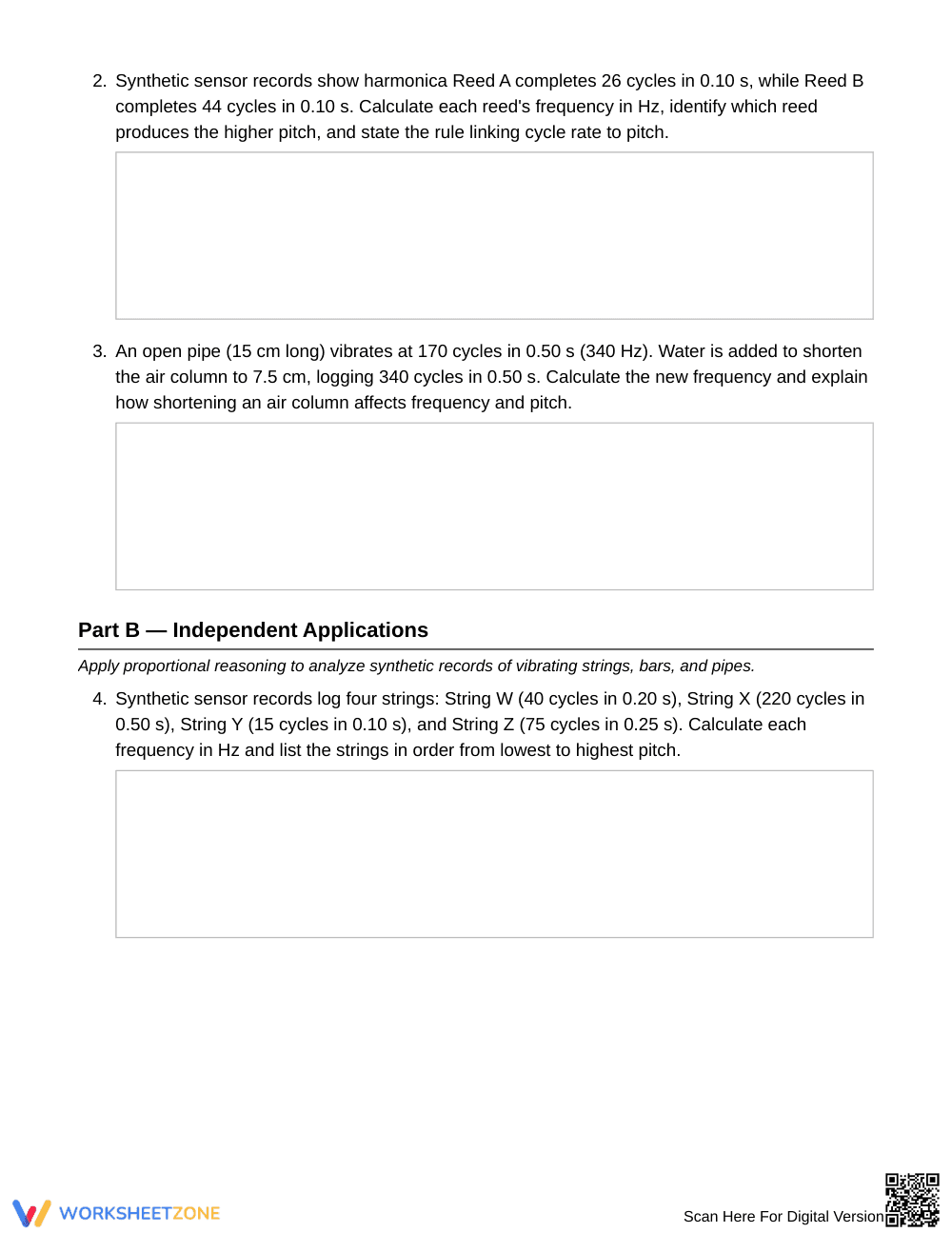
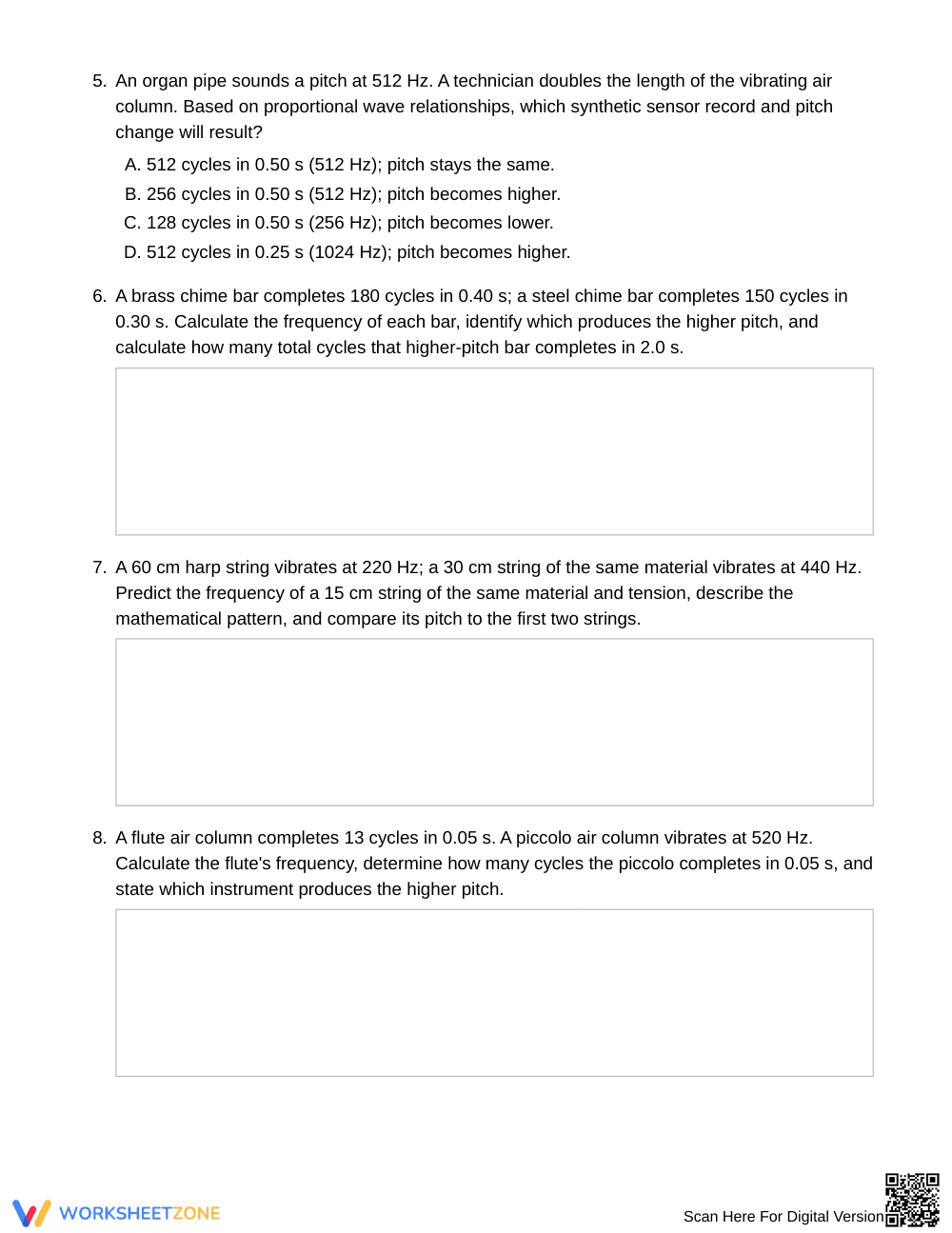
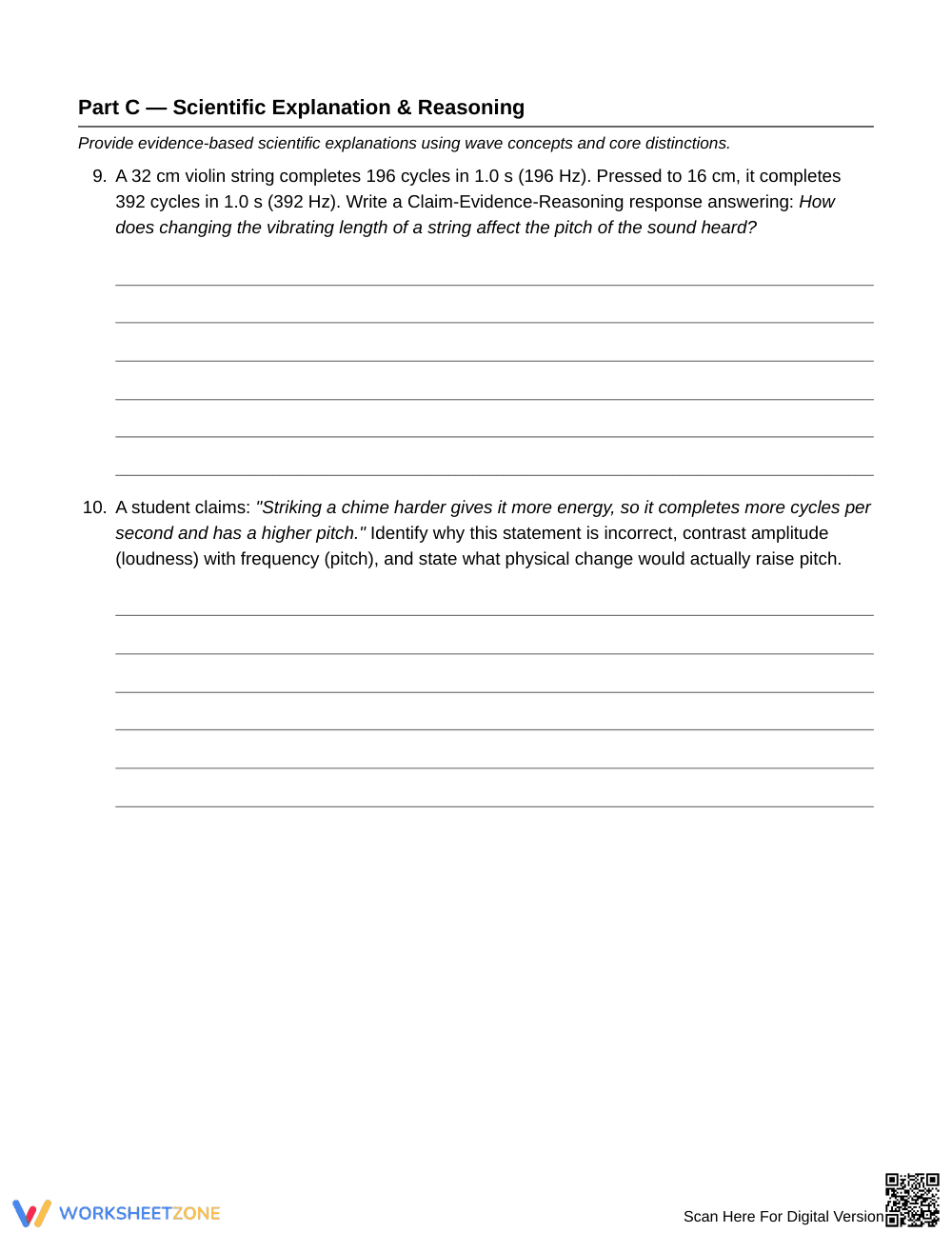

Essential Vibration & Pitch Worksheet | Grade 6 Science
Paste this activity's link or code into your existing LMS (Google Classroom, Canvas, Teams, Schoology, Moodle, etc.).
Students can open and work on the activity right away, with no student login required.
You'll still be able to track student progress and results from your teacher account.
Students master the physical relationship between frequency and pitch by analyzing quantitative sensor records. This resource helps sixth-grade science learners calculate vibration rates in Hertz using cycle counts and time intervals, directly connecting numerical data to auditory pitch differences across strings, chime bars, and resonant air columns.
At a Glance
- Grade: 6 · Subject: Science
- Standard: Sound and Wave Properties — Calculate frequency from cycle records to determine sound pitch
- Skill Focus: Link a Vibration Record to Pitch
- Format: 4 pages · 10 problems · Answer key included · PDF
- Best For: Guided practice after wave instruction
- Time: 40–50 minutes
This 4-page science packet features 10 structured student tasks supported by foundational formula boxes and worked models. Students inspect simulated sensor records tracking oscillation cycles, apply proportional reasoning, and construct Claim-Evidence-Reasoning explanations. The 2-page answer key provides complete calculations, frequency computations, and sample reasoning responses for grading.
Skill Progression
- Guided practice (Part A, Problems 1–3): Students calculate frequencies using provided formulas and compare rates against baseline values, supported by introductory models of strings and air columns.
- Supported practice (Part B, Problems 4–6): Learners analyze multi-instrument datasets, ordering four distinct strings by pitch and predicting frequency shifts when air column lengths double.
- Independent practice (Part B & C, Problems 7–10): Students evaluate proportional relationships across instruments before resolving misconceptions between amplitude and pitch in an independent CER task.
This sequence follows a gradual-release instructional model that transitions learners smoothly toward conceptual mastery.
Standards Alignment
This resource aligns with middle school physical science wave standards. Students investigate how mechanical vibrations produce sound waves, proving frequency determines pitch rather than wave amplitude. Both standard codes can be copied directly into lesson plans, IEP goals, or district curriculum mapping tools.
How to Use It
Deploy this worksheet immediately following direct instruction on wave frequency. For collaborative practice, have pairs complete Part A before transitioning to independent work in Part B. As a formative assessment check, monitor Problem 10 to ensure students do not confuse volume with pitch when striking an instrument harder. Expect completion within 40 to 50 minutes.
Who It's For
This resource serves sixth-grade science classrooms, middle school physical science electives, and introductory STEM units. Explicit formula boxes assist developing math learners, while conceptual reasoning tasks challenge advanced students. Pair this activity with an interactive tuning fork demonstration or an online wave simulation.
According to Fisher & Frey (2014), structured gradual release models significantly increase student retention of complex scientific reasoning by shifting cognitive responsibility from guided modeling to independent analysis. This Grade 6 physical science worksheet targets linking vibration records to pitch through 10 carefully sequenced calculation and reasoning items. Sixth-grade students begin by applying basic frequency equations to simulated optical sensor data from vibrating cello strings and harmonica reeds. They then progress to proportional reasoning tasks involving column lengths and multi-instrument data sets, culminating in an evidence-based explanation that addresses common student misconceptions regarding sound amplitude versus frequency. By coupling mathematical rate computation with conceptual wave physics, the instructional sequence bridges numerical literacy and empirical scientific inquiry. Educators can implement this structured material during wave mechanics units to establish verifiable student mastery of sound frequency relationships prior to formal summative assessments.


