


























Views
Downloads



Essential Text Structure Worksheet | Grade 6 ELA
Paste this activity's link or code into your existing LMS (Google Classroom, Canvas, Teams, Schoology, Moodle, etc.).
Students can open and work on the activity right away, with no student login required.
You'll still be able to track student progress and results from your teacher account.
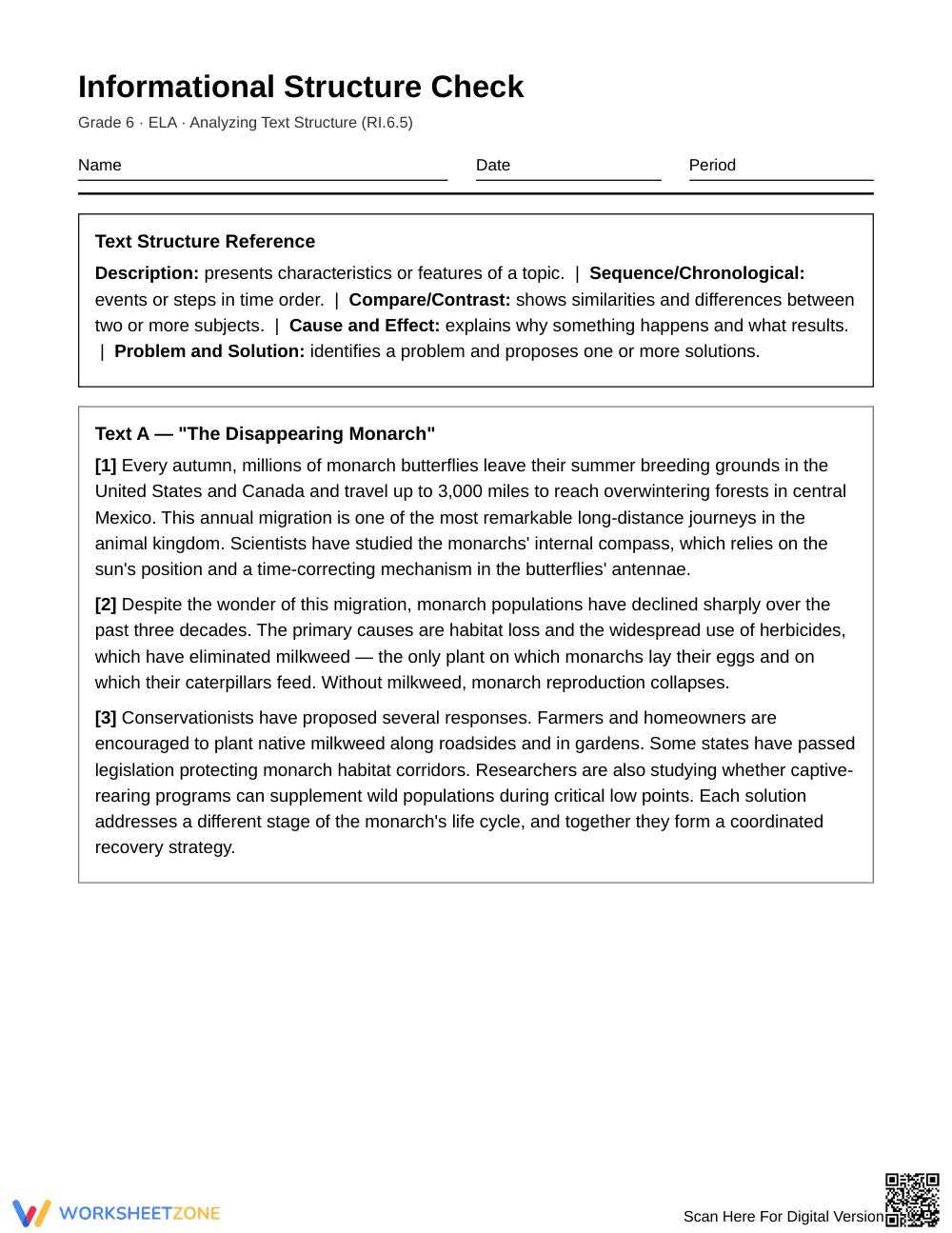
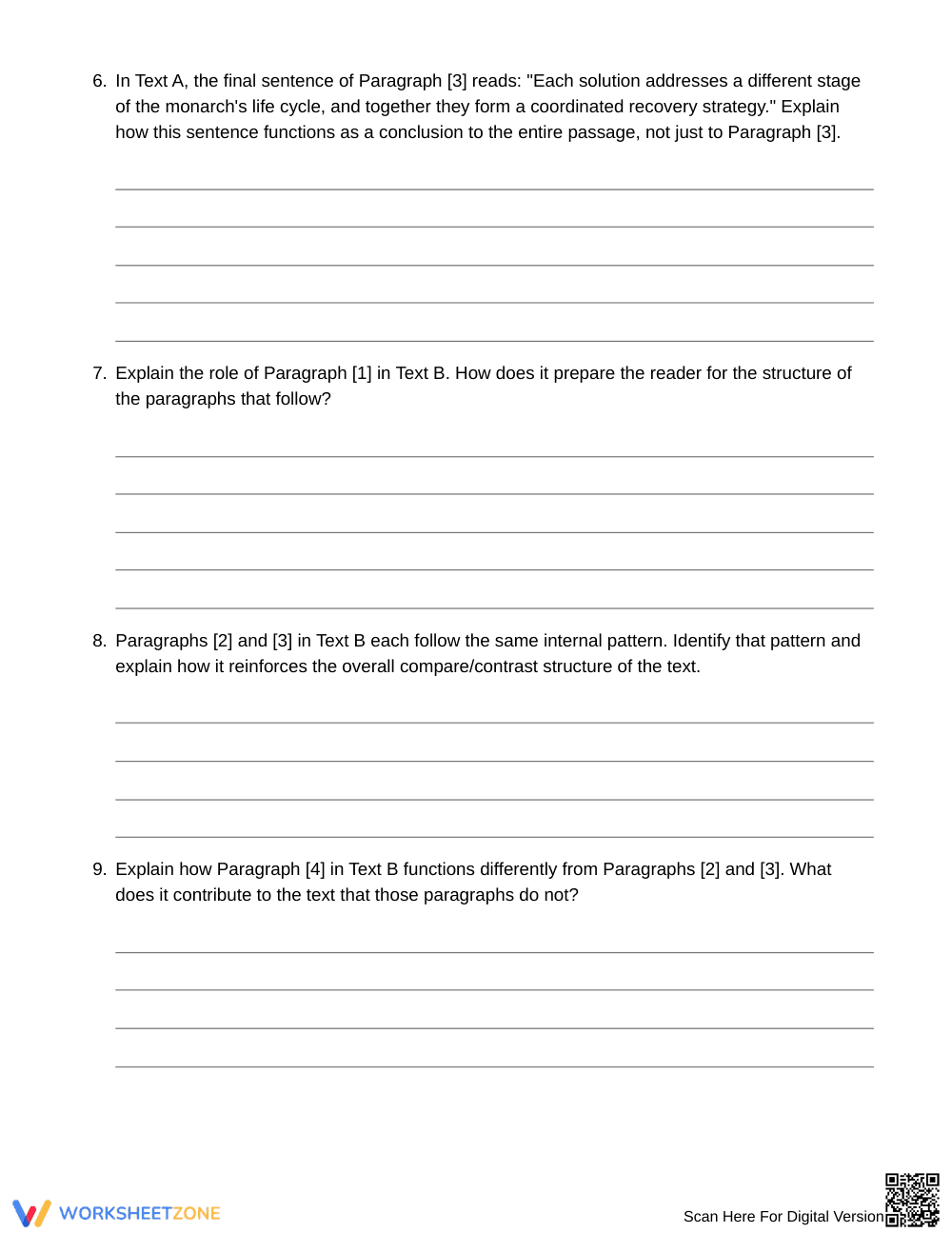
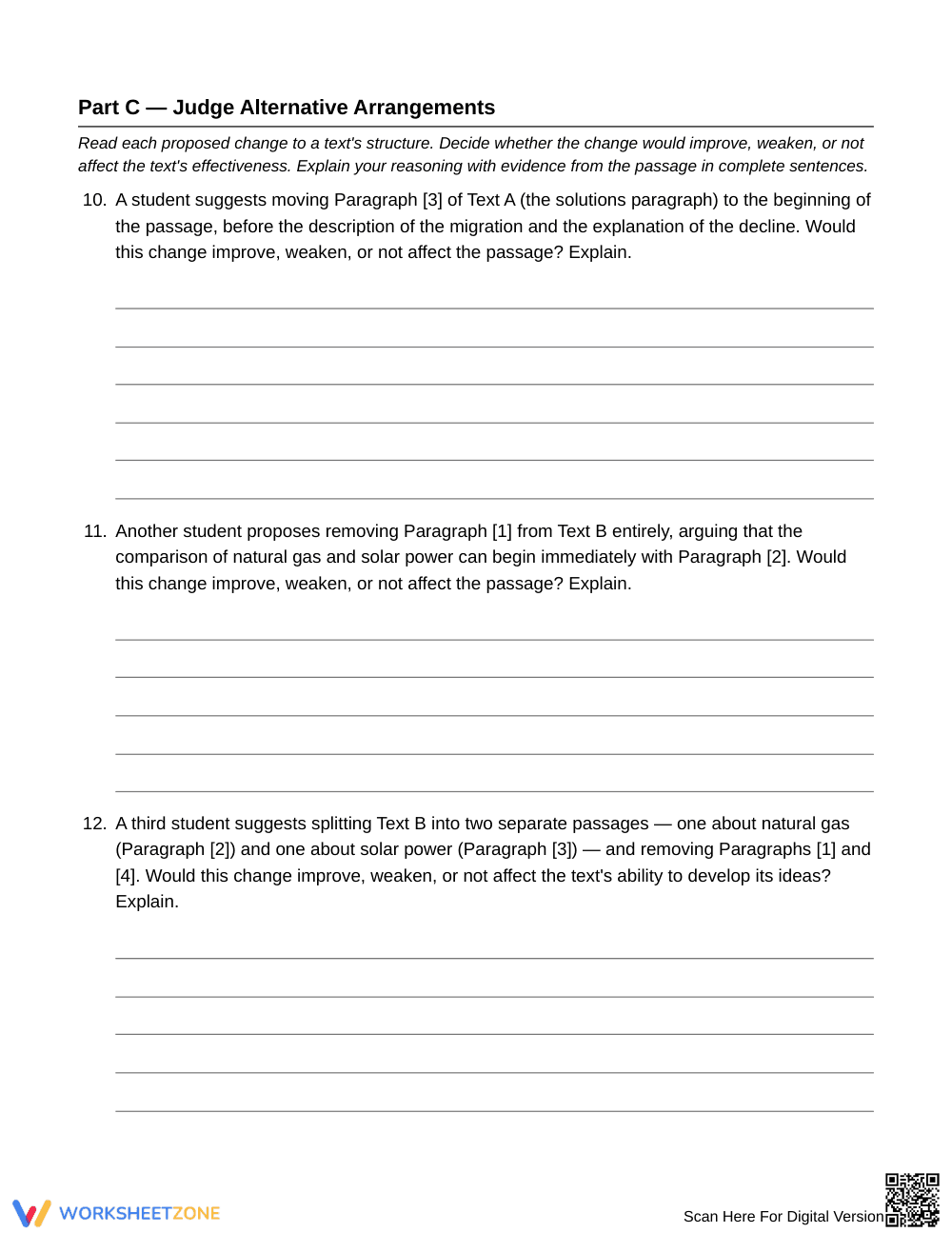
This informational text structure worksheet helps sixth-grade students analyze how specific sentences and paragraphs develop ideas in non-fiction texts. Through two multi-paragraph passages and twelve structured tasks, learners evaluate organizational patterns, explain paragraph roles, and critique structural arrangements to strengthen analytical reading skills.
At a Glance
- Grade: 6 · Subject: ELA
- Standard:
RI.6.5— Analyze how a particular sentence, paragraph, or section fits into overall text structure.- Skill Focus: Informational text structure and paragraph function
- Format: 5 pages · 12 problems · Answer key included · PDF
- Best For: Independent analysis practice after direct instruction
- Time: 40–50 minutes
What's Inside
This 5-page student packet includes a complete 5-page answer key and a reference box defining five major informational text structures. Students read two complete passages—an ecological text on monarch butterflies and a comparative text on urban energy sources—before completing twelve targeted items across three scaffolded sections.
Skill Progression
The twelve tasks follow a gradual-release model:
- Guided practice (Part A, Problems 1–3): Students identify overarching text structures and key signal sentences via multiple-choice items.
- Supported practice (Part B, Problems 4–9): Students write short-answer responses explaining how specific numbered paragraphs function and develop central ideas.
- Independent practice (Part C, Problems 10–12): Students evaluate proposed structural revisions, justifying how rearranging or deleting paragraphs impacts textual clarity.
This sequence supports the I Do, We Do, You Do instructional framework.
Standards Alignment
This worksheet aligns directly with primary standard RI.6.5: analyze how a particular sentence, paragraph, chapter, or section fits into the overall structure of a text and contributes to the development of the ideas. It also supports RI.6.1 through evidence-based analysis. Both standard codes can be copied directly into lesson plans, IEP goals, or district curriculum mapping tools.
How to Use It
Use this resource during core reading instruction after introducing text organizational structures. Have students complete Parts A and B with peer support before attempting Part C independently. Formatively assess student explanations in Part B to ensure they analyze structural function rather than summarizing content. Expected completion time is 40 to 50 minutes.
Who It's For
This activity suits Grade 6 ELA classrooms, reading intervention groups, and advanced Grade 5 learners. Striving readers benefit from the top reference definitions and paragraph numbers, while advanced students tackle the evaluative critique in Part C. Pair this worksheet with an anchor chart on text structure signal words.
According to research synthesized by Fisher & Frey (2014), explicit instruction in informational text structure substantially improves adolescent reading comprehension by providing a cognitive framework for organizing complex non-fiction ideas. This worksheet aligns with standard RI.6.5 by requiring sixth-grade students to analyze how specific sentences and paragraphs contribute to the overarching design and thematic development of expository texts. By progressing through 12 rigorous tasks—from structure classification to evidence-based paragraph analysis and structural critique—learners build metacognitive awareness of how authors organize information. Engaging with paired texts featuring problem-and-solution and compare-and-contrast structures allows students to examine functional transitions and evaluate organizational choices. Educational research confirms that structured analytical practice with authentic text organization equips middle school students to master complex informational passages and synthesize academic texts across disciplines.


