

































Essential Skeletal Vocabulary Worksheet | Grades 6–12

Paste this activity's link or code into your existing LMS (Google Classroom, Canvas, Teams, Schoology, Moodle, etc.).
Students can open and work on the activity right away, with no student login required.
You'll still be able to track student progress and results from your teacher account.
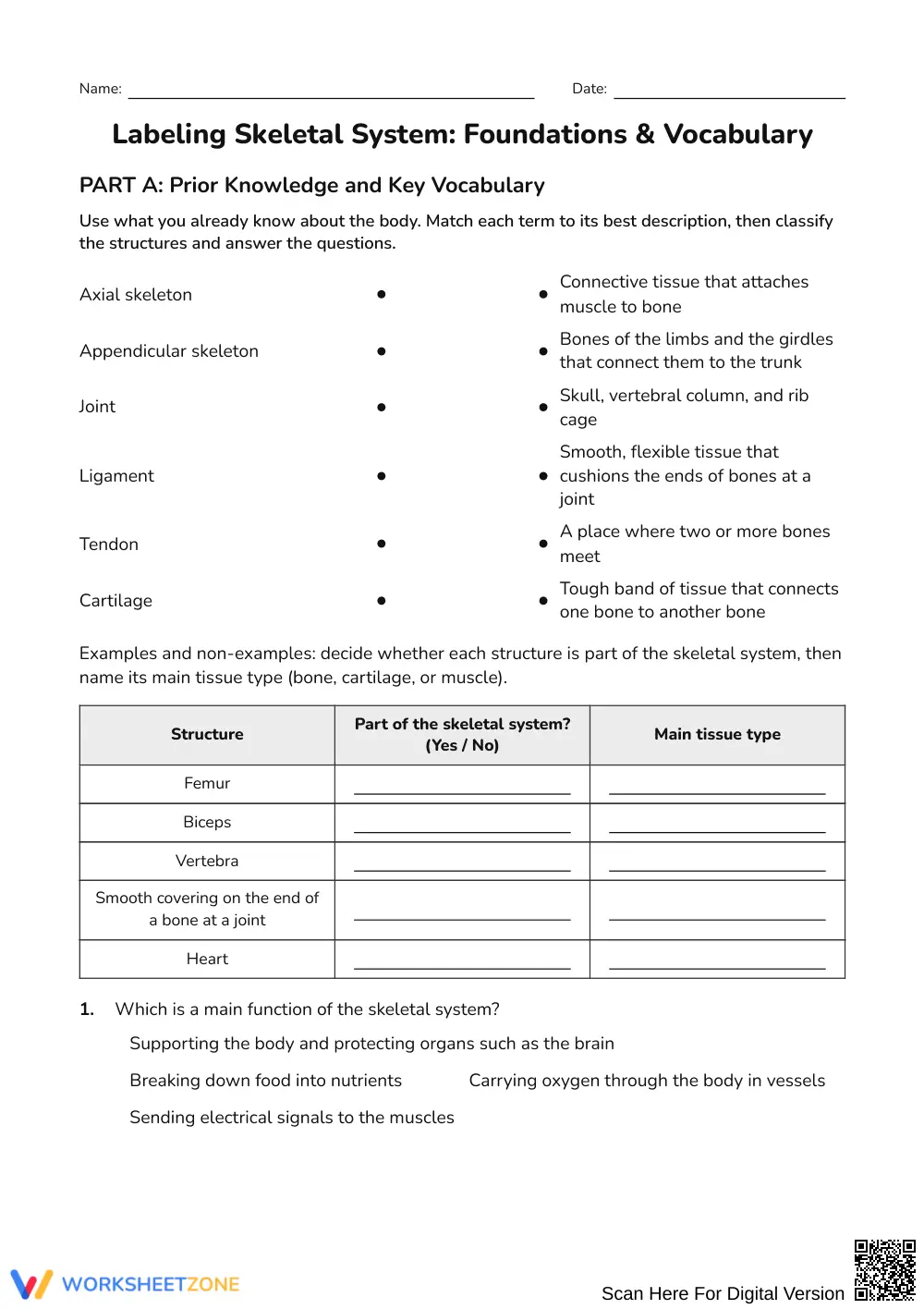
Students will master essential skeletal‑system vocabulary while correcting common misconceptions through a series of matching, labeling, and short‑answer tasks. By the end, they can accurately identify axial and appendicular bones and explain their functions in everyday language and relate them to body movement.
At a Glance
- Grade: Grades 6–12 · Subject: Science
- Standard: None — Identify and label skeletal system parts while clarifying key vocabulary.
- Skill Focus: Skeletal system terminology and misconception correction
- Format: 4 pages · 43 problems · Answer key included · PDF
- Best For: Vocabulary review, pre‑lab preparation, interactive, self‑paced
- Time: 30–45 minutes, easy
What's Inside
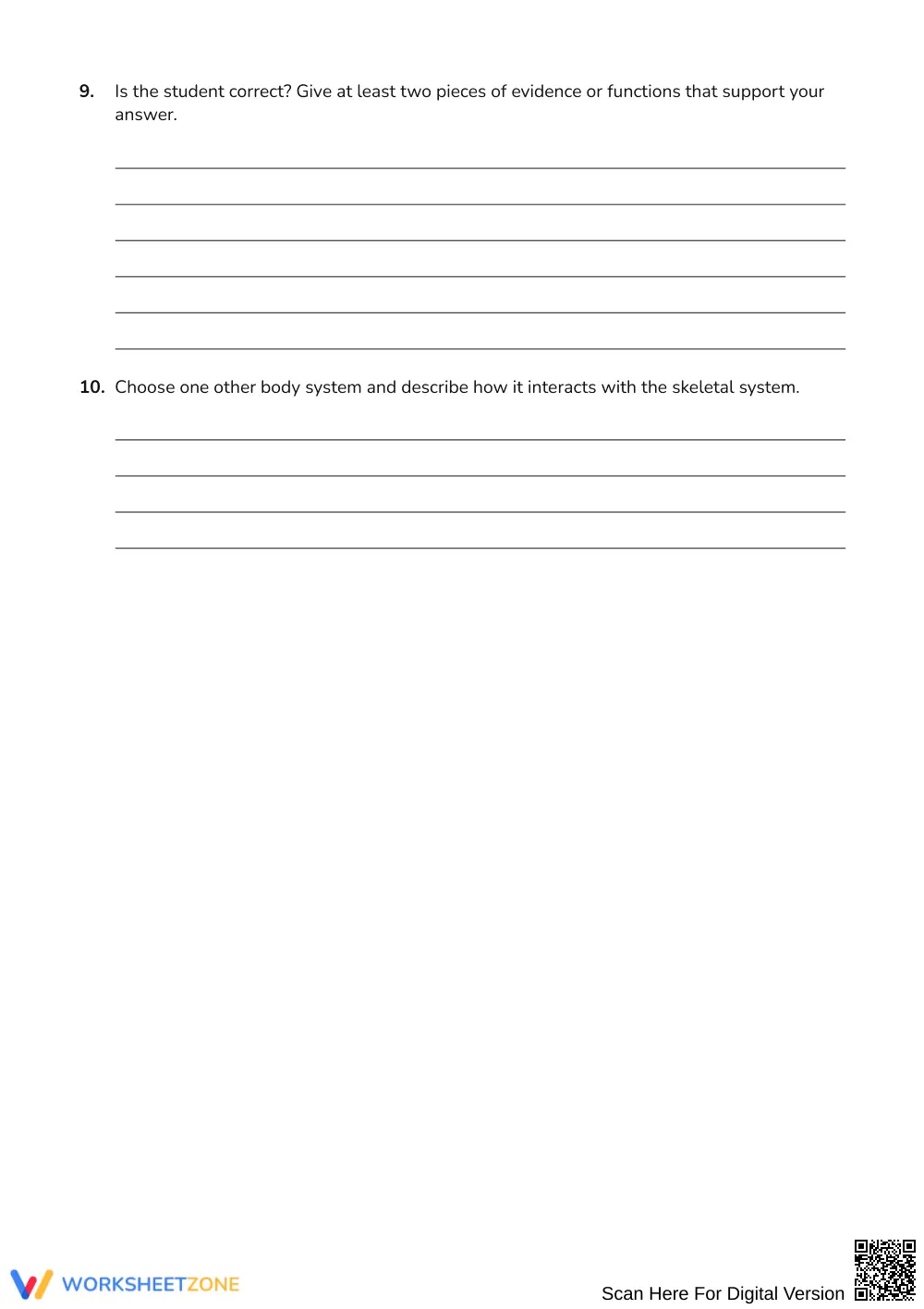
The packet spans four double‑sided pages and contains 43 varied tasks: vocabulary matching, true/false classification, multiple‑choice questions, bone‑labeling with a word bank, short‑answer explanations, and a misconception check. An answer key occupies the final page, and each section includes a brief worked example and sentence frames to support novice writers.
Skill Progression
- Guided practice – 12 matching and classification items with word bank and sentence frames.
- Supported practice – 15 labeling and short‑answer tasks with worked examples.
- Independent practice – 16 multiple‑choice and misconception‑check questions requiring full sentences.
This three‑stage release follows the classic I Do, We Do, You Do model, gradually shifting responsibility to the learner.
Standards Alignment
Students identify and label parts of the axial and appendicular skeleton while using precise scientific vocabulary. These foundational life science objectives can be copied directly into lesson plans, IEP goals, or district curriculum mapping documents.
How to Use It
Before a unit on human anatomy, teachers can assign the matching and classification section as a quick pre‑assessment; observe whether students correctly pair terms with definitions to gauge prior knowledge.
During the labeling activity, circulate to listen for accurate scientific language; note any lingering misconceptions for a brief whole‑class clarification. Completion typically takes 30–45 minutes.
Who It's For
Designed for middle and high school science students (Grades 6–12) who need focused vocabulary practice. No differentiated versions are included, but the built‑in sentence frames and word bank support English learners and students with IEPs. Pair with a skeletal‑system anchor chart or a short video on bone functions for a cohesive lesson.
Research indicates that explicit vocabulary instruction paired with immediate corrective feedback significantly accelerates secondary science literacy and long-term retention (Fisher & Frey, 2014). When middle and high school students encounter academic terminology in active contexts, their conceptual understanding expands far beyond simple rote memorization. This instructional packet provides structured scaffolding by directly targeting common student misconceptions, such as the persistent belief that mature human bones are non-living structures. By requiring learners to analyze definitions, justify their classifications, and construct concise evidence-based explanations, the activity supports proven pedagogical strategies that promote durable conceptual change across secondary grades. Classroom educators can confidently implement these forty-three targeted review tasks during introductory anatomy lessons, structured laboratory warm-ups, or focused small-group interventions to establish the solid terminological foundation necessary for advanced biological investigations and overall academic success throughout the entire school year.


