




























Essential Section Reordering Worksheet | Grade 10 English II
Paste this activity's link or code into your existing LMS (Google Classroom, Canvas, Teams, Schoology, Moodle, etc.).
Students can open and work on the activity right away, with no student login required.
You'll still be able to track student progress and results from your teacher account.
This Grade 10 English II worksheet trains students to analyze how authors structure informational texts and build evaluative claims. Students examine a transit economics report, identifying baseline constraints, analyzing paragraph transitions, and evaluating how reordering sections alters stakeholder perception and policy outcomes.
At a Glance
- Grade: 10 · Subject: English II
- Standard:
RI.9-10.5— Analyze how author claims are developed and refined by particular text sections- Skill Focus: Reorder a Section and Evaluate the Cost
- Format: 6 pages · 10 problems · Answer key included · PDF
- Best For: Informational text analysis and structural evaluation
- Time: 45–60 minutes
What's Inside
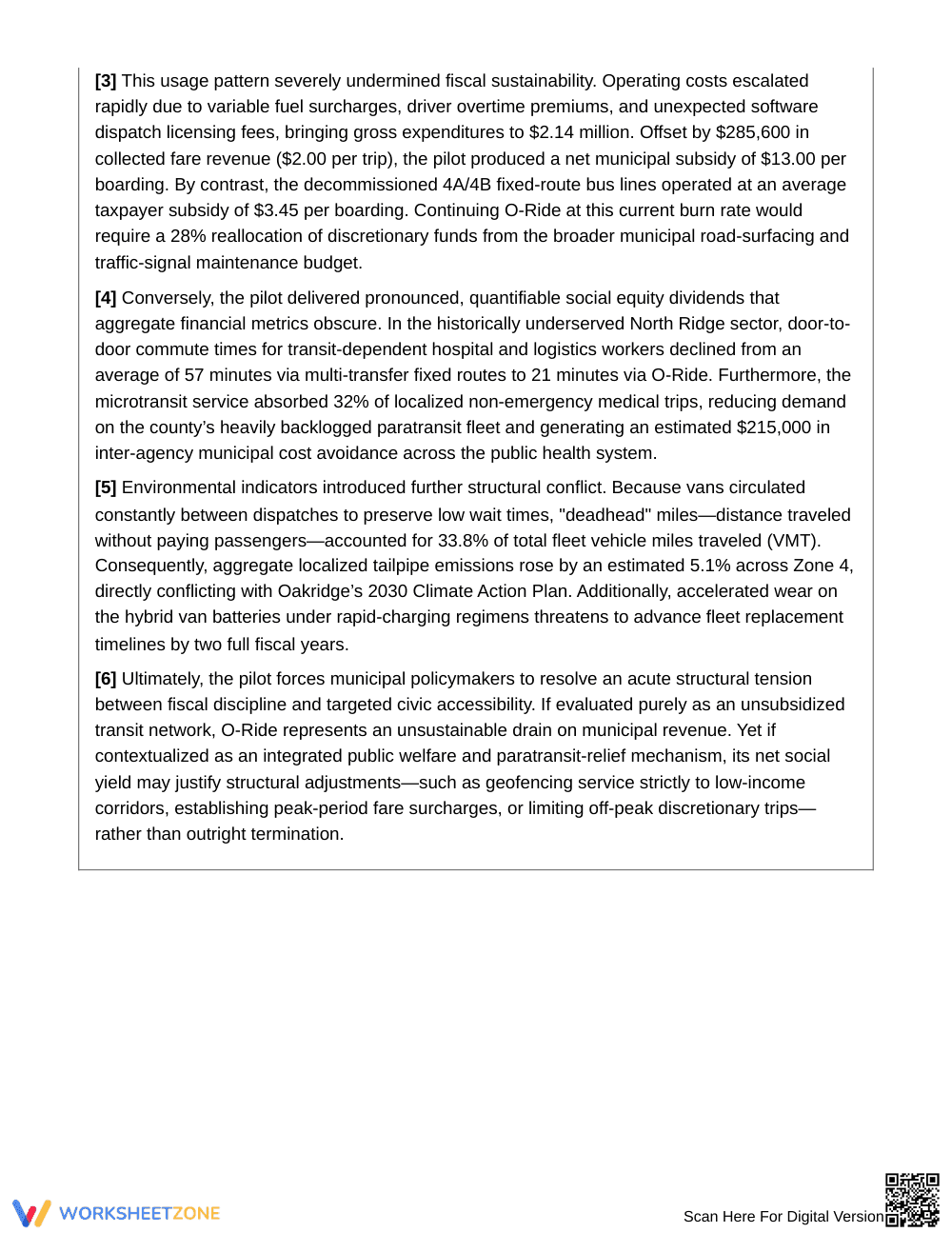
This resource features an authentic 6-paragraph policy evaluation detailing the fiscal, social, and environmental trade-offs of a municipal microtransit pilot. Across 6 pages, students complete 10 analytical tasks divided into three distinct operational sections. A thorough 4-page answer key provides complete exemplar responses and text evidence for rapid grading.
Skill Progression
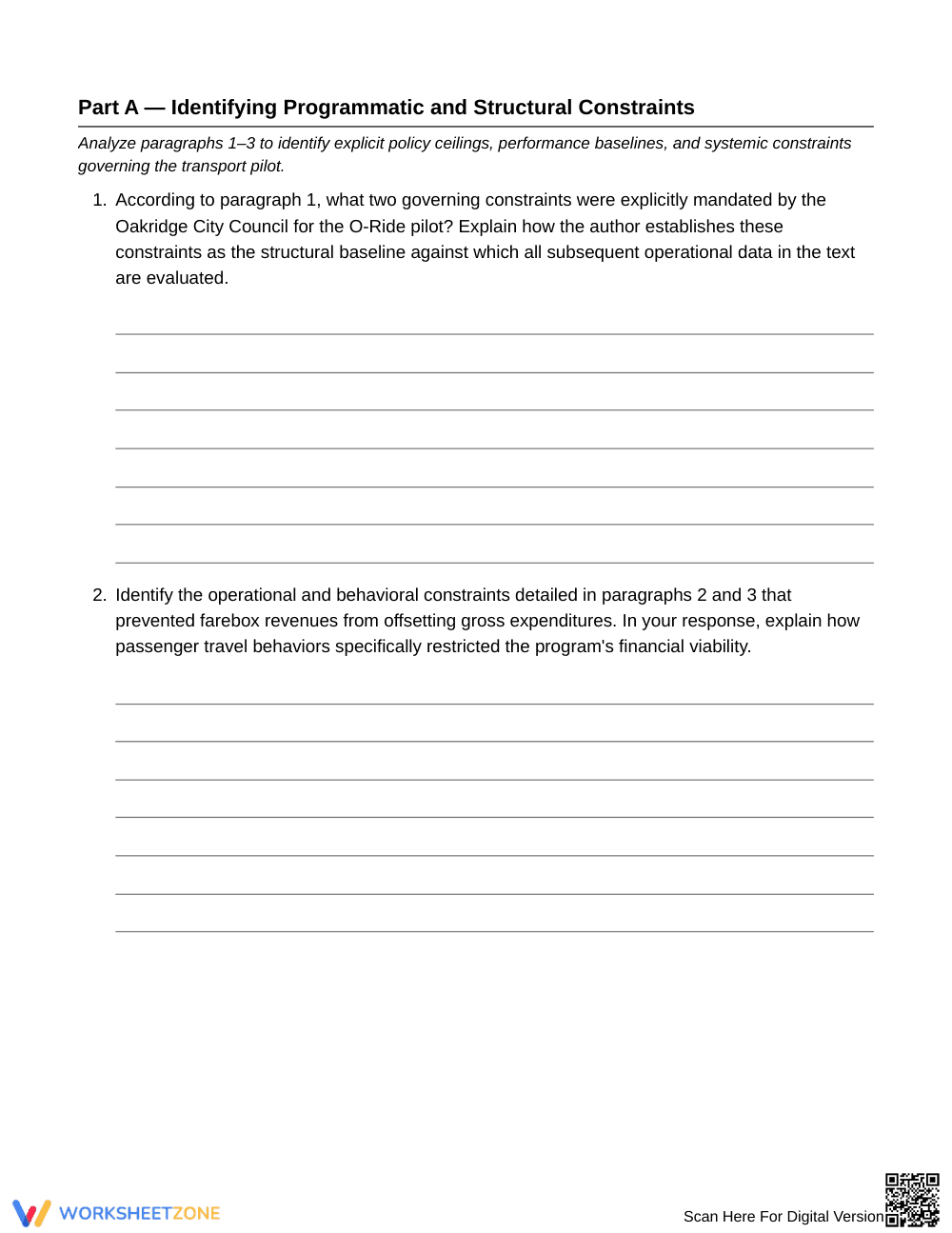
- Guided Practice (Part A, 2 tasks): Students identify policy baselines, expenditure ceilings, and operational constraints in paragraphs 1–3.
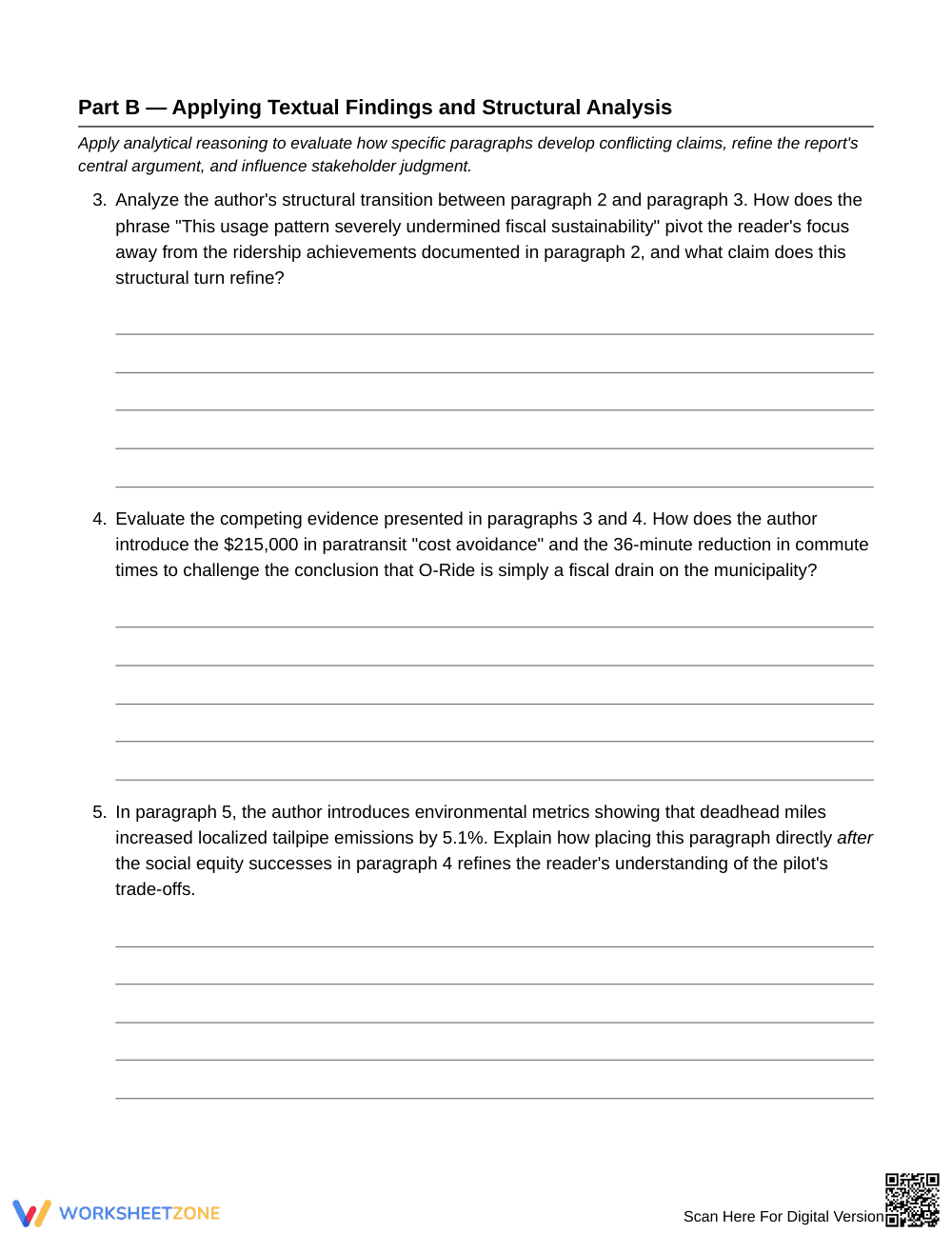
- Supported Practice (Part B, 6 tasks): Students evaluate structural transitions, analyze competing fiscal and equity data, and model section reordering.
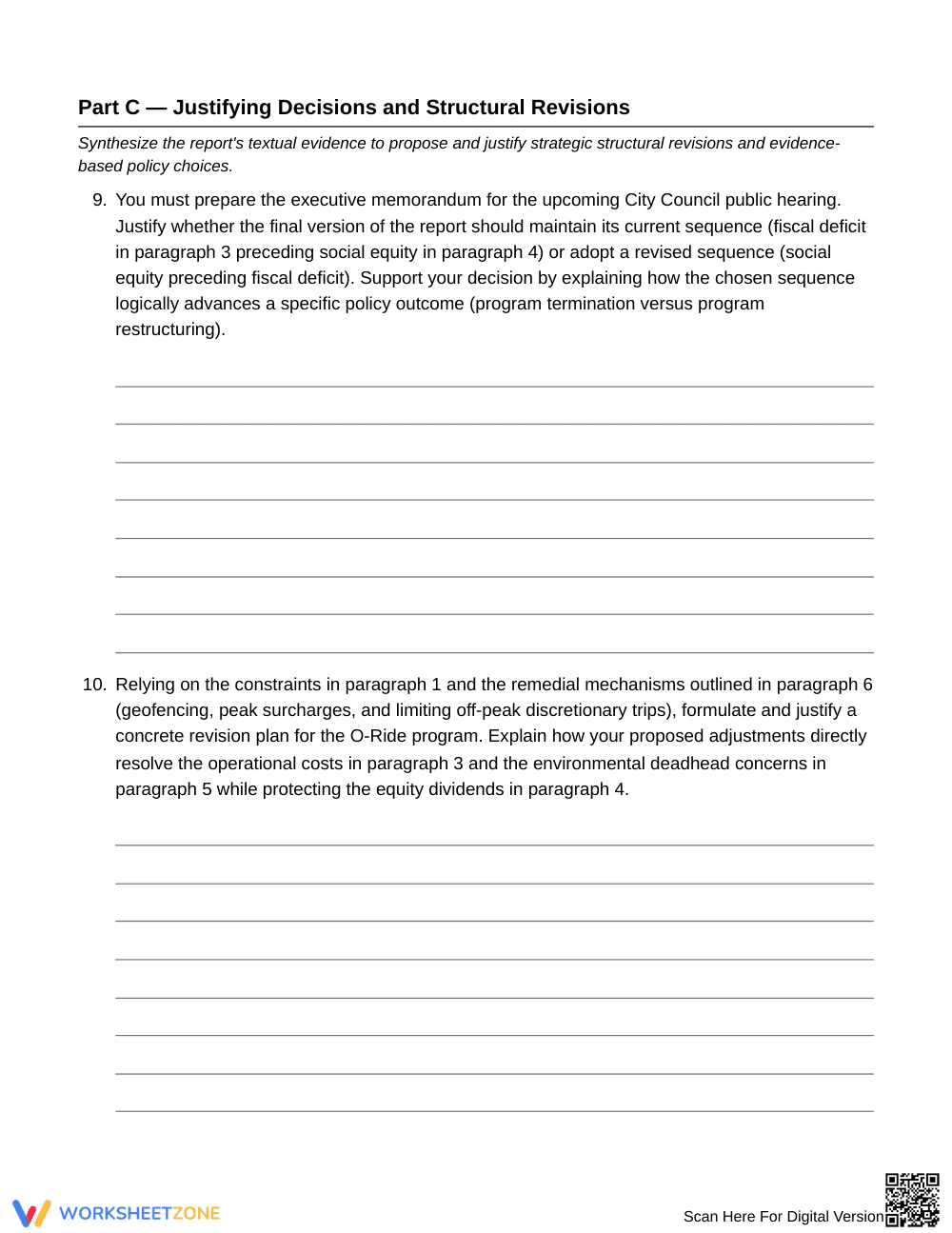
- Independent Practice (Part C, 2 tasks): Students synthesize textual evidence into an executive memorandum, justifying structural sequence choices.
This progression follows the gradual-release model, advancing students from constraint identification to independent structural synthesis.
Standards Alignment
This worksheet aligns with `RI.9-10.5`: Analyze in detail how an author's ideas or claims are developed and refined by particular sentences, paragraphs, or larger portions of a text. Students assess how specific structural choices refine claims about municipal programs. Both standard codes can be copied directly into lesson plans, IEP goals, or district curriculum mapping tools.
How to Use It
Use this worksheet after direct instruction on informational text structure. Introduce the passage collaboratively, model Part A constraint analysis, and have students complete Part B in pairs. Use Part C as an independent formative assessment. During Part B, observe whether students connect paragraph placement to rhetorical emphasis. Expected completion time is 45 to 60 minutes.
Who It's For
This activity is designed for Grade 10 English II students mastering informational text analysis. Differentiate by providing graphic organizers to track conflicting data points before answering Part B. Pair this worksheet with direct instruction on rhetorical structure or an anchor chart on text organization.
According to Fisher & Frey (2014), engaging secondary students in close structural analysis of informational text substantially develops their ability to evaluate organizational logic and complex claims. Standard RI.9-10.5 requires Grade 10 students to analyze how authors build and refine arguments through specific paragraphs and larger section arrangements. This worksheet provides rigorous practice in this skill by placing learners in the role of policy analysts reviewing municipal transit data. Across 10 analytical tasks on 6 pages, students identify initial baseline constraints, evaluate structural tensions between fiscal deficits and social equity dividends, and examine how reordering text sections alters reader perception. Structured around proven gradual-release principles, this resource delivers targeted practice that strengthens critical reading analysis and informational text comprehension for high school English II students preparing for standardized text assessments.


