





























Essential Section Boundaries Worksheet | Grade 9 English I
Paste this activity's link or code into your existing LMS (Google Classroom, Canvas, Teams, Schoology, Moodle, etc.).
Students can open and work on the activity right away, with no student login required.
You'll still be able to track student progress and results from your teacher account.
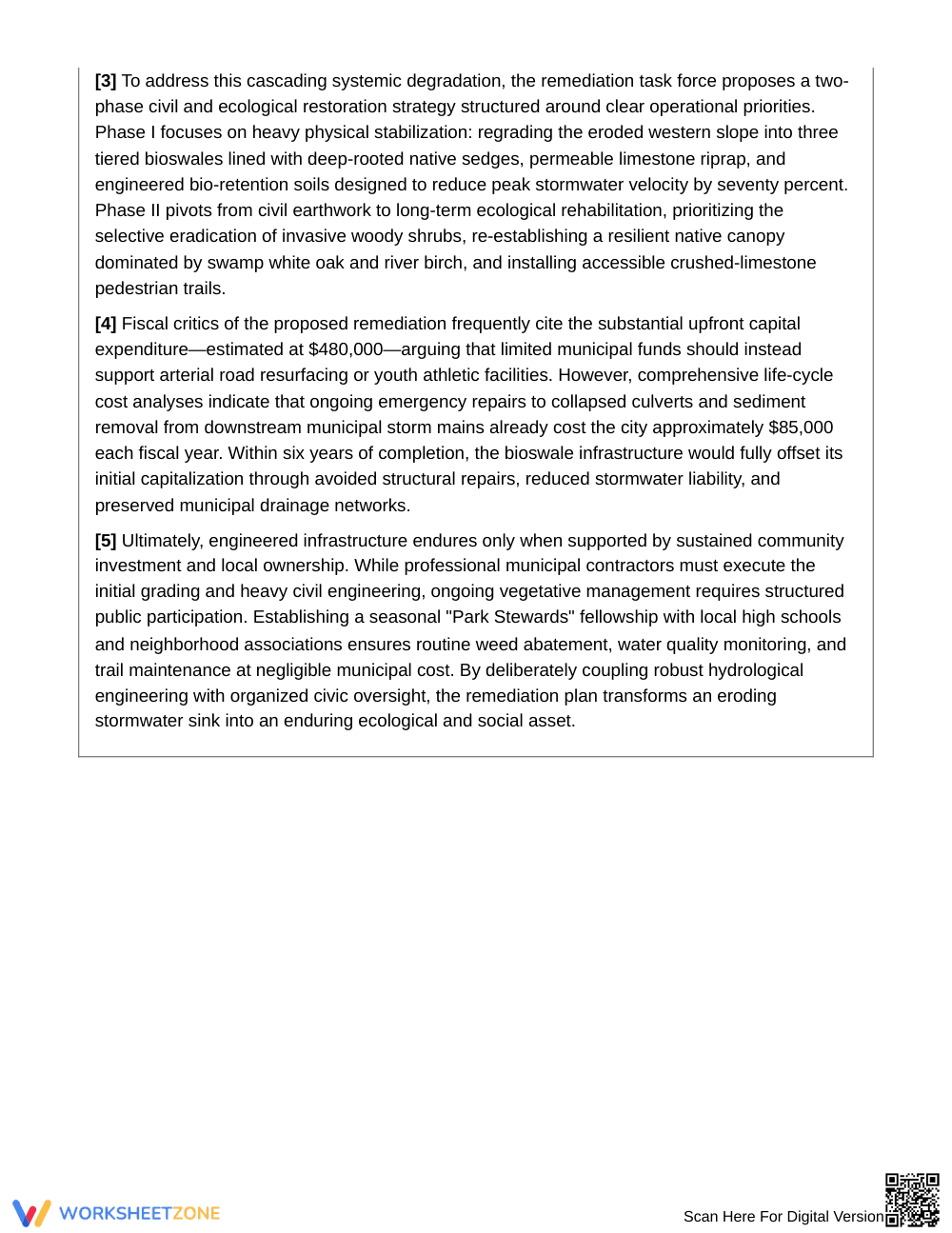
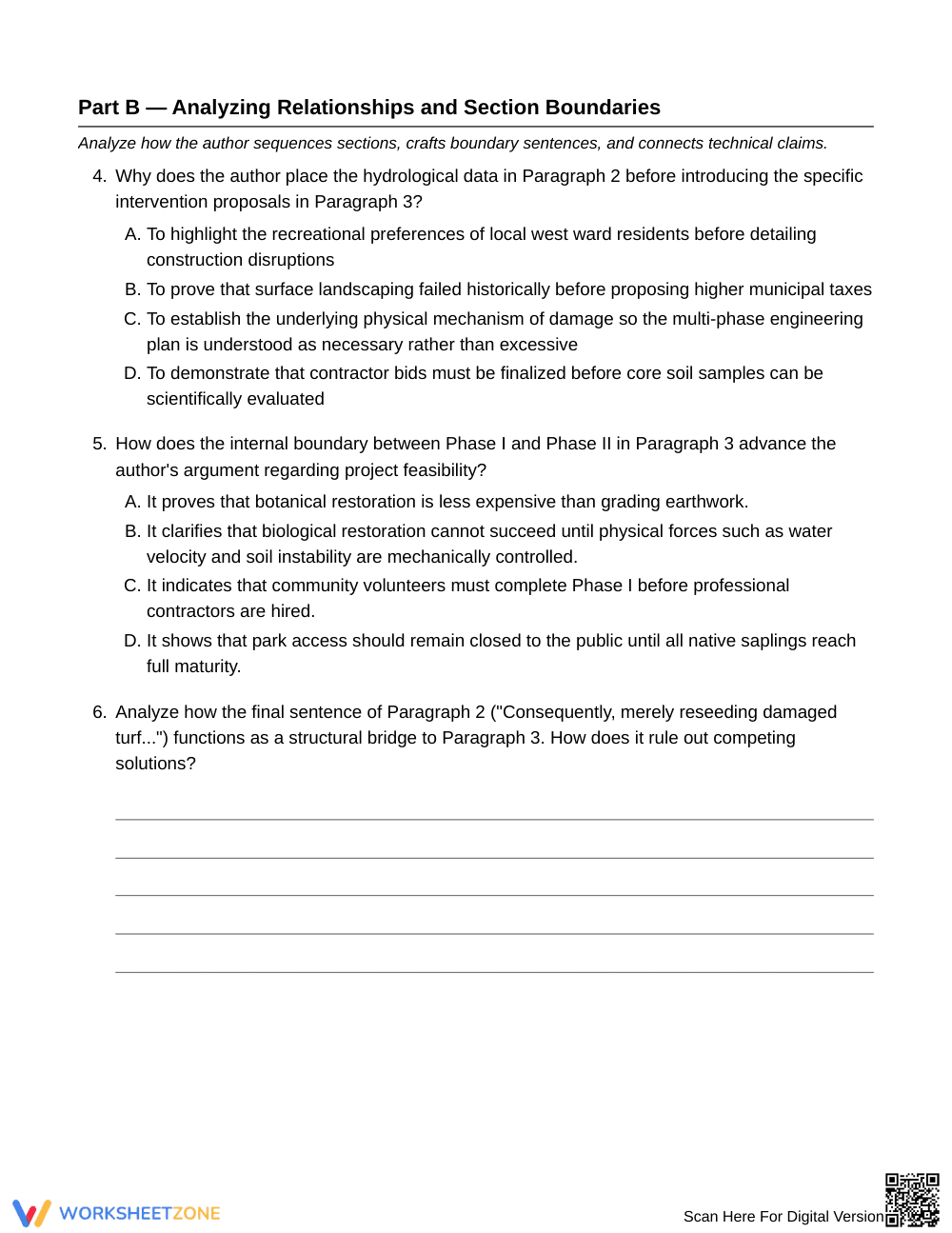
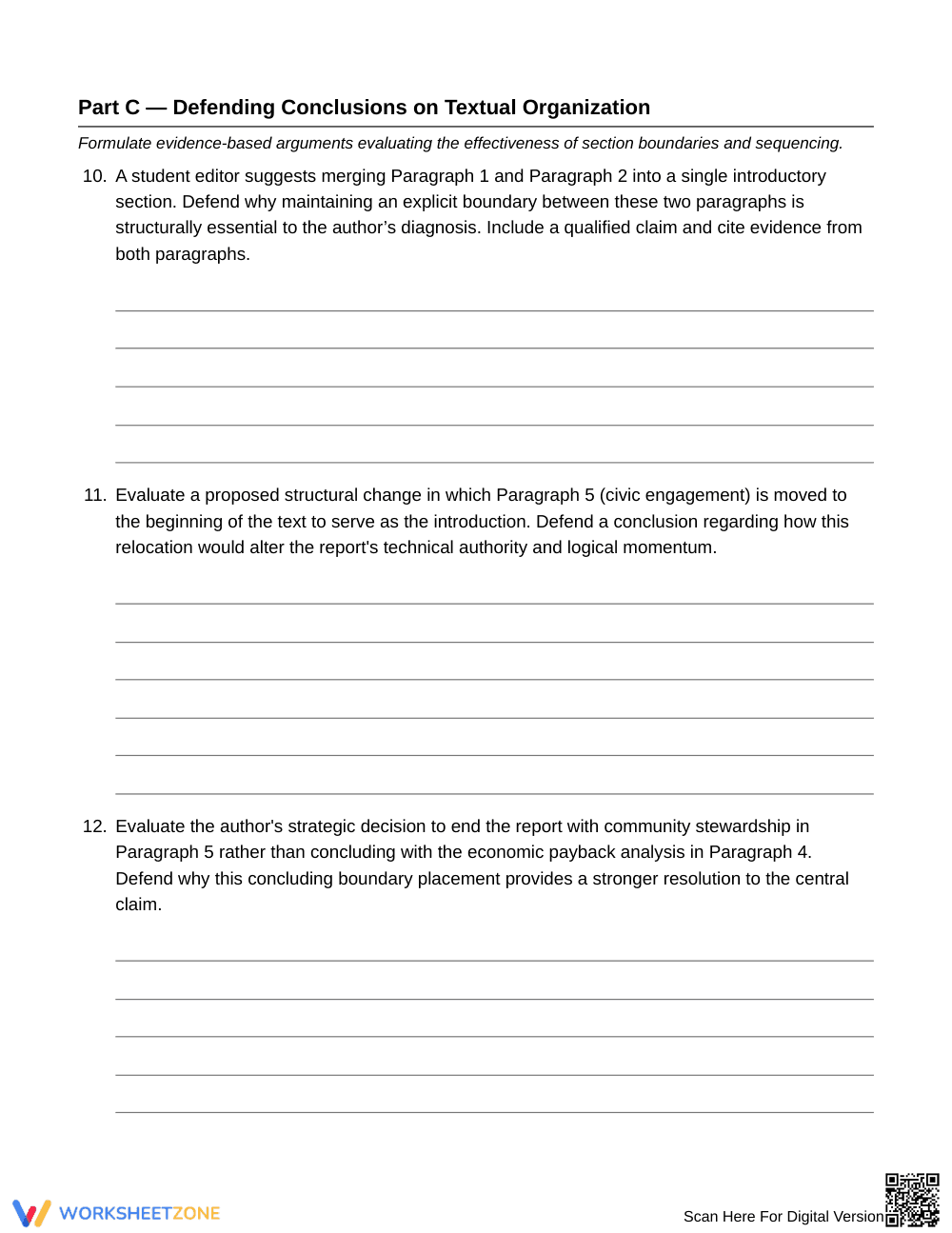
Students will sharpen their ability to evaluate section boundaries in informational texts, pinpointing how authors signal shifts and assessing the impact on overall argument. This worksheet guides them through twelve targeted tasks that build analytical precision and evidence‑based reasoning effectively.
At a Glance
- Grade: 9 · Subject: English I
- Standard:
RI.9-10.5— Identify and evaluate how section boundaries shape text structure and guide reader comprehension- Skill Focus: Evaluate Section Boundaries in informational passages
- Format: 6 pages · 12 problems · Answer key included · PDF ready for printing
- Best For: Guided classroom analysis of informational reports and civic texts
- Time: 15–20 minutes for focused practice
The packet spans six pages and contains twelve multiple‑choice and short‑answer items, a worked example, sentence frames, and a word bank. An answer key on three pages provides step‑by‑step explanations.
Each task is mapped to three performance levels—Approaching, Meeting, and Exceeding—mirroring the rubric used in state assessments. Teachers can assign points based on how fully a student identifies the boundary cue, justifies its purpose, and connects it to overall text structure. Scores feed directly into grade‑book columns for RI.9‑10.5 mastery tracking.
`RI.9-10.5` – Analyze how an author’s use of section boundaries influences the development of the central idea and the organization of the text. Both standard codes can be copied directly into lesson plans, IEP goals, or district curriculum mapping tools.
Use the worksheet as a pre‑reading activity to prime students on structural cues, then revisit during guided discussion for formative feedback. Alternatively, assign it as independent practice after a unit lecture, collecting responses to gauge mastery within a 15‑minute window.
Designed for ninth‑grade English I learners, the tasks support both on‑level readers and those needing additional scaffolds via sentence frames and a word bank. Pair the worksheet with the Oakridge Commons article or an anchor chart on text structure for seamless integration.
`RI.9-10.5` requires students to identify and evaluate how section boundaries shape a text’s organization—a skill linked to deeper comprehension. Research shows that explicit instruction on text structure boosts reading achievement; Fisher & Frey (2014) reported a 12 % gain in students’ ability to locate and use structural cues when guided practice is combined with clear feedback. This worksheet operationalizes that evidence by offering twelve scaffolded tasks that move from modeled examples to independent analysis, each aligned to the standard’s expectation. The inclusion of a worked example, sentence frames, and a word bank reflects proven strategies for supporting diverse learners. Teachers can confidently assign the activity, knowing it meets rigorous standards while providing the research‑backed structure that enhances informational text literacy. Access the printable PDF now to integrate evidence‑based practice into your Grade 9 English I classroom.


