


























Views
Downloads


Essential Rhetorical Appeals Worksheet | Grade 10 English II
Paste this activity's link or code into your existing LMS (Google Classroom, Canvas, Teams, Schoology, Moodle, etc.).
Students can open and work on the activity right away, with no student login required.
You'll still be able to track student progress and results from your teacher account.
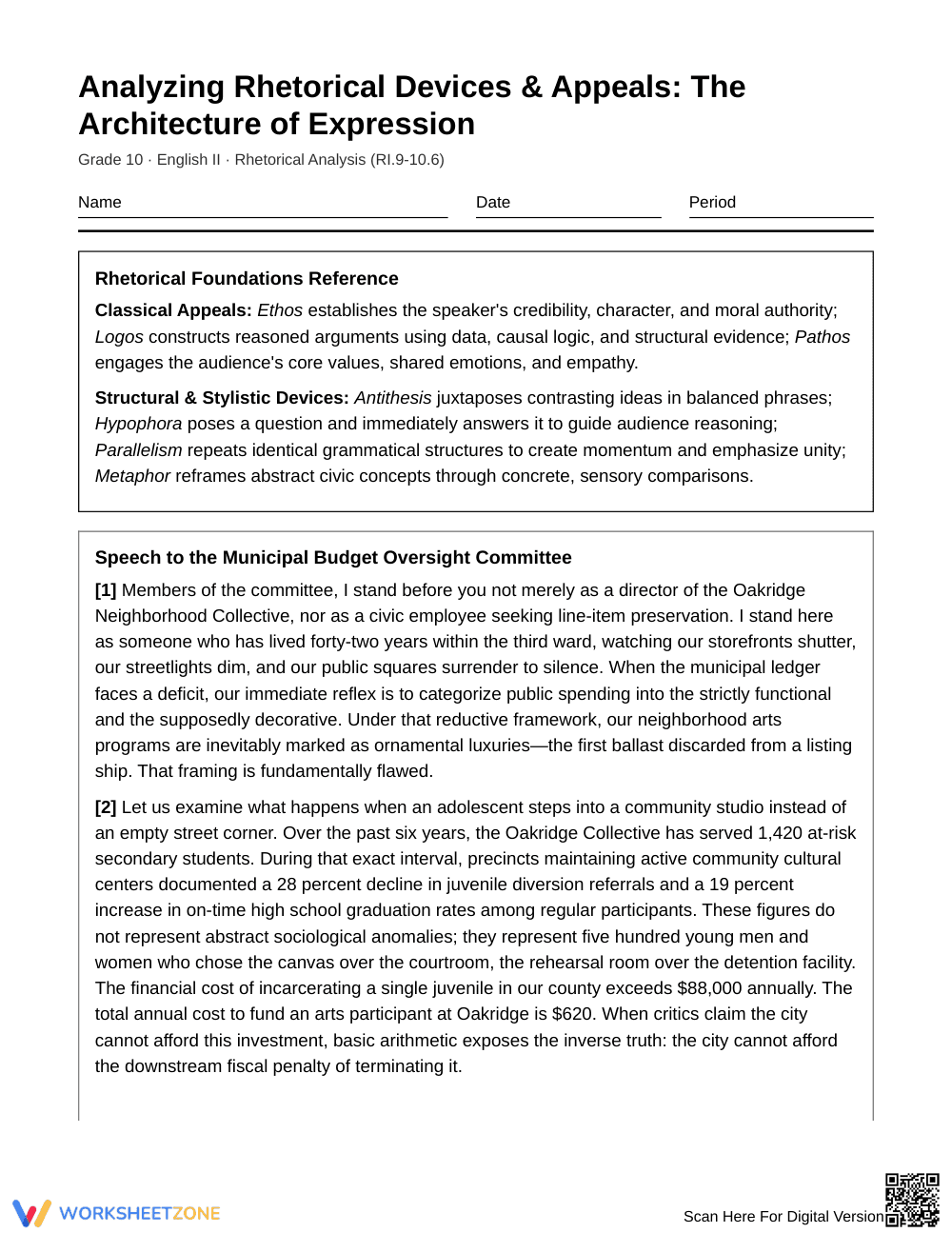
This comprehensive high school English worksheet equips Grade 10 students to dissect classical rhetorical appeals and stylistic devices within authentic civic discourse. Working with an original persuasive speech on municipal arts funding, learners evaluate ethos, logos, pathos, hypophora, antithesis, and parallel structure to determine how an author establishes purpose and advances a point of view.
At a Glance
- Grade: 10 · Subject: English II
- Standard:
RI.9-10.6— Determine an author's point of view or purpose and analyze rhetorical choices- Skill Focus: Appeals and Rhetorical Techniques
- Format: 6 pages · 10 problems · Answer key included · PDF
- Best For: Close reading and rhetorical analysis units
- Time: 45–60 minutes
What's Inside
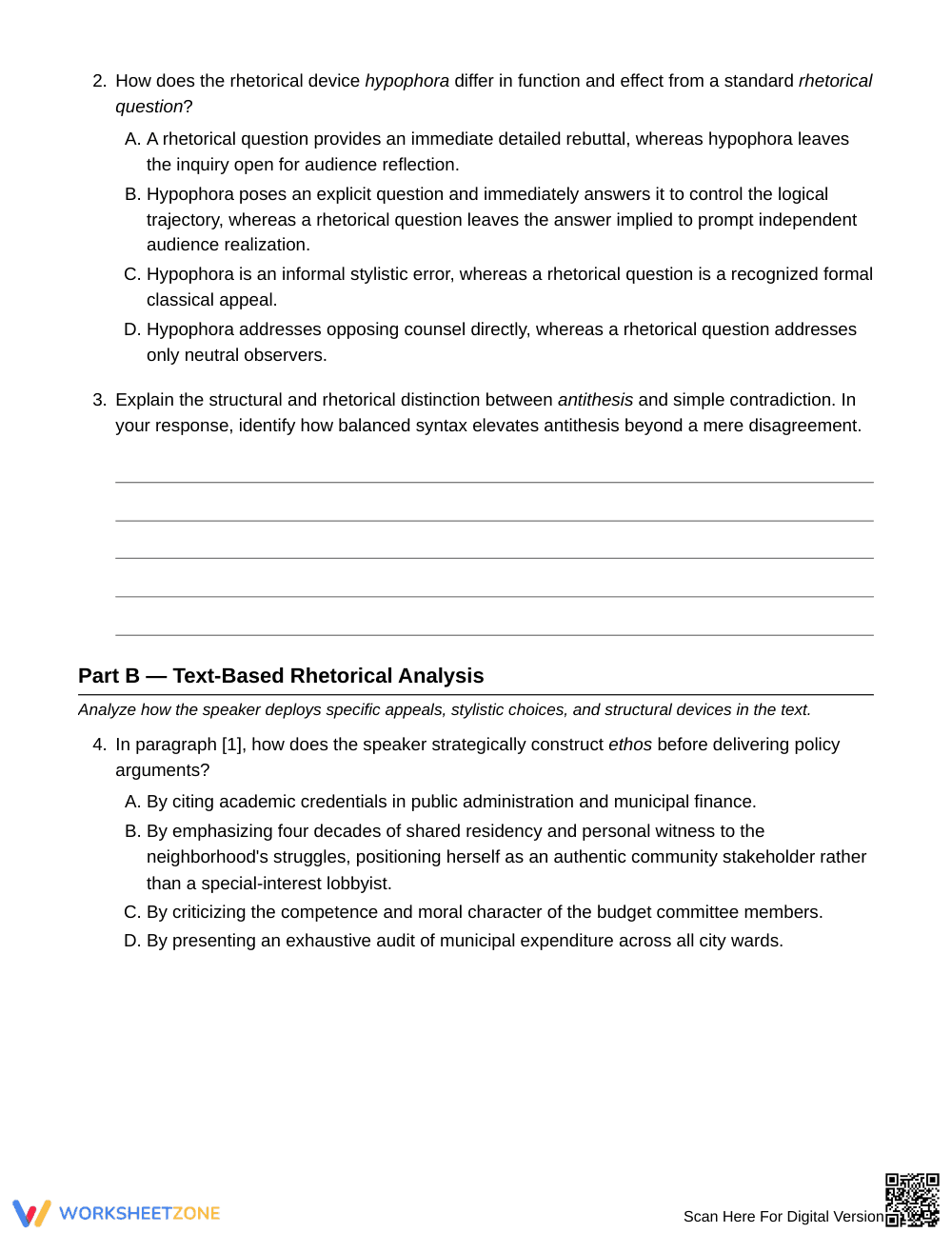
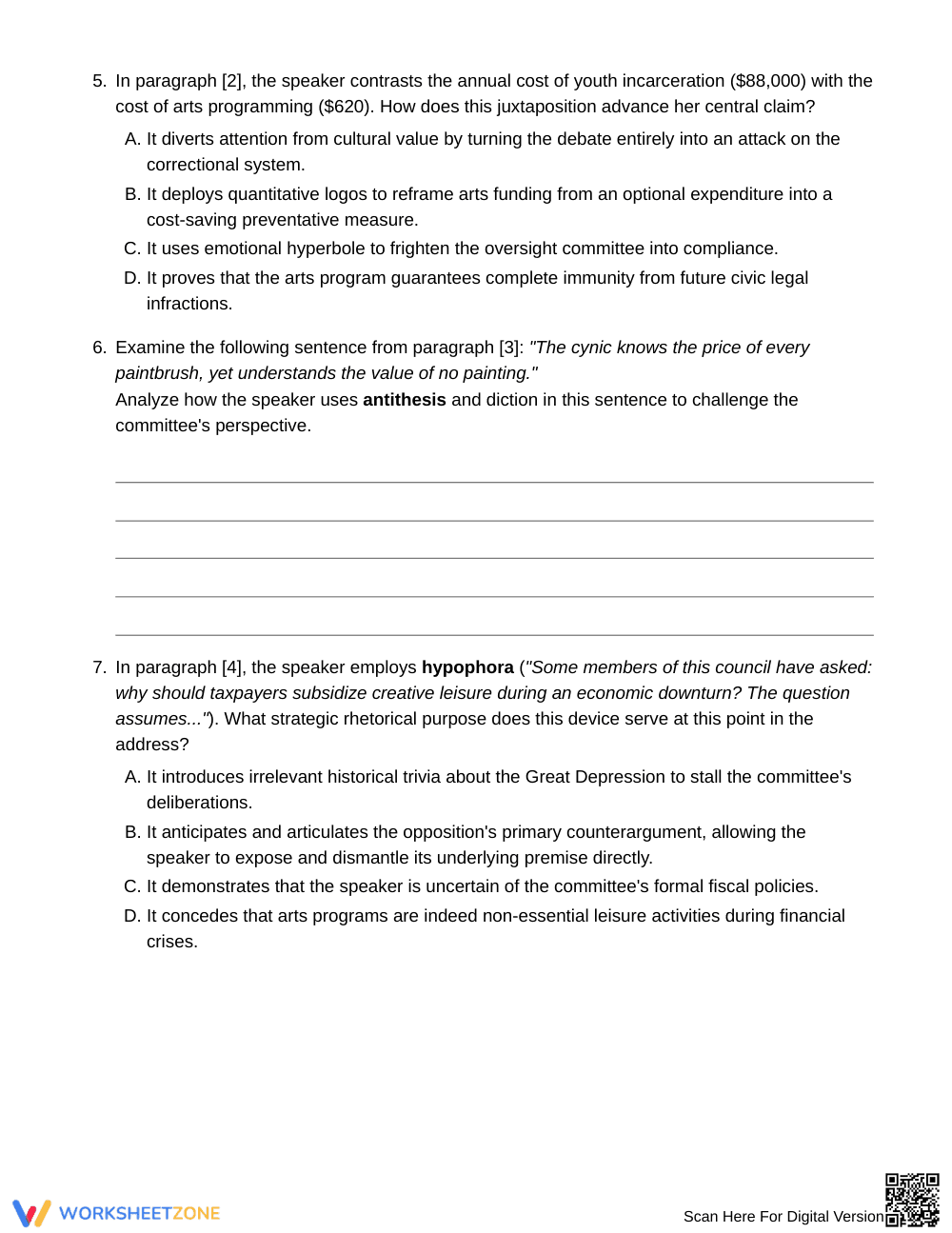
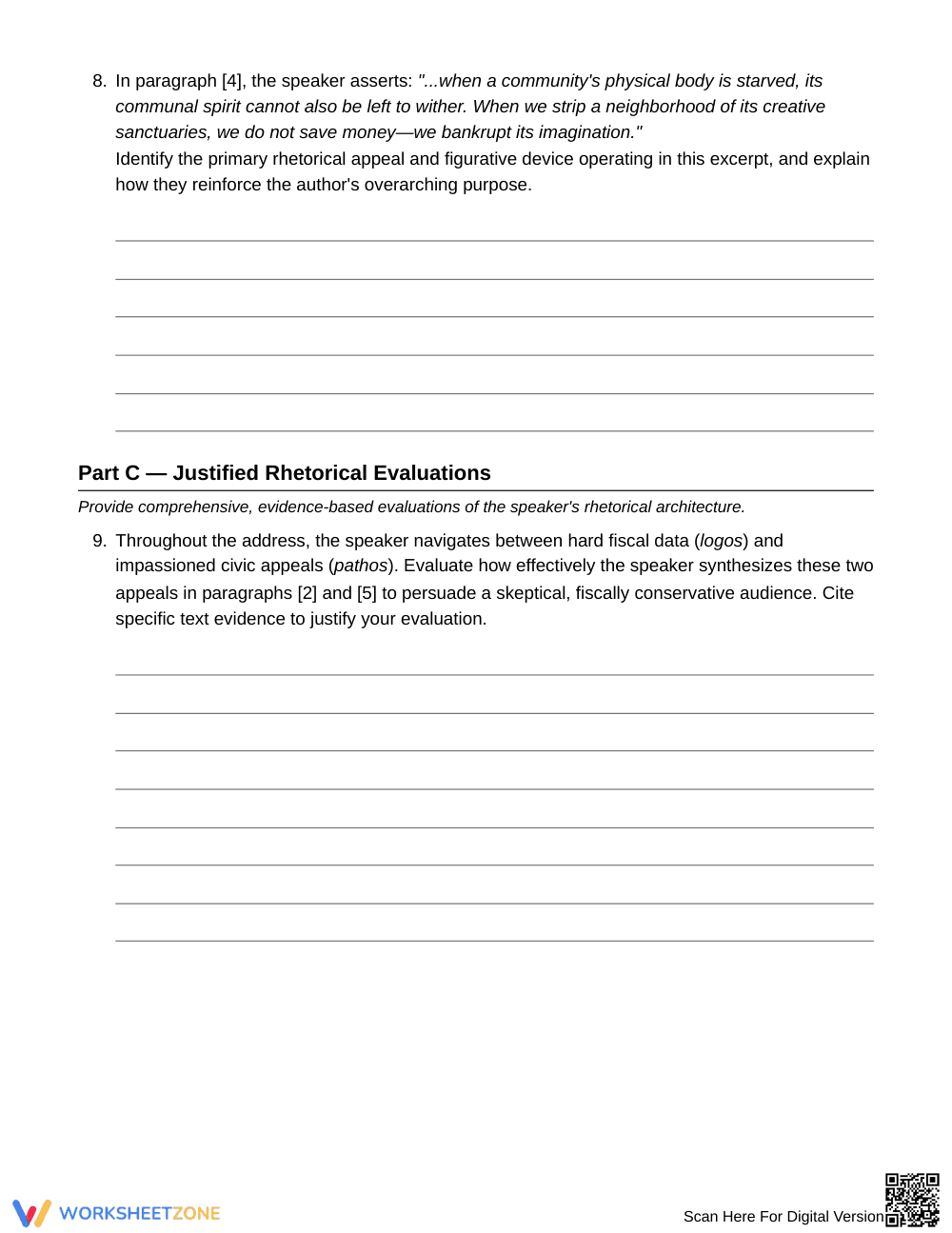
The activity begins with an architectural reference guide outlining classical appeals and syntactic devices, followed by a five-paragraph original speech delivering high-leverage data and persuasive rhetoric. Across six pages, students encounter ten rigorous items combining multiple-choice conceptual checks, excerpt-based analytical questions, and extended written evaluations. A three-page explanatory answer key provides complete model responses and pedagogical commentary for efficient grading.
Skill Progression
- Guided practice (Tasks 1–3): Foundational multiple-choice and short-answer prompts establish core distinctions between logos and pathos, explain hypophora versus rhetorical questions, and define syntactic antithesis.
- Supported practice (Tasks 4–8): Text-dependent analytical questions require students to examine specific speech paragraphs, identifying how fiscal data creates quantitative logos and how balanced diction conveys theme.
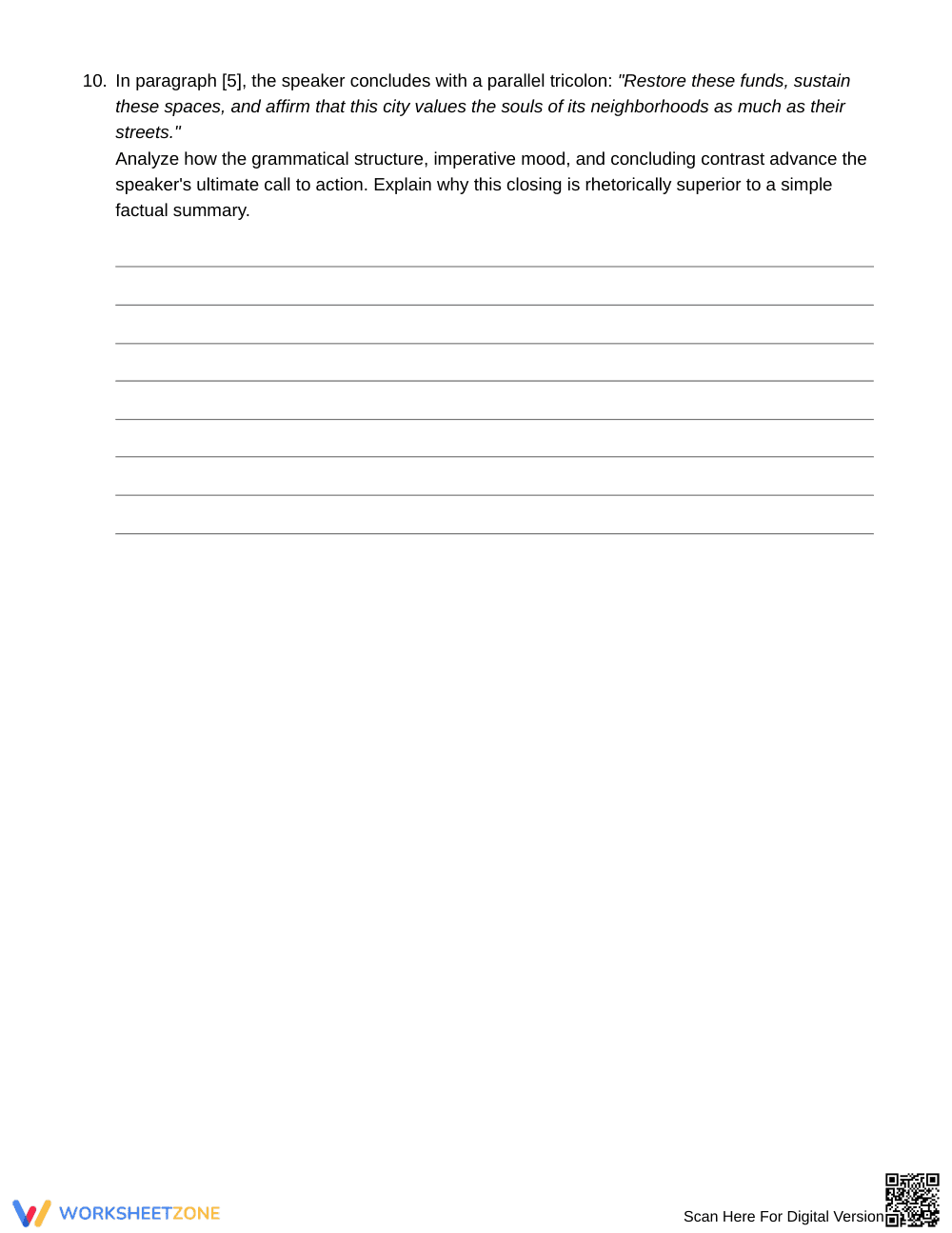
- Independent practice (Tasks 9–10): High-level synthesis items prompt learners to craft evidence-based paragraphs evaluating how the author merges opposing appeals and uses parallel tricolon in a call to action.
This structured sequence reflects the gradual release of responsibility model, guiding students from structural recognition to independent rhetorical evaluation.
Standards Alignment
This resource aligns to standard `RI.9-10.6`: Determine an author's point of view or purpose in a text and analyze how an author uses rhetoric to advance that point of view or purpose. It reinforces secondary reading skills in textual evidence citation and argument delineation. Both standard codes can be copied directly into lesson plans, IEP goals, or district curriculum mapping tools.
How to Use It
Deploy this worksheet during the guided practice phase of an argument unit or as an assessment after direct instruction on persuasive devices. During independent completion, circulate to observe whether students confuse emotional diction with formal pathos. Expect full completion within 45 to 60 minutes.
Who It's For
Designed for Grade 10 English II classrooms, honors English students, and AP Language preparation cohorts. Pair this practice directly with an argumentative anchor chart or a comparative analysis of historic speeches.
Rigorous rhetorical analysis requires secondary students to move beyond passive content comprehension into the active deconstruction of persuasive form and structure. According to Fisher & Frey (2014), structured close-reading tasks that combine scaffolded conceptual checks with text-grounded analytical writing significantly strengthen student capacity to evaluate complex informational texts independently. Standard RI.9-10.6 mandates that tenth-grade learners not only identify an author's central stance, but also interrogate how specific structural devices—such as balanced antithesis, hypophora, and the deliberate synthesis of ethos, logos, and pathos—work in concert to shape audience perception and dismantle opposing arguments. This ten-task worksheet operationalizes that instructional target through a complete civic speech model, guiding students systematically from baseline device recognition to sophisticated, evidence-backed critique suitable for standards-aligned assessment.


