




























Views
Downloads



Essential Repair Weak Purpose Worksheet | Grade 6 ELA

Paste this activity's link or code into your existing LMS (Google Classroom, Canvas, Teams, Schoology, Moodle, etc.).
Students can open and work on the activity right away, with no student login required.
You'll still be able to track student progress and results from your teacher account.
This worksheet teaches sixth-grade students to identify and fix flawed author's-purpose explanations by distinguishing purpose from topic, audience, and genre. Across two authentic-style passages and 10 scaffolded tasks, students diagnose common errors and compose polished, text-supported purpose statements aligned to standard RI.6.6.
At a Glance
- Grade: 6 · Subject: ELA
- Standard:
RI.6.6— Determine an author’s point of view or purpose in a text and explain how it is conveyed- Skill Focus: Repair a Weak Purpose Explanation
- Format: 5 pages · 10 problems · Answer key included · PDF
- Best For: Guided practice after direct instruction
- Time: 30–45 minutes
What’s Inside
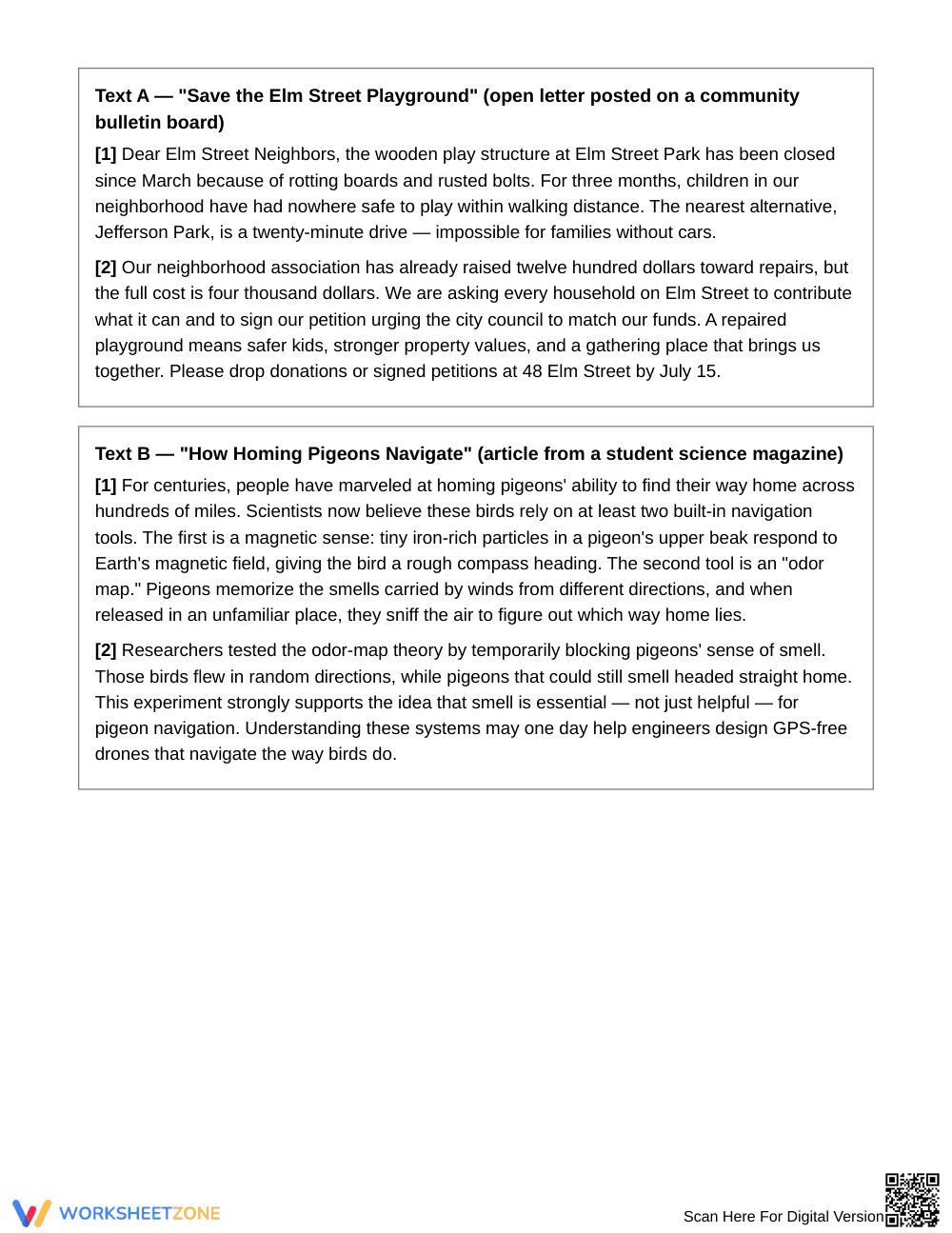
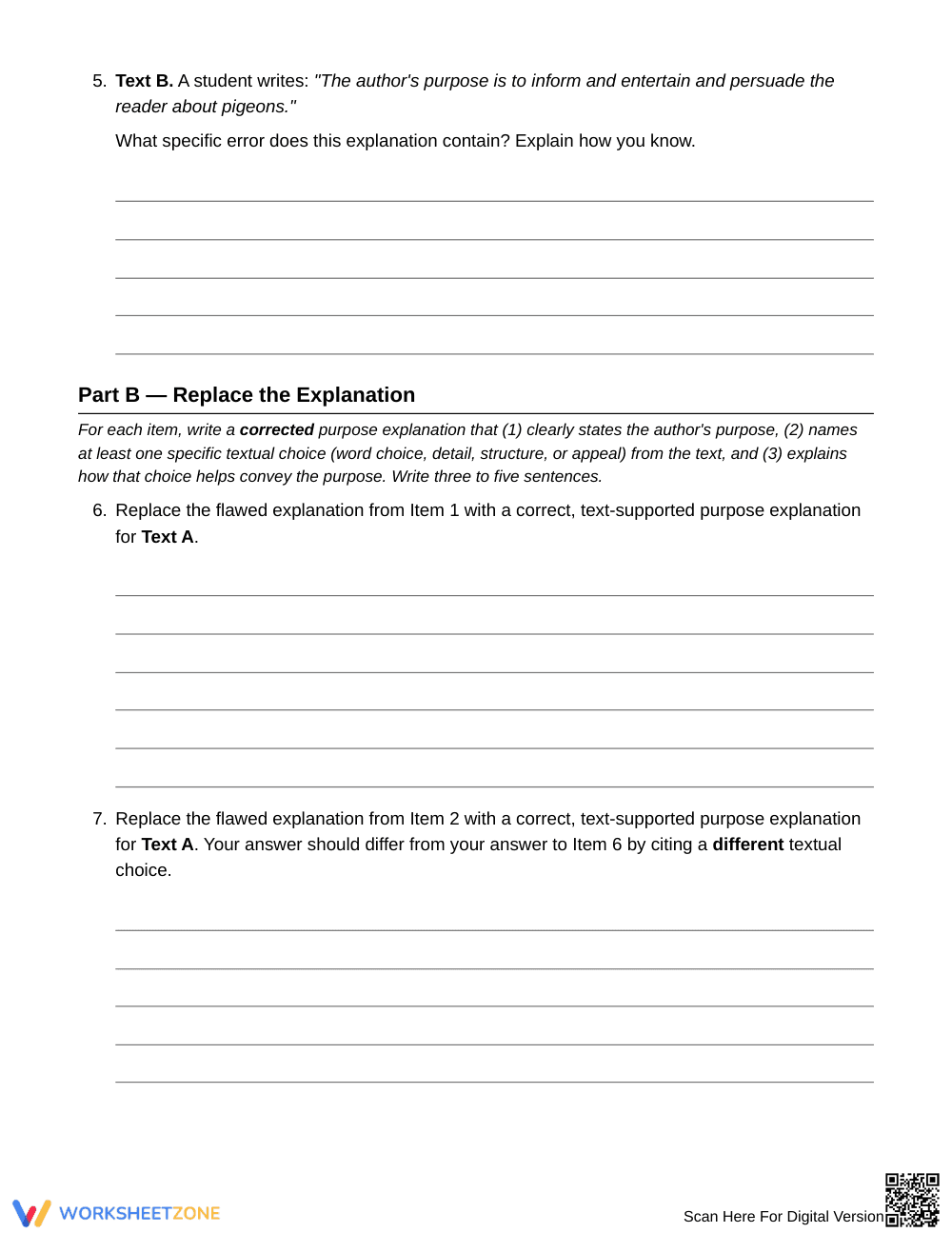
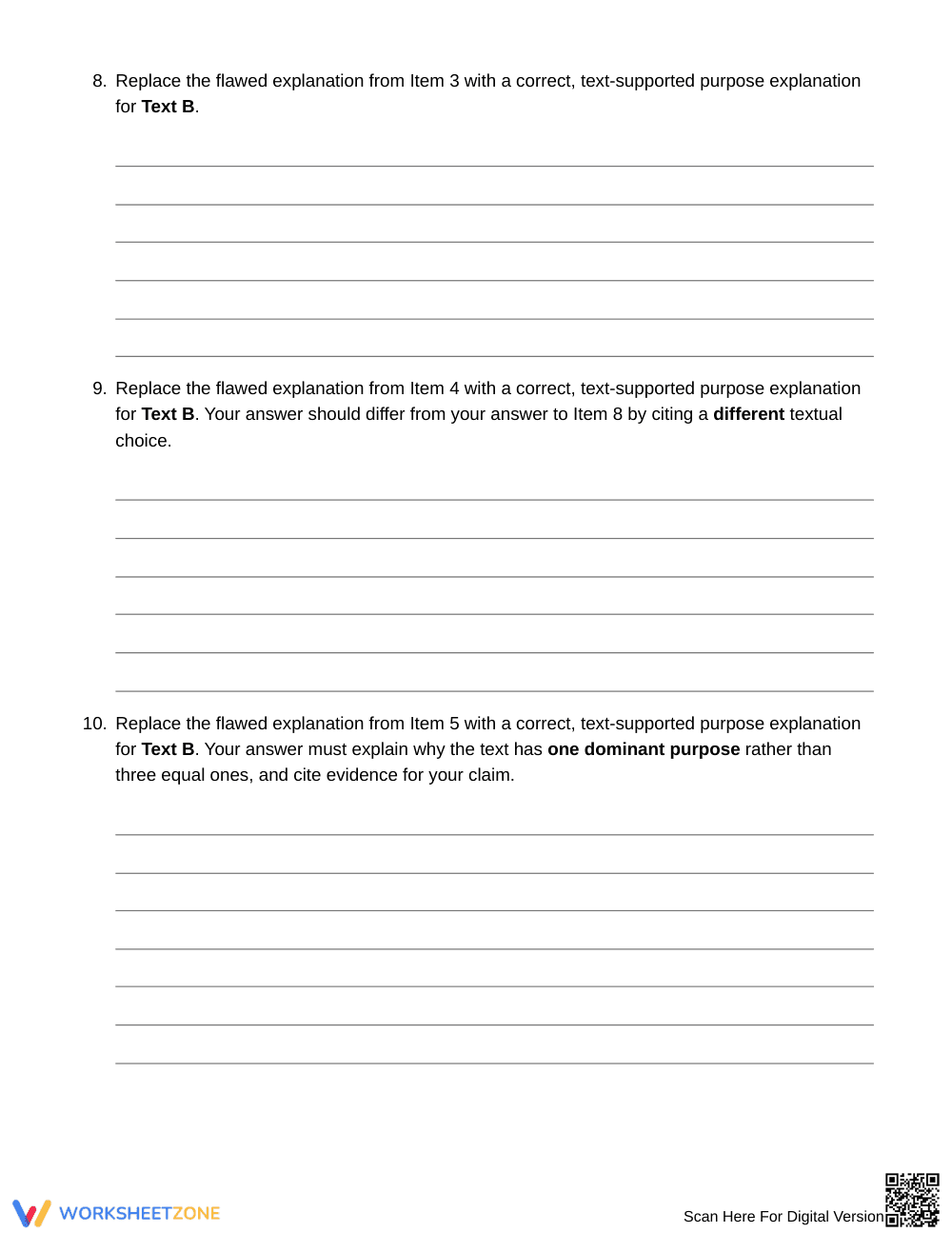
The worksheet opens with a key-definitions box clarifying topic, audience, genre, and purpose, followed by a worked example using a cafeteria-menu excerpt. Students read two texts: an open letter about a neighborhood playground and an informational article about homing-pigeon flight. In Part A (5 items), students diagnose specific analytical errors. In Part B (5 items), they compose corrected, evidence-based purpose explanations. A complete 3-page answer key provides model responses.
Skill Progression
- Guided Practice: A completed model shows students how to diagnose a flawed statement and compose a repair before independent work begins.
- Supported Analysis (Part A): Students examine flawed statements to determine whether each confuses topic, audience, or genre, explaining errors in brief responses.
- Independent Writing (Part B): Students write full explanations that identify purpose, cite textual evidence, and explain the author’s intent.
Standards Alignment
This resource directly targets standard RI.6.6 by requiring students to determine an author’s point of view or purpose and explain how text structures, word choices, and evidence convey that purpose. It also reinforces writing standard W.6.9 as learners draw textual evidence to support their written literary and informational analyses.
How to Use It
Distribute the worksheet for guided practice following your direct instruction lesson. Have partners complete Part A collaboratively to discuss error types, then assign Part B for independent demonstration of mastery. You can also split the tasks across two 30-minute class sessions as a formative assessment check.
Aligned to RI.6.6, this 10-problem worksheet targets an essential reading skill that national data show many sixth-grade students struggle to master: distinguishing an author’s purpose from the topic, audience, or genre of a text. According to research by Fisher & Frey (2014), middle school students benefit significantly from direct reading instruction when they practice identifying flawed reasoning before constructing their own analytical explanations. This diagnose-then-repair instructional model mirrors that evidence-based approach directly. Across five printable pages, this resource delivers two complete informational passages, an introductory definitions reference box, a fully worked sample item, and a three-page answer key with exemplar responses for simple grading. Educators can utilize Part A for quick formative checks and use Part B written responses as measurable evidence of standard mastery for gradebook reporting, Tier 2 intervention tracking, or individualized education program progress monitoring.


