































Essential Heredity-Concept Check Worksheet | Grade 9 Biology

Paste this activity's link or code into your existing LMS (Google Classroom, Canvas, Teams, Schoology, Moodle, etc.).
Students can open and work on the activity right away, with no student login required.
You'll still be able to track student progress and results from your teacher account.
This worksheet targets ninth‑grade biology students, guiding them through 12 concept‑check problems that deepen understanding of alleles, dominance, and gene action while building analytical reasoning skills.
At a Glance
- Grade: 9 · Subject: Biology
- Standard:
— Analyze how alleles influence phenotype and how inheritance patterns arise- Skill Focus: Heredity‑Concept Check
- Format: 5 pages · 12 problems · Answer key included · PDF
- Best For: Reinforcing genetics after direct instruction
- Time: 30–45 minutes
What’s Inside – The packet contains a brief synthetic model introduction, three parts (Foundation Concepts, Core Application, Evidence‑Based Challenge), a worked example, and a two‑page answer key. Tasks range from multiple‑choice definition checks to data‑interpretation, short‑answer explanations, and a mini‑research critique.
- Guided practice: Items 1‑3 provide definitions and short explanations with a worked example; 3 problems.
- Supported practice: Items 4‑9 require data analysis, experimental design, and genetic reasoning; 6 problems.
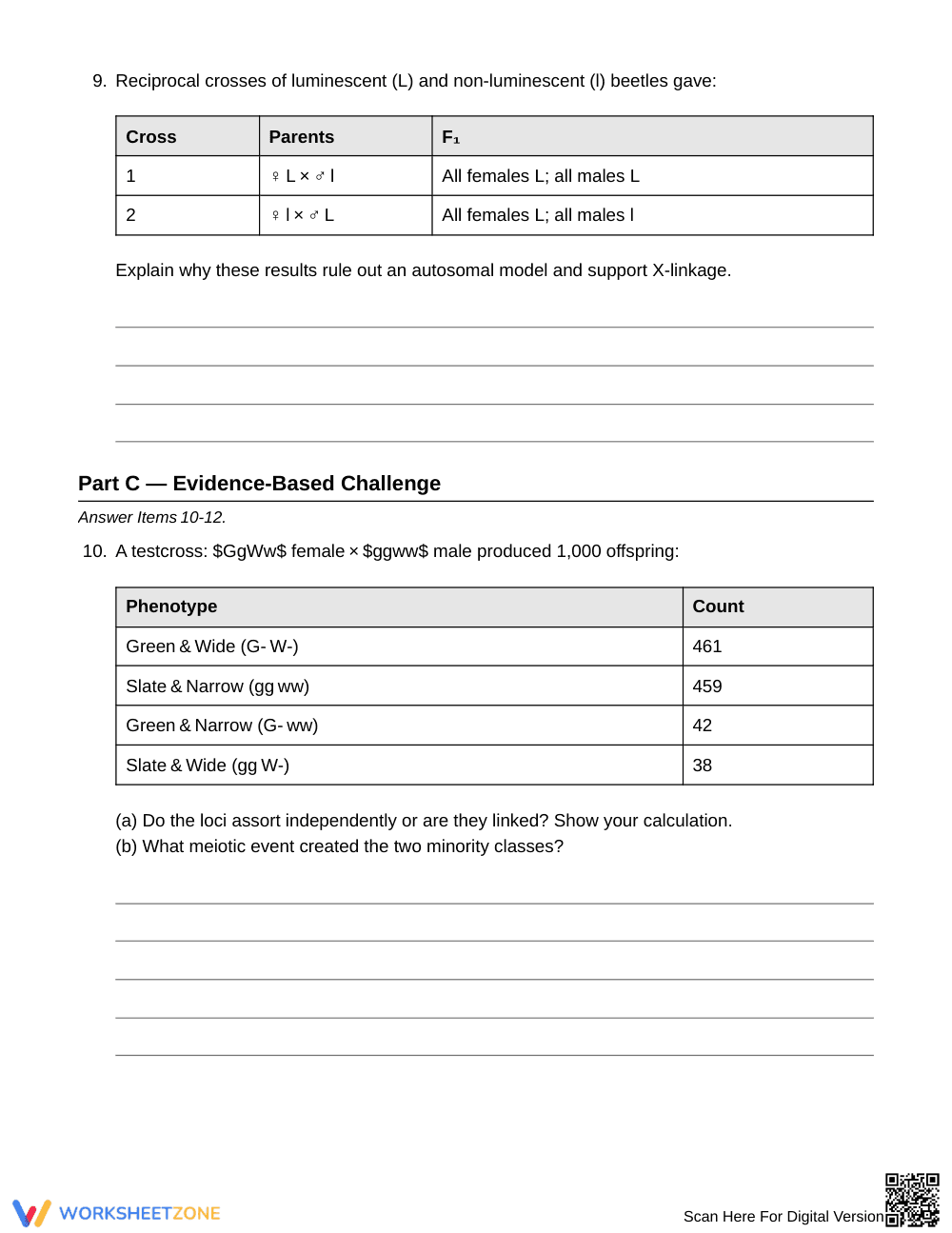
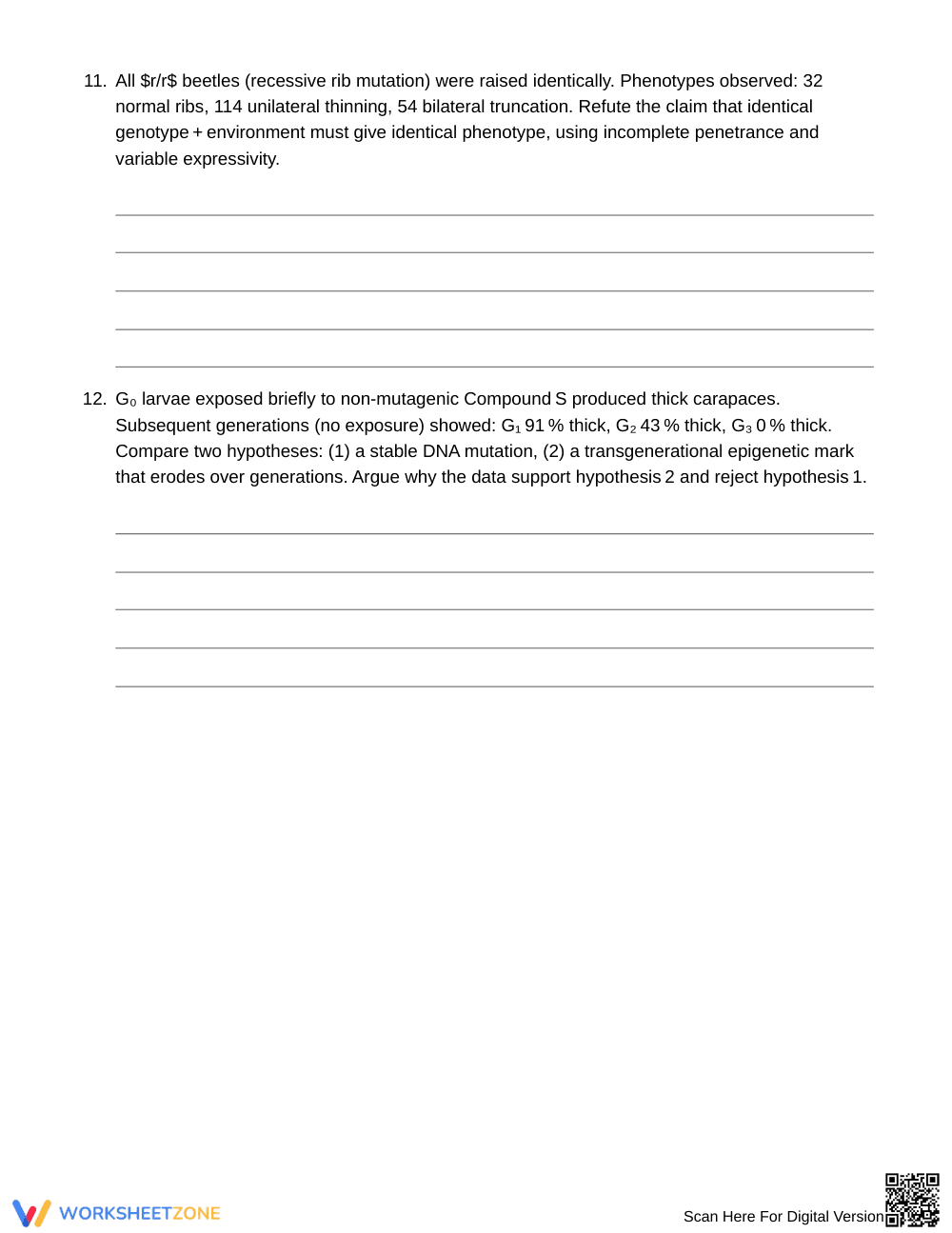
- Independent practice: Items 10‑12 present a test‑cross calculation, a phenotype‑variability argument, and an epigenetics case study; 3 problems.
These stages follow a gradual‑release model (I Do, We Do, You Do) that scaffolds student independence.
Standards Alignment – `` (no specific code provided). The worksheet aligns with typical high‑school genetics standards that expect students to describe allele function, predict inheritance patterns, and evaluate experimental evidence. Both the conceptual and analytical expectations can be copied directly into lesson plans, IEP goals, or district curriculum maps.
How to Use It – Use the Foundation Concepts section as a quick warm‑up before a lecture on Mendelian genetics, then move to Core Application during guided practice. After the lesson, assign the Evidence‑Based Challenge as a formative exit ticket; observe student explanations for misconceptions about dominance and penetrance. Expected completion time is 30–45 minutes.
Who It’s For – Ideal for ninth‑grade biology classes that have completed a unit on genetics. The worksheet’s clear scaffolds support diverse learners, and it pairs well with a visual allele‑frequency anchor chart or a short video on phenotypic plasticity.
Research shows that frequent, targeted concept‑checks improve retention of complex genetics ideas (Fisher & Frey, 2014). This worksheet delivers twelve focused items that require students to apply terminology, interpret quantitative data, and argue scientifically, directly addressing the skill of analyzing gene action. By integrating a real‑world beetle model, the tasks also echo findings from RAND AIRS 2024 that authentic contexts boost engagement in high‑school science. Teachers can confidently assign this resource to reinforce standards‑aligned genetics instruction and to gather quick evidence of student mastery.


