




























Views
Downloads


Essential Heat Transfer Worksheet | Grade 6 Science

Paste this activity's link or code into your existing LMS (Google Classroom, Canvas, Teams, Schoology, Moodle, etc.).
Students can open and work on the activity right away, with no student login required.
You'll still be able to track student progress and results from your teacher account.
This Grade 6 science worksheet builds students' ability to identify, explain, and defend the dominant thermal energy transfer mechanism — conduction, convection, or radiation — across realistic scenarios. Through 8 carefully sequenced tasks, students move from selecting evidence to constructing multi-sentence explanations and evaluating peer claims, strengthening both content knowledge and scientific argumentation skills.
At a Glance
- Grade: 6 · Subject: Science
- Standard: Thermal Energy Transfer — Identify and defend the dominant heat transfer mechanism using evidence
- Skill Focus: Defending conduction, convection, and radiation claims with data
- Format: 5 pages · 8 problems · Answer key included · PDF
- Best For: Practice after direct instruction on heat transfer
- Time: 30–45 minutes
What's Inside
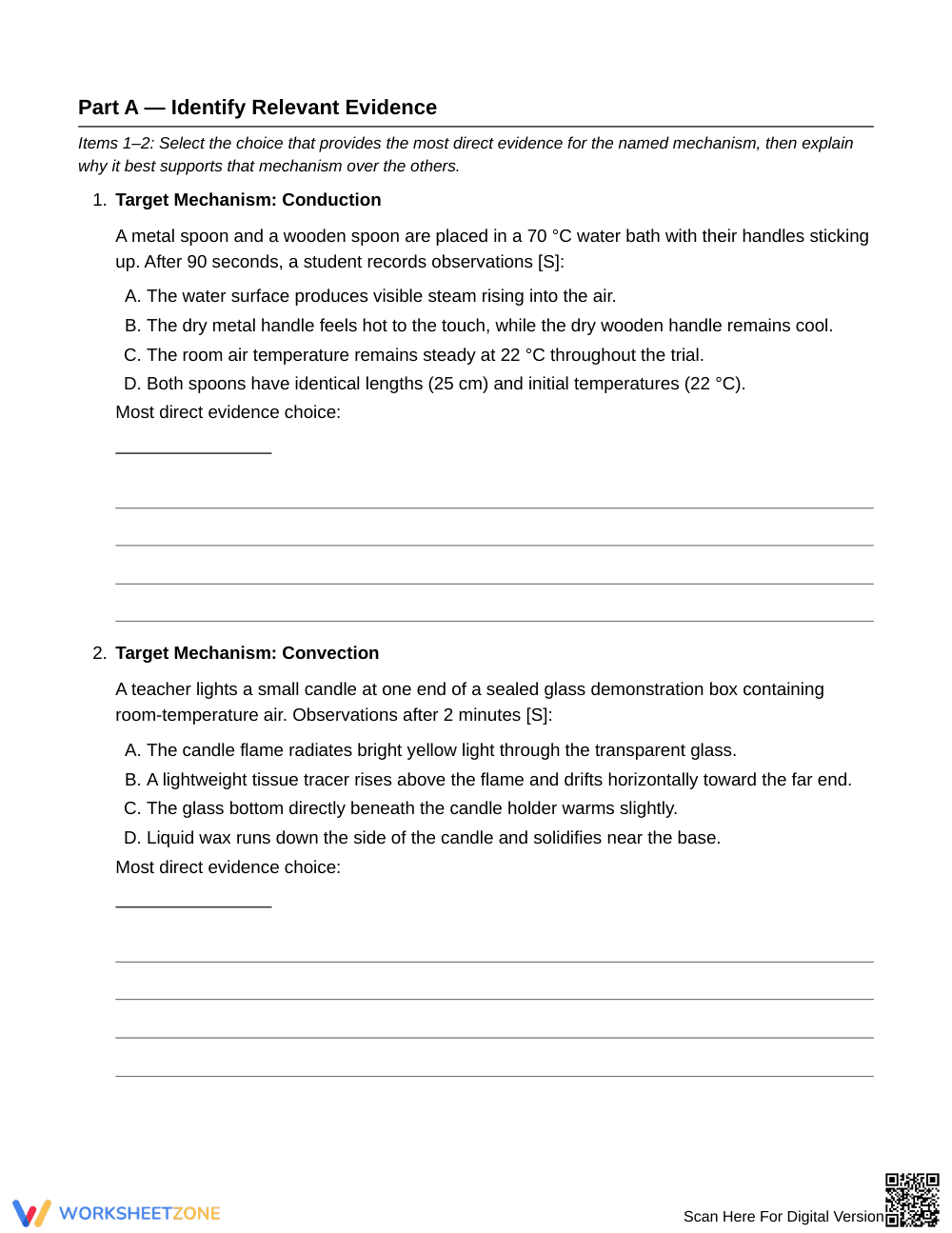
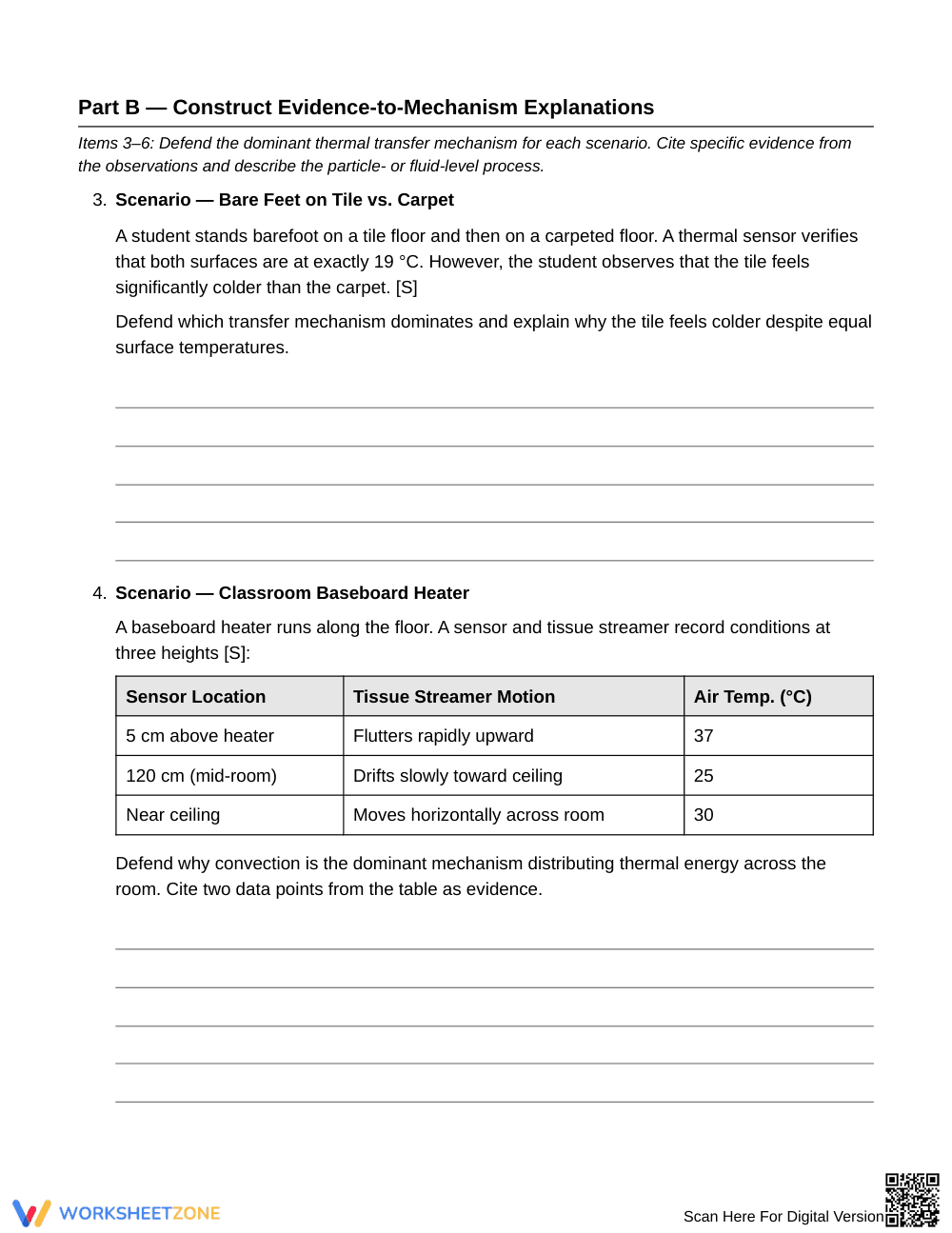
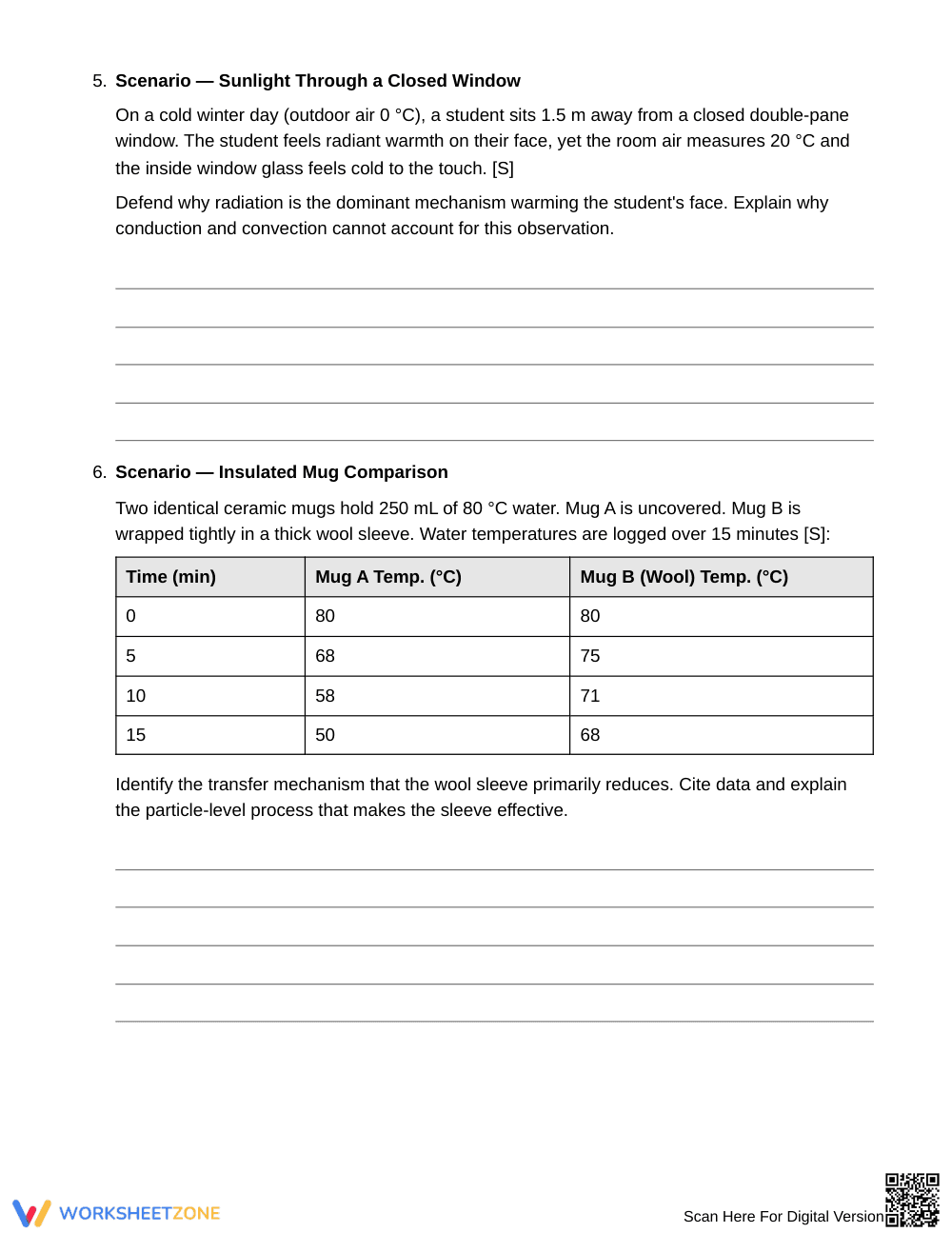
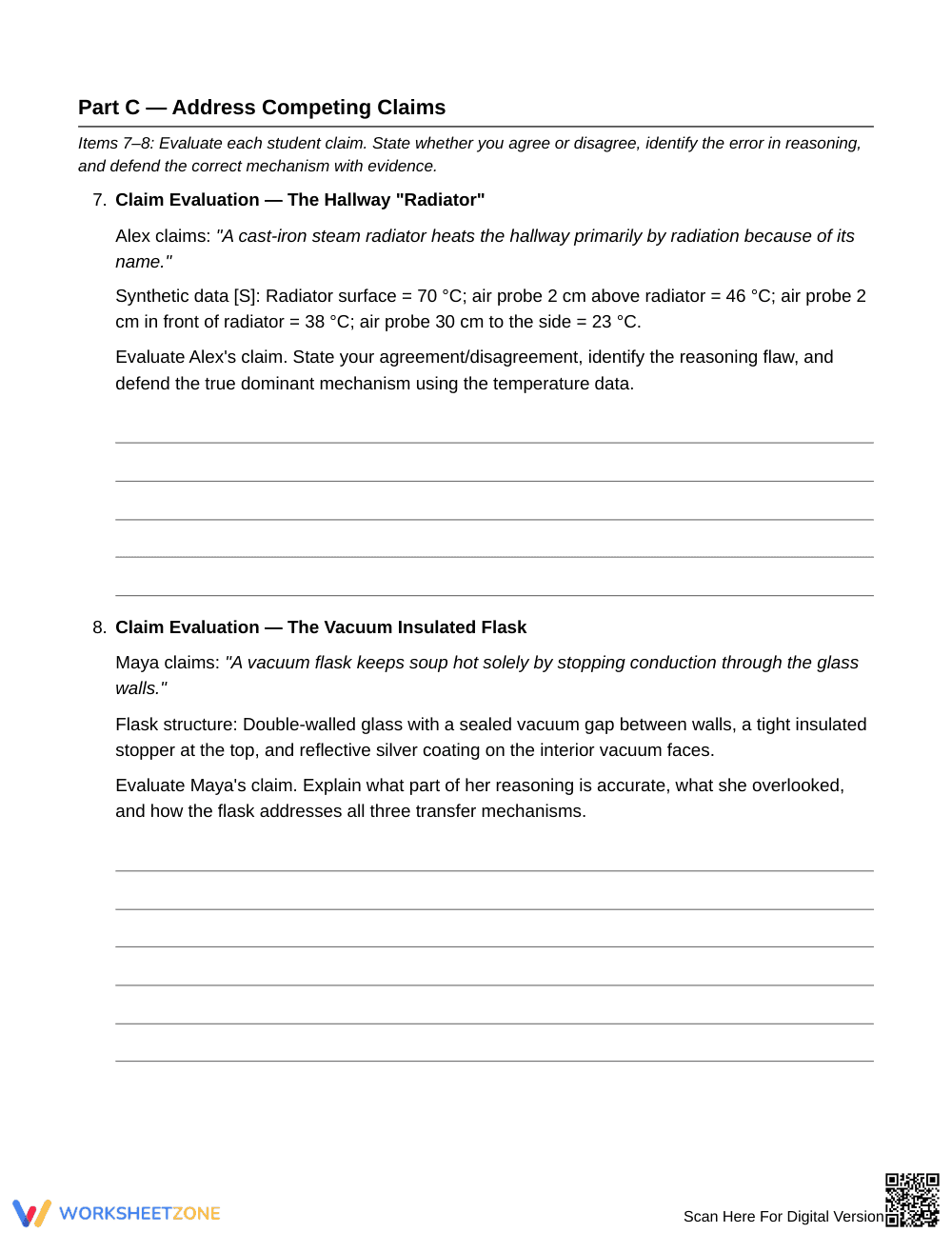
The worksheet spans 5 student-facing pages plus a complete 3-page answer key. It opens with a reference box defining thermal energy, temperature, conduction, convection, and radiation so students can consult key vocabulary as they work. Tasks include multiple-choice evidence selection with justification (Part A, 2 items), extended constructed-response explanations citing scenario data (Part B, 4 items), and claim-evaluation prompts requiring students to critique peer reasoning (Part C, 2 items). Data tables and synthetic sensor readings are embedded directly within the scenarios.
How to Use It
Use this worksheet immediately following direct instruction on heat transfer mechanisms. Students who have observed demonstrations or videos of conduction, convection, and radiation can apply new vocabulary to concrete situations right away. Alternatively, assign it as a formative check during a thermal energy unit review. As students work through Part B, circulate to verify whether they reference particle collisions for conduction or density differences for convection. Expected completion time is 30 to 45 minutes.
Who It's For
Designed for Grade 6 science classrooms, this activity supports general education students, small-group intervention, and enrichment stations. The built-in reference box assists developing readers, while the claim-evaluation tasks challenge advanced learners to identify scientific flaws in peer arguments.
This five-page thermal energy transfer worksheet targets the core Grade 6 skill of defending the dominant heat transfer mechanism — conduction, convection, or radiation — using scenario-based evidence. Across 8 tasks, students progress from guided evidence selection to independent claim evaluation, building the argumentation skills that Fisher & Frey (2014) identify as essential for deep content retention in science classrooms. Each scenario embeds synthetic data tables or sensor readings so students practice the same evidence-citing routines required on state science assessments. The gradual-release design ensures that students who struggle with open-ended writing receive structured support before working independently. A complete answer key is included, making the resource suitable for classroom instruction, homework review, or substitute-teacher plans. Teachers can use student responses on the Part C claim-evaluation items as a formative snapshot of misconceptions about heat transfer, informing next-day instruction and small-group pulls.


