





























Essential Flower Dissection Worksheet | Grades 7-12 Science
Paste this activity's link or code into your existing LMS (Google Classroom, Canvas, Teams, Schoology, Moodle, etc.).
Students can open and work on the activity right away, with no student login required.
You'll still be able to track student progress and results from your teacher account.
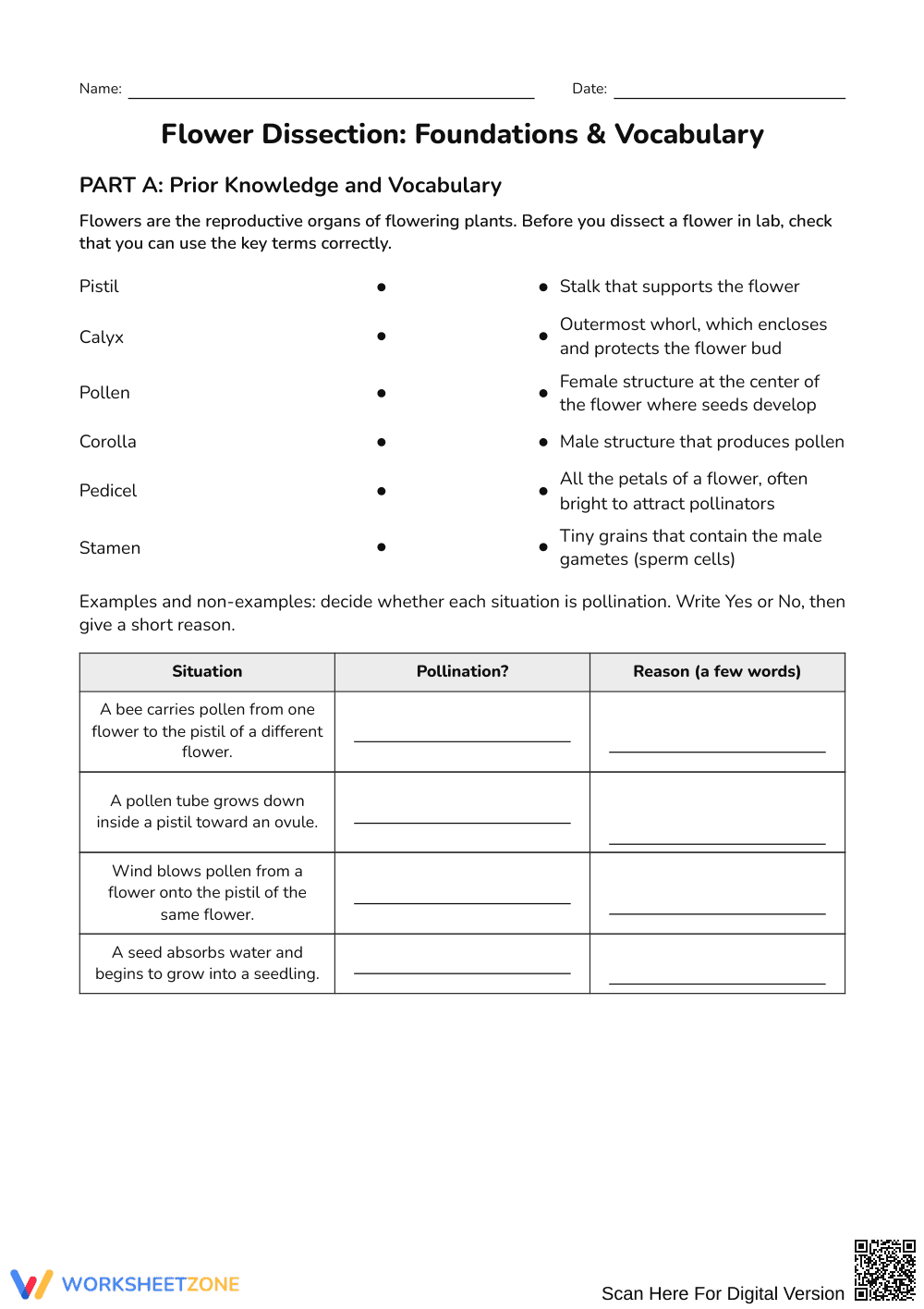
This comprehensive four-page science worksheet equips students in grades 7–12 with the foundational anatomy and vocabulary required for successful flower dissection. Across 38 structured tasks, learners identify reproductive structures, analyze pollination scenarios, and examine biological models to connect floral morphology directly to reproductive function before handling real specimens in the laboratory.
At a Glance
- Grade: Grades 7–12 · Subject: Science
- Standard: Life Science — Identify floral structures and explain their specialized roles in plant reproduction
- Skill Focus: Floral anatomy, reproductive organs, and pollination mechanics
- Format: 4 pages · 38 problems · Answer key included · PDF
- Best For: Pre-lab preparation and botanical review
- Time: 45–60 minutes
What's Inside
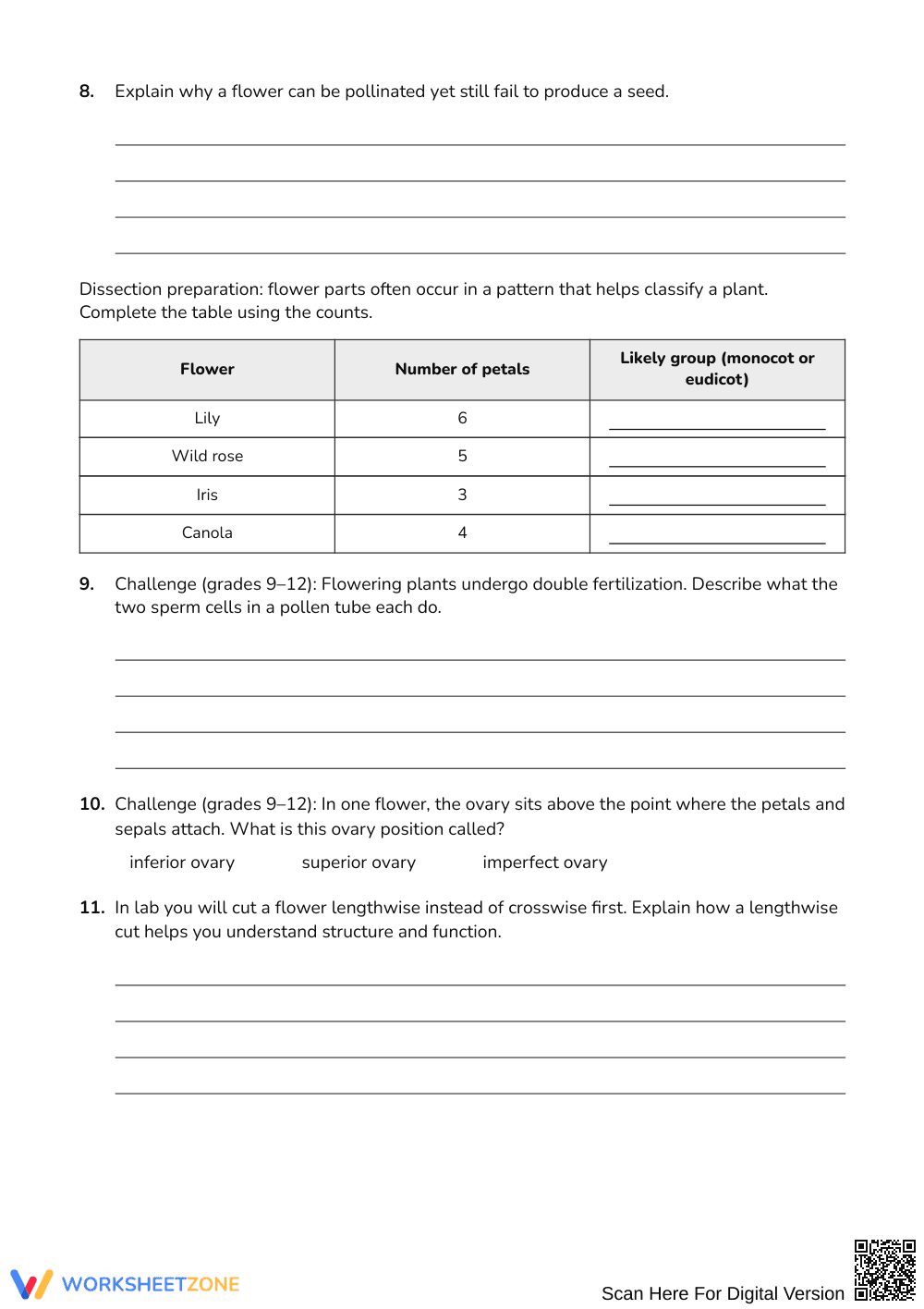
This four-page instructional resource contains 38 varied items organized into three targeted sections. It features botanical vocabulary definitions, an examples/non-examples classification table, longitudinal flower diagram analysis, ordered whorl identification, and misconception-busting scenarios. A complete four-page teacher answer key provides thorough explanations and sample responses for immediate grading and review.
Skill Progression
- Guided practice (Part A): Students examine foundational definitions for reproductive whorls and complete a structured table distinguishing pollination events from non-examples with teacher-supported criteria.
- Supported practice (Part B): Learners label eight numbered anatomical structures on a longitudinal flower model, trace the path of the pollen tube, and explain adaptive petal functions.
- Independent practice (Part C): Students analyze student claims, resolve misconceptions regarding pollination versus fertilization, classify monocot and eudicot specimens, and tackle advanced double-fertilization extension questions.
This sequence mirrors the gradual release of responsibility model, guiding learners from baseline anatomical terminology to high-level biological reasoning.
Standards Alignment
This resource aligns with middle and high school life science standards addressing plant reproduction, biological structure-function relationships, and specialized adaptations for reproductive success. Both standard codes can be copied directly into lesson plans, IEP goals, or district curriculum mapping tools.
How to Use It
Deploy this worksheet as a pre-lab readiness activity before hands-on dissection to ensure students understand anatomical orientations and safety terminology. During direct instruction, assign Part B immediately after demonstrating flower anatomy on a physical model. Formative assessment tip: observe whether students accurately distinguish pollination from fertilization in Part C before allowing scalpel use. Expected completion time is 45–60 minutes.
Who It's For
This practice set serves general science, life science, and high school biology students preparing for botanical dissections. The structured tables and challenge items offer natural differentiation for diverse learners. For best results, pair this worksheet with an illustrated floral anatomy anchor chart or an introductory plant reproduction lecture.
According to research by Fisher & Frey (2014) on the gradual release of responsibility framework, science learners build deeper conceptual understanding when direct structural vocabulary instruction precedes hands-on laboratory investigation. This 4-page science resource prepares middle and high school students in grades 7 through 12 for hands-on flower dissection by systematically establishing key floral anatomy terminology, structure-function relationships, and pollination mechanisms across 38 targeted tasks. Students evaluate definitions, trace the physical path of pollen tubes through the pistil, distinguish pollination from fertilization, and analyze monocot versus eudicot petal patterns. Explicitly clarifying misconceptions before laboratory handling reduces cognitive overload during tactile dissection, allowing students to focus on observational accuracy and biological structures. By moving intentionally from guided terminology recall to independent morphological reasoning, the worksheet provides the foundational scaffolding required for authentic inquiry-based botanical exploration.


