




























Essential Diction Clusters Worksheet | Grade 10 English II
Paste this activity's link or code into your existing LMS (Google Classroom, Canvas, Teams, Schoology, Moodle, etc.).
Students can open and work on the activity right away, with no student login required.
You'll still be able to track student progress and results from your teacher account.
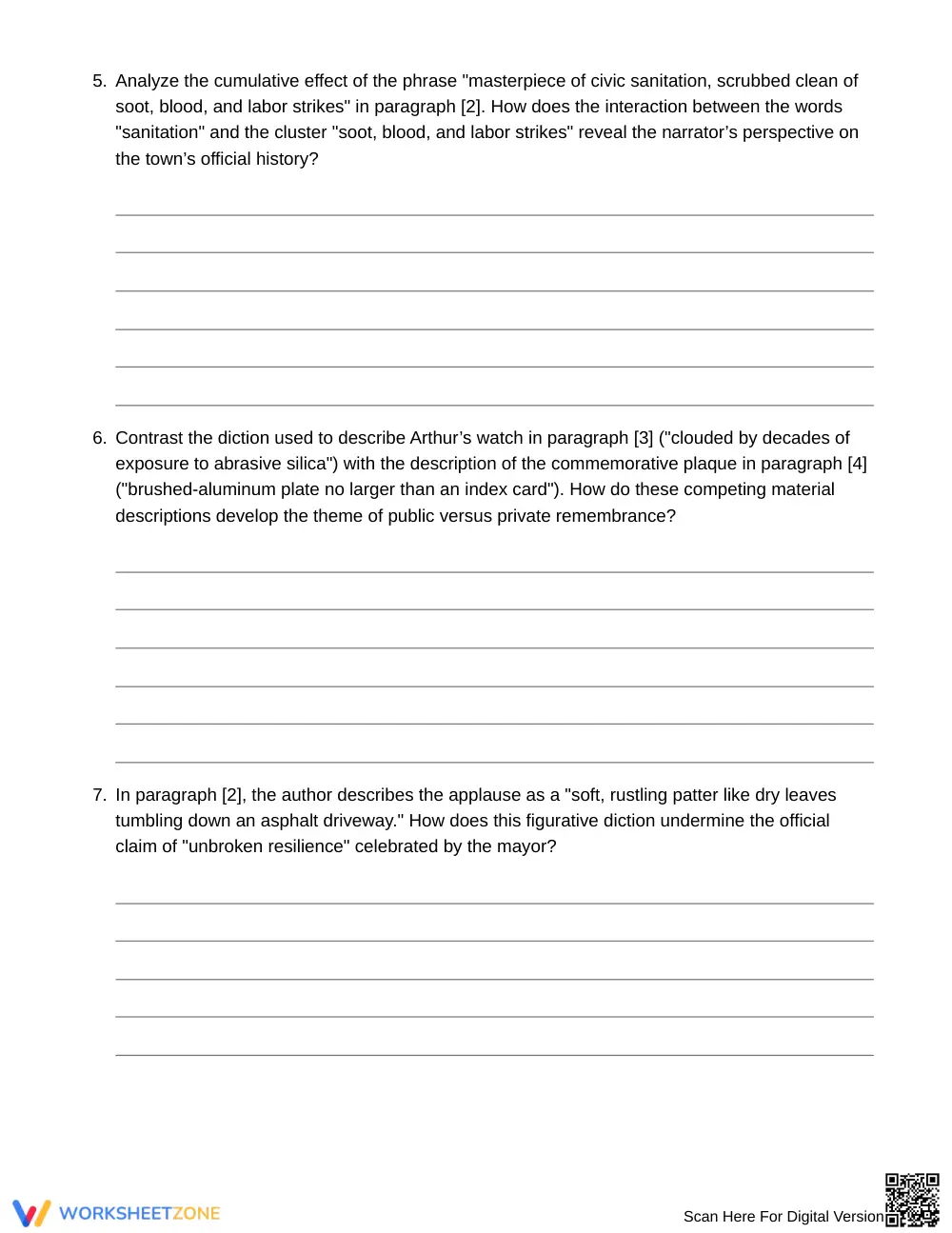
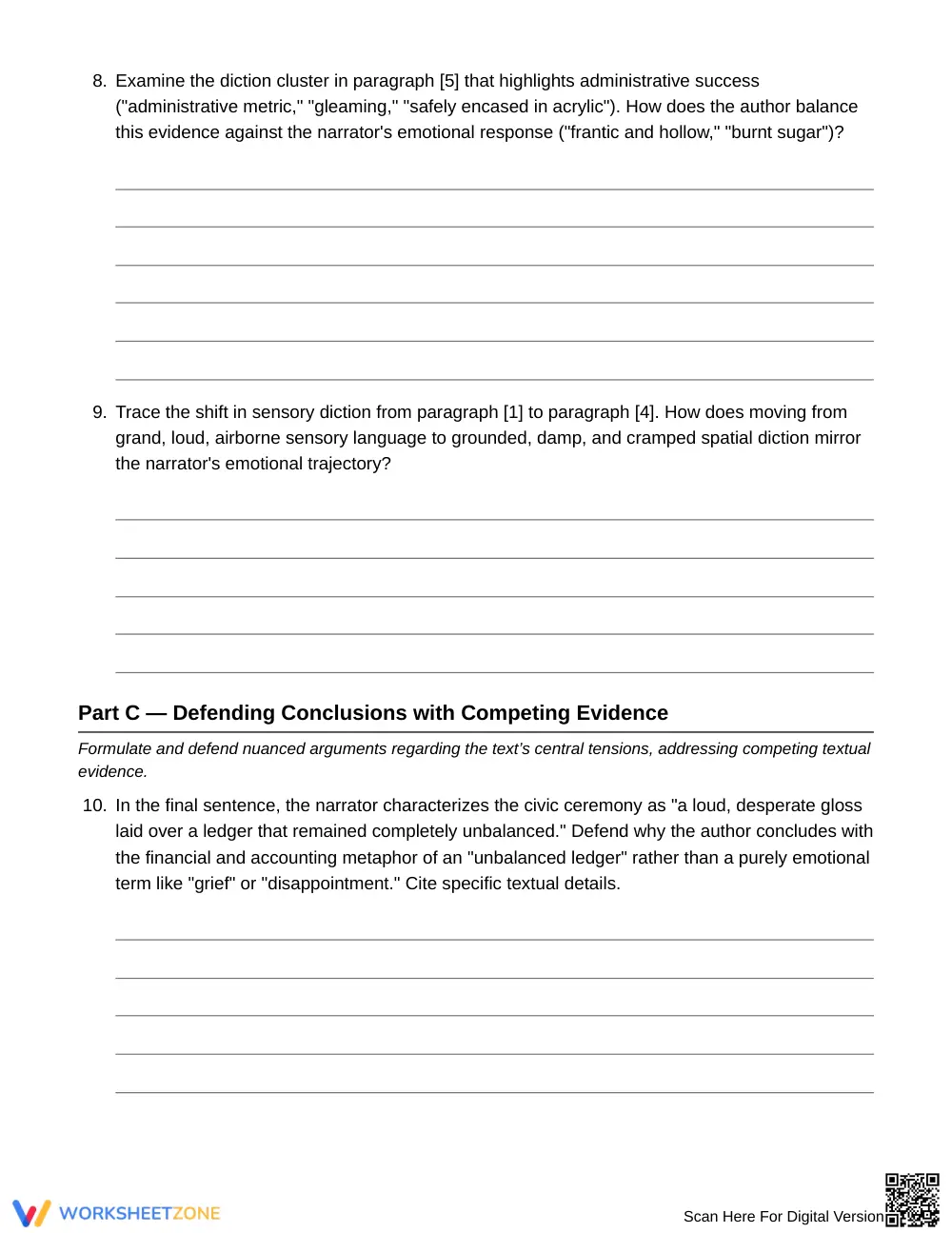
This rigorous Grade 10 English language arts worksheet trains students to analyze diction clusters and evaluate cumulative tone in complex prose. Working through 12 text-dependent tasks paired with an original literary nonfiction passage, students investigate how authors juxtapose competing word groups to convey nuance, develop subtext, and reveal implicit thematic tensions.
At a Glance
- Grade: 10 · Subject: English II
- Standard: Text Analysis — Analyze how complex word choices establish tone, irony, and subtext
- Skill Focus: Analyzing Clusters of Diction
- Format: 6 pages · 12 problems · Answer key included · PDF
- Best For: Close reading and analytical writing practice
- Time: 45–60 minutes
The 6-page printable resource centers on "The Gilded Ledger," a rich multi-paragraph passage exploring civic memory and labor history. Across 12 carefully sequenced questions, students complete multiple-choice identification items and in-depth constructed responses. A thorough 4-page teacher answer key provides exemplary textual analysis, rubric-aligned student response models, and explicit explanations of tonal shifts across paragraphs.
Skill Progression
- Guided Practice (Part A): Students locate specific word clusters in paragraphs 2 through 4, establishing baseline identification skills for artificial refinement and bodily wear.
- Supported Practice (Part B): Six analytical prompts challenge learners to examine interactions between divergent diction groups, tracking shifts from festive rhetoric to somber industrial reality.
- Independent Practice (Part C): Three extended synthesis tasks require students to defend nuanced textual arguments using competing textual evidence and complex figurative metaphors.
This structured progression leverages the gradual release of responsibility model, guiding high school readers from foundational vocabulary recognition to sophisticated, evidence-based rhetorical critique.
Curricular Alignment
This lesson directly targets high school close reading standards focused on authorial craft and vocabulary. Students determine the cumulative impact of specific word choices, analyze how figurative and connotative meanings shape perspective, and evaluate how contrasting language creates irony. This comprehensive alignment supports standards-based lesson plans, departmental common assessments, and district curriculum mapping objectives.
How to Use It
Administer this worksheet during the active practice phase of a tone and diction unit, or deploy it as a formative assessment following direct instruction on connotation and rhetorical strategies. During work time, circulate to observe whether students isolate single words or successfully identify multi-word thematic networks across paragraphs. Expect completion in 45 to 60 minutes.
Target Audience
Designed for Grade 10 English II students, this activity supports on-level and honors readers preparing for advanced rhetorical analysis. Scaffold struggling readers by pre-highlighting diction clusters in Part A, while pushing advanced learners to evaluate authorial subtext in Part C. Pair this lesson with an anchor chart detailing sensory registers and connotative spectrums.
Analyzing clusters of diction enables tenth-grade English II students to decode cumulative tone, authorial perspective, and rhetorical subtext across complex literary texts. According to foundational close reading research synthesized by Fisher & Frey (2014), instructional frameworks that scaffold learners from text-dependent vocabulary identification to rigorous, evidence-based written synthesis significantly deepen critical comprehension. Rather than analyzing vocabulary words in isolation, examining interrelated word groups allows high school readers to trace how authors juxtapose celebratory promotional rhetoric with visceral imagery of labor and physical wear. This 6-page instructional module provides 12 targeted tasks that systematically cultivate these higher-order analytical capabilities. By evaluating competing textual evidence and articulating how structural diction patterns generate dramatic irony, students build the academic reading stamina and argumentative precision demanded by secondary literacy standards.


