




























Views
Downloads

Essential Debatable Claims Worksheet | Grade 8 ELA

Paste this activity's link or code into your existing LMS (Google Classroom, Canvas, Teams, Schoology, Moodle, etc.).
Students can open and work on the activity right away, with no student login required.
You'll still be able to track student progress and results from your teacher account.
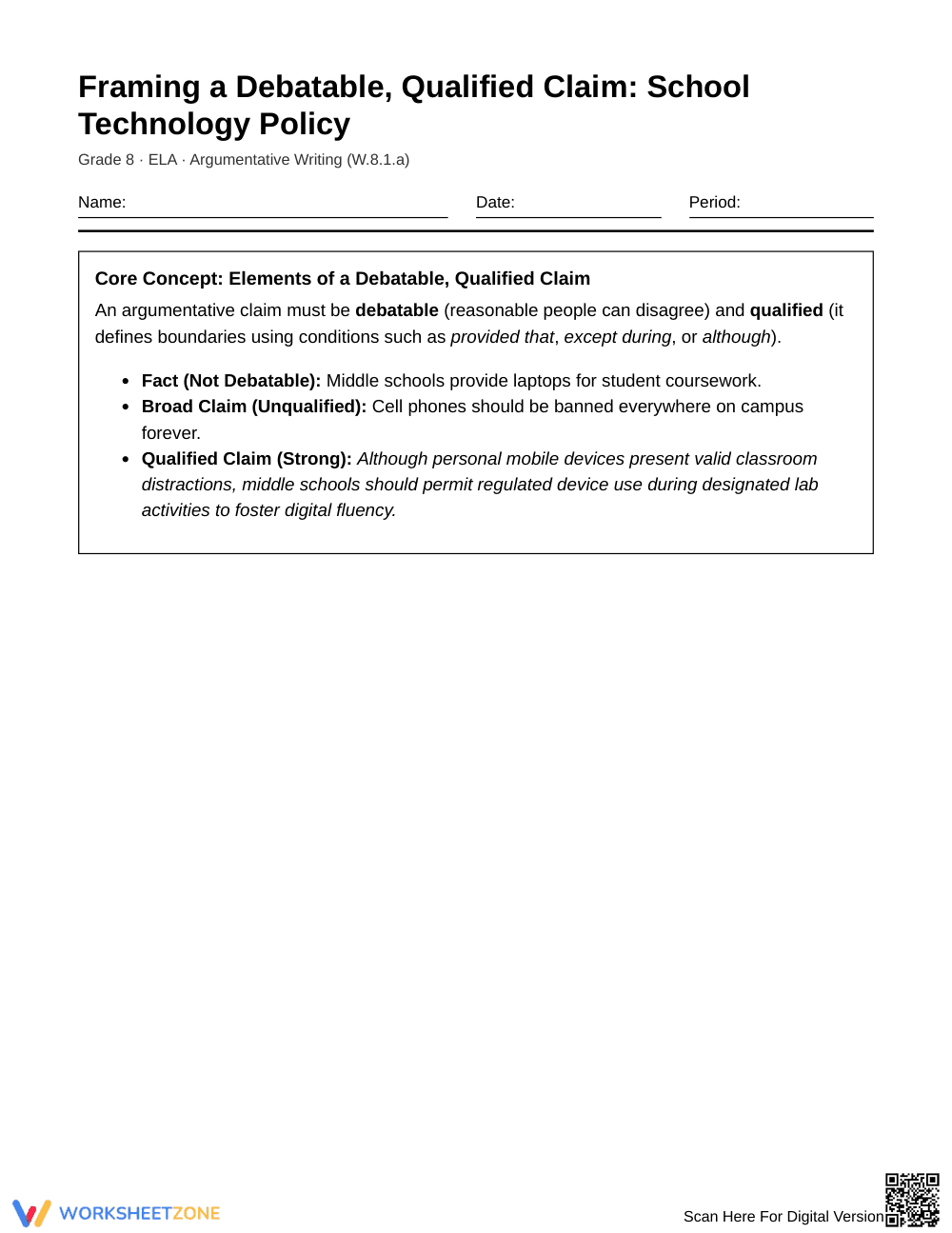
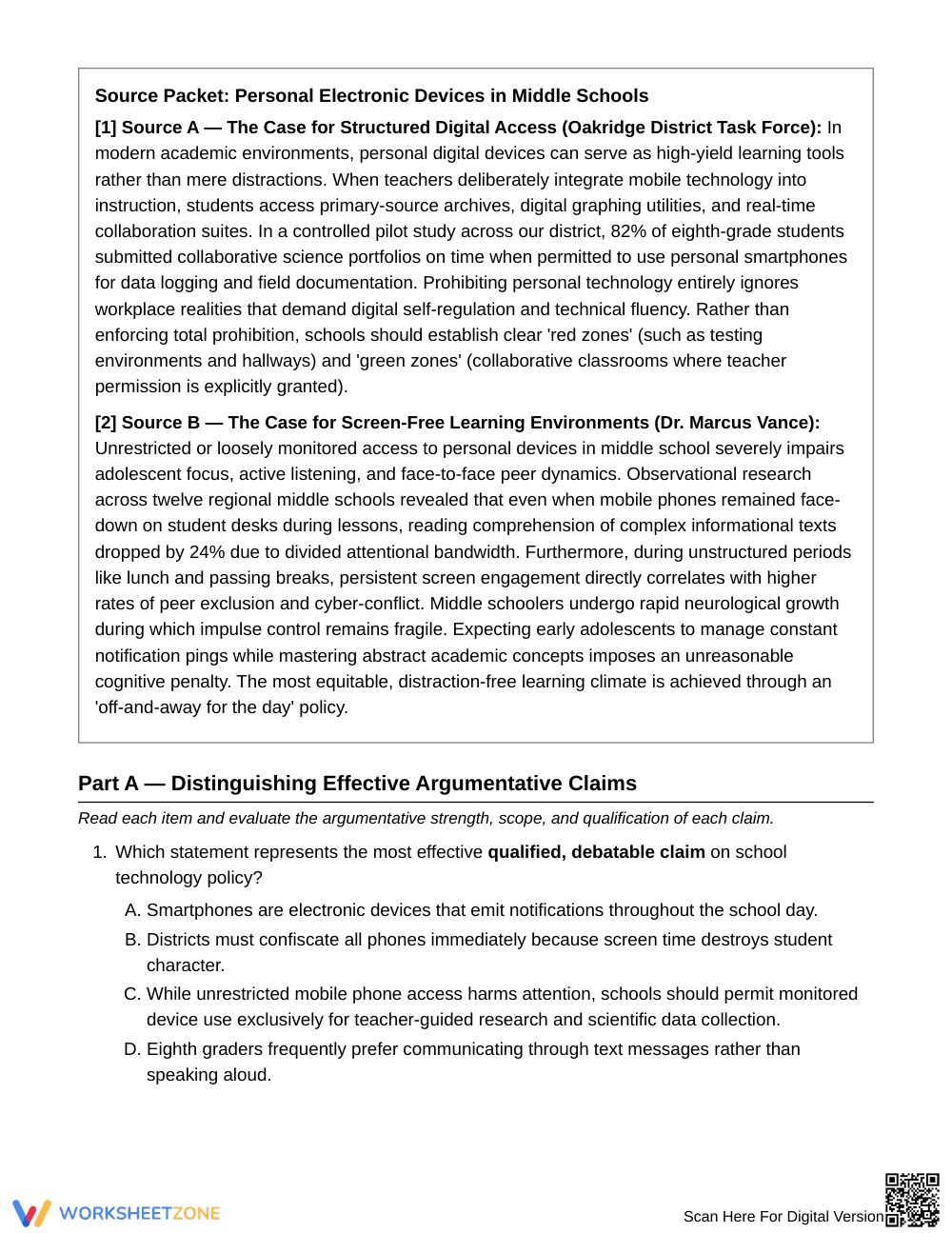
This Grade 8 argumentative writing worksheet teaches students to formulate nuanced, defensible claims using paired informational sources. Students evaluate competing viewpoints on school technology policies, distinguish broad assertions from qualified arguments, and draft evidence-grounded thesis statements. The activity equips middle school writers to address counterclaims and establish clear policy boundaries.
At a Glance
- Grade: 8 · Subject: ELA
- Standard:
W.8.1.a— Introduce precise, qualified claims and distinguish them from alternate viewpoints.- Skill Focus: Frame a Debatable Qualified Claim
- Format: 5 pages · 8 problems · Answer key included · PDF
- Best For: Argumentative unit direct instruction and guided practice
- Time: 45–60 minutes
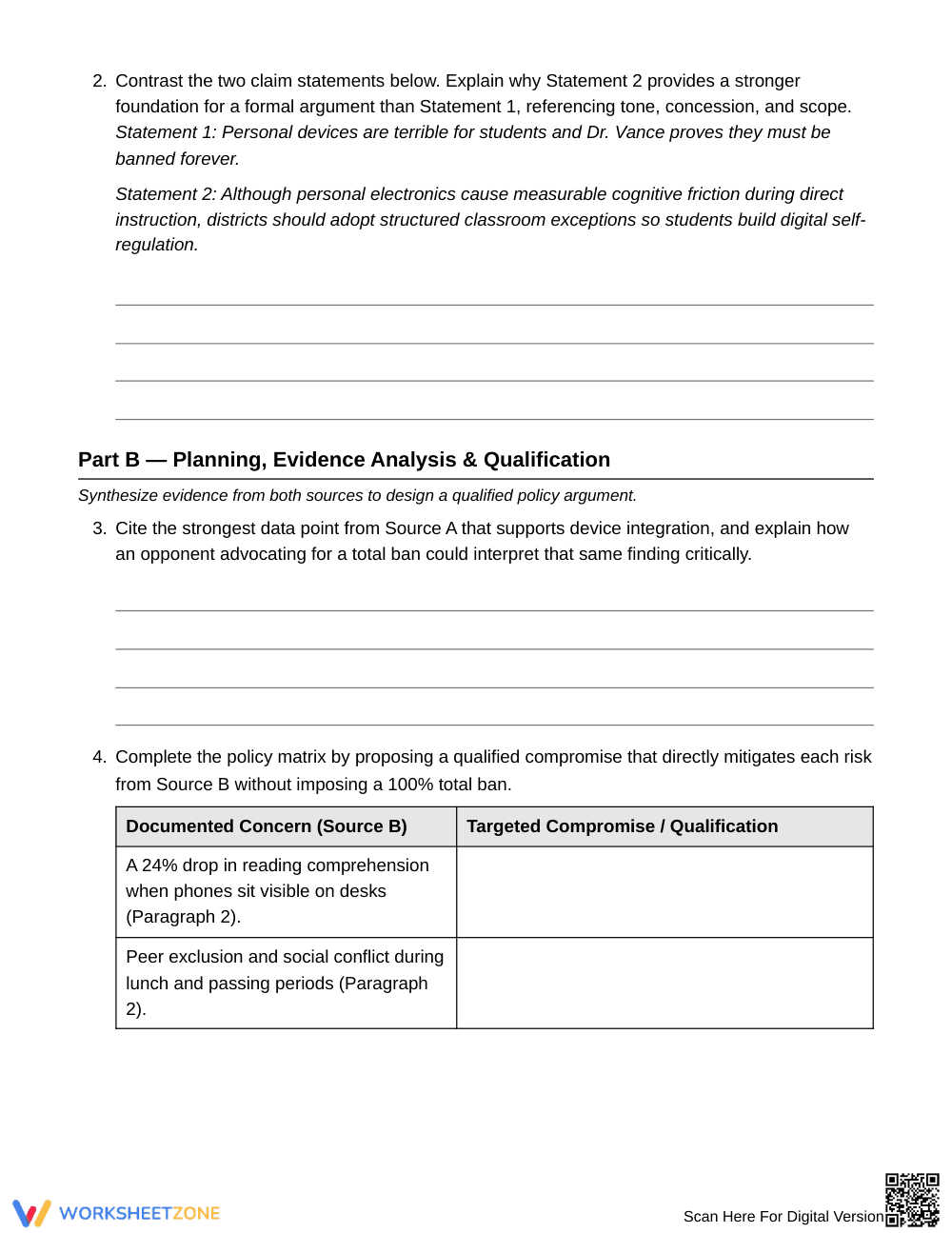
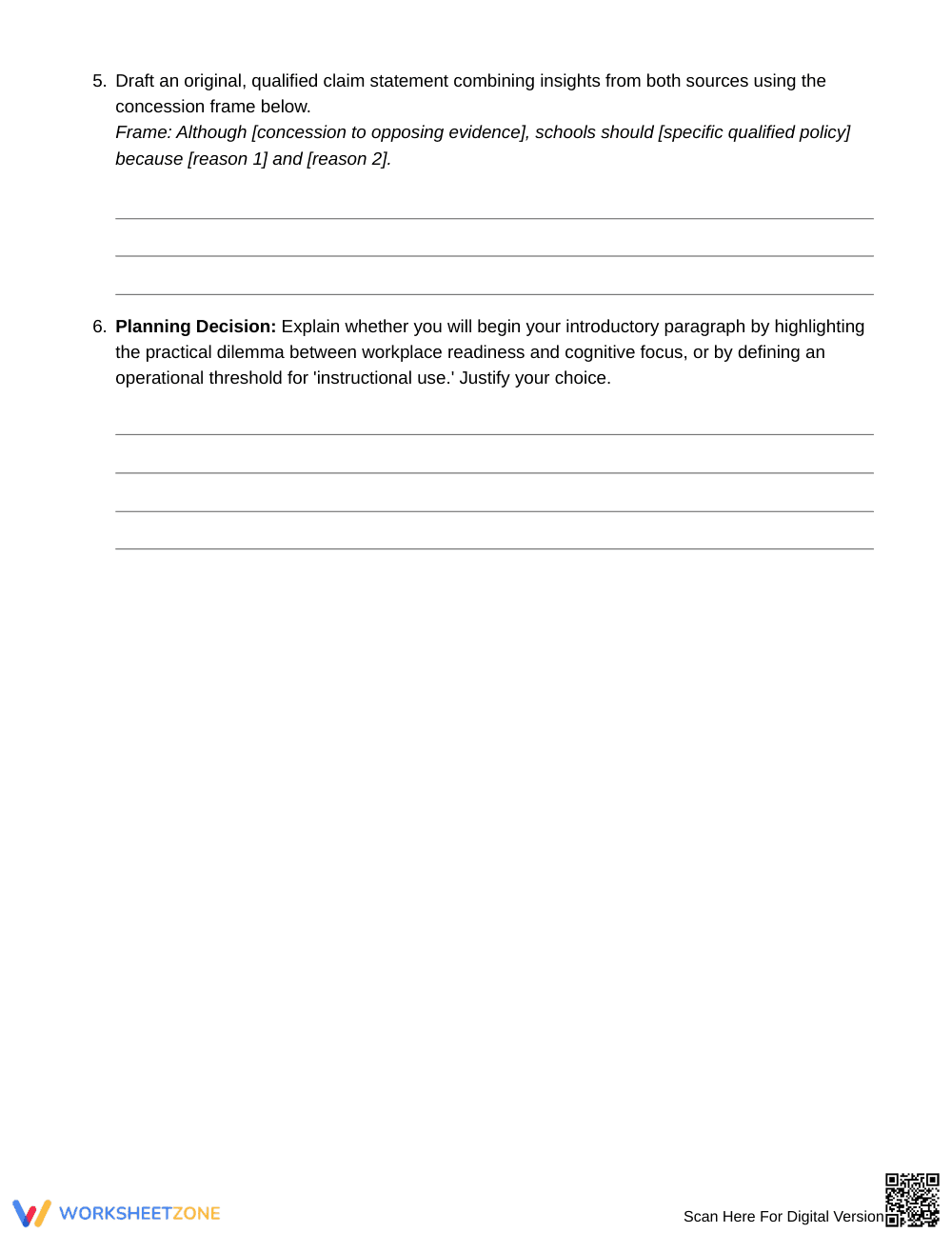
The 5-page worksheet provides two balanced informational texts presenting contrasting views on school mobile device policies, followed by 8 analytical and writing tasks. Students analyze debatable claim criteria, complete a risk-mitigation matrix, apply concession sentence frames, draft an evidence-based response, and reference a complete 3-page answer key.
Skill Progression
- Guided practice (Tasks 1–2): Students evaluate model claims to distinguish factual statements, unqualified assertions, and balanced arguments by analyzing tone and scope.
- Supported practice (Tasks 3–6): Learners synthesize source data points, complete a policy compromise matrix, and draft an original claim using structured concession frames.
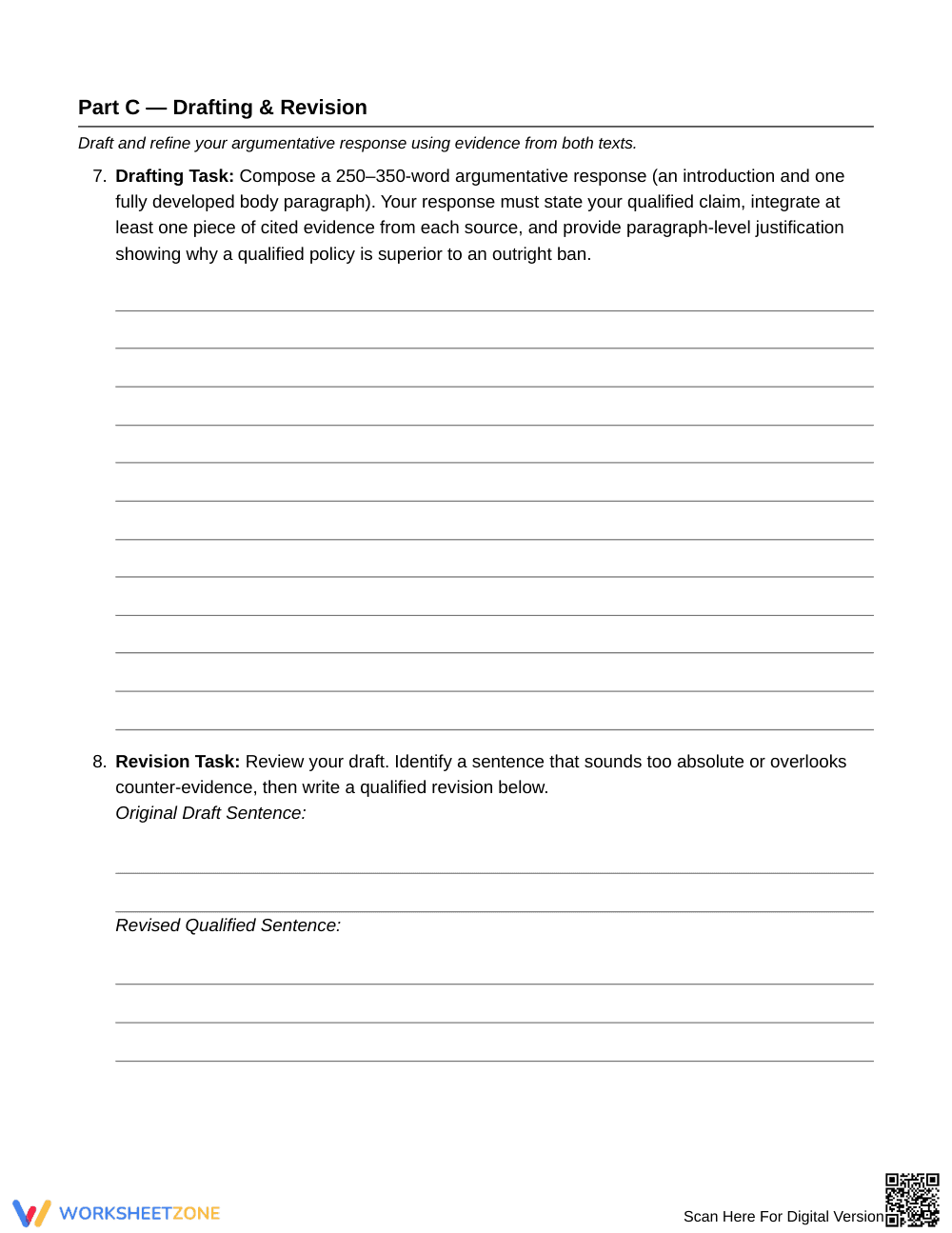
- Independent practice (Tasks 7–8): Students compose a 250–350-word response synthesizing dual texts and execute a targeted revision to eliminate absolute assertions.
This progression uses the gradual release of responsibility model to move learners from claim analysis to independent drafting.
Standards Alignment
This activity aligns directly to primary standard W.8.1.a: Introduce claim(s), acknowledge and distinguish the claim(s) from alternate claims, and organize reasons and evidence logically. It also reinforces W.8.1.b through data integration from dual informational texts. Both standard codes can be copied directly into lesson plans, IEP goals, or district curriculum mapping tools.
How to Use It
Use this worksheet during guided practice in an argumentative writing unit after introducing claim qualifications. As a formative assessment check, inspect the Part B compromise matrix to verify students address opposing evidence before drafting. The full lesson requires approximately 45 to 60 minutes of instructional time.
Who It's For
This resource supports Grade 8 ELA classrooms, advanced Grade 7 writers, and intervention groups needing explicit argumentative thesis scaffolding. Built-in sentence frames assist English learners and developing writers. Pair this printable with an anchor chart outlining concession transitions such as although, whereas, and provided that.
According to research in Fisher & Frey (2014), middle school writers achieve greater structural proficiency when explicit instructional scaffolds transition students systematically from evaluating model texts to independent composition. This 5-page instructional resource operationalizes standard W.8.1.a by guiding Grade 8 students to frame precise, debatable claims that acknowledge opposing evidence. Through 8 structured tasks centered on a dual-source technology policy packet, learners analyze competing viewpoints, synthesize data points, and utilize qualification sentence frames. The scaffolded sequence reinforces the distinction between broad, absolute declarations and defensible, qualified arguments. By requiring students to draft a multi-paragraph response and revise absolute statements into nuanced claims, the worksheet cultivates higher-order argumentative writing skills. Teachers can integrate this standards-aligned material directly into persuasive writing units to support rigorous academic discourse and evidence-based synthesis.


