































Essential Cause-and-Effect Worksheet | Grade 8‑12 Science

Paste this activity's link or code into your existing LMS (Google Classroom, Canvas, Teams, Schoology, Moodle, etc.).
Students can open and work on the activity right away, with no student login required.
You'll still be able to track student progress and results from your teacher account.
Opening
This worksheet guides students through 28 cause‑and‑effect genetics problems, helping them predict how a single genetic or environmental change will alter a visible trait. By the end, learners can articulate the link between genotype, phenotype, and external factors.
At a Glance
- Grade: 8‑12 · Subject: Science
- Standard: Predict how a change in a gene or condition affects an organism’s observable trait
- Skill Focus: Guided cause‑and‑effect reasoning
- Format: 4 pages · 28 problems · Answer key included · PDF
- Best For: Reinforcing heredity concepts after direct instruction
- Time: 5–7 minutes per part
What’s Inside
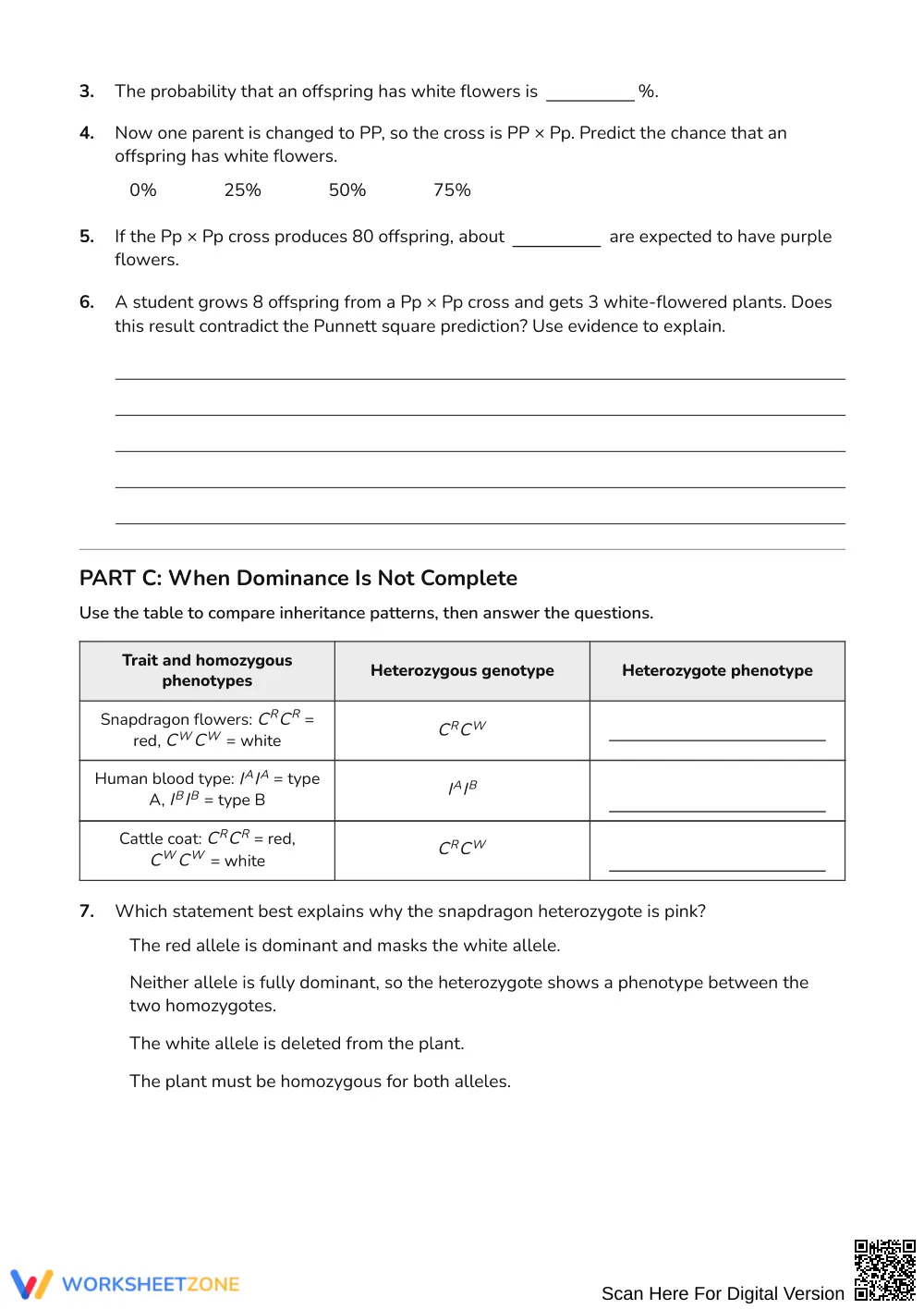
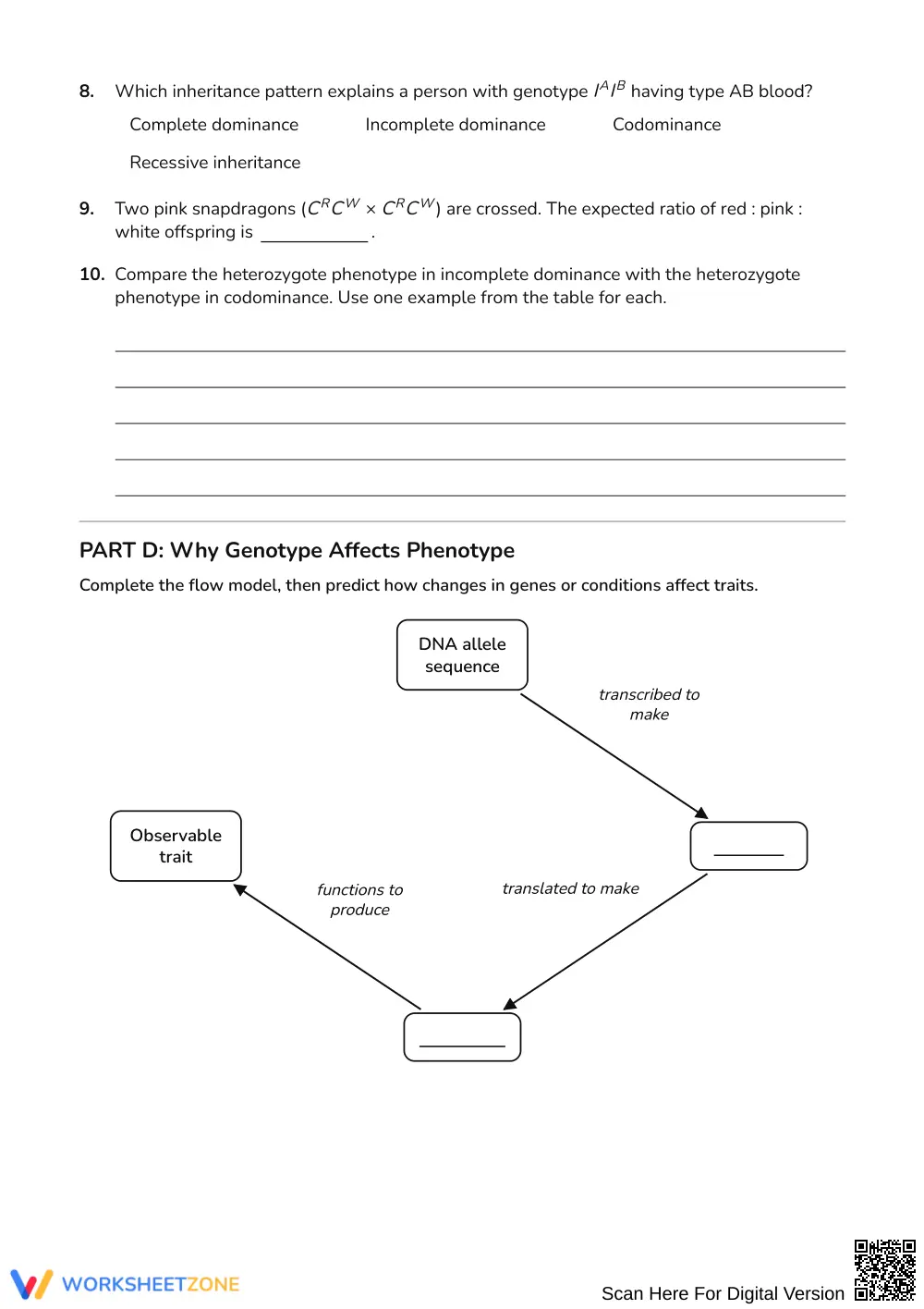
The packet contains four double‑sided pages: a model‑based table, a Punnett‑square section, an incomplete‑dominance comparison, and a flow‑model activity. Each part includes a brief worked example, sentence frames, and a word bank. The answer key mirrors the layout for quick grading.
Skill Progression
- Guided practice (8 tasks): Students complete a model table with teacher‑provided explanations and a sentence frame for each prediction.
- Supported practice (10 tasks): Students fill in Punnett squares and choose from multiple‑choice options, using a word bank for key terminology.
- Independent practice (10 tasks): Students answer open‑ended questions on incomplete dominance, codominance, and environmental effects without scaffolds.
This sequence follows the classic gradual release of responsibility model.
Standards Alignment
The activities align with secondary life science standards on heredity, variation, and the influence of environment on phenotype. Both the genetics concepts and the cause‑and‑effect reasoning are core components of standard high‑school biology curricula.
How to Use It
Before a lab: Hand out Part A as a warm‑up (5 minutes) to activate prior knowledge of dominant and recessive alleles. Observe student predictions to inform the upcoming hands‑on cross experiment.
During review: Use Part C as a formative check after a lesson on incomplete dominance. Collect responses, note any misconceptions, and provide immediate feedback.
Who It’s For
Designed for grade 8‑12 students studying genetics, the worksheet supports diverse learners with built‑in sentence frames and an accessible word bank. It pairs well with a visual allele‑frequency anchor chart or a short video on genotype‑phenotype relationships.
Educational research demonstrates that structured cause-and-effect questioning significantly strengthens conceptual transfer and critical thinking across secondary life science curricula (Fisher & Frey, 2014). When secondary biology learners actively predict how single genetic alterations modify observable phenotypic outcomes, they develop durable mental models of molecular and organismal interactions. This systematic approach mirrors the foundational inquiry frameworks advocated by leading science educators, moving students beyond rote memorization of genetic terms toward genuine analytical reasoning. By pairing sentence frames with targeted problem sets, educators create an accessible entry point for struggling readers while reinforcing core mechanistic relationships for advanced students. Integrating these twenty-eight focused problems into regular classroom practice provides educators with reliable diagnostic data regarding student comprehension of heredity concepts. Ultimately, this research-backed printable resource offers teachers an effective, structured pathway for reinforcing fundamental genetic mechanisms through independent practice, peer discussion, or formative evaluation.


