




























Views
Downloads


Essential Body Systems Word Search | Grades 7–8 Science

Paste this activity's link or code into your existing LMS (Google Classroom, Canvas, Teams, Schoology, Moodle, etc.).
Students can open and work on the activity right away, with no student login required.
You'll still be able to track student progress and results from your teacher account.
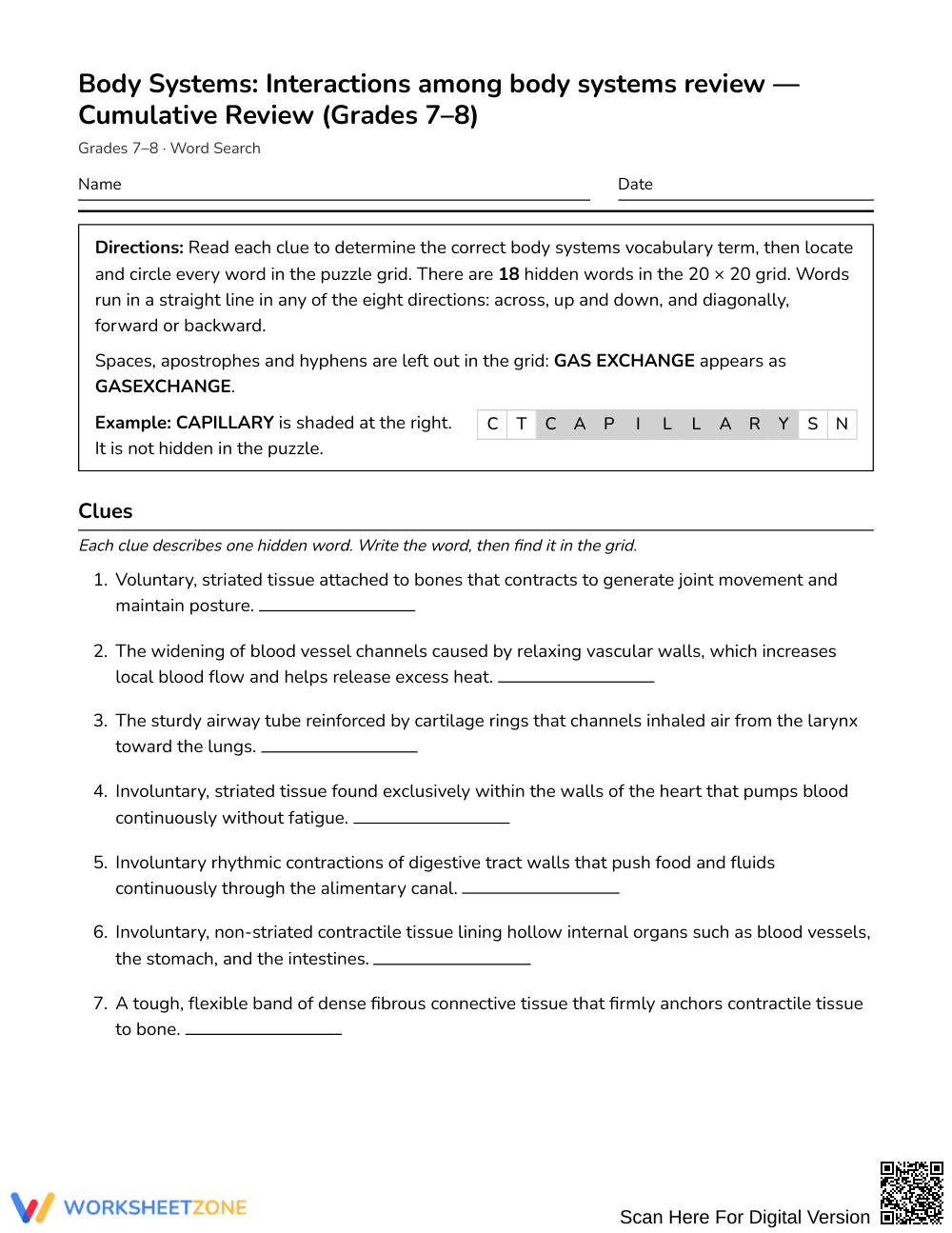
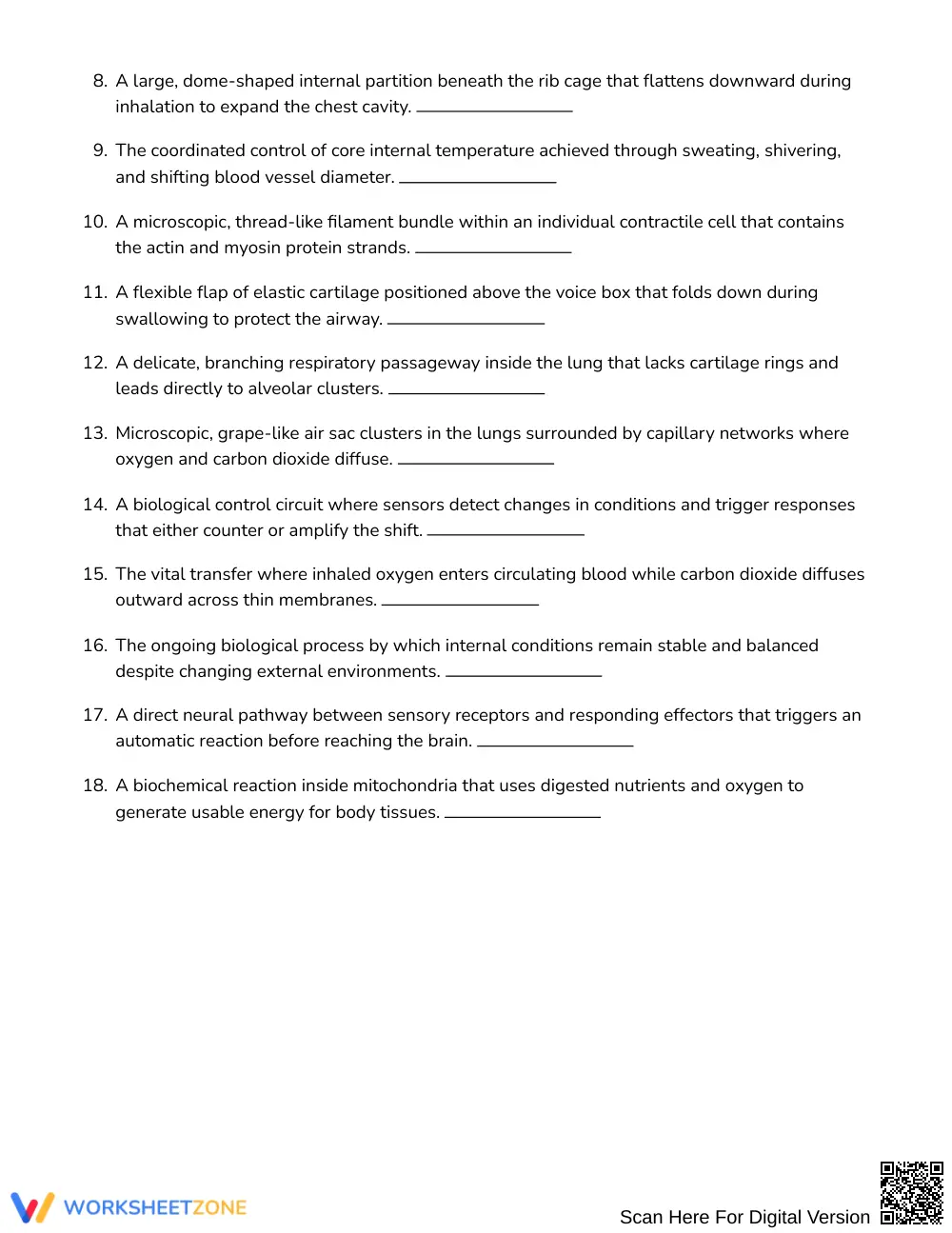
This body systems review word search reinforces life science terminology for Grades 7–8. Students identify key terms connecting circulatory, respiratory, muscular, and digestive processes across 18 vocabulary clues. By linking definitions to target terms, learners strengthen scientific literacy and consolidate knowledge of organ system interactions.
At a Glance
- Grade: Grades 7–8 middle school · Subject: Science (Life Science)
- Standard: Not standards-assessed — vocabulary enrichment
- Skill Focus: Review of interactions among human body systems
- Format: 3 pages · 18 words · Complete 4-page answer key · Printable PDF
- Best For: End-of-unit review, vocabulary reinforcement, or substitute plans
- Time: 25–35 minutes of focused student work
What's Inside
This 3-page science resource features 18 vocabulary clues paired with a shuffled word bank. Students decode clues defining terms such as peristalsis, vasodilation, alveoli, and homeostasis before locating them in the puzzle. A comprehensive 4-page answer key provides word locations and clear grid solutions for rapid verification.
Puzzle Structure
The activity features a 20 x 20 letter grid containing 18 hidden vocabulary terms. Words run in all eight compass directions: north, northeast, east, southeast, south, southwest, west, and northwest, including diagonal and backward placements. Rather than copying a simple list, students read descriptive clues to identify concepts from a shuffled word bank before searching.
Standards Alignment
This resource serves as vocabulary enrichment and conceptual review rather than formal standards assessment. It is not aligned to a specific standard. The puzzle supports general life science curricula by consolidating key domain-specific terminology across organ systems, reinforcing foundational scientific language necessary for subsequent biology coursework.
How to Use It
Implement this word search after direct instruction as an end-of-unit review or during laboratory station rotations. Circulate while students work to observe whether they solve clues from memory or consult notes, providing quick formative insight into vocabulary retention. Expected completion time is 25 to 35 minutes.
Who It's For
This review is designed for Grades 7–8 life science students. For differentiated support, offer an organ system diagram or glossary for challenging terms like vasodilation. Advanced students can explain how two discovered terms interact in paragraph form. Pair this activity with an organ systems reading passage or review lecture.
Vocabulary acquisition forms the bedrock of conceptual comprehension in middle school life science, particularly when students study complex interactions among body systems. As demonstrated by Fisher & Frey (2014), intentional exposure to domain-specific terminology through contextual clues and active retrieval practice strengthens long-term semantic retention and reading comprehension across scientific disciplines. This 3-page word search provides Grades 7–8 learners with targeted review of body system interactions across 18 essential terms, including cellular respiration, negative feedback loops, and thermoregulation. Although not standards-assessed, the activity pairs precise biological definitions with puzzle mechanics, requiring students to process conceptual meanings before identifying hidden terms across an eight-directional 20 x 20 grid. Incorporating clue-based retrieval tasks supports cognitive schema construction, ensuring students retain critical anatomical vocabulary necessary for advanced secondary life science coursework, laboratory investigations, and collaborative scientific discourse.


