

































Essential Author Choices Worksheet | Grade 11 English III

Paste this activity's link or code into your existing LMS (Google Classroom, Canvas, Teams, Schoology, Moodle, etc.).
Students can open and work on the activity right away, with no student login required.
You'll still be able to track student progress and results from your teacher account.
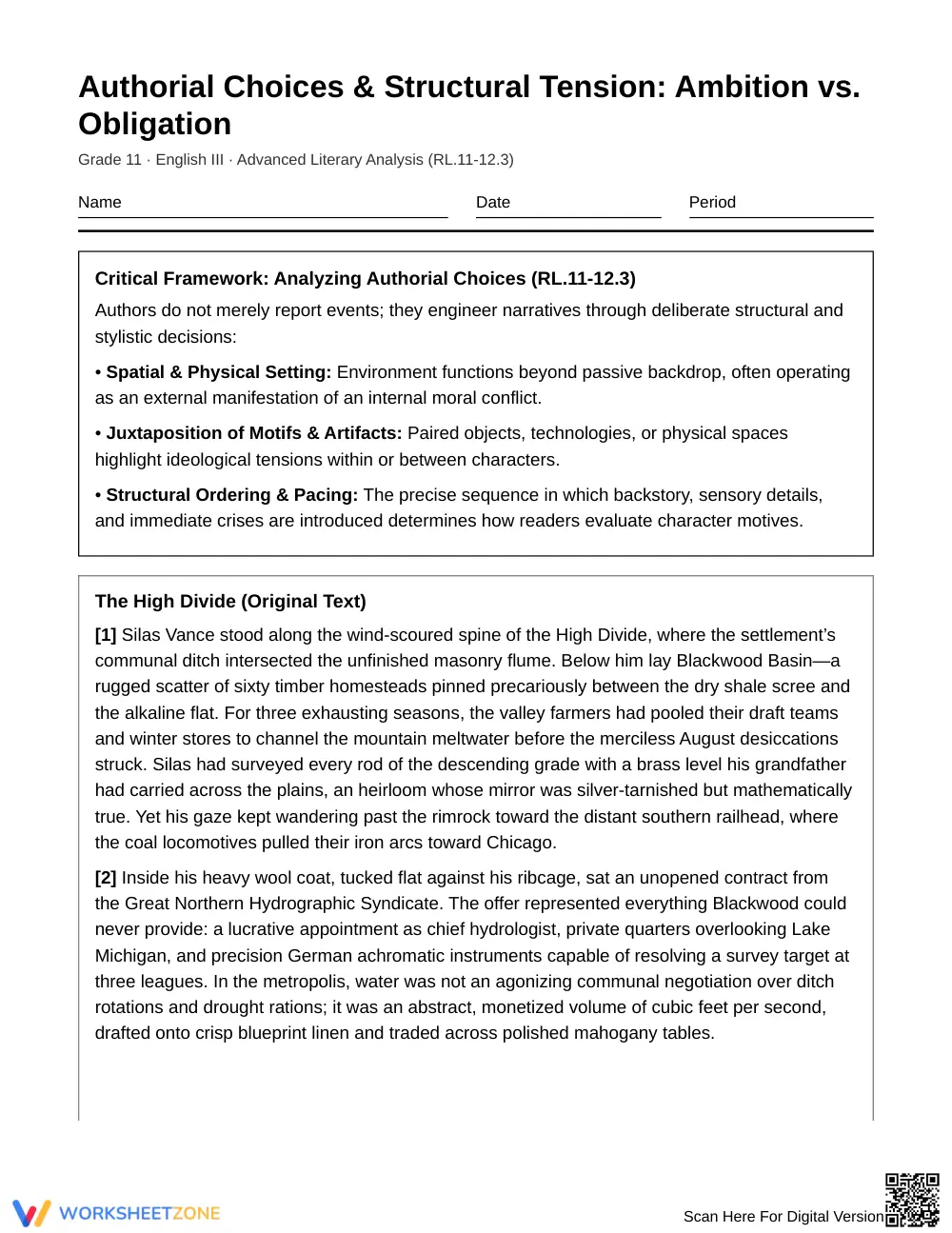
This advanced literary analysis worksheet guides Grade 11 students to construct interpretive claims about intentional craft decisions. Learners evaluate how setting, pacing, and symbolic juxtaposition generate narrative tension. By moving beyond plot recall, students develop the analytical skills required to defend text-based arguments regarding authorial technique.
At a Glance
- Grade: 11 · Subject: English III
- Standard:
RL.11-12.3— Analyze how author choices shape story elements and structural tension- Skill Focus: Interpretive Claims and Deliberate Author Choices
- Format: 6 pages · 10 problems · Answer key included · PDF
- Best For: Close reading and analytical writing
- Time: 45–60 minutes
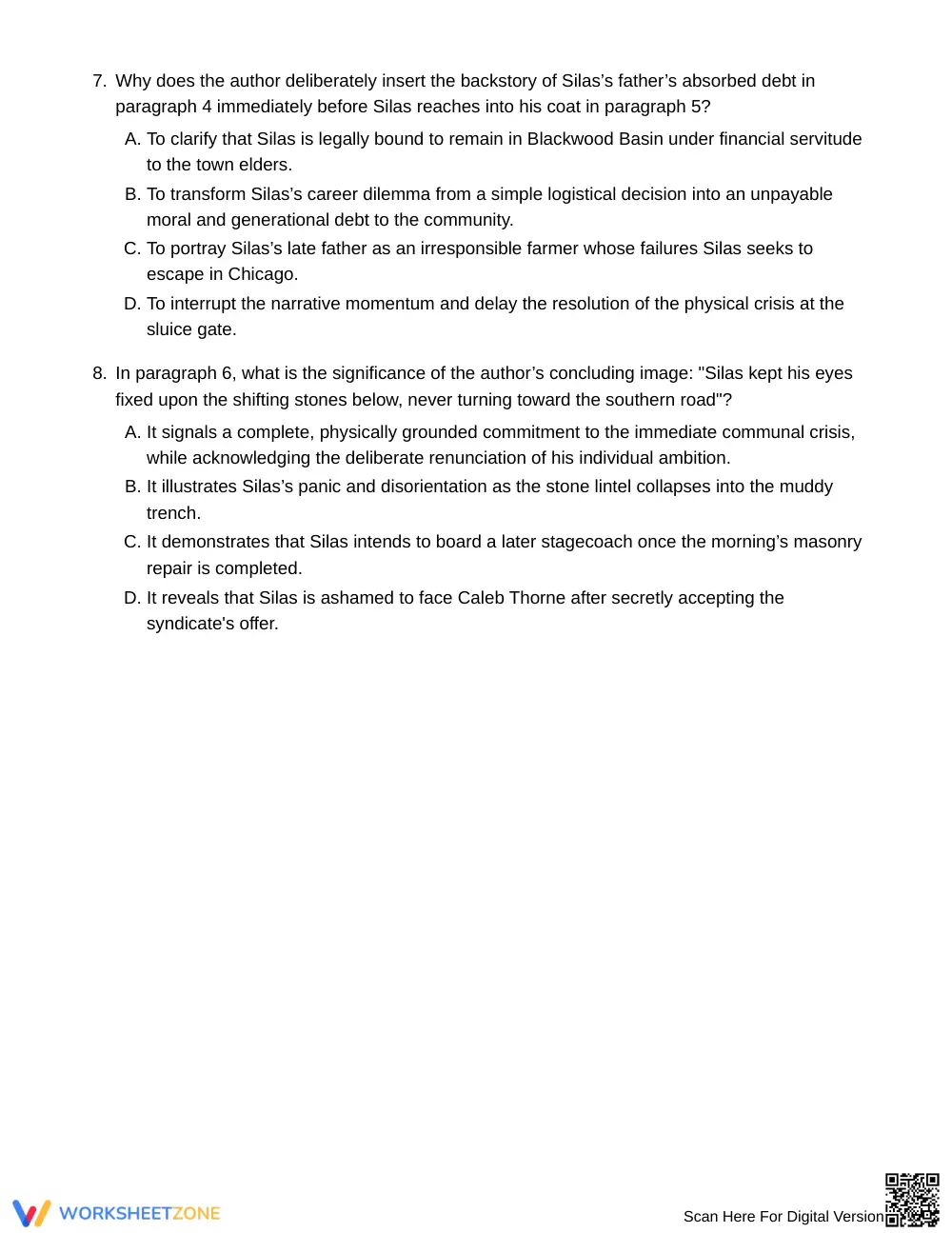
Students read a craft framework defining setting, juxtaposed motifs, and pacing before reading "The High Divide," a 6-paragraph narrative detailing a surveyor's dilemma. Across 6 pages, the resource provides 10 targeted tasks, including conceptual multiple-choice items, text-based craft questions, and rigorous constructed-response prompts. A complete 3-page answer key provides exemplar responses.
Skill Progression
- Guided practice (Tasks 1–3): Students differentiate craft analysis from plot summary and identify how symbolic juxtaposition and pacing function.
- Supported practice (Tasks 4–8): Learners analyze text evidence, evaluating how optical instruments, dialogue, and backstory placement create character tension.
- Independent practice (Tasks 9–10): Students write extended analyses evaluating vertical spatial setting and narrative ambiguity with direct textual evidence.
This gradual-release sequence guides students from identifying isolated craft techniques to independently evaluating sustained authorial decisions.
Standards Alignment
This resource aligns to RL.11-12.3: Analyze the impact of the author's choices regarding how to develop and relate story elements. It also supports W.11-12.1 through evidence-based written claims. Both standard codes can be copied directly into lesson plans, IEP goals, or district curriculum mapping tools.
How to Use It
Use this worksheet following direct instruction on narrative structure. Complete Part A together to reinforce the distinction between plot summary and craft analysis, then have students finish Parts B and C independently. Formative assessment tip: check Task 1 first; students choosing plot summaries need immediate reteaching on identifying craft. Expected completion time is 45 to 60 minutes.
Who It's For
Designed for Grade 11 English III and AP Literature students mastering complex textual criticism. The introductory framework supports developing writers prior to extended prose tasks. Pair this printable with a direct instruction lesson on structural tension or characterization.
According to Fisher & Frey (2014), analytical reading proficiency develops when instructional materials deliberately shift students from literal comprehension toward evaluating authorial craft and text structure. This Grade 11 worksheet directly operationalizes Common Core standard RL.11-12.3 by requiring learners to construct defensible interpretive claims about deliberate author choices rather than summarizing storyline events. Research indicates that scaffolded progressions—moving from identifying structural techniques like motif juxtaposition and chronological pacing to defending analytical interpretations with textual citations—produce significant gains in adolescent close-reading mastery. By providing explicit criteria alongside a complex, complete narrative passage, this resource equips eleventh-grade students to dissect how spatial setting and narrative pacing shape overarching thematic tensions. Consequently, educators receive reliable diagnostic insight into how effectively high school students transfer critical analysis principles to independent, evidence-based written argumentation across upper-level literary coursework.


