





























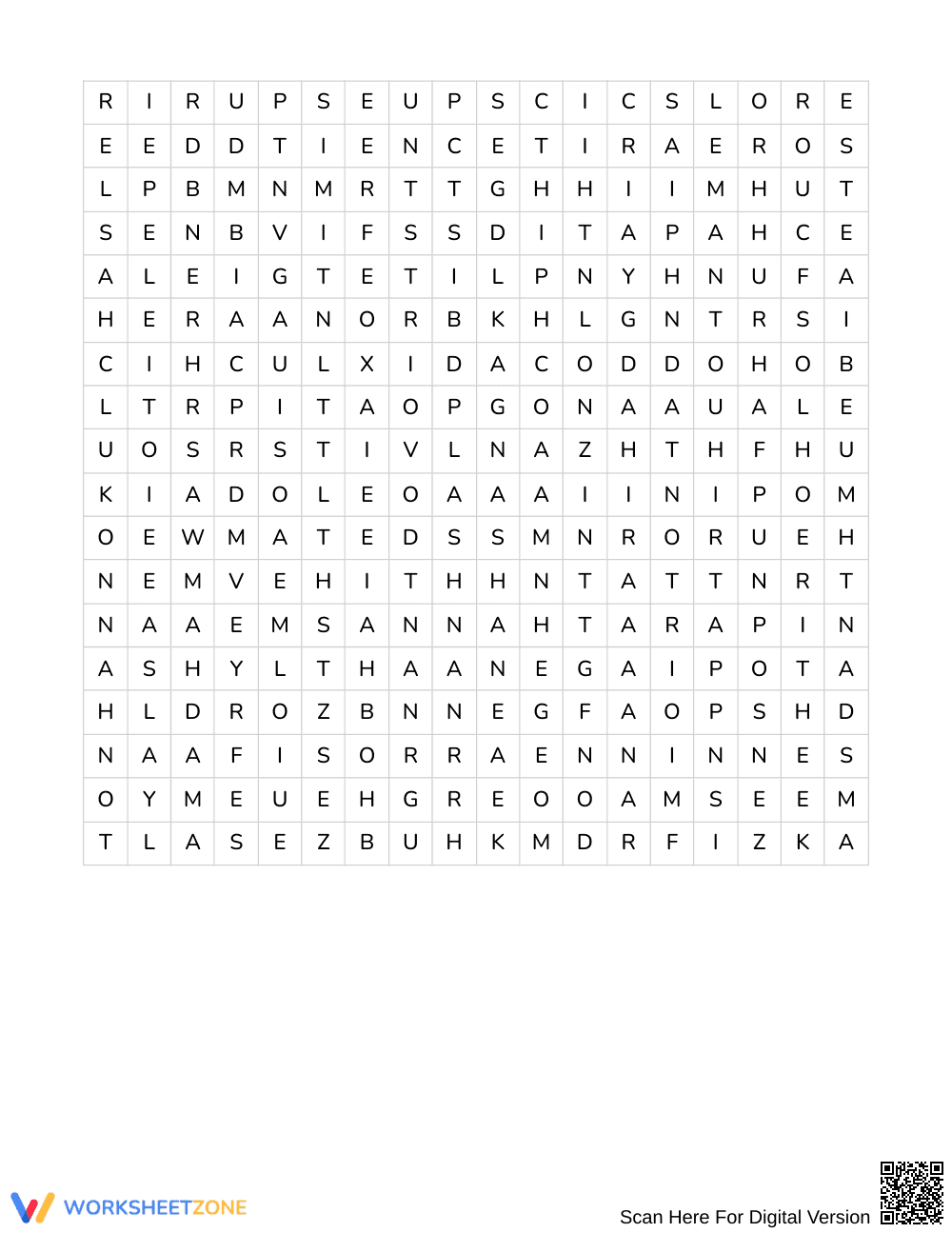


Essential Asian Breads Word Search | Grades 6–7 ELA

Paste this activity's link or code into your existing LMS (Google Classroom, Canvas, Teams, Schoology, Moodle, etc.).
Students can open and work on the activity right away, with no student login required.
You'll still be able to track student progress and results from your teacher account.
This Grades 6–7 vocabulary enrichment word search introduces middle school students to 16 traditional breads from across Asian culinary cultures. Working from contextual definitions rather than a standard word list, students build cultural literacy and domain-specific terminology as they identify authentic culinary staples from South, East, Central, and West Asian traditions.
At a Glance
- Grade: Grades 6–7 · Subject: English Language Arts (ELA)
- Standard: Not standards-assessed — vocabulary enrichment
- Skill Focus: Breads from Asian traditions
- Format: 3 pages · 16 words · Answer key included · PDF
- Best For: Cultural vocabulary enrichment and culinary studies
- Time: 20–30 minutes
What's Inside: This 3-page printable activity challenges students to analyze 16 detailed informational clues describing distinctive regional breads such as naan, baozi, lavash, and sangak. Because the activity omits an explicit word bank, learners must read each descriptive clue, deduce the correct bread name, and locate the term within the letter field. A complete 3-page solution key shows exact word placements for quick verification.
Puzzle Mechanics
The activity centers on a dense 18 × 18 letter grid engineered to provide an engaging cognitive challenge for upper elementary and intermediate readers:
- Grid Dimensions: An 18 × 18 matrix provides 324 letters, ensuring target vocabulary terms are thoroughly embedded among plausible letter combinations.
- Word Placements: Hidden words run in all eight possible directions: North, Northeast, East, Southeast, South, Southwest, West, and Northwest.
- No-Bank Clue System: Instead of searching from an alphabetical list, students read culinary descriptions detailing preparation methods, grain types, and regional roots to identify the target vocabulary before scanning the grid.
Standards Alignment
This activity serves as cross-curricular vocabulary enrichment and is not aligned to a specific state or national content standard. It supports domain-specific informational reading and cultural geography awareness across middle school English Language Arts, social studies, and world cultures curricula.
How to Use It
Deploy this puzzle as an engaging introductory hook before reading regional world literature, or assign it as an independent enrichment activity during a cross-curricular unit on world geography and food traditions. While students work, circulate to observe whether they deduce terms directly from regional clues or require scaffolded reference to culinary encyclopedias. Typical completion time spans 20 to 30 minutes.
Who It's For
This resource is designed for Grades 6–7 students expanding their cultural and academic vocabulary. It provides accessible enrichment for fast finishers, serves as a high-interest cooperative learning task, and pairs naturally with informational passages exploring regional food traditions or agricultural history.
Vocabulary acquisition research highlighted by Fisher & Frey (2014) underscores that introducing academic and domain-specific terms within meaningful cultural contexts significantly enhances long-term lexical retention. Rather than memorizing isolated definitions, middle school learners benefit when tasked with active retrieval, connecting culinary descriptions to authentic terminology across diverse geographic regions. This vocabulary enrichment word search engages students in intentional text analysis by replacing passive word-search matching with active clue-based problem solving. Students must interpret details about leavening methods, regional cooking tools like tandoor ovens, and agricultural staples before locating 16 terms within an 18 by 18 letter matrix. By integrating informational reading with systematic visual search across eight directional orientations, the exercise reinforces orthographic awareness, cultural literacy, and reading comprehension in an accessible, low-stakes classroom format suitable for whole-group or independent study.


