


























1 / 2
0
Views
0
Downloads

0.0
0
Save
0 Likes
Share
Energy Pyramid Practice Worksheet
0 Views
0 Downloads
Paste this activity's link or code into your existing LMS (Google Classroom, Canvas, Teams, Schoology, Moodle, etc.).
Students can open and work on the activity right away, with no student login required.
You'll still be able to track student progress and results from your teacher account.
Information
Description
What It Is:
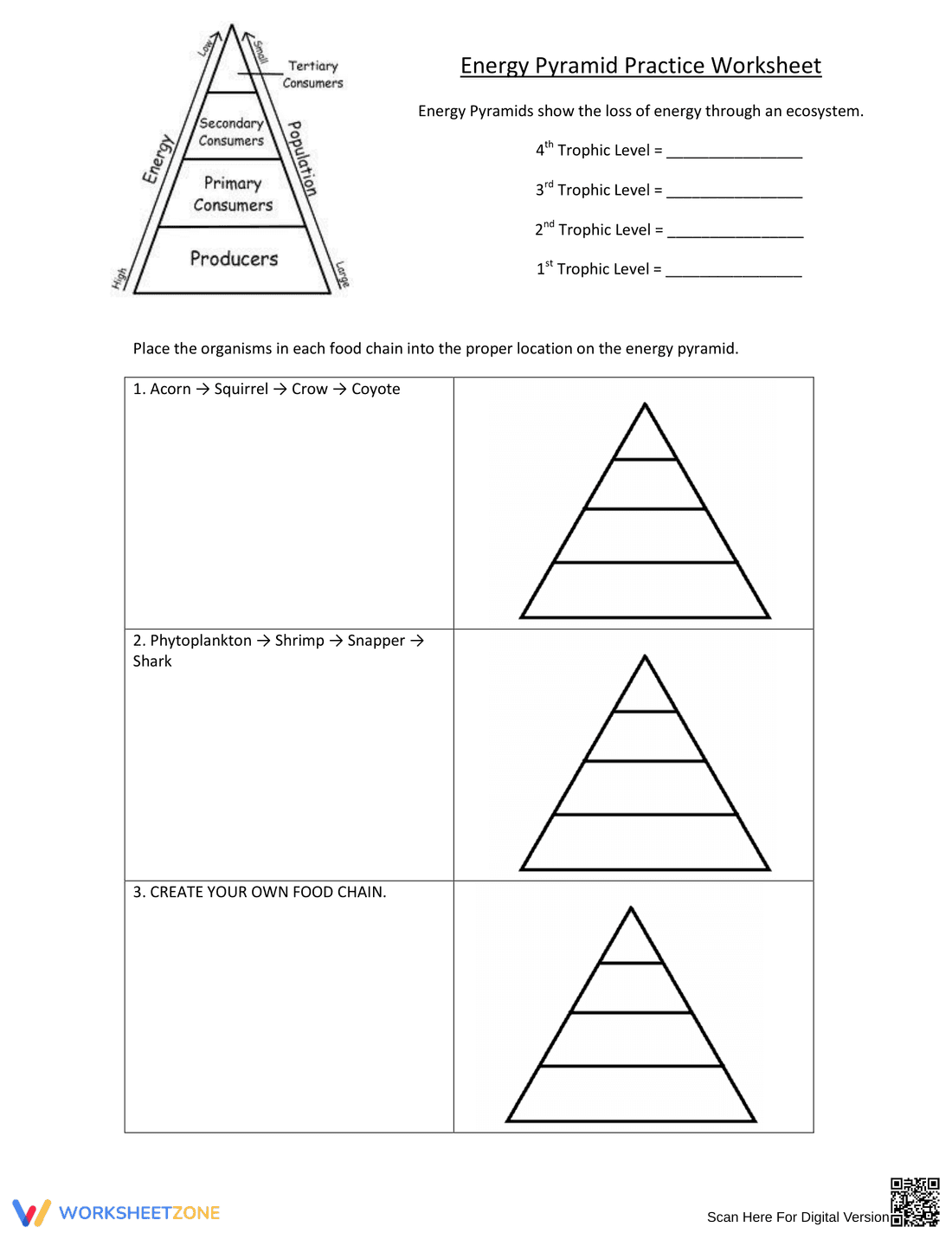
This is an energy pyramid practice worksheet. It features a blank energy pyramid diagram with spaces for labeling trophic levels. The worksheet includes exercises where students place organisms from given food chains (Acorn -> Squirrel -> Crow -> Coyote and Phytoplankton -> Shrimp -> Snapper -> Shark) into the correct trophic level on a blank pyramid. Additionally, it provides a section for students to create their own food chain and represent it on an energy pyramid. The worksheet also asks students to identify the 1st, 2nd, 3rd, and 4th trophic levels.
Grade Level Suitability:
This worksheet is suitable for grades 6-9. It introduces or reinforces concepts related to food chains, energy transfer, and trophic levels within ecosystems, which are typically covered in middle school science curricula. The activities require students to analyze food chains and apply their understanding of energy pyramids.
Why Use It:
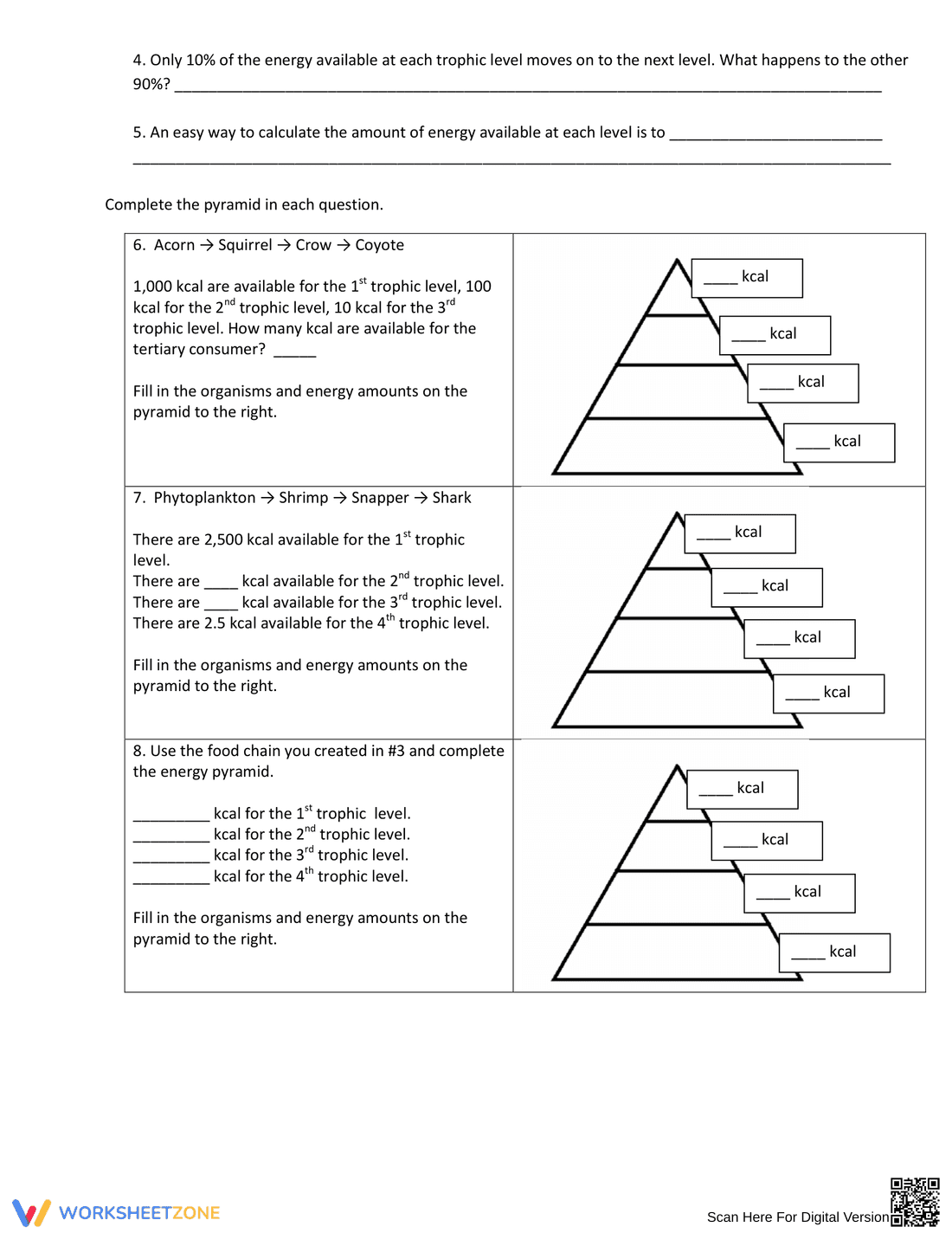
This worksheet helps students visualize and understand the flow of energy through an ecosystem. It reinforces the concepts of trophic levels, producers, consumers, and the loss of energy at each level. The hands-on activity of placing organisms on the pyramid promotes active learning and critical thinking. Creating their own food chain encourages deeper understanding and application of the concepts.
How to Use It:
First, have students define the 1st, 2nd, 3rd, and 4th trophic levels. Then, provide students with the worksheet and explain the concept of energy pyramids and trophic levels. For each food chain provided, guide students to identify the producers, primary consumers, secondary consumers, and tertiary consumers. Then, have them place each organism in the appropriate level on the blank energy pyramid. Finally, instruct students to create their own food chain and represent it on the last energy pyramid diagram.
Target Users:
This worksheet is designed for middle school science students (grades 6-9) learning about ecology, food chains, energy pyramids, and trophic levels. It can also be used as a review activity for high school students or as a supplementary resource for homeschooling.
This is an energy pyramid practice worksheet. It features a blank energy pyramid diagram with spaces for labeling trophic levels. The worksheet includes exercises where students place organisms from given food chains (Acorn -> Squirrel -> Crow -> Coyote and Phytoplankton -> Shrimp -> Snapper -> Shark) into the correct trophic level on a blank pyramid. Additionally, it provides a section for students to create their own food chain and represent it on an energy pyramid. The worksheet also asks students to identify the 1st, 2nd, 3rd, and 4th trophic levels.
Grade Level Suitability:
This worksheet is suitable for grades 6-9. It introduces or reinforces concepts related to food chains, energy transfer, and trophic levels within ecosystems, which are typically covered in middle school science curricula. The activities require students to analyze food chains and apply their understanding of energy pyramids.
Why Use It:
This worksheet helps students visualize and understand the flow of energy through an ecosystem. It reinforces the concepts of trophic levels, producers, consumers, and the loss of energy at each level. The hands-on activity of placing organisms on the pyramid promotes active learning and critical thinking. Creating their own food chain encourages deeper understanding and application of the concepts.
How to Use It:
First, have students define the 1st, 2nd, 3rd, and 4th trophic levels. Then, provide students with the worksheet and explain the concept of energy pyramids and trophic levels. For each food chain provided, guide students to identify the producers, primary consumers, secondary consumers, and tertiary consumers. Then, have them place each organism in the appropriate level on the blank energy pyramid. Finally, instruct students to create their own food chain and represent it on the last energy pyramid diagram.
Target Users:
This worksheet is designed for middle school science students (grades 6-9) learning about ecology, food chains, energy pyramids, and trophic levels. It can also be used as a review activity for high school students or as a supplementary resource for homeschooling.


