


























Views
Downloads
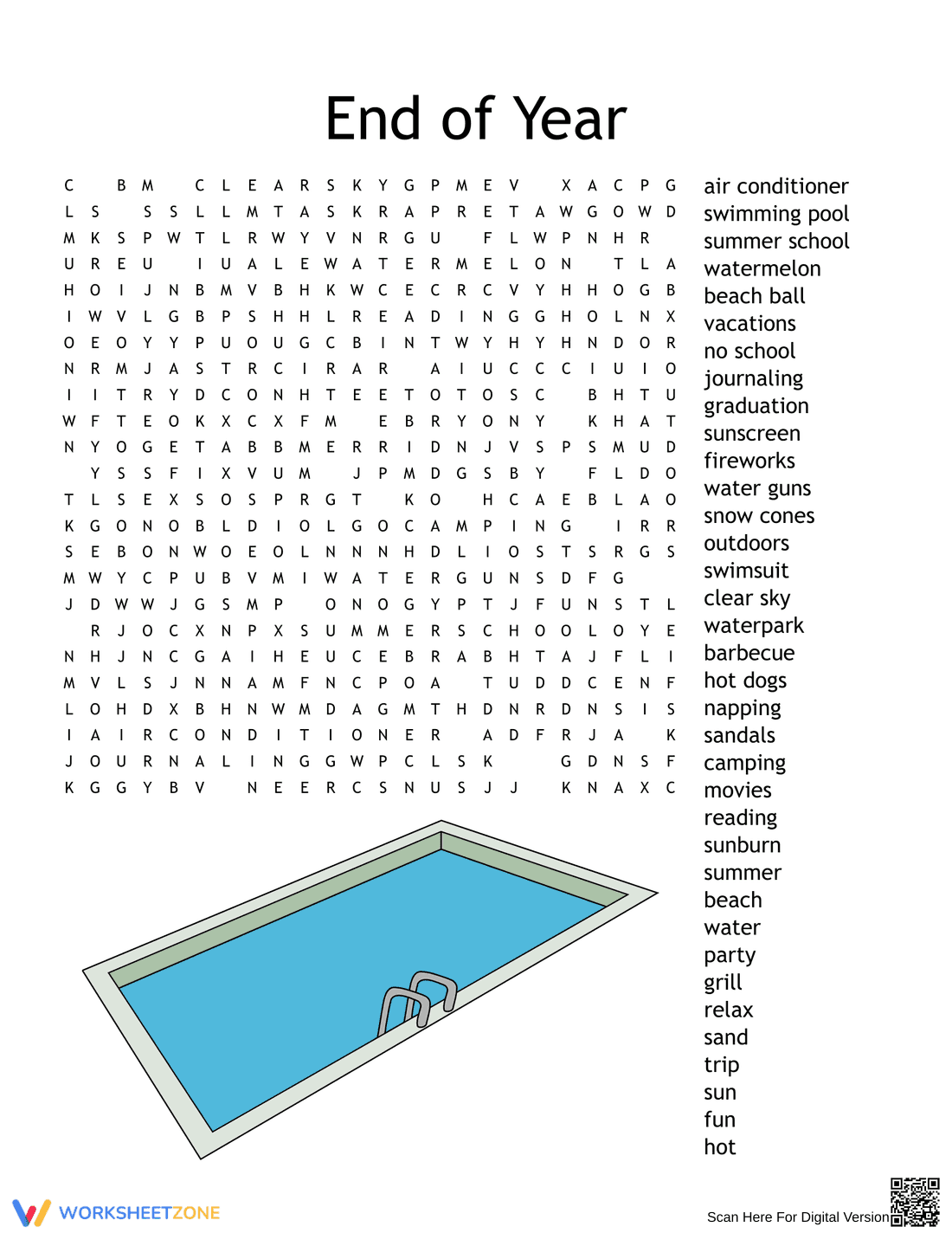

Grade 2 End of Year Word Search — Printable Worksheet
Paste this activity's link or code into your existing LMS (Google Classroom, Canvas, Teams, Schoology, Moodle, etc.).
Students can open and work on the activity right away, with no student login required.
You'll still be able to track student progress and results from your teacher account.
This printable ELA worksheet reinforces seasonal vocabulary and spelling for early elementary students. By locating 36 summer-themed words, learners build word recognition and cognitive scanning skills. The activity provides an engaging, independent task that helps transition students into summer break while maintaining focus on language arts standards.
At a Glance
- Grade: Grade 2 · Subject: English Language Arts
- Standard:
CCSS.ELA-LITERACY.L.2.6— Use words and phrases acquired through conversations and reading- Skill Focus: Vocabulary and word recognition
- Format: 1 page · 36 problems · Answer key not included · PDF
- Best For: End of year morning work
- Time: 15–20 minutes
What's Inside
This single-page PDF features a large grid containing 36 hidden vocabulary terms related to summer activities and seasonal concepts. The word list includes compound words like "air conditioner" and "swimming pool," alongside simpler terms like "sun" and "fun." The clean layout features a pool graphic at the bottom, providing a visual anchor without distracting young learners.
Zero-Prep Workflow
The zero-prep workflow saves valuable classroom time during the hectic final weeks of school. First, print the single-page document in under 1 minute. Second, distribute the sheets to students, taking less than 1 minute. Third, review completed puzzles or have students read the found words aloud, requiring only 5 minutes of class time. This structure requires less than 2 minutes of total teacher preparation, making it an ideal choice for emergency sub plans, morning work, or transition periods.
Standards Alignment
This activity aligns directly with the Common Core State Standard CCSS.ELA-LITERACY.L.2.6, which focuses on acquiring and using grade-appropriate conversational, general academic, and domain-specific words. By identifying terms like "journaling" and "vacations," students solidify their spelling memory and expand their active vocabulary. Both standard codes can be copied directly into lesson plans, IEP goals, or district curriculum mapping tools.
How to Use It
Use this worksheet as a quiet morning activity during the final week of the school year to ease students into the daily routine. Alternatively, assign it as a post-assessment reward or a collaborative partner challenge where students race to find ten words first. Teachers can use this as a formative assessment by observing scanning patterns and asking students to define three found words. Expect completion to take 15 to 20 minutes.
Who It's For
This resource is designed for Grade 2 students, but it also serves as an excellent extension for Grade 1 readers or a supportive review for Kindergarten learners. It pairs naturally with a summer-themed read-aloud book or a creative writing prompt where students must use five words from the search grid in a short story.
This vocabulary worksheet supports early literacy development through structured word recognition practice. According to research from Fisher & Frey (2014) on vocabulary acquisition, repeated exposure to thematic word lists strengthens orthographic mapping and helps young learners transition words from receptive to active vocabulary. By engaging with 36 distinct terms, students practice visual scanning and letter-pattern recognition, which are foundational components of reading fluency. The alignment with CCSS.ELA-LITERACY.L.2.6 ensures that this seasonal activity maintains academic rigor, serving as a purposeful learning tool rather than mere busywork. Teachers can confidently integrate this puzzle into their end-of-year curriculum, knowing it reinforces essential spelling patterns and semantic connections. This document provides a reliable, research-backed resource for maintaining student engagement during seasonal transitions.


