


























Views
Downloads
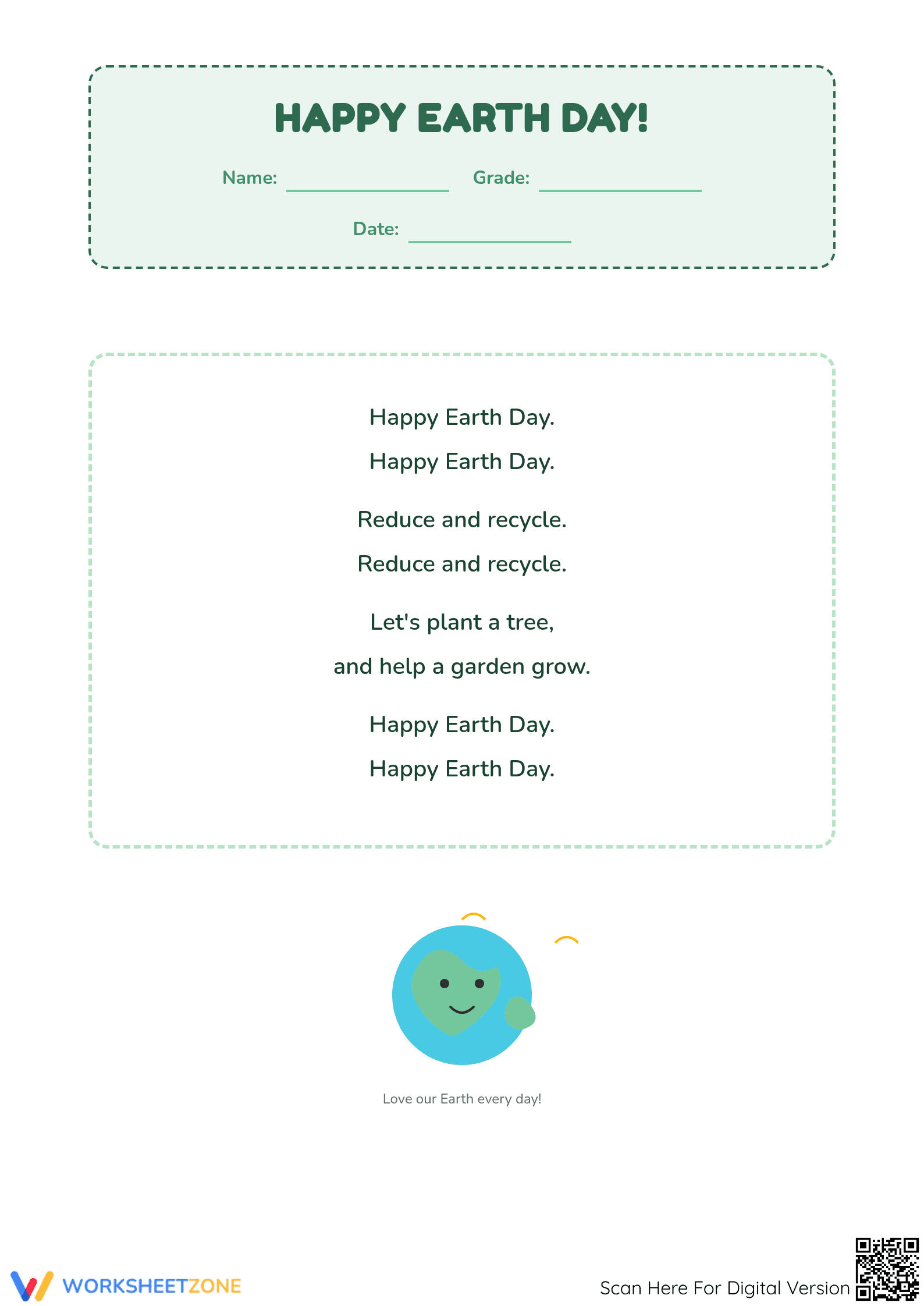


Grade 2 Earth Day Poem — Printable No-Prep Worksheet
Paste this activity's link or code into your existing LMS (Google Classroom, Canvas, Teams, Schoology, Moodle, etc.).
Students can open and work on the activity right away, with no student login required.
You'll still be able to track student progress and results from your teacher account.
This Earth Day poetry worksheet helps second and third-grade students build reading comprehension skills while exploring environmental themes. By reading a short, engaging poem and answering targeted questions, learners practice identifying key details and matching vocabulary words to their correct definitions in a fun, thematic context.
At a Glance
- Grade: 2 · Subject: ELA
- Standard:
CCSS.ELA-LITERACY.RL.2.1— Answer questions to demonstrate understanding of key details.- Skill Focus: Poetry Comprehension
- Format: 3 pages · 8 problems · Answer key included · PDF
- Best For: Independent practice or morning work
- Time: 15–20 minutes
This three-page packet includes an original Earth Day poem followed by three distinct activity sections. Part one features three direct comprehension questions to check understanding of the text. Part two provides a four-question vocabulary matching activity focusing on environmental terms like "reduce" and "recycle." Part three offers a creative prompt where students illustrate their Earth Day promise. A complete answer key is provided for quick grading.
Zero-Prep Workflow
Designed for immediate classroom implementation:
- Print (1 minute): Print the three-page PDF and answer key. No special materials required.
- Distribute (1 minute): Hand out during your literacy block or morning work time.
- Review (3 minutes): Use the included answer key to quickly check the comprehension and vocabulary sections, or review them together as a whole class.
With under two minutes of total teacher prep time, this packet is an excellent, reliable option for emergency sub plans or busy holiday weeks.
Standards Alignment
This activity is directly aligned to CCSS.ELA-LITERACY.RL.2.1, requiring students to ask and answer such questions as who, what, where, when, why, and how to demonstrate understanding of key details in a text. Both standard codes can be copied directly into lesson plans, IEP goals, or district curriculum mapping tools.
How to Use It
This worksheet works beautifully as an independent reading center activity during the week of Earth Day. Introduce the poem during whole-group instruction to model fluency before independent practice. As a formative assessment tip, observe how students tackle the vocabulary matching section; this will reveal their ability to use context clues from the poem to determine word meanings. The entire activity should take students approximately 15 to 20 minutes to complete.
Who It's For
This resource is primarily designed for second and third-grade students developing their reading comprehension and vocabulary skills. The simple, repetitive structure of the poem provides built-in scaffolding, making it accessible for emerging readers and English Language Learners. For a complete thematic lesson, pair this worksheet with a read-aloud of a picture book about recycling or a brief science lesson on how plants grow.
Integrating thematic poetry into literacy instruction provides a highly effective vehicle for developing foundational reading skills in early elementary classrooms. According to a recent ScienceDirect TpT Analysis, cross-curricular resources that blend holiday themes with rigorous academic standards significantly increase student engagement and task persistence during independent work. This worksheet specifically targets CCSS.ELA-LITERACY.RL.2.1, challenging students to answer questions to demonstrate understanding of key details within a text. By combining literal comprehension checks with vocabulary matching and a creative application prompt, the activity ensures learners process the material at multiple cognitive levels. The structured format allows students to practice extracting specific information from stanzas while building environmental vocabulary. This targeted approach to reading practice not only reinforces essential literacy benchmarks but also fosters meaningful connections to real-world concepts like conservation and community responsibility.


