


























1 / 2
0
Views
0
Downloads

0.0
0
Save
0 Likes
Share
DNA: The Double Helix Structure Worksheet
0 Views
0 Downloads
Paste this activity's link or code into your existing LMS (Google Classroom, Canvas, Teams, Schoology, Moodle, etc.).
Students can open and work on the activity right away, with no student login required.
You'll still be able to track student progress and results from your teacher account.
Information
Description
What It Is:
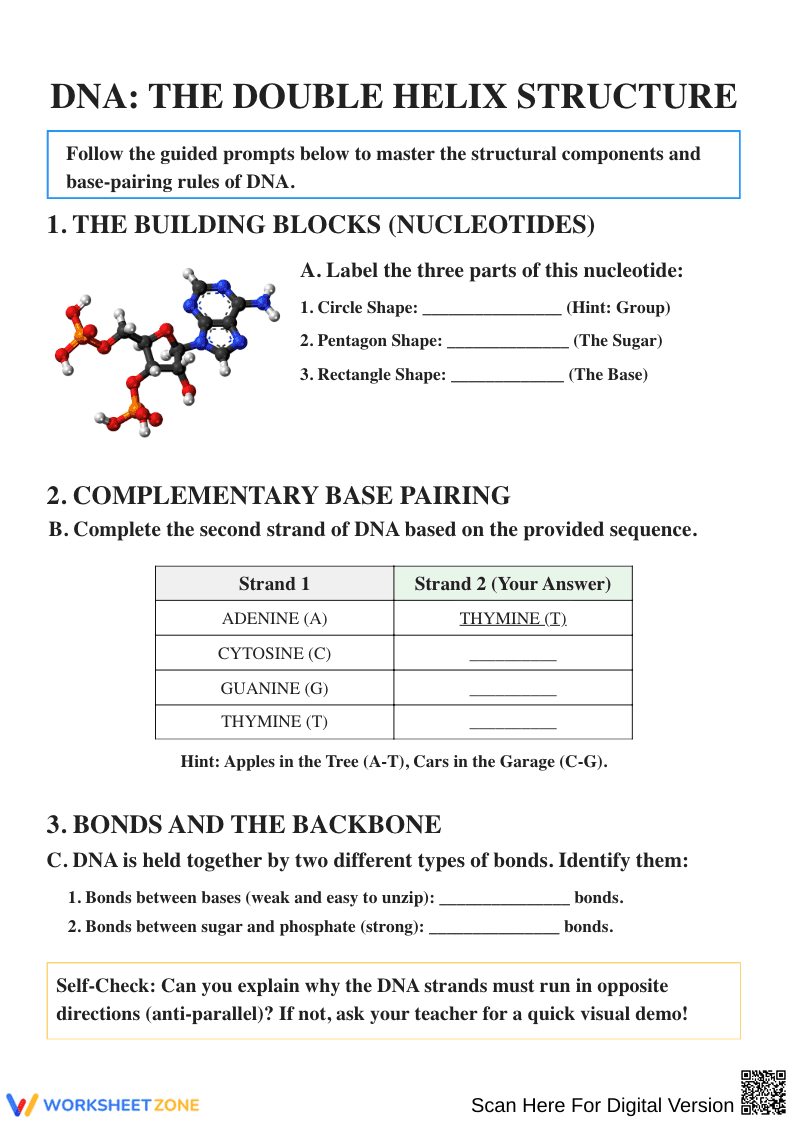
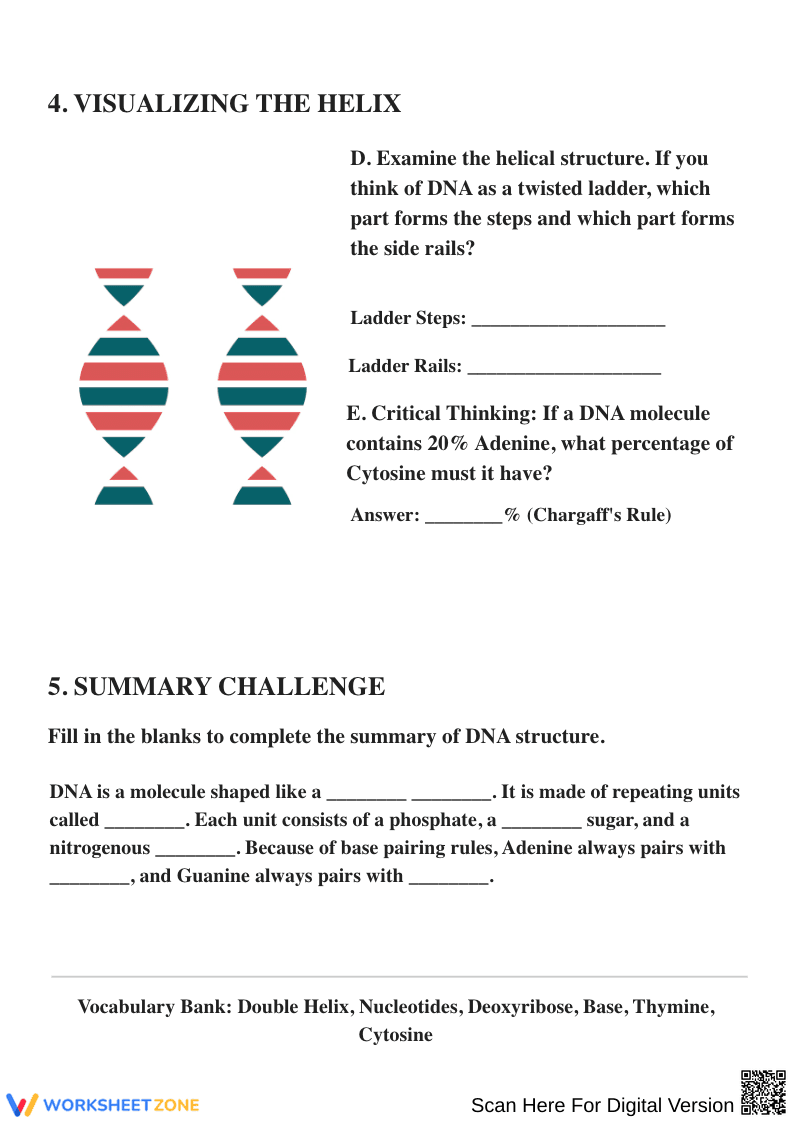
A structured biology worksheet focused on the DNA double helix. Students identify nucleotide parts, practice complementary base pairing, distinguish bond types, visualize the helix as a ladder, and apply Chargaff’s rule through guided and summary exercises.
Why Use It:
Strengthens understanding of DNA structure by clearly connecting shapes, bonds, and base-pairing rules. Helps prevent common misconceptions about hydrogen vs. covalent bonds and reinforces why DNA strands are antiparallel.
How to Use It:
• Use as a core worksheet during lessons on DNA structure
• Assign as guided practice with hints and self-checks
• Include as a review or formative assessment before a genetics test
Grade Suitability:
Best suited for middle school and early high school students.
• Grade 6–7: Introduction to nucleotides and base pairing
• Grade 8–9: Deeper understanding of bonds, backbone, and the double helix
Target Users:
Middle school science teachers, biology educators, and students learning foundational genetics.
A structured biology worksheet focused on the DNA double helix. Students identify nucleotide parts, practice complementary base pairing, distinguish bond types, visualize the helix as a ladder, and apply Chargaff’s rule through guided and summary exercises.
Why Use It:
Strengthens understanding of DNA structure by clearly connecting shapes, bonds, and base-pairing rules. Helps prevent common misconceptions about hydrogen vs. covalent bonds and reinforces why DNA strands are antiparallel.
How to Use It:
• Use as a core worksheet during lessons on DNA structure
• Assign as guided practice with hints and self-checks
• Include as a review or formative assessment before a genetics test
Grade Suitability:
Best suited for middle school and early high school students.
• Grade 6–7: Introduction to nucleotides and base pairing
• Grade 8–9: Deeper understanding of bonds, backbone, and the double helix
Target Users:
Middle school science teachers, biology educators, and students learning foundational genetics.


