


























Views
Downloads

Essential Descriptive Text Worksheet | Grade 6 ELA
Paste this activity's link or code into your existing LMS (Google Classroom, Canvas, Teams, Schoology, Moodle, etc.).
Students can open and work on the activity right away, with no student login required.
You'll still be able to track student progress and results from your teacher account.
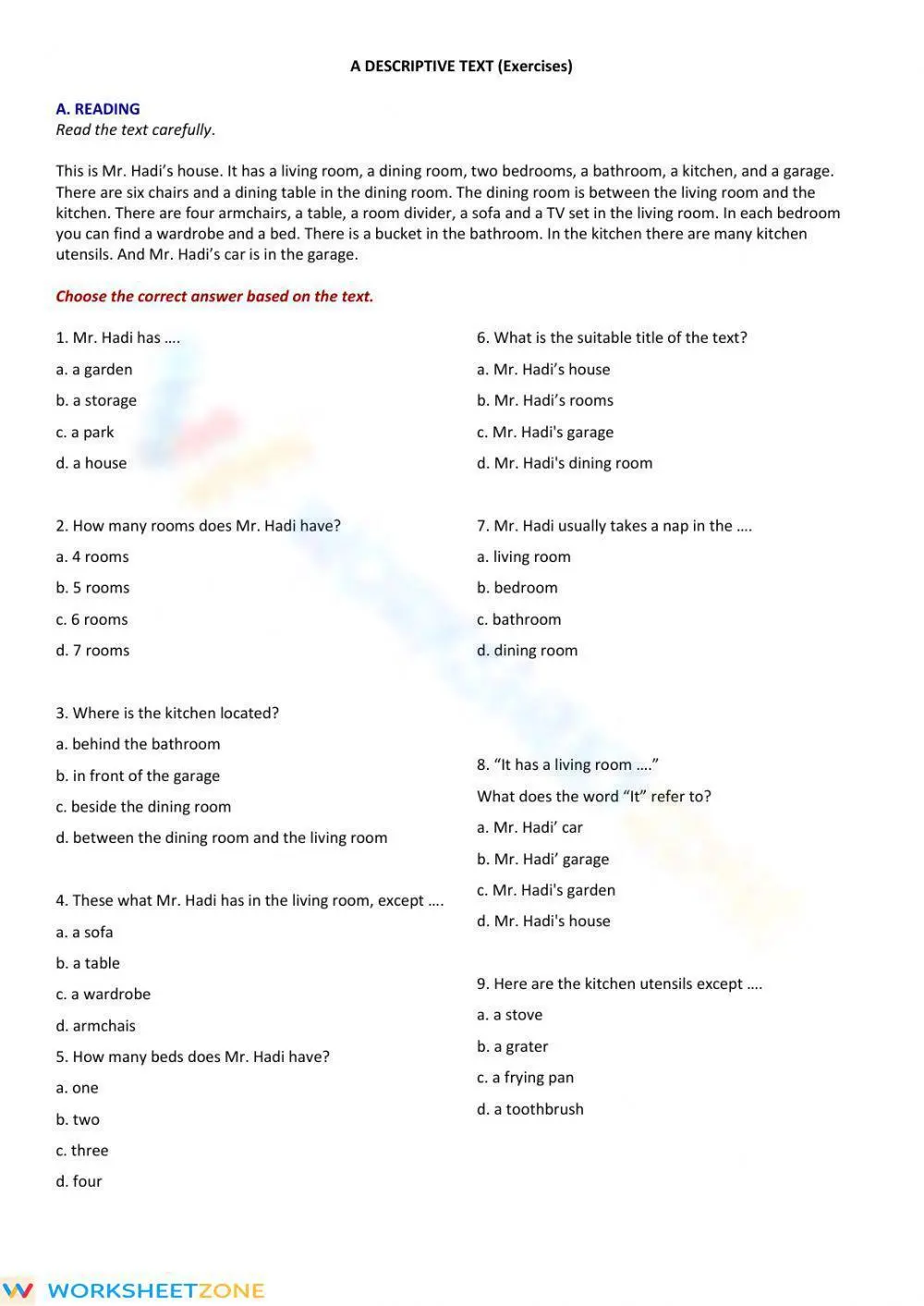
This essential Descriptive Text worksheet helps Grade 6 students master the art of identifying key details and organizing spatial information. By engaging with a structured reading passage about a home and a sequencing task involving kitchen descriptions, learners build the critical skills needed for both reading comprehension and clear composition.
At a Glance
- Grade: 6 · Subject: ELA
- Standard:
CCSS.ELA-LITERACY.RI.6.1— Cite specific textual evidence to support explicit analysis of a descriptive text- Skill Focus: Descriptive Paragraph Analysis and Structural Composition
- Format: 2 pages · 10 tasks · Answer key included · PDF
- Best For: Focused middle school reading and writing practice
- Time: 20–30 minutes of classroom instruction time
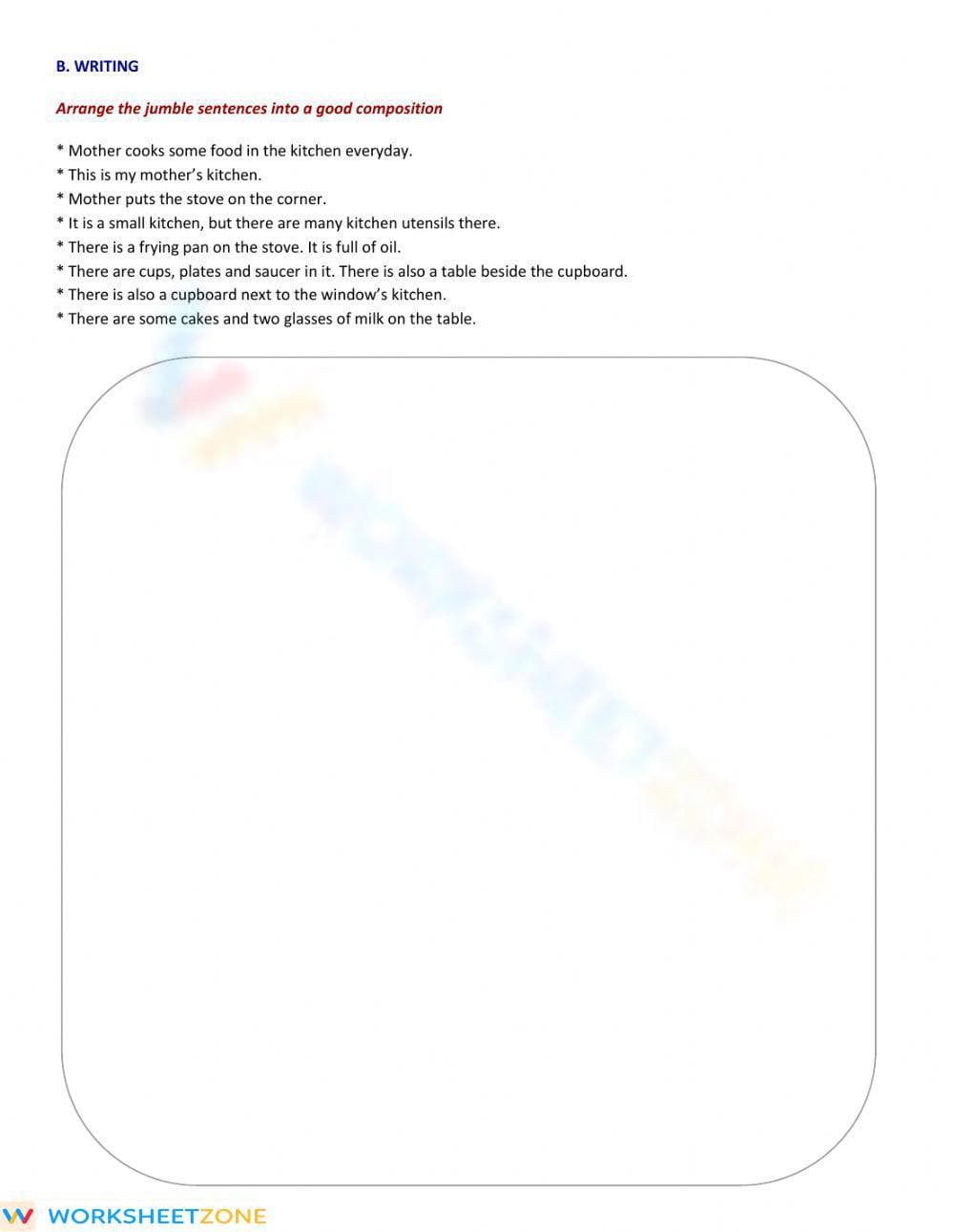
Inside this resource, you will find two comprehensive pages designed for immediate classroom use. The first page features a descriptive reading passage titled "Mr. Hadi's House," followed by 9 multiple-choice questions that test students' ability to locate specific facts and infer meanings within a spatial context. The second page challenges students to arrange 8 jumbled sentences into a logical composition, reinforcing the structural requirements of descriptive writing.
Skill Progression
- Guided Practice: Students begin by reading a detailed text that serves as a model for descriptive structure, focusing on how spatial details are used to build a cohesive mental image.
- Supported Practice: Through 9 targeted comprehension questions, learners practice identifying specific attributes and locations, such as the placement of furniture and the count of specific household items.
- Independent Practice: The final writing task requires students to independently evaluate sentence relationships and sequence them into a coherent composition about a kitchen scene.
This resource is aligned to CCSS.ELA-LITERACY.RI.6.1, which requires students to cite textual evidence to support analysis of what the text says explicitly. Additionally, it supports CCSS.ELA-LITERACY.W.6.4 by focusing on the organization and coherence of written descriptions. Both standard codes can be copied directly into lesson plans, IEP goals, or district curriculum mapping tools.
How to Use It
This worksheet is ideal for use as a formative assessment after a lesson on descriptive adjectives or spatial prepositions. Instructors can also assign it as a focused homework task to reinforce the "I Do, We Do, You Do" instructional model. For a quick check for understanding, observe whether students correctly identify the "between" and "beside" relationships in the reading questions. Expect most students to complete the full 10-task set within 25 minutes.
Who It's For
This printable is designed for Grade 6 students but is equally effective for Grade 5 or Grade 7 learners who need additional support with descriptive structures. It is particularly useful for English Language Learners (ELLs) due to its focus on clear, concrete vocabulary and spatial relationships. Pair this worksheet with a short descriptive passage or an anchor chart on prepositions for maximum instructional impact.
Descriptive writing and reading comprehension are foundational skills that bridge the gap between basic literacy and advanced analytical writing. This worksheet aligns with CCSS.ELA-LITERACY.RI.6.1 by requiring students to cite specific textual evidence to answer comprehension questions. The integration of a sequencing task supports cognitive development by forcing students to recognize organizational patterns within descriptive paragraphs. The gradual release of responsibility, moving from guided reading to independent sentence arrangement, significantly improves student retention of structural concepts. This resource provides the necessary scaffolding to ensure students can accurately identify and produce descriptive content, helping all learners meet core proficiency standards in middle school ELA.


