




























Views
Downloads

Grade 1 Decomposing Numbers — Printable No-Prep Worksheet

Paste this activity's link or code into your existing LMS (Google Classroom, Canvas, Teams, Schoology, Moodle, etc.).
Students can open and work on the activity right away, with no student login required.
You'll still be able to track student progress and results from your teacher account.
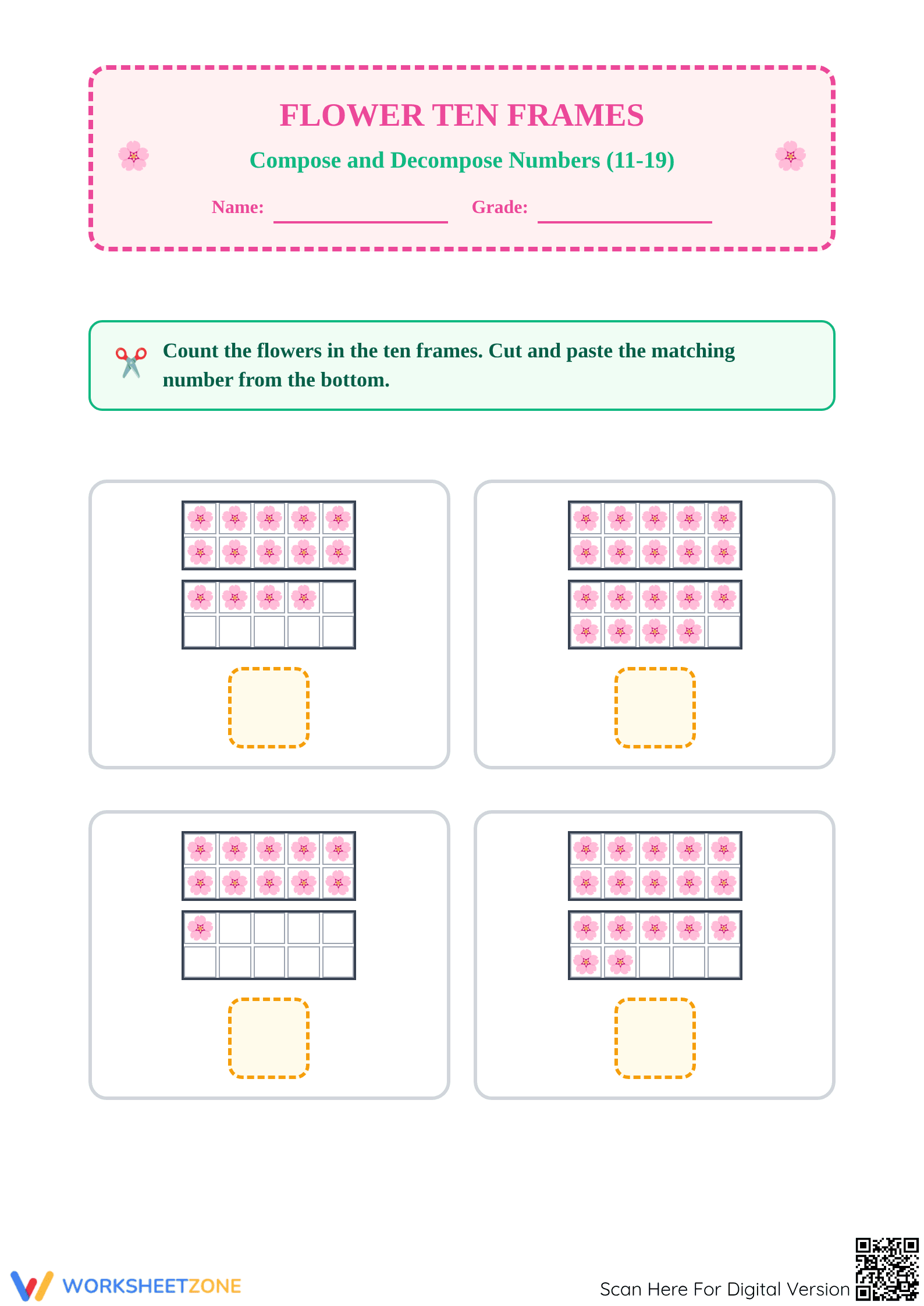
Master number composition with this engaging Grade 1 Math worksheet. Students practice decomposing numbers between 11 and 19 using visual flower ten frames, helping them bridge the gap between concrete counting and abstract place value understanding. By identifying tens and ones, learners build the essential foundation required for complex addition and subtraction.
At a Glance
- Grade: 1 · Subject: Math
- Standard:
1.NBT.B.2— Understand that two-digit numbers represent specific amounts of tens and ones- Skill Focus: Composing and decomposing numbers 11–19
- Format: 2 pages · 6 problems · Answer key included · PDF
- Best For: Small group math centers or independent practice
- Time: 15–20 minutes
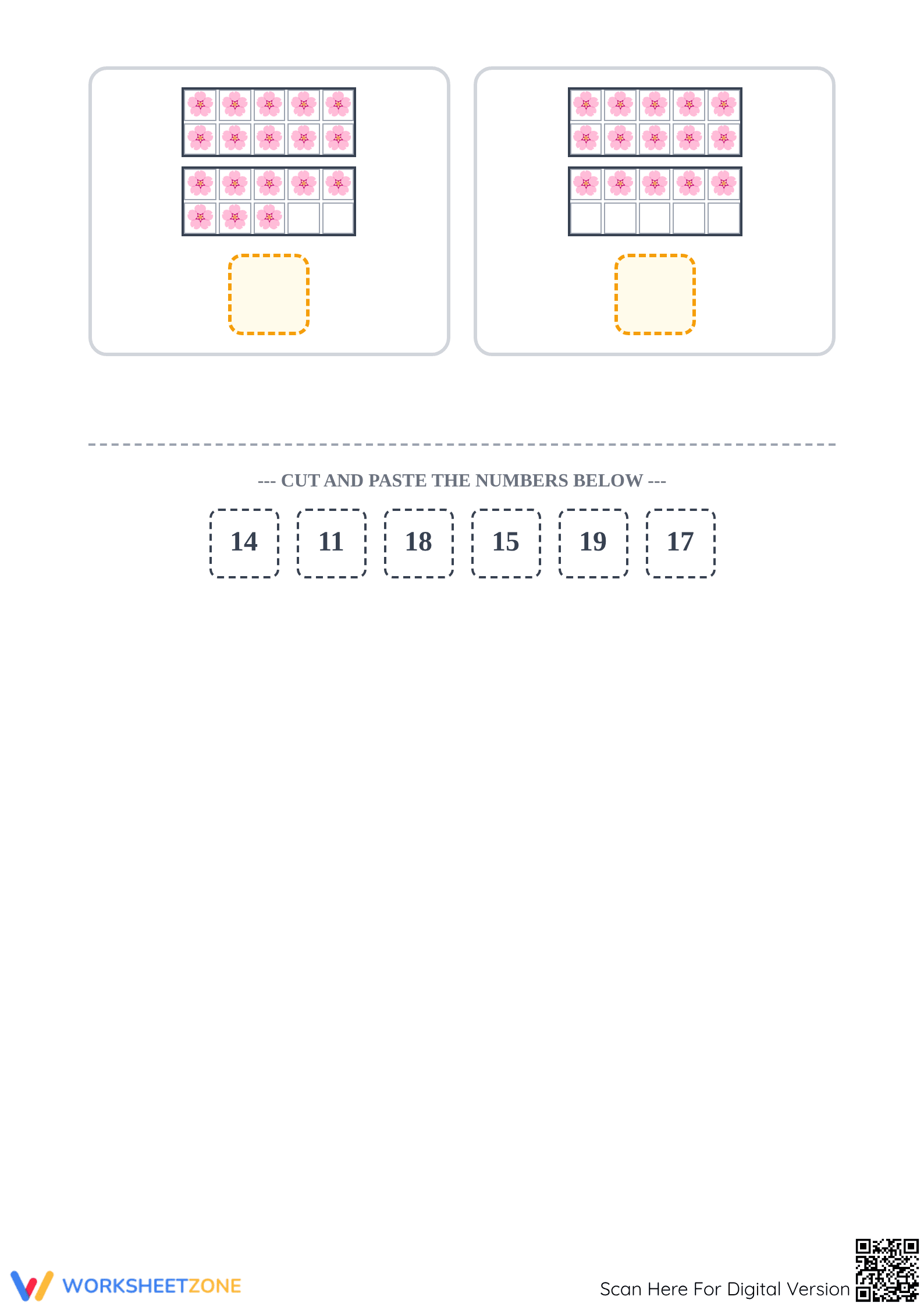
This comprehensive 2-page PDF features six distinct "Flower Ten Frames" tasks designed for young learners. The first page contains four structured ten-frame challenges, while the second page offers two additional problems alongside a set of cut-out number tiles. The cut-and-paste format keeps students physically engaged while they process mathematical concepts, and a complete answer key is provided for immediate feedback.
Zero-Prep Workflow
This resource is designed for immediate classroom implementation. Teachers can follow a simple 3-step workflow: Print the dual-sided document (30 seconds), Distribute to students along with scissors and glue (1 minute), and Review completed work using the included key (1 minute). With a total preparation time of under three minutes, it serves as an ideal solution for busy mornings or unexpected substitute teacher plans.
Standards Alignment
This worksheet is strictly aligned to `1.NBT.B.2`, which requires Grade 1 students to understand that numbers from 11 to 19 are composed of a ten and a specific number of ones. It also supports foundational place value concepts found in `K.NBT.A.1` and supports early addition strategies. Both standard codes can be copied directly into lesson plans, IEP goals, or district curriculum mapping tools.
How to Use It
Deploy this worksheet during the guided practice phase of a place value lesson to help students visualize the "ten and some more" concept. It also works effectively as a formative assessment tool; observe if students count every flower individually or if they recognize the full ten-frame automatically, which indicates a transition to more advanced subitizing skills. Expected completion time for most students is 20 minutes.
Who It's For
This resource is tailored for first-grade students or kindergarteners ready for acceleration. The heavy use of visual scaffolding makes it an excellent choice for English Language Learners and students with IEP accommodations. It pairs naturally with physical ten-frame manipulatives or a "Teen Numbers" anchor chart during direct instruction to reinforce the relationship between visual models and numeric symbols.
Research indicates that visual representations like ten frames are critical for developing mental models of number structure. According to Fisher & Frey (2014), the use of manipulatives and visual aids in early mathematics facilitates the gradual release of responsibility from teacher to student. This Grade 1 worksheet targets 1.NBT.B.2 by requiring students to decompose teen numbers into a base ten and remaining units. By using a cut-and-paste mechanism, the activity reinforces the physical composing of numbers while anchoring the concept in the visual ten-frame system. This approach aligns with EdReports 2024 findings that prioritize materials that foster both procedural fluency and conceptual understanding in foundational math. Students who master these decomposition skills in the first grade demonstrate significantly higher accuracy in two-digit addition during later primary years. The interactive nature of this worksheet ensures that students remain focused on the place value relationship between the whole number and its components.


