


























Views
Downloads

Daniel Tiger Coloring Page | Essential K-2 Printable
Paste this activity's link or code into your existing LMS (Google Classroom, Canvas, Teams, Schoology, Moodle, etc.).
Students can open and work on the activity right away, with no student login required.
You'll still be able to track student progress and results from your teacher account.
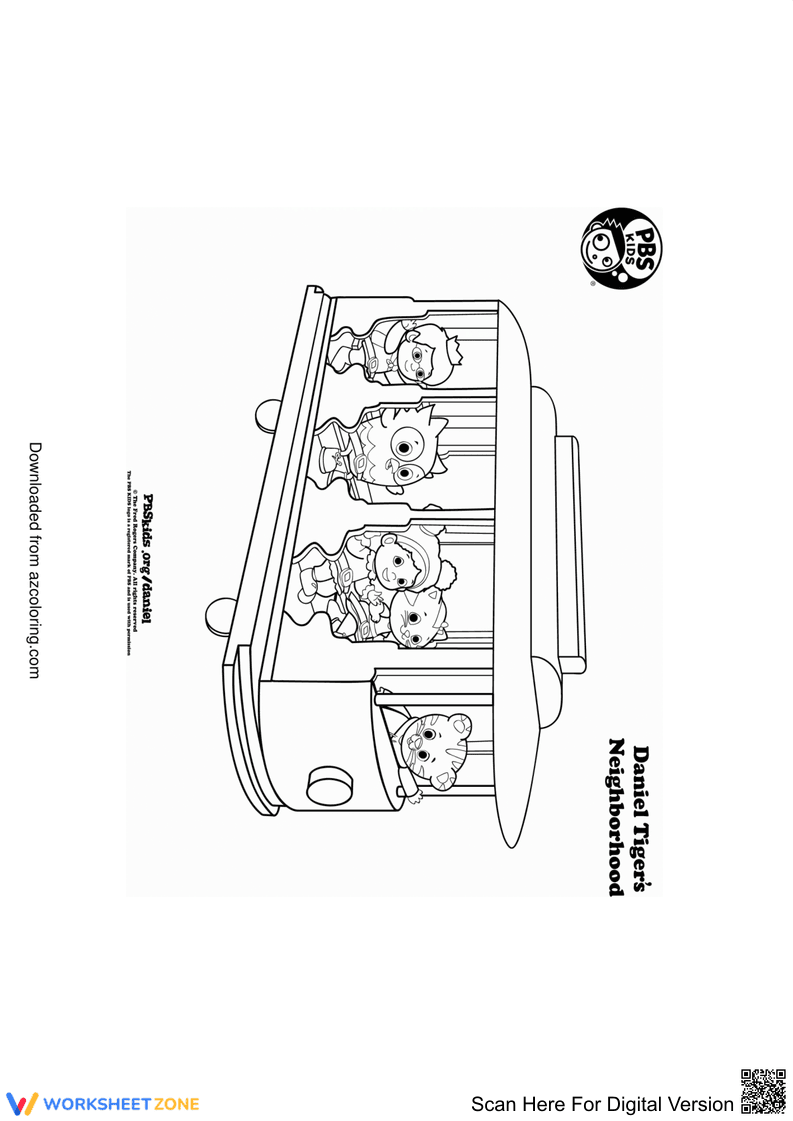
This Daniel Tiger's Neighborhood coloring page provides a creative outlet for early learners to develop fine motor control while engaging with familiar characters. By coloring Daniel and his friends on the trolley, students practice precision and color recognition. The scene serves as a visual prompt for narrative storytelling, helping children predict plot points and describe settings in a structured yet imaginative way.
At a Glance
- Grade: K-2 · Subject: English Arts
- Standard:
CCSS.ELA-LITERACY.SL.K.5— Add drawings to descriptions to provide additional detail and clarify ideas- Skill Focus: Fine motor skills & Narrative prediction
- Format: 1 page · 1 task · No answer key · PDF
- Best For: Morning work or creative transitions
- Time: 15–20 minutes
Inside this resource, you will find a high-quality, 1-page printable featuring the iconic trolley from Daniel Tiger's Neighborhood. The illustration includes Daniel Tiger, O the Owl, Katerina Kittycat, Prince Wednesday, and Miss Elaina. The clear, bold outlines are specifically designed for Kindergarten and Grade 1 students who are still refining their grip and stroke control.
The zero-prep workflow for this Daniel Tiger activity is designed for maximum efficiency. First, print the single-page PDF (30 seconds). Second, distribute the sheets to students during a transition period or as a fast-finisher option (1 minute). Third, review the work by asking students to describe where the trolley is heading, facilitating a brief oral language check (1 minute). Total teacher prep is under 2 minutes.
This worksheet aligns with CCSS.ELA-LITERACY.SL.K.5, which requires students to add drawings or other visual displays to descriptions to provide additional detail. While primarily an artistic task, the inclusion of a narrative prompt allows it to support early language standards. This standard code can be copied directly into lesson plans, IEP goals, or district curriculum mapping tools to document creative expression.
Use this worksheet during the settling-in period at the start of the school day to help students transition into a learning mindset. It also functions effectively as a formative assessment tool; observe how students choose colors and whether they can name the characters and their emotions. Expect students to spend approximately 15 to 20 minutes completing the coloring and discussing the trolley's destination.
This resource is tailored for Kindergarten through Grade 2 students, particularly those who benefit from familiar social-emotional themes found in PBS Kids programming. It is an excellent pairing for a direct instruction lesson on community helpers or transportation. For students needing extra support, provide a smaller set of crayons to encourage specific color choices and grip development.
Research by Fisher & Frey (2014) emphasizes the role of visual representation in early literacy development. Coloring activities like this Daniel Tiger trolley scene provide a low-stakes environment for students to practice fine motor control while engaging in oral storytelling. When paired with the prompt "Guess where they will go?", this worksheet aligns with CCSS.ELA-LITERACY.SL.K.5 by encouraging students to use visual displays to enhance their descriptions. According to NAEP data, early exposure to narrative-based creative tasks correlates with improved reading comprehension in later elementary years. This resource serves as a bridge between artistic expression and linguistic prediction, allowing educators to observe a student's ability to identify characters and infer situational context. By integrating familiar media characters, the worksheet increases student engagement and reduces task-related anxiety for emergent learners.


