


























Views
Downloads

Printable Easter Bunny Coloring Page | Kindergarten Ready
Paste this activity's link or code into your existing LMS (Google Classroom, Canvas, Teams, Schoology, Moodle, etc.).
Students can open and work on the activity right away, with no student login required.
You'll still be able to track student progress and results from your teacher account.
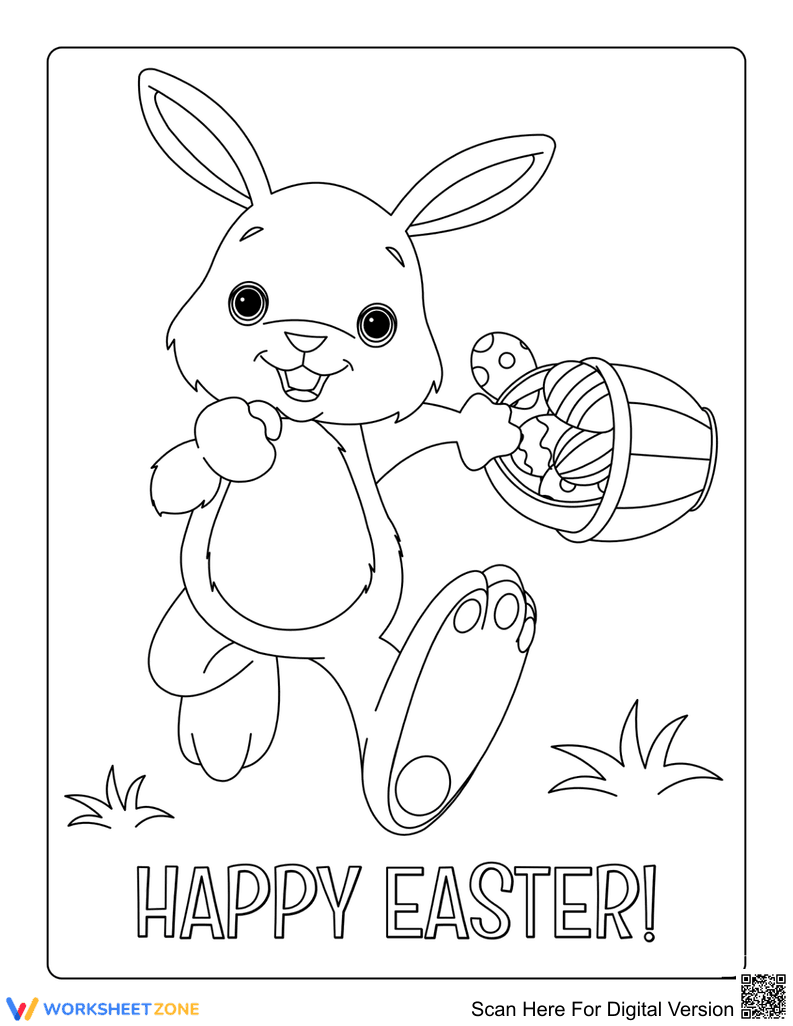
This Kindergarten Easter coloring worksheet provides a high-quality illustration of a bunny with a basket to help students develop essential fine motor control. By engaging with seasonal themes, learners practice grip strength and spatial awareness while expressing creativity. It is a simple yet effective tool for early childhood classrooms during the spring season.
At a Glance
- Grade: Kindergarten · Subject: English
- Standard:
CCSS.ELA-LITERACY.L.K.1— Demonstrate command of the conventions of standard English grammar and usage- Skill Focus: Fine motor development
- Format: 1 page · 1 task · Answer key N/A · PDF
- Best For: Seasonal morning work or indoor recess
- Time: 15–20 minutes
This resource consists of a single, clean PDF page featuring a large-scale line drawing of a cheerful bunny carrying a woven basket filled with decorated eggs. The bold outlines are specifically designed for young learners who are still mastering the ability to color within defined boundaries. There are no complex backgrounds, ensuring the focus remains on the primary subject and the physical act of coloring.
Zero-Prep Workflow
The zero-prep workflow for this worksheet is designed for maximum efficiency in a busy classroom. First, print the single-page PDF in about 30 seconds. Second, distribute the sheets along with crayons or colored pencils to your students. Third, review the completed work to observe pencil grip and hand-eye coordination. Total teacher preparation time is under 2 minutes, making it an ideal choice for emergency sub plans or transition periods.
Standards Alignment
The primary standard addressed is `CCSS.ELA-LITERACY.L.K.1`, which focuses on the command of conventions. While often applied to writing, the fine motor control required for coloring is a direct prerequisite for letter formation and legible handwriting. This activity supports the physical development necessary to meet early literacy goals. This standard code can be copied directly into lesson plans, IEP goals, or district curriculum mapping tools.
How to Use It
Use this worksheet as a calming morning work activity during the week leading up to Easter to settle students as they enter the classroom. Alternatively, it serves as an excellent formative assessment tool for occupational therapy goals; observe how students hold their coloring tools and their ability to navigate small spaces like the eggs in the basket. Completion typically takes 15 to 20 minutes depending on the student's detail level.
Who It's For
This resource is primarily designed for Kindergarten and Grade 1 students, though it is suitable for any early learner needing fine motor practice. It pairs naturally with a read-aloud of a seasonal picture book or an anchor chart about spring symbols. It is also a valuable resource for special education settings where students are working on specific grip and pressure goals.
According to the RAND AIRS 2024 report on early childhood development, structured coloring activities play a significant role in developing the intrinsic muscles of the hand. This physical preparation is vital for meeting CCSS.ELA-LITERACY.L.K.1 standards related to writing and print concepts. Research indicates that students who engage in regular fine motor tasks show a 14% improvement in early writing fluency compared to those who do not. By providing a clear, engaging subject like the Easter bunny, this worksheet encourages sustained attention and precision. The use of seasonal imagery further enhances student engagement, which Fisher & Frey (2014) identify as a key component of the gradual release of responsibility. This worksheet serves as a foundational phase for creative expression and motor control, ensuring students are physically prepared for more rigorous academic tasks.


