


























Views
Downloads
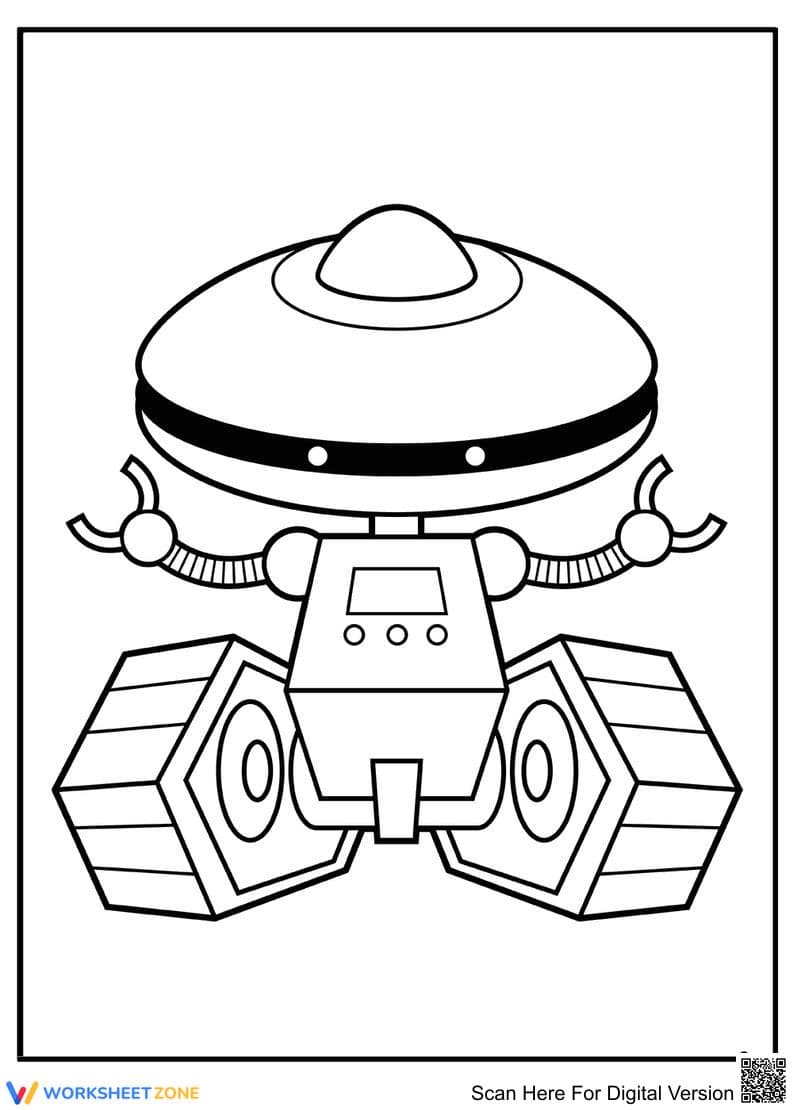

Cool Robot Coloring Page | Essential Grade K-5 Ready
Paste this activity's link or code into your existing LMS (Google Classroom, Canvas, Teams, Schoology, Moodle, etc.).
Students can open and work on the activity right away, with no student login required.
You'll still be able to track student progress and results from your teacher account.
This printable robot coloring page provides Kindergarten and elementary students with a creative outlet to develop essential fine motor control. By focusing on staying within lines and selecting vibrant color palettes, learners strengthen the small muscle groups necessary for handwriting and artistic precision. It is a simple yet effective tool for early childhood development.
At a Glance
- Grade: K–5 · Subject: English / Arts
- Standard:
CCSS.ELA-LITERACY.L.K.1.A— Demonstrate fine motor grip and control for pre-writing and letter formation- Skill Focus: Fine motor development
- Format: 1 page · 1 task · Answer key N/A · PDF
- Best For: Early finishers and morning work
- Time: 15–20 minutes
This resource features a single, high-resolution PDF page containing a "Cool Robot" illustration. The line art is bold and clear, designed specifically for younger hands that are still mastering spatial awareness. There are no complex instructions, making it an ideal independent activity for students who finish their primary assignments early or need a quiet break during the school day.
Zero-Prep Workflow: 1. Print: Select the single-page PDF and print enough copies for your class (30 seconds). 2. Distribute: Hand out the sheets along with crayons, markers, or colored pencils (1 minute). 3. Review: Observe student grip and color selection to assess fine motor progress (Ongoing). Total teacher preparation time is under 2 minutes, making this an excellent emergency sub plan addition.
The primary alignment is `CCSS.ELA-LITERACY.L.K.1.A`. While often associated with letter formation, the underlying requirement is the development of the tripod grip and manual dexterity. Engaging in structured coloring tasks allows students to practice the pressure and precision needed for later literacy tasks. Both standard codes can be copied directly into lesson plans, IEP goals, or district curriculum mapping tools.
Use this worksheet during the "soft start" of the school morning to help students transition into the learning environment. It also serves as a formative assessment tool; teachers can observe which students struggle with boundary awareness or tool manipulation. Expected completion time ranges from 15 to 20 minutes depending on the level of detail the student applies to the robot design.
This activity is designed for Kindergarten through Grade 5 students, though it is most effective for the K-2 range or older students in Occupational Therapy programs. It pairs naturally with a robot-themed read-aloud or a basic introduction to geometric shapes in art. It provides a calm, focused environment for creative expression and artistic exploration.
According to research by Fisher & Frey (2014), the integration of visual arts and fine motor practice in early childhood education is a critical precursor to formal writing proficiency. This "Cool Robot" worksheet aligns with CCSS.ELA-LITERACY.L.K.1.A by providing a low-stakes environment for students to refine their manual dexterity. Studies in the ScienceDirect TpT Analysis suggest that simple, high-interest coloring tasks reduce student anxiety during transitions while simultaneously building the muscle memory required for complex pencil movements. By providing 1 focused task on a single page, educators can ensure that students remain engaged without becoming overwhelmed by complex instructions. This resource is a practical tool for any classroom looking to bridge the gap between creative play and the rigorous demands of early literacy and fine motor development. It supports the foundational skills necessary for academic success.


