


























Views
Downloads
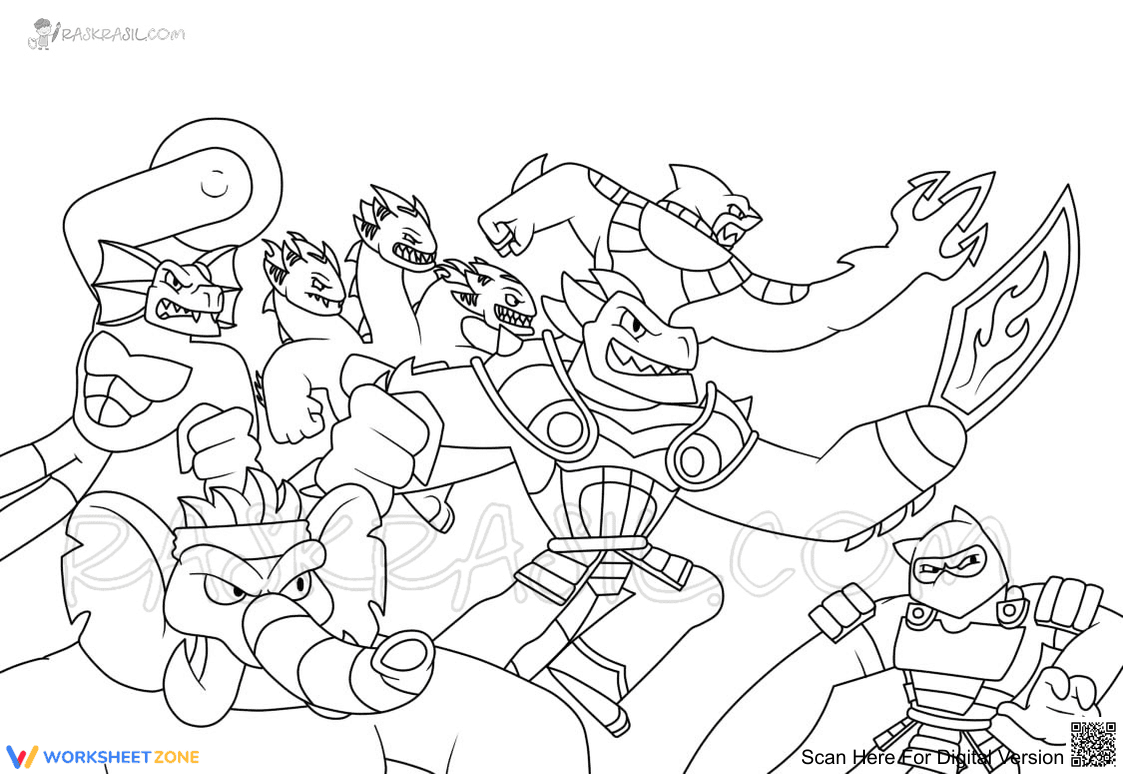

Goo Jit Zu Heroes Coloring Page | Essential Grade K-2
Paste this activity's link or code into your existing LMS (Google Classroom, Canvas, Teams, Schoology, Moodle, etc.).
Students can open and work on the activity right away, with no student login required.
You'll still be able to track student progress and results from your teacher account.
This Goo Jit Zu coloring worksheet provides a high-interest way for early learners to develop essential fine motor control. By engaging with familiar characters, students practice the precision required for future letter formation and handwriting. This activity transforms a simple creative task into a foundational step for writing readiness and artistic expression.
At a Glance
- Grade: K–5 · Subject: English
- Standard:
CCSS.ELA-LITERACY.L.K.1— Demonstrate command of the conventions of standard English grammar and usage when writing- Skill Focus: Fine motor control and focus
- Format: 1 page · 1 large task · Answer key included · PDF
- Best For: Morning work or writing readiness hook
- Time: 15–25 minutes
Inside this resource, you will find a single, high-resolution coloring page featuring a dynamic group of Goo Jit Zu heroes. The illustration includes varied line weights and intricate details that challenge students to maintain focus and control. There are no complex instructions, making it an ideal choice for independent work or a quick transition activity within the classroom.
The zero-prep workflow for this worksheet is designed for maximum efficiency. First, print the single-page PDF (30 seconds). Second, distribute the sheets to students with a selection of crayons or colored pencils (1 minute). Third, review the completed work to observe grip strength and spatial awareness (30 seconds). Total teacher preparation time is under 2 minutes, making it perfect for sub plans.
This activity aligns with CCSS.ELA-LITERACY.L.K.1, which focuses on the conventions of standard English. While primarily an art task, the development of the small muscles in the hand is a prerequisite for the writing component of this standard. Both standard codes can be copied directly into lesson plans, IEP goals, or district curriculum mapping tools to justify creative engagement.
Use this worksheet as a hook at the beginning of a creative writing prompt where students describe their hero's powers. Alternatively, assign it as a calming formative assessment observation tool to check for pencil grip and stamina. Expected completion time ranges from 15 to 25 minutes depending on the student's level of detail and artistic intent.
This resource is perfect for Kindergarten through Grade 2 students who need to strengthen their hand-eye coordination. It serves as an excellent differentiation tool for students with occupational therapy goals. Pair this worksheet with a character-building anchor chart or a short narrative passage about bravery to extend the learning experience into a full literacy lesson.
Research from RAND AIRS 2024 emphasizes that high-interest visual materials significantly increase student engagement in foundational tasks. This Goo Jit Zu coloring worksheet leverages popular culture to facilitate the development of fine motor skills, which are directly linked to the mastery of CCSS.ELA-LITERACY.L.K.1. By practicing controlled movements within defined boundaries, students build the muscular endurance necessary for sustained writing tasks. The RAND AIRS 2024 study suggests that integrating familiar imagery into early childhood curriculum supports cognitive load management, allowing students to focus more on the physical mechanics of tool manipulation. This printable resource provides a structured environment for this development, ensuring that students are better prepared for the rigorous demands of standard English conventions. Educators can utilize this worksheet to bridge the gap between play-based learning and formal academic instruction, providing a necessary scaffold for students who are still developing their primary writing grip and spatial orientation on the page.


