


























Views
Downloads

Complete Wave Measurements Worksheet | Grade 6 Science
Paste this activity's link or code into your existing LMS (Google Classroom, Canvas, Teams, Schoology, Moodle, etc.).
Students can open and work on the activity right away, with no student login required.
You'll still be able to track student progress and results from your teacher account.
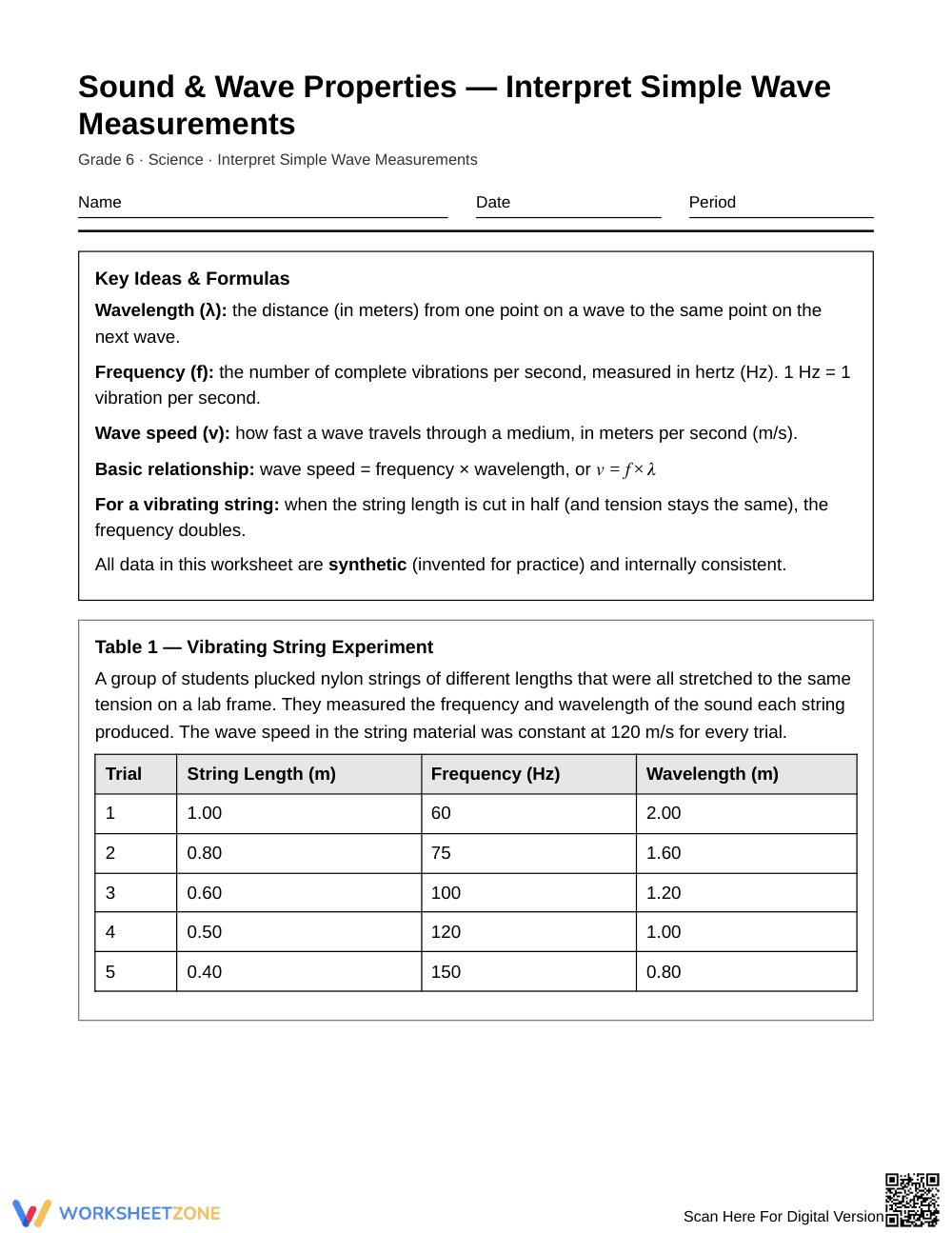
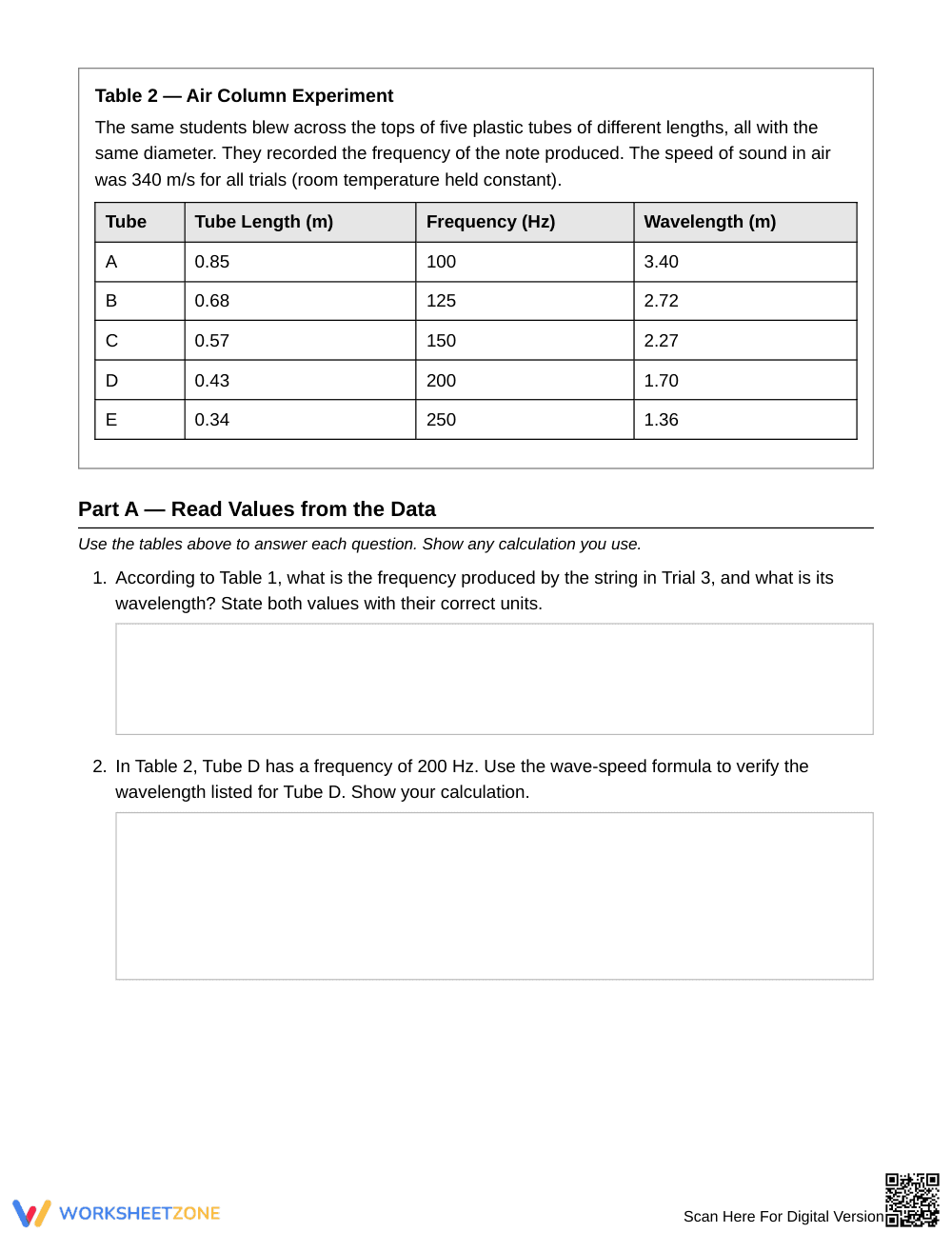
This Grade 6 Science worksheet builds students' ability to interpret simple wave measurements—frequency, wavelength, and wave speed—using two synthetic data sets. Across 10 carefully sequenced problems, learners move from reading data tables to analyzing patterns and evaluating experimental limitations, developing essential quantitative reasoning skills for middle school physical science.
At a Glance
- Grade: 6 · Subject: Science
- Skill Focus: Interpret Simple Wave Measurements
- Format: 5 pages · 10 problems · Answer key included · PDF
- Best For: Guided practice after direct instruction
- Time: 25–35 minutes
What's Inside
The worksheet opens with a reference box containing key definitions and the wave-speed formula, giving every student immediate access to necessary tools. Two data tables follow: one from a vibrating-string experiment with a constant wave speed of 120 m/s and one from an air-column experiment measuring sound at 340 m/s. Students work through three distinct parts totaling 10 problems across 5 pages, supported by a complete answer key with worked calculations.
Skill Progression
- Guided practice (Part A, 2 problems): Students locate values directly in the data tables and verify a single wavelength calculation using the provided formula box for scaffolding.
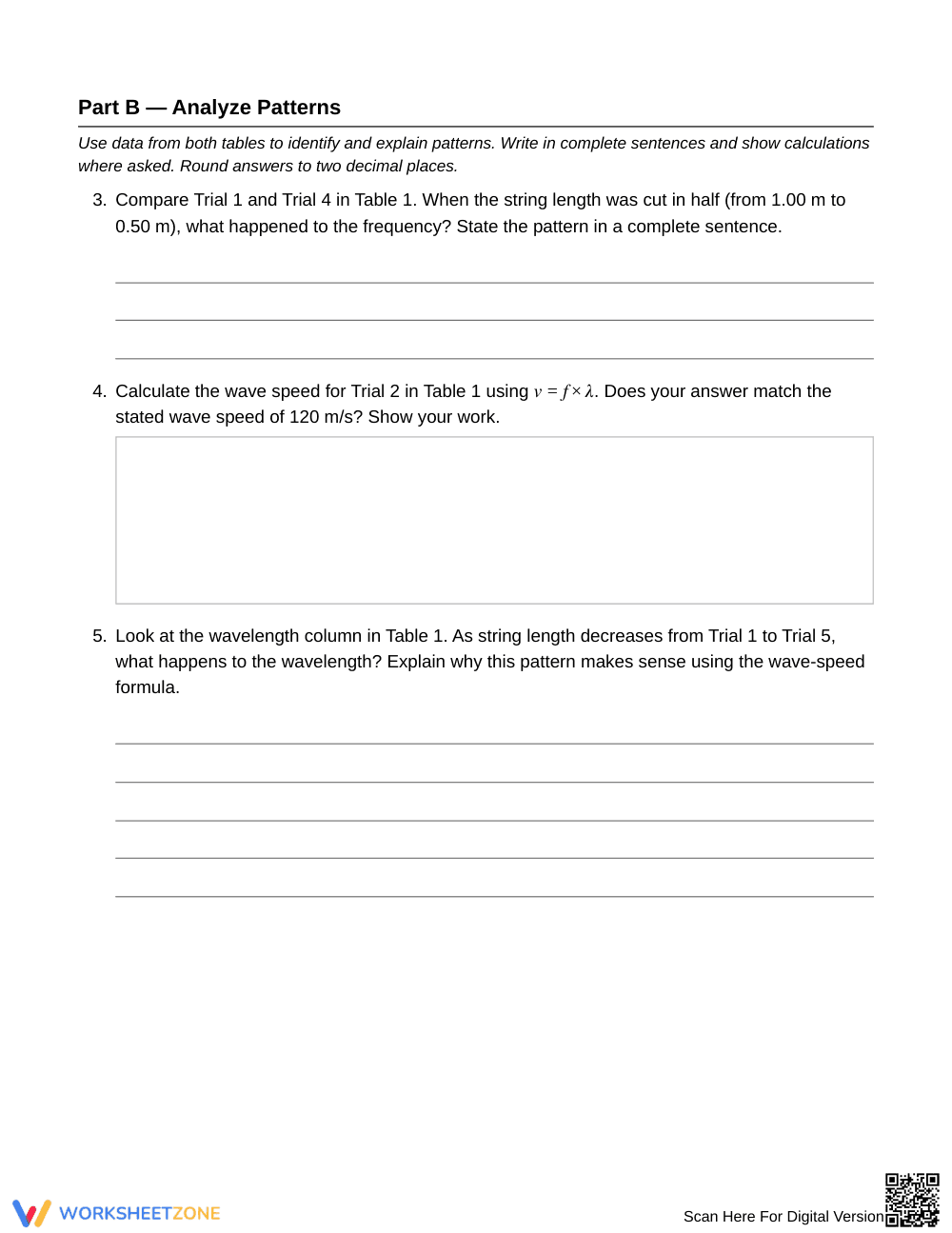
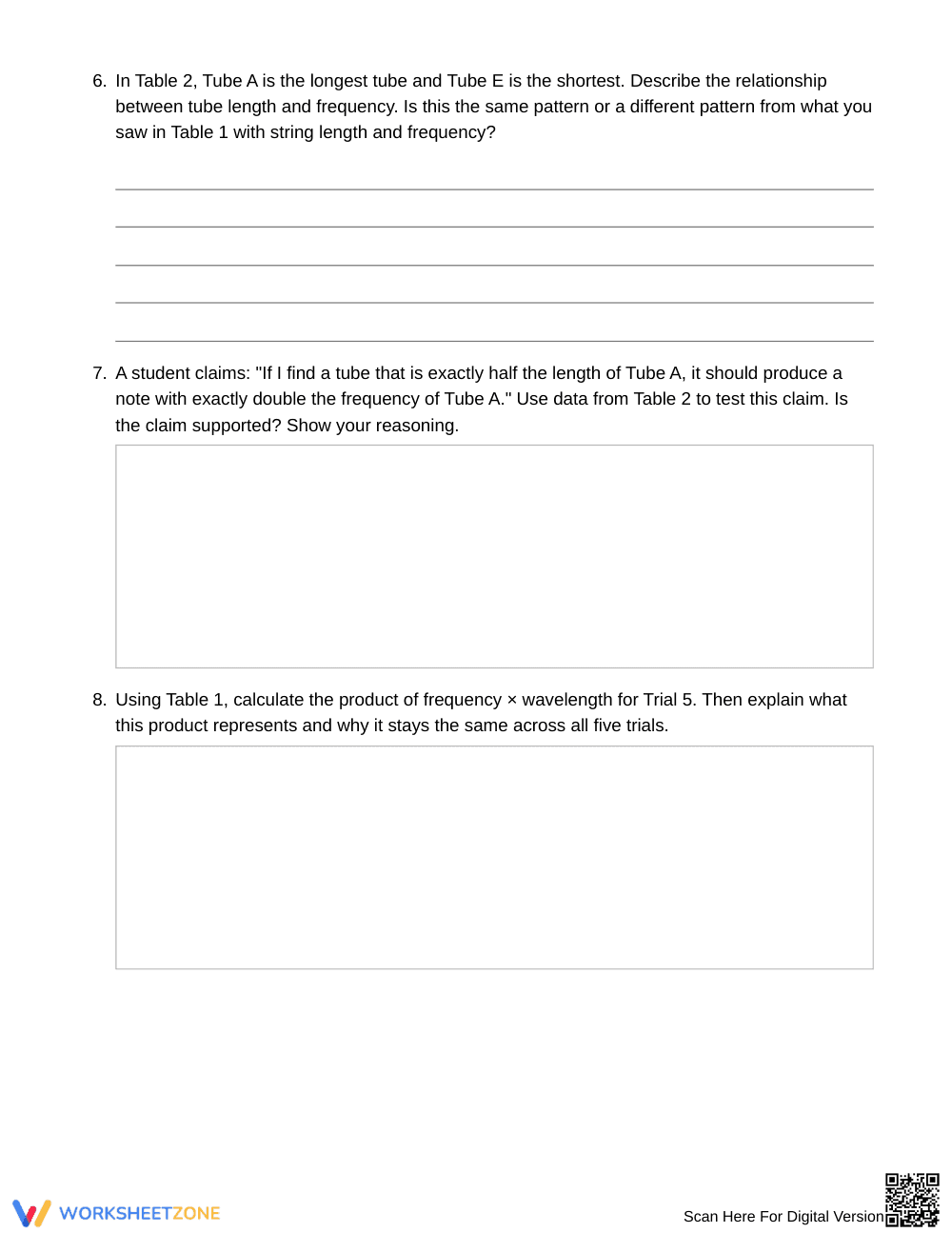
- Supported practice (Part B, 6 problems): Learners compare experimental trials, calculate wave speed, identify inverse relationships between length and frequency, and explain why wave speed remains constant across medium conditions.
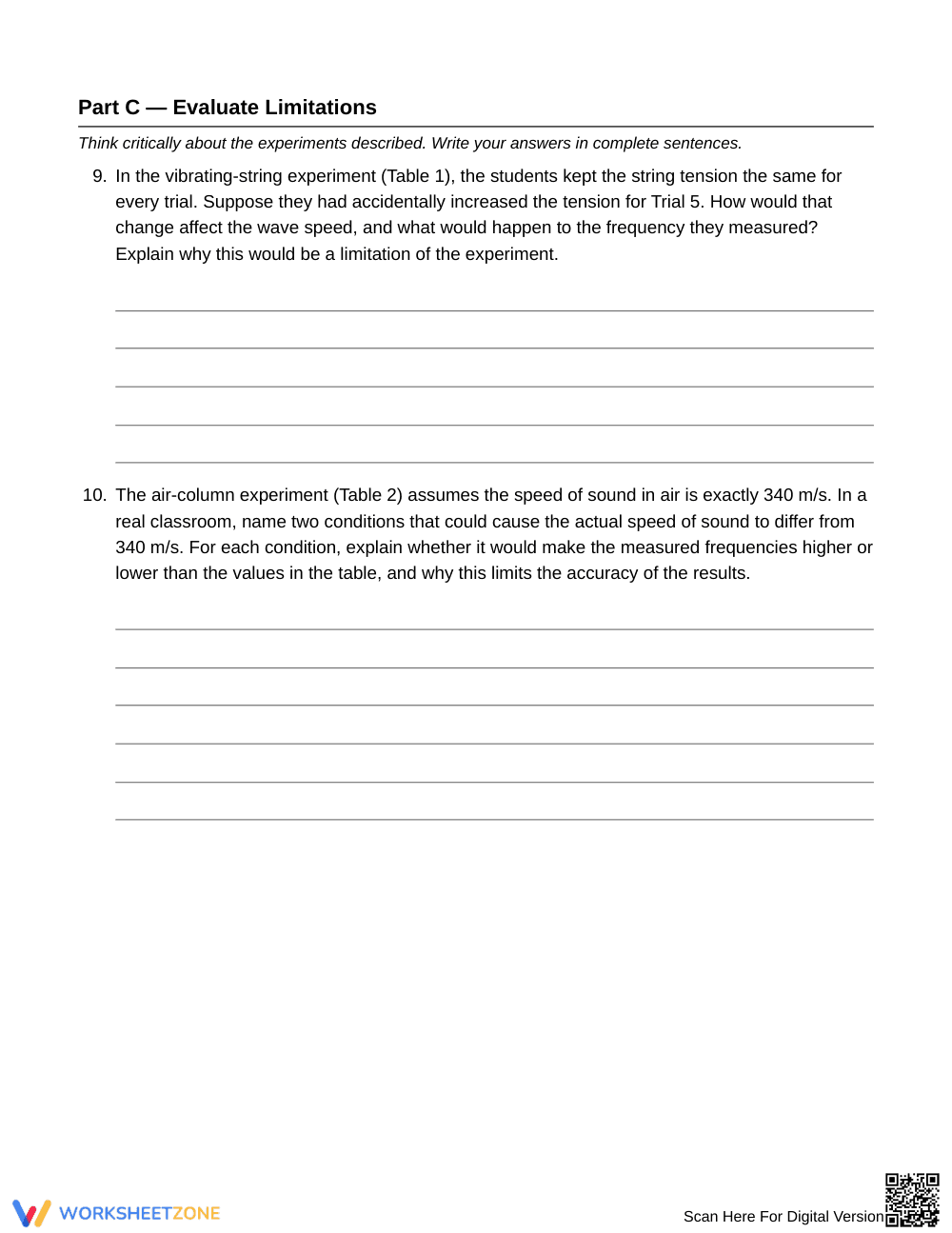
- Independent practice (Part C, 2 problems): Students evaluate experimental limitations—such as how variable tension or changing air temperature alters outcomes—without step-by-step guidance.
How to Use It
Assign Part A immediately after introducing the wave formula during direct instruction as a quick formative check before moving forward. Parts B and C work well for independent practice or collaborative partner work during subsequent class periods. Circulate during Part B to listen for whether students can explain inverse relationships. Most learners complete the full worksheet in 25 to 35 minutes.
Who It's For
Designed for Grade 6 physical science classes studying sound, vibrations, and wave properties. The built-in reference box supports struggling learners, while the open-ended limitation questions challenge advanced thinkers.
This printable science resource targets the core skill of interpreting simple wave measurements, specifically reading frequency, wavelength, and wave-speed values from experimental data tables while applying the wave formula. Research from the RAND AIRS 2024 report on science instructional materials highlights that students retain quantitative science skills more effectively when practice moves through structured tiers of complexity rather than presenting uniform difficulty throughout a lesson. The 10-problem design here follows that principle through two retrieval items, six analysis items, and two evaluation items, each requiring students to show calculations and write clear explanations. The inclusion of two distinct experimental contexts, vibrating strings and air columns, requires learners to transfer the same formula across physical setups, reinforcing genuine conceptual understanding rather than rote memorization. A complete answer key with fully worked solutions supports both teacher grading and student self-assessment. Teachers can use this resource for guided practice, independent work, or formative assessment in wave units.


