
































Complete Voice & Action Worksheet | Grade 11 English III

Paste this activity's link or code into your existing LMS (Google Classroom, Canvas, Teams, Schoology, Moodle, etc.).
Students can open and work on the activity right away, with no student login required.
You'll still be able to track student progress and results from your teacher account.
This advanced literary analysis worksheet guides Grade 11 students through dissecting the tension between a character's professed verbal morality and their covert physical actions. Working with an original Realist narrative text, students evaluate double entendre, symbolic staging, and narrative irony to determine authorial point of view and implicit social critique.
At a Glance
- Grade: 11 · Subject: English III
- Standard:
RL.11-12.6— Analyze how point of view and irony distinguish stated rhetoric from underlying meaning- Skill Focus: Analyzing Tension Between Voice and Action
- Format: 7 pages · 12 problems · Answer key included · PDF
- Best For: Advanced literary analysis and close reading
- Time: 45–60 minutes
What's Inside
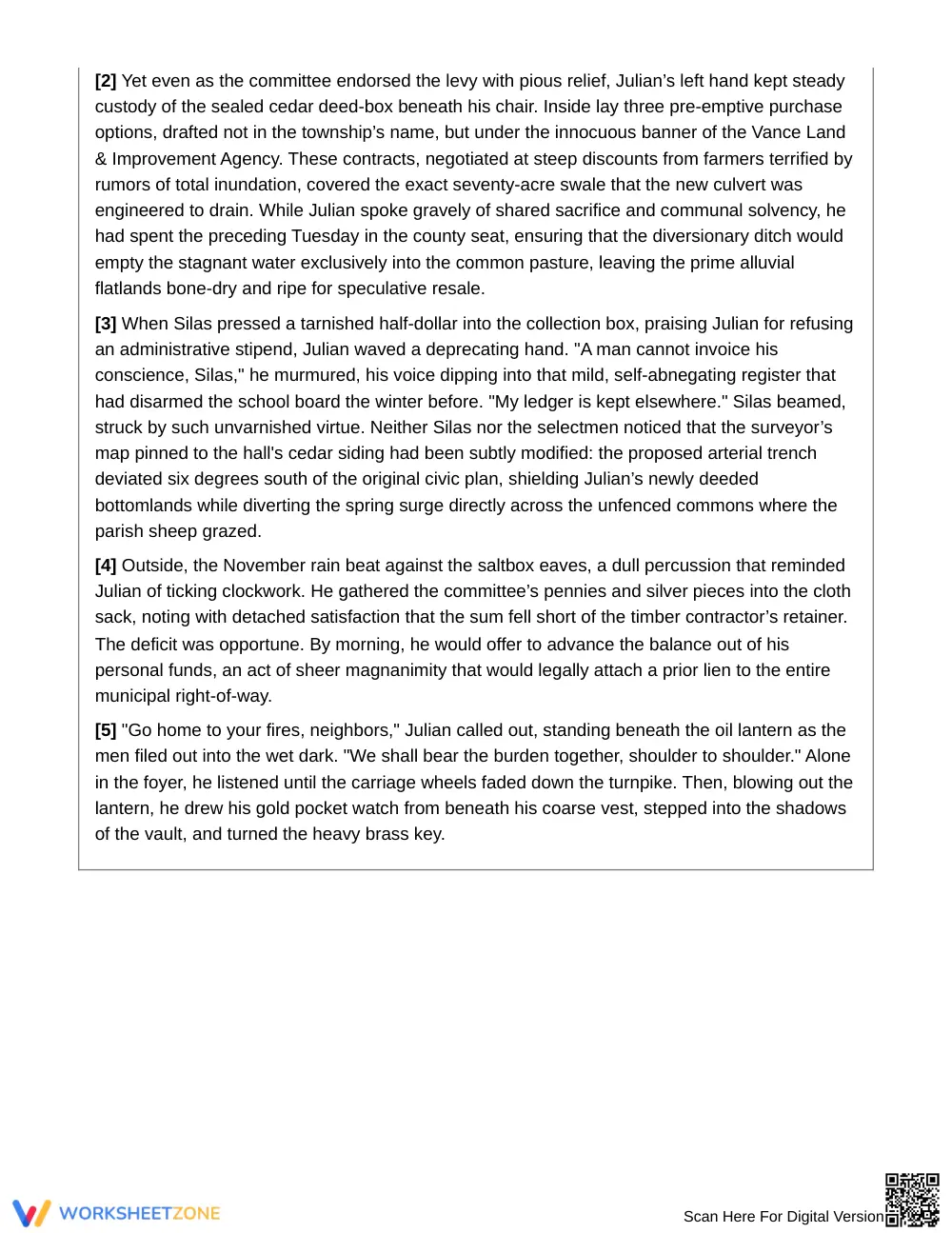
The 7-page resource centers on “The Common Silt,” a complete Gilded Age narrative that showcases calculated public virtue masking private land speculation. The worksheet is divided into three analytical sections comprising 12 rigorous text-dependent questions: selected-response detail checks, open-ended structural analyses of verbal double meanings and costume symbolism, and multi-paragraph written arguments requiring students to defend layered conclusions with cited textual evidence. A 5-page comprehensive teacher answer key supplies model responses and evidence criteria.
Skill Progression
- Guided Practice (Part A — Tasks 1–3): Direct textual identification focusing on explicit legal documents, map alterations, and financial motives with immediate multiple-choice and short-retrieval prompts.
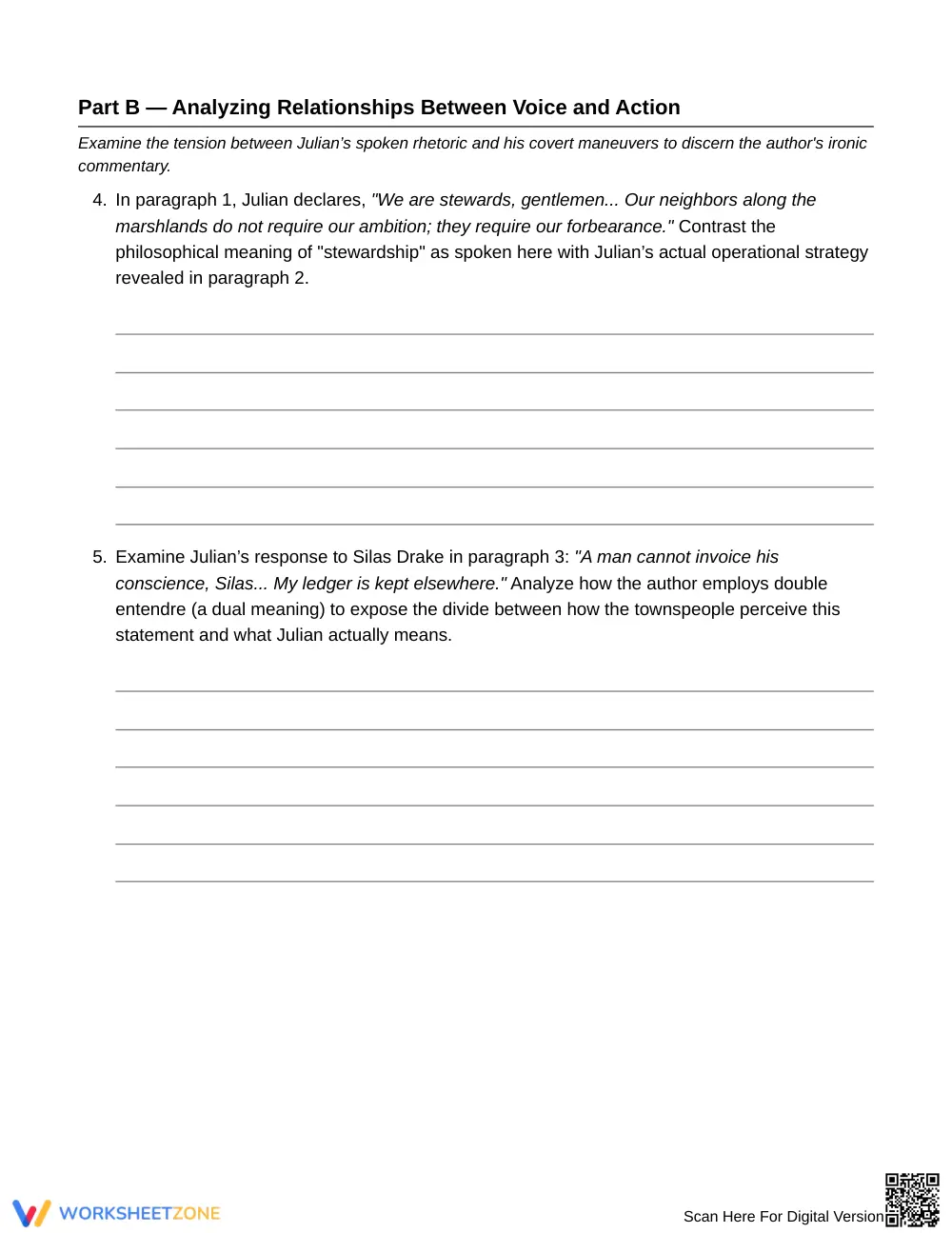
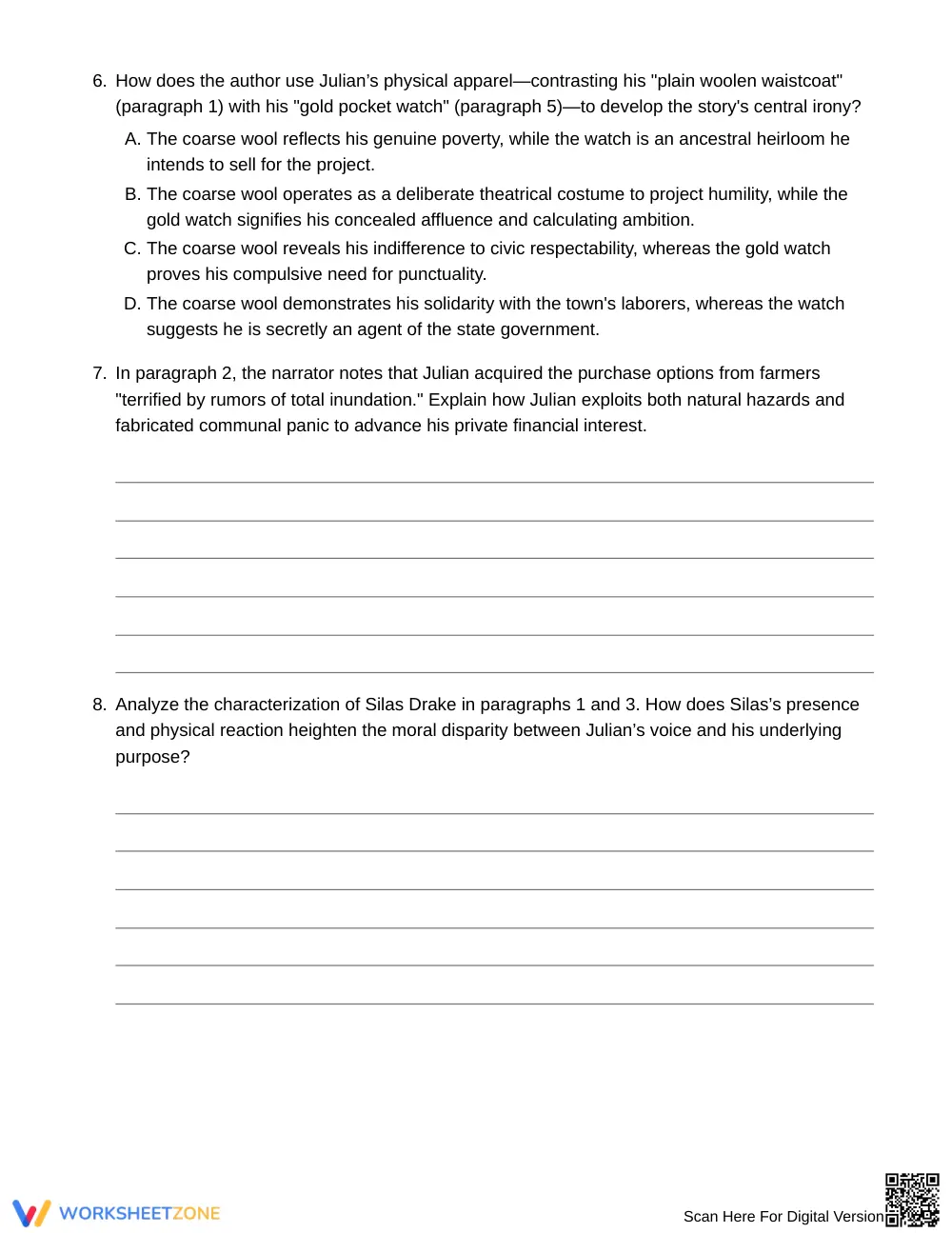
- Supported Practice (Part B — Tasks 4–9): Analytical short-answer prompts examining how costume choices, double entendre, sensory details, and foils expose the divide between spoken rhetoric and operational behavior.
- Independent Practice (Part C — Tasks 10–12): High-demand evaluative tasks requiring students to defend critical claims regarding verbal irony, symbolic gestures, and authorial perspective on institutional opportunism.
This structured progression follows a gradual-release instructional model, moving learners systematically from literal narrative comprehension to sophisticated critical evaluation.
Standards Alignment
Primary Standard: `RL.11-12.6` — Determine an author's point of view or purpose in a text in which the rhetoric is particularly effective, analyzing how style and content contribute to the power, persuasiveness, or beauty of the text. Supporting standard `RL.11-12.1` guides textual citation to support inferences. Both standard codes can be copied directly into lesson plans, IEP goals, or district curriculum mapping tools.
How to Use It
Implement this worksheet during an American Realism or rhetorical analysis unit after introducing dramatic and verbal irony. As a formative assessment, review student responses to Part B, Task 5 to ensure students recognize how double entendre functions before they tackle the essay-style defenses in Part C. Expected completion time is 45 to 60 minutes.
Who It's For
This worksheet is tailored for Grade 11 English III, Advanced Placement Literature, and honors secondary English students ready for nuanced character analysis. Pair this practice with excerpts from William Dean Howells or Edith Wharton to deepen historical connections.
According to Fisher & Frey (2014), engaging students in close-reading routines that demand text-based synthesis of character rhetoric versus physical agency significantly increases interpretive reading comprehension. This Grade 11 analytical worksheet targets standard RL.11-12.6 by requiring students to distinguish what characters declare publicly from what their covert actions achieve. Across 12 multi-tiered tasks, students examine narrative point of view, authorial purpose, and aesthetic word choice within 7 total pages of instructional materials and comprehensive answer keys. By grounding literary evaluation in explicit textual contradictions, learners develop the evaluative literacy necessary for college-level textual inquiry and rigorous state assessments.


