































Complete Theater Backstage Word Search | Grades 5–6 ELA

Paste this activity's link or code into your existing LMS (Google Classroom, Canvas, Teams, Schoology, Moodle, etc.).
Students can open and work on the activity right away, with no student login required.
You'll still be able to track student progress and results from your teacher account.
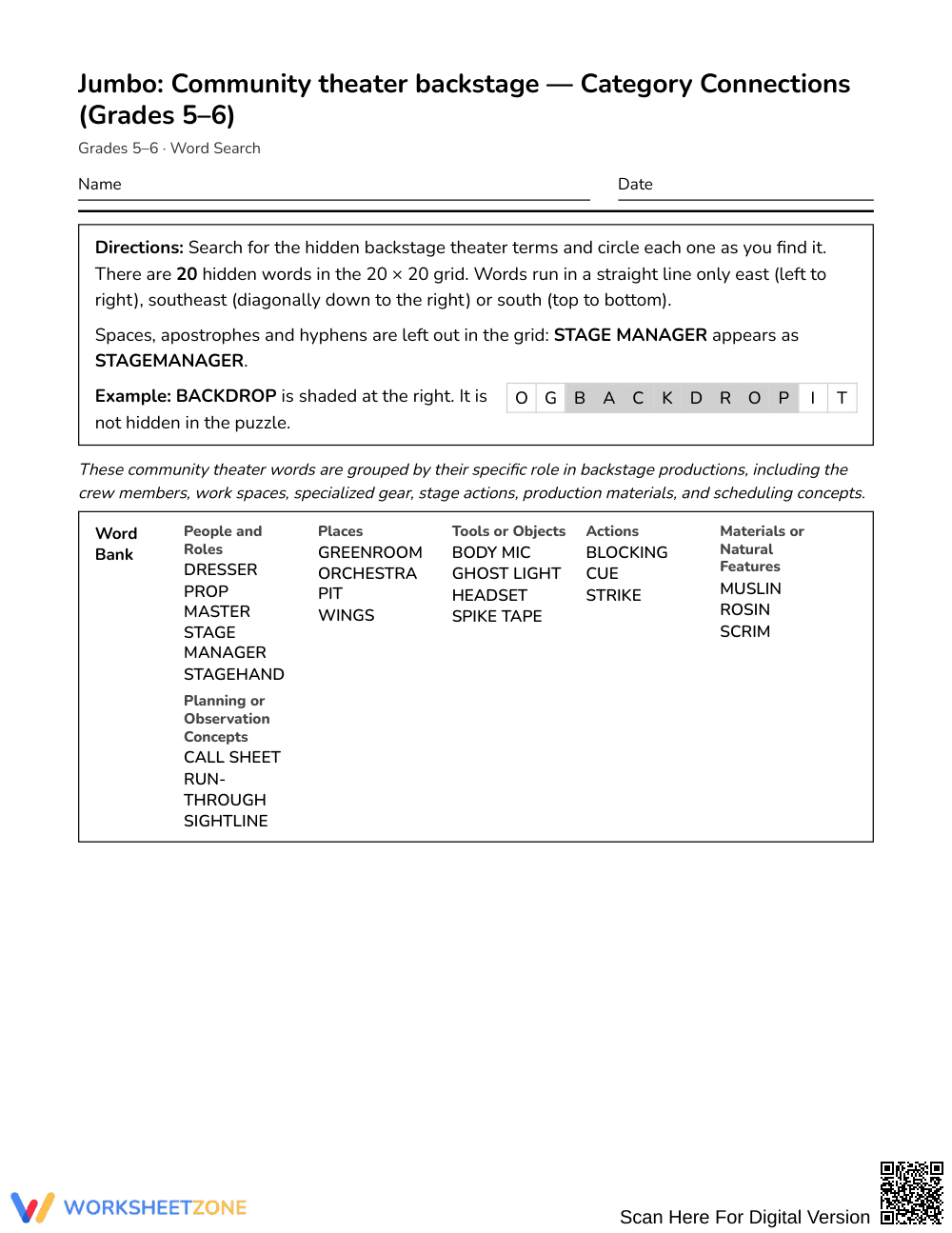
Build foundational drama literacy with this theater backstage word search designed for middle-grade readers. Students identify, read, and locate technical stage vocabulary in a clear puzzle format. This activity reinforces behind-the-scenes terminology, helping learners connect technical crew roles, production tools, and rehearsal routines directly to their study of dramatic literature and live stage performances.
At a Glance
- Grade: Grades 5–6 · Subject: English Language Arts
- Standard: Not standards-assessed — vocabulary enrichment
- Skill Focus: Community theater backstage terminology
- Format: 2 pages · 20 words · Answer key included · PDF
- Best For: Drama unit vocabulary introduction or review
- Time: 20–30 minutes
What's Inside
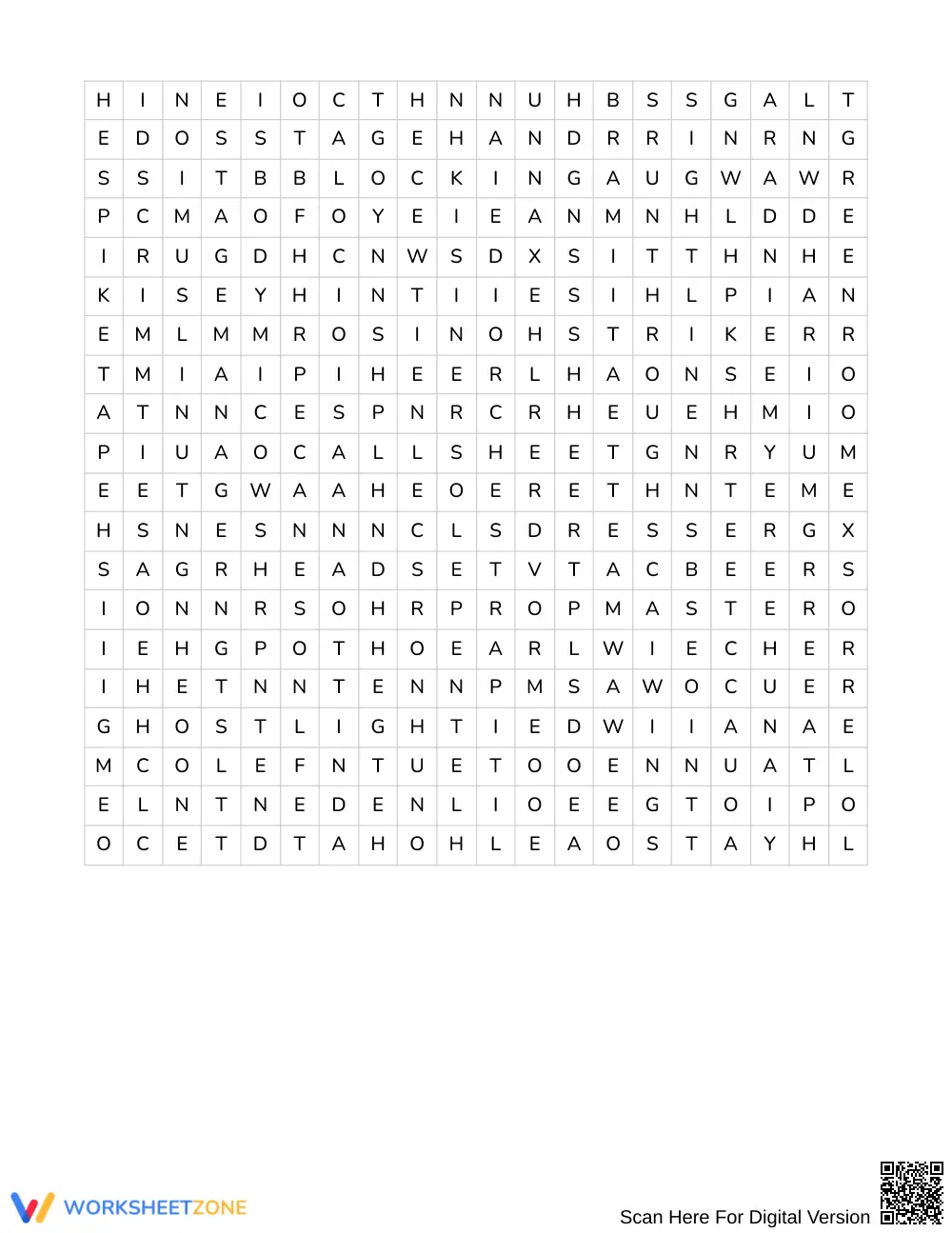
This 2-page printable activity features a clean, high-density letter grid and an organized category-based word bank containing 20 authentic theatrical terms. The set includes a comprehensive 4-page answer key showing exact letter paths for rapid grading or student self-checking. Clear structural headings cluster terms by function so students connect related theatrical concepts while solving the puzzle.
Puzzle Mechanics and Structure
The puzzle utilizes a spacious 20 x 20 letter grid engineered specifically for upper-elementary and intermediate learners. Hidden terms run in three designated directions: horizontal left-to-right (East), diagonal downward (Southeast), and vertical downward (South). To foster meaningful conceptual grouping rather than isolated letter hunting, the 20 target vocabulary items are categorized into six functional areas: People and Roles, Places, Tools or Objects, Actions, Materials, and Planning Concepts.
Standards Alignment
This resource serves as targeted vocabulary enrichment and is not aligned to a specific academic content standard. It reinforces essential dramatic arts domain-specific language that supports general reading comprehension and theater arts appreciation across upper-elementary and middle school grade spans.
How to Use It
Deploy this activity before direct instruction to activate prior knowledge during an introductory drama unit, or use it after reading a play script to solidify stagecraft concepts. As a formative assessment observation, circulate while students search to check if they recognize how categories like tools (headset, spike tape) differ from physical spaces (wings, greenroom). Expect completion to take between 20 and 30 minutes during independent desk work or literacy centers.
Who It's For
This resource is crafted for general education students in Grades 5–6, introductory drama clubs, and English language learners needing contextual exposure to specialized performing arts vocabulary. Pair this word search naturally with a classroom play read-aloud or a labeled backstage diagram anchor chart to bridge text-based drama with authentic technical theater production.
Explicit exposure to specialized, domain-specific terminology provides intermediate learners with the schema necessary to interpret complex informational texts and dramatic dialogue. According to Fisher & Frey (2014), systematic vocabulary acquisition is most effective when technical words are introduced within structured conceptual categories rather than presented as isolated definitions. This 20-word puzzle organizes backstage vocabulary into functional production domains, including technical crew roles, rehearsal procedures, and stage spaces. By scanning the 20 x 20 letter grid across horizontal, vertical, and diagonal paths, students repeatedly process orthographic letter patterns and consolidate visual word recognition. This targeted vocabulary enrichment supports middle-grade reading comprehension during drama units and script analysis, establishing a solid foundation for both academic literacy and practical stagecraft appreciation without requiring extraneous teacher preparation or assessment overhead.


