

































Complete Textual Defense Worksheet | Grade 10 English II

Paste this activity's link or code into your existing LMS (Google Classroom, Canvas, Teams, Schoology, Moodle, etc.).
Students can open and work on the activity right away, with no student login required.
You'll still be able to track student progress and results from your teacher account.
This Grade 10 literary analysis worksheet trains high school readers to construct evidence-based arguments by synthesizing motif, symbolism, and situational irony. Students analyze an original short story, evaluate competing interpretations, and defend the single most coherent textual reading through rigorous analytical writing. By confronting counterarguments directly, students master the critical discipline required for advanced high school literary analysis.
At a Glance
- Grade: 10 · Subject: High School English II
- Standard:
RL.9-10.1— Cite strong and thorough textual evidence to support analytical interpretations of explicit and inferred details- Skill Focus: Defending the Most Coherent Literary Pattern
- Format: 6 pages · 8 problems · Answer key included · PDF
- Best For: Close reading analysis, evidence synthesis, and essay preparation
- Time: 45–60 instructional minutes
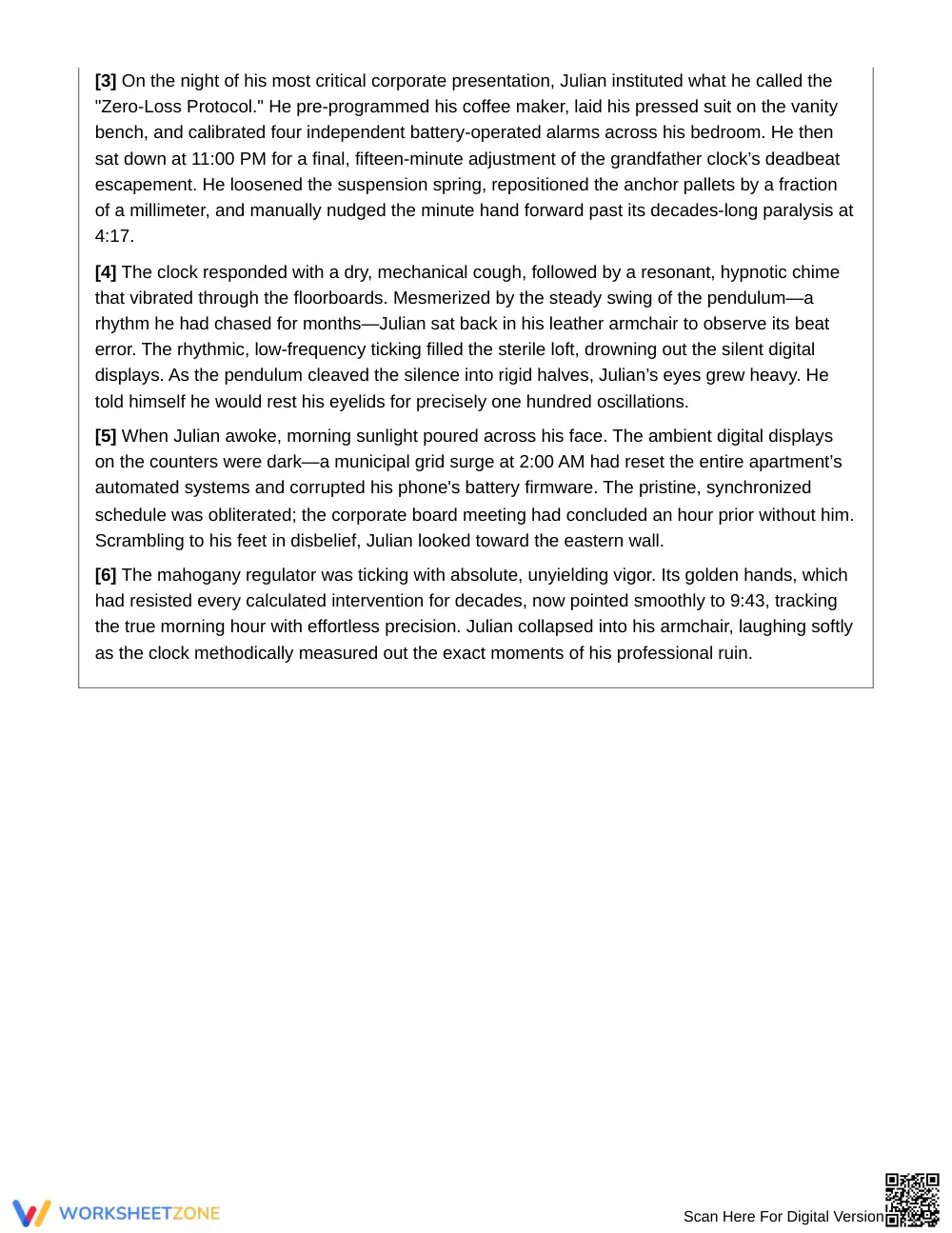
This resource features a complete original short story, "The Gilded Regulator," paired with an analytical knowledge box defining motif, symbolism, and situational irony. Spanning 6 pages, the resource contains 8 comprehensive analytical tasks organized into three distinct parts, followed by a complete 3-page explanatory answer key with sample model defenses and textual citations.
Skill Progression
- Guided practice (Part A, 2 tasks): Students isolate explicit details from paragraphs 1–3 to identify foundational motifs and establish baseline character traits with introductory analytical prompts.
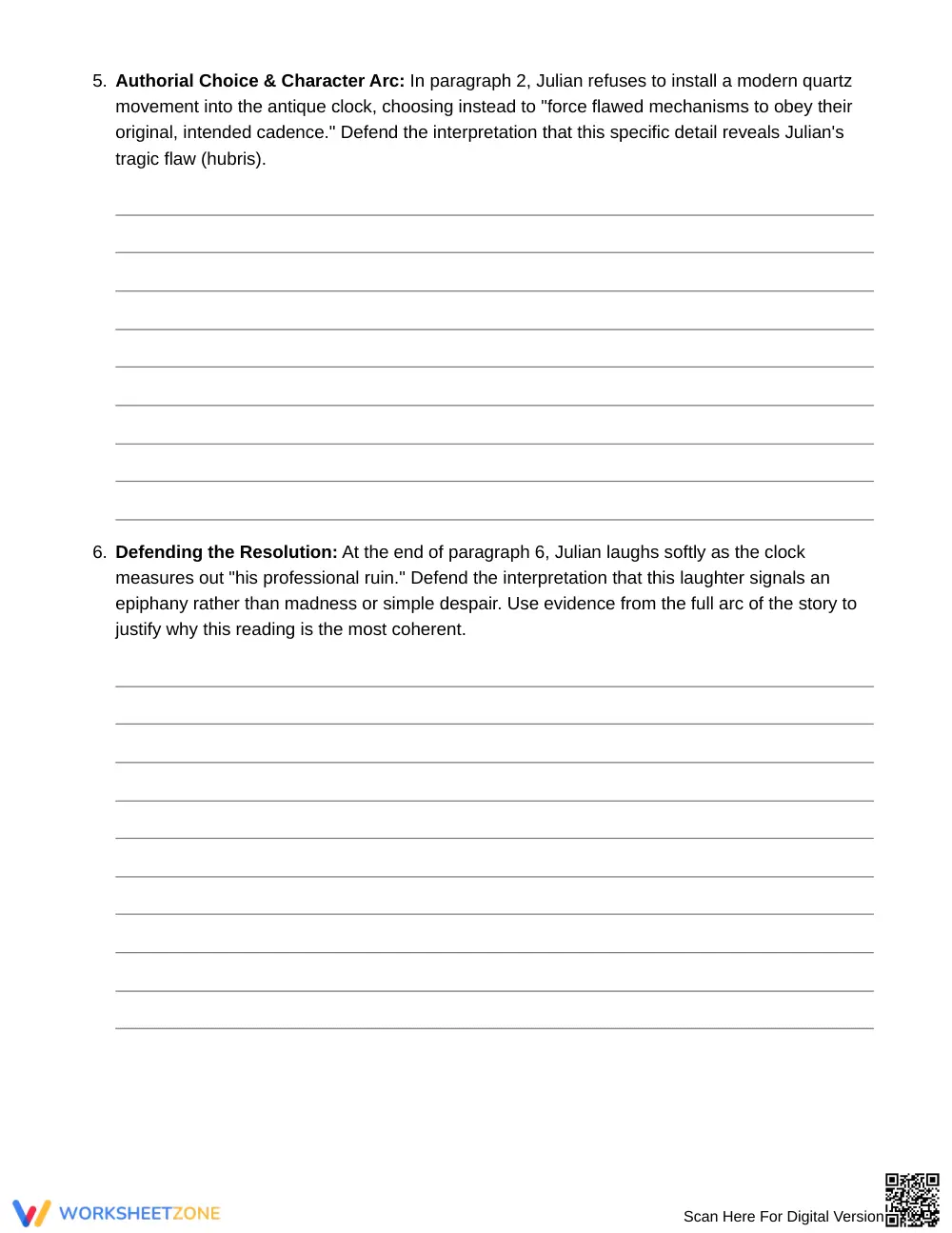
- Supported practice (Part B, 4 tasks): Students construct multi-sentence textual arguments defending thematic patterns, exploring character hubris, and analyzing situational irony across paragraphs 1–6.
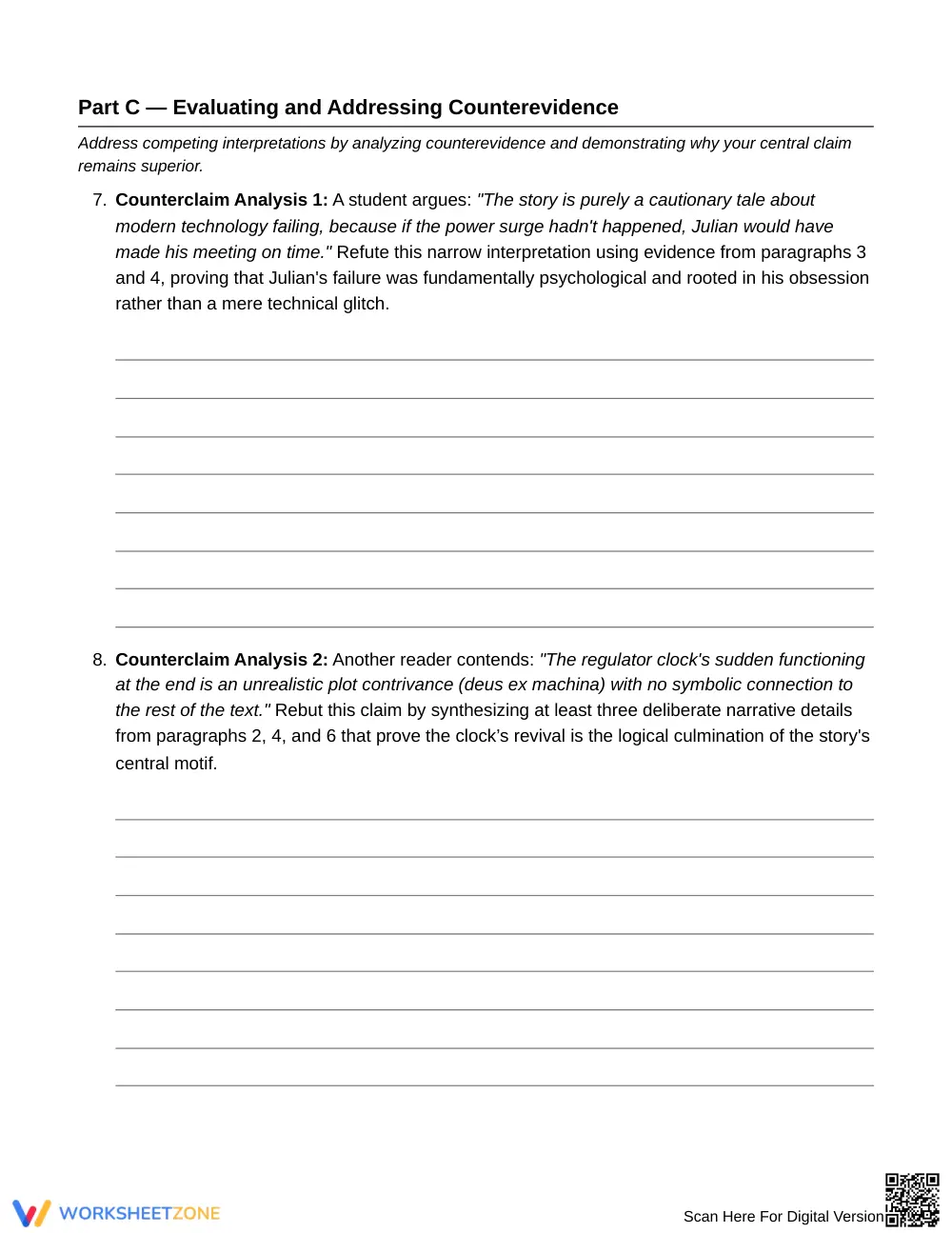
- Independent practice (Part C, 2 tasks): Students refute flawed counterclaims and defend coherent thematic readings against competing interpretations without intermediate prompts.
This sequence embodies a gradual-release instructional model that transitions learners from basic textual citation to rigorous, self-directed defense of sophisticated literary patterns.
Standards Alignment
This worksheet is aligned to primary standard `RL.9-10.1`: "Cite strong and thorough textual evidence to support analysis of what the text says explicitly as well as inferences drawn from the text." It also supports standard `RL.9-10.2` by requiring students to determine theme development through recurring motifs and character actions. Both standard codes can be copied directly into lesson plans, IEP goals, or district curriculum mapping tools.
How to Use It
Deploy this worksheet after direct instruction on motifs and literary irony, using Part A for guided partner practice and Part B for focused independent writing during a 45-to-60-minute instructional block. Alternatively, use Part C as a mid-unit formative assessment check: observe whether students rely merely on plot summary or actively synthesize multiple paragraphs to refute competing claims.
Who It's For
Designed for Grade 10 English II students, this activity provides critical rigor for standard, honors, and pre-AP coursework. Provide struggling writers with sentence starters for counterclaim rebuttals, or pair this activity with an anchor chart on authorial intent and situational irony to reinforce analytical expectations.
Under Common Core standard RL.9-10.1, tenth-grade students must move beyond surface-level plot recall to cite thorough textual evidence that defends the most coherent thematic interpretation of a complex literary work. As highlighted by Fisher & Frey (2014), gradual-release instructional frameworks that intentionally scaffold close-reading tasks empower secondary students to evaluate competing claims and substantiate cohesive arguments with textual precision. By asking learners to analyze how recurring motifs construct central themes and generate situational irony, this resource operationalizes rigorous text-dependent analysis. Students do not simply identify literary devices in isolation; they systematically evaluate counterevidence, dismantle flawed assumptions, and defend an overarching narrative logic across paragraphs. This deliberate pedagogical design equips high school readers with the evaluative reasoning required for advanced literary essays, standardized textual analysis tasks, and cross-curricular evidentiary writing across secondary English language arts curricula.


