





























Complete Text Structure Worksheet | Grade 10 English II
Paste this activity's link or code into your existing LMS (Google Classroom, Canvas, Teams, Schoology, Moodle, etc.).
Students can open and work on the activity right away, with no student login required.
You'll still be able to track student progress and results from your teacher account.
This informational text analysis worksheet guides Grade 10 students to evaluate how rhetorical framing, structural sequencing, and counterarguments drive policy conclusions. Working with paired texts analyzing a municipal transit pilot, high schoolers dissect competing viewpoints to master informational text architecture and defend evidence-based claims with critical precision.
At a Glance
- Grade: 10 · Subject: English II
- Standard:
RI.9-10.5— Analyze how an author's ideas or claims are developed and refined by text sections- Skill Focus: Connect framing, structural progression, and policy conclusions
- Format: 6 pages · 12 problems · Answer key included · PDF
- Best For: Informational text analysis and argument structure
- Time: 45–60 minutes
What's Inside
The 6-page printable resource includes a student-facing Text Architecture Guide, a structural analysis checklist, and two paired policy texts totaling six paragraphs. Students complete 12 analytical tasks across three progressive sections featuring multiple-choice and constructed-response prompts. A comprehensive 3-page answer key provides complete exemplar justifications and structural explanations for every question.
Skill Progression
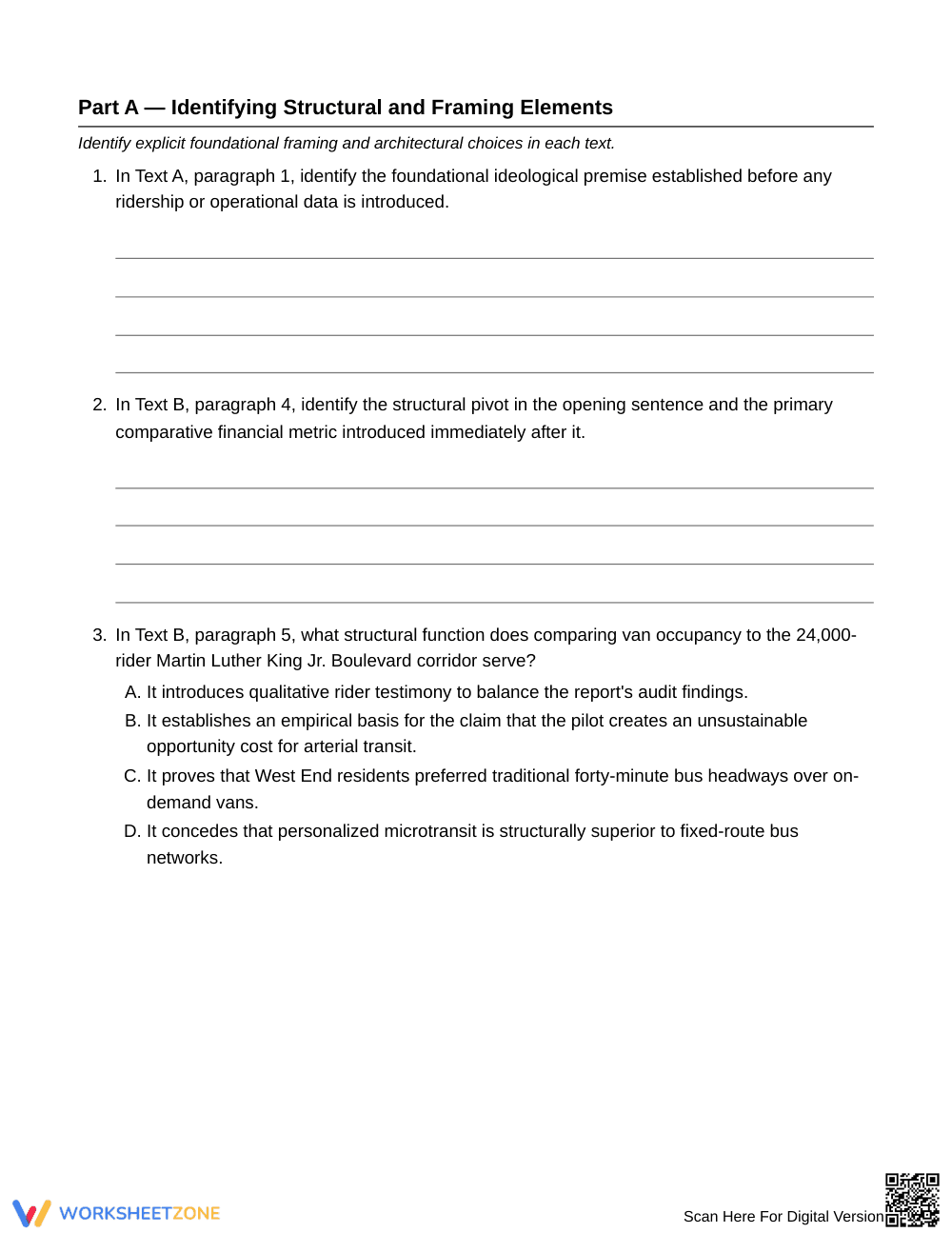
- Guided practice (Part A, Tasks 1–3): Students use the structural checklist to identify foundational premises, structural pivots, and comparative metrics with low scaffold support.
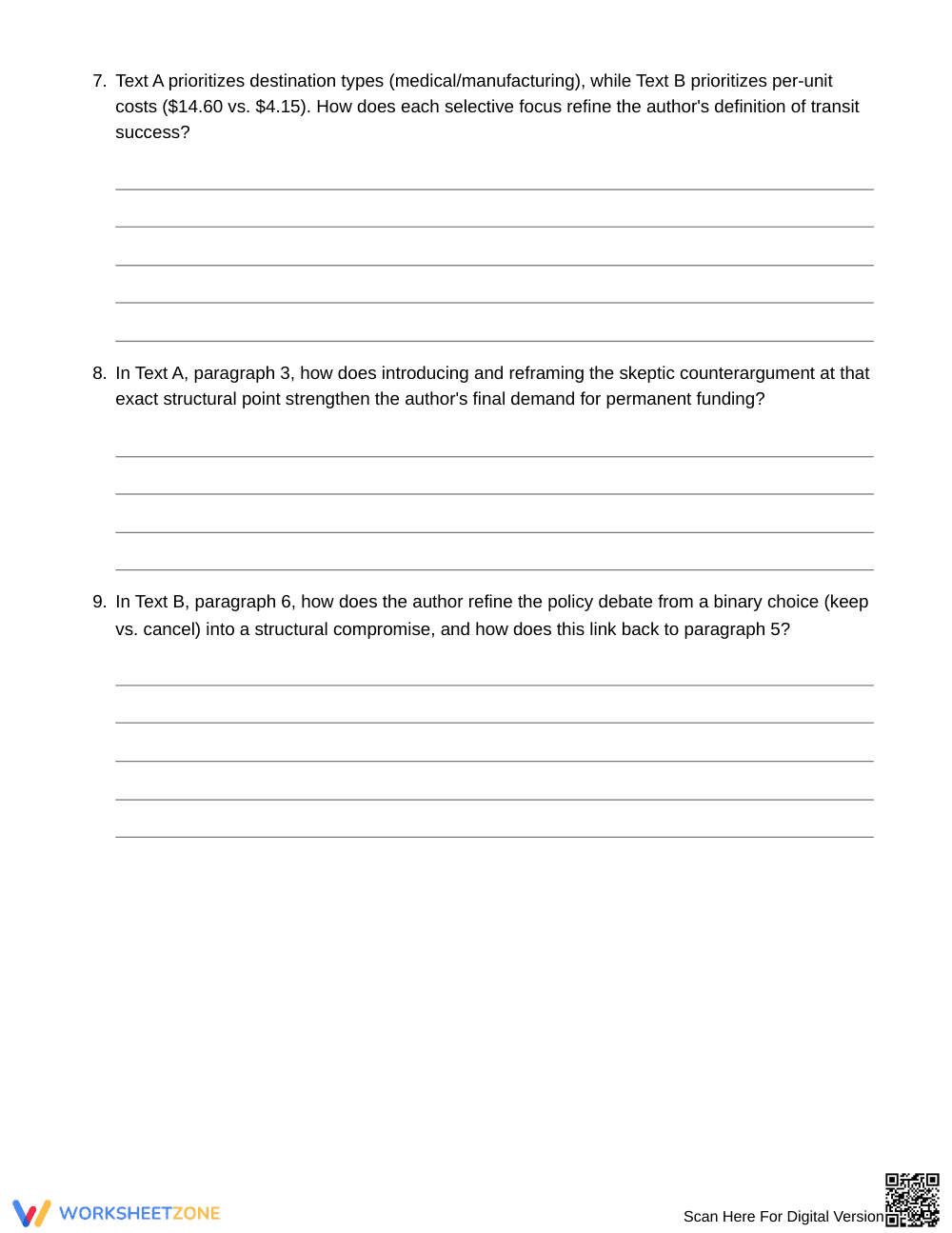
- Supported practice (Part B, Tasks 4–9): Students examine intermediate transitions, evidence prioritization, and counterargument placement across six analytical prompts.
- Independent practice (Part C, Tasks 10–12): Students independently evaluate structural trajectories, justify rhetorical choices, and synthesize how text architecture shapes policy debates.
This structured progression follows the gradual-release model, moving learners smoothly from direct identification to high-level synthesis.
Standards Alignment
This resource aligns directly with `RI.9-10.5`: Analyze in detail how an author's ideas or claims are developed and refined by particular sentences, paragraphs, or larger portions of a text. It also supports `RI.9-10.8` through the critical delineation and evaluation of competing policy arguments. Both standard codes can be copied directly into lesson plans, IEP goals, or district curriculum mapping tools.
How to Use It
Deploy this worksheet after direct instruction on rhetorical devices and argument organization during an informational text unit. For close-reading analysis, have student pairs annotate Text A and Text B before answering Part B collaboratively. Formatively assess mastery by observing whether students recognize how Text B reframes transit deficits as arterial opportunity costs. Expect 45 to 60 minutes for complete individual or paired completion.
Who It's For
Designed for Grade 10 English II students, this rigorous resource supports on-level learners, honors cohorts, and AP prep students needing practice with complex non-fiction. Provide sentence starters for developing writers or pair this activity with an anchor chart detailing structural transition markers and metric framing strategies.
Under educational frameworks aligned with Common Core standard RI.9-10.5, high school English language arts students must master the ability to analyze how an author's ideas or claims are developed and refined by particular sentences, paragraphs, or text sections. Research by Fisher & Frey (2014) demonstrates that structured informational text analysis using paired passages and explicit architectural guides significantly improves adolescent reading comprehension and analytical writing. By comparing opposing perspectives on a shared municipal pilot program, students examine how foundational premises, quantitative data points, and counterargument placement actively construct persuasive rhetoric rather than neutrally presenting facts. This 6-page worksheet provides 12 targeted tasks that systematically transition learners from identifying structural elements to synthesizing whole-text trajectories, establishing essential critical literacy skills required for college and career readiness.


