































Complete Suspense Pacing & Pauses Worksheet | Grade 7 ELA

Paste this activity's link or code into your existing LMS (Google Classroom, Canvas, Teams, Schoology, Moodle, etc.).
Students can open and work on the activity right away, with no student login required.
You'll still be able to track student progress and results from your teacher account.
This printable reading literature worksheet equips middle school students to examine how authors build dramatic tension through deliberate structural choices. Working with paired narrative passages, students analyze how shifting narrative pace, timed pauses, and dramatic irony generate suspense across parallel scenes. The 12 rigorous questions guide learners to connect specific text mechanics to overall reader impact.
At a Glance
- Grade: 7 · Subject: ELA
- Standard:
RL.8.6— Analyze how differences in points of view create effects like suspense or humor- Skill Focus: Structural mechanics of suspense, pacing, and withheld information
- Format: 5 pages · 12 problems · Answer key included · PDF
- Best For: Close reading practice and craft analysis
- Time: 40–50 minutes
What's Inside
This 5-page instructional resource begins with a structured Craft Checklist that defines pacing control, structural pauses, and withheld information. Students read two short, interlinked narrative texts featuring dual perspectives and cross-cutting timelines. A 12-task progression guides learners from explicit identification through deep synthesis, supported by a complete 2-page answer key with detailed text evidence explanations.
Skill Progression
- Guided Practice (Part A, 3 tasks): Students identify concrete craft techniques in the text, isolating ticking clocks, withheld details, and narrative pauses with low scaffold demands.
- Supported Practice (Part B, 6 tasks): Learners explain how cross-scene sensory details, syntax length, and dramatic irony interact to heighten tension between simultaneous character storylines.
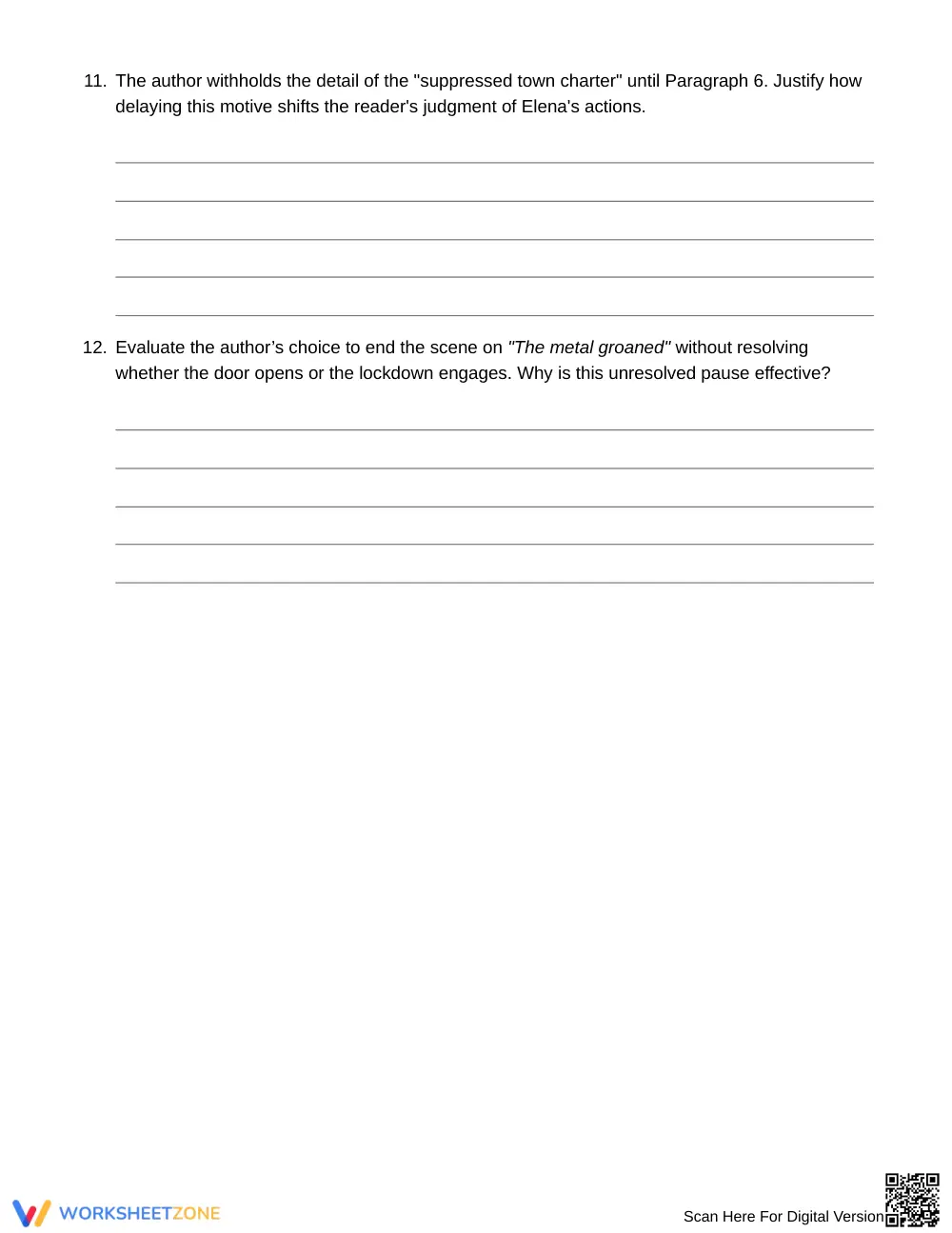
- Independent Practice (Part C, 3 tasks): Students evaluate whole-text structural effects, justifying why the author withheld key character motives and ended on an unresolved cliffhanger.
This systematic progression embodies the gradual release of responsibility model, ensuring students master foundational craft identification before tackling complex literary evaluation.
Standards Alignment
This resource aligns directly to `RL.8.6`: Analyze how differences in the points of view of the characters and the audience or reader (e.g., created through the use of dramatic irony) create such effects as suspense or humor. Students explicitly evaluate how information known to the reader but hidden from characters drives narrative tension. Both standard codes can be copied directly into lesson plans, IEP goals, or district curriculum mapping tools.
How to Use It
Deploy this activity during the guided practice phase of an author's craft unit or immediately after introducing dramatic irony. For formative assessment, monitor student responses in Part B to verify whether learners can connect short sentence syntax directly to perceived narrative speed rather than simply identifying punctuation. Expect the full 12-item worksheet to take 40 to 50 minutes of focused classroom work.
Who It's For
This material is designed for Grade 7 English Language Arts classrooms, advanced Grade 6 readers, or Grade 8 students reviewing structural analysis. Provide sentence stems for striving readers during Part B, and challenge advanced students to write an alternate perspective paragraph. Pair this worksheet alongside Edgar Allan Poe's short fiction or an anchor chart detailing narrative pacing devices.
According to Fisher & Frey (2014), guiding students through structured text-dependent questions that isolate authorial craft fosters deep comprehension and analytical independence. By systematically analyzing pacing variations, tactical scene pauses, and strategic information disparities under standard RL.8.6, middle school readers learn to articulate exactly how structural mechanics shape reader experience. This 5-page worksheet provides 12 targeted tasks that move middle school learners from identifying discrete literary devices to evaluating complex narrative tension across dual-perspective texts, reinforcing core literary analysis skills through intentional scaffolding and rigorous, standards-aligned practice.


