


























Views
Downloads

Complete Sequence or Cause Worksheet | Grade 6 ELA
Paste this activity's link or code into your existing LMS (Google Classroom, Canvas, Teams, Schoology, Moodle, etc.).
Students can open and work on the activity right away, with no student login required.
You'll still be able to track student progress and results from your teacher account.
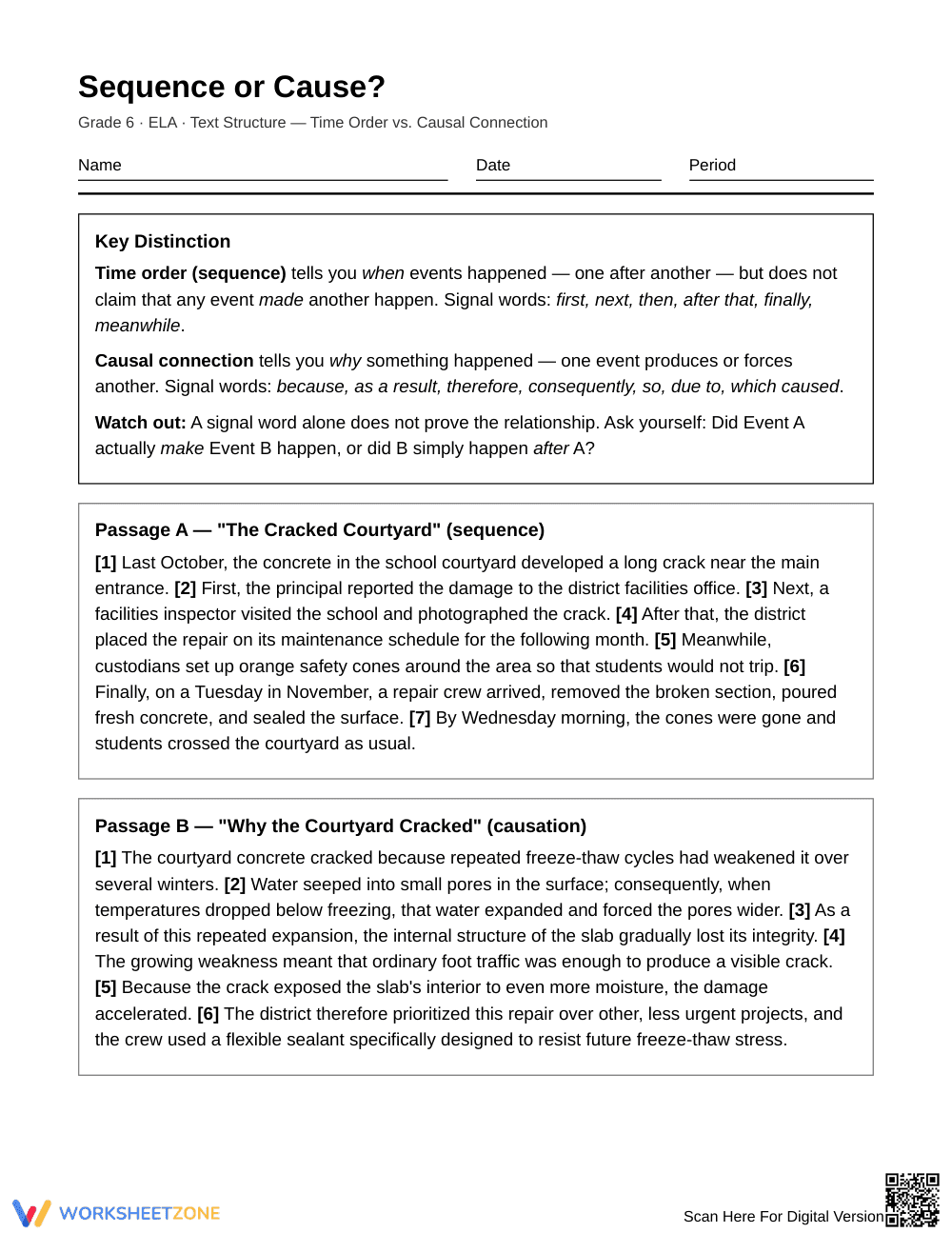
Mastering informational text structures requires distinguishing between chronological order and causal relationships. This printable worksheet guides sixth-grade readers through paired passages on the same event to classify transitions, evaluate authorial purpose, and revise misleading signal words. Students build analytical comprehension by determining what happened versus why it happened.
At a Glance
- Grade: 6 · Subject: ELA
- Standard:
RI.6.5— Analyze how a particular sentence contributes to overall text structure- Skill Focus: Sequence vs. Causal Text Structures
- Format: 5 pages · 10 problems · Answer key included · PDF
- Best For: Informational text structure analysis practice
- Time: 35–45 minutes
What's Inside
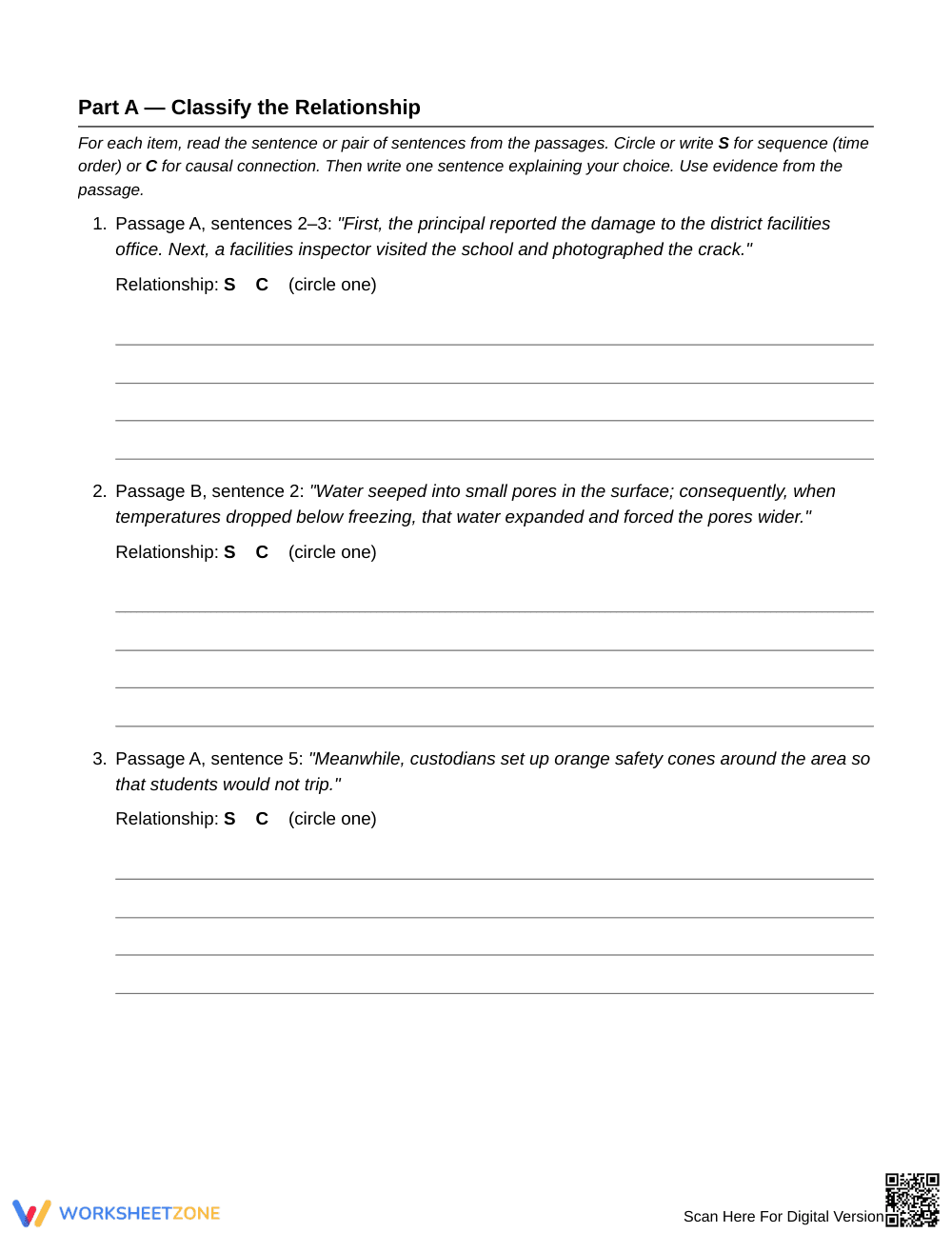
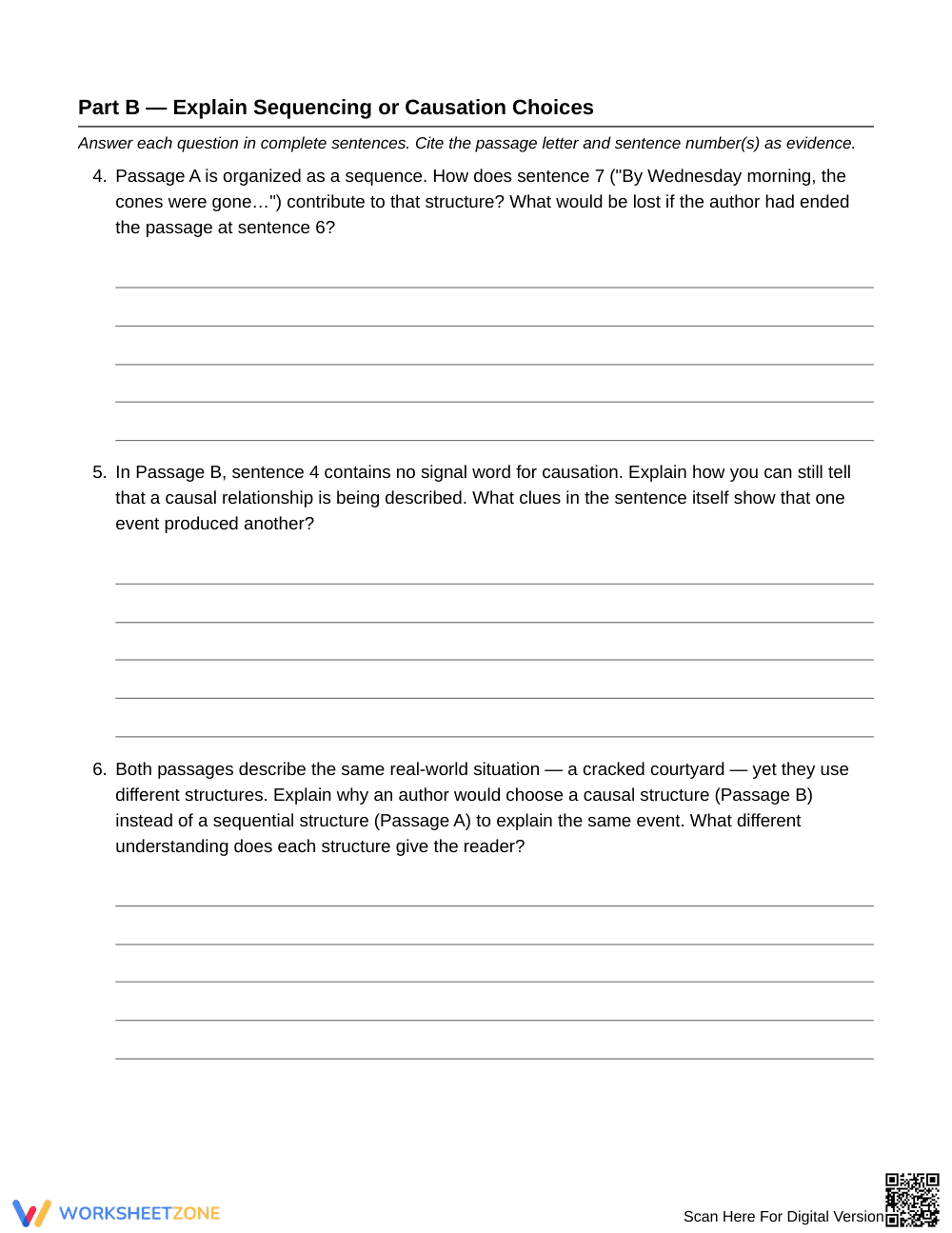
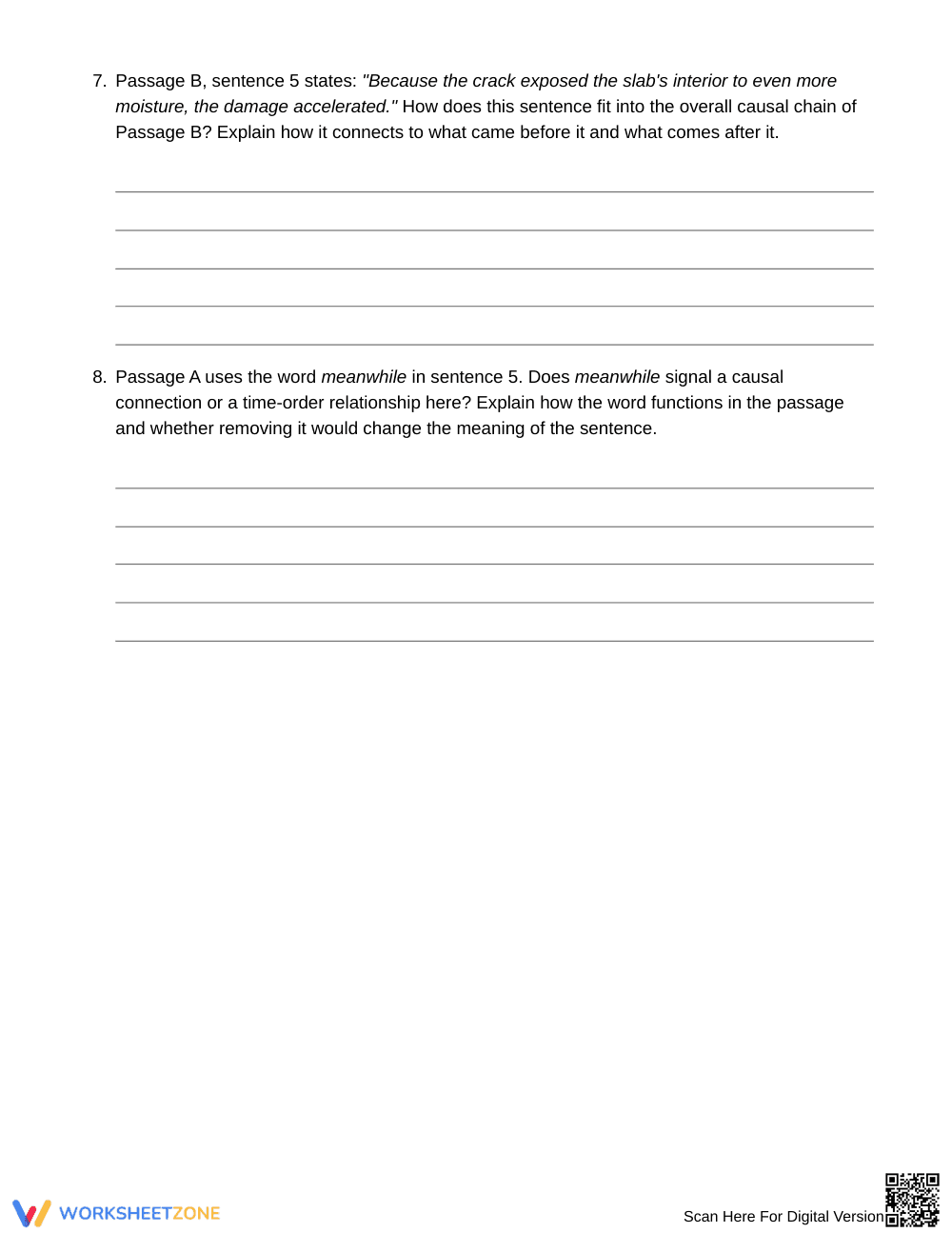
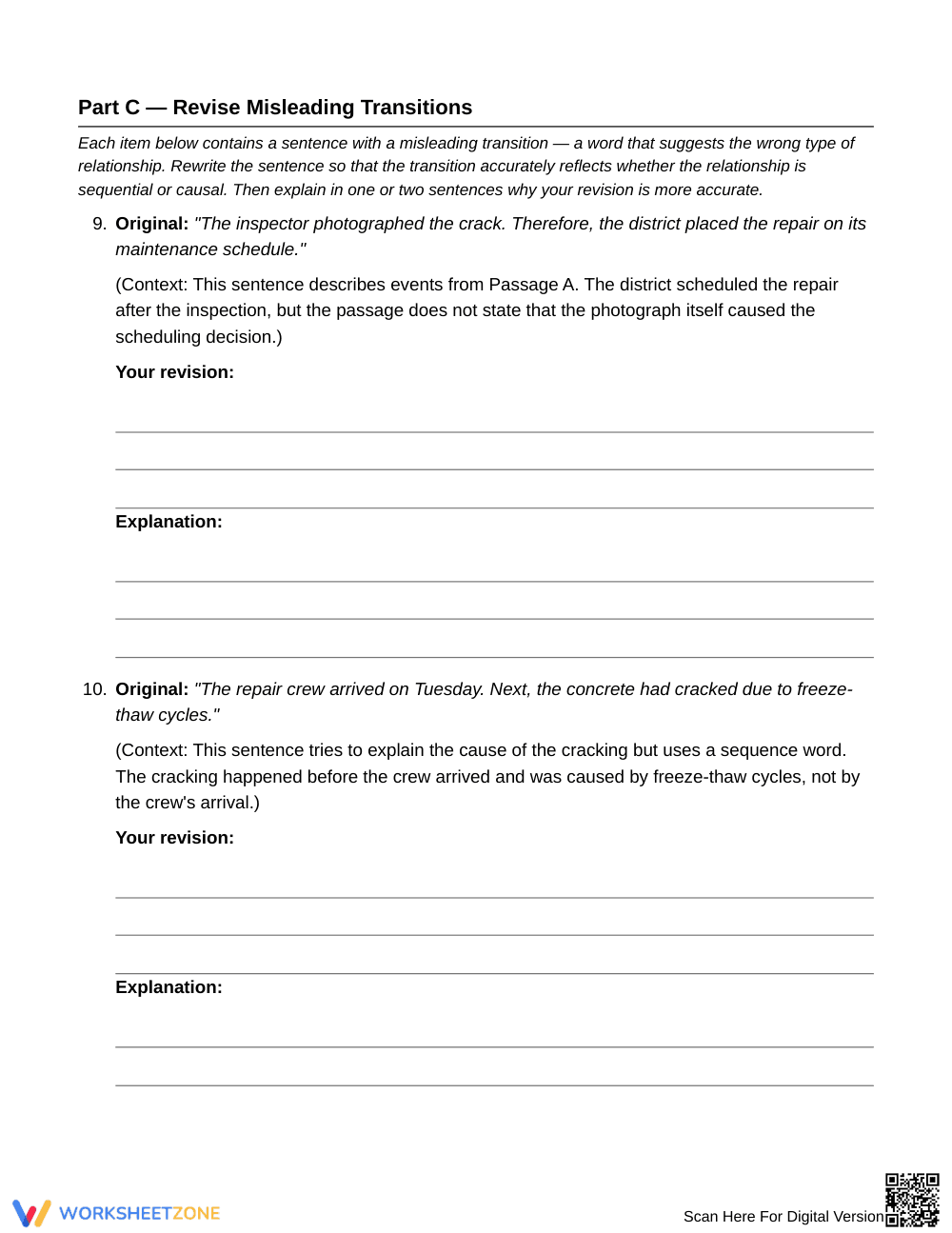
This 5-page resource includes two paired passages detailing a damaged courtyard through chronological sequence and causal lenses. Students complete 10 rigorous tasks across three sections. The packet features an anchor box defining signal words, passage-based classification questions, constructed responses requiring text evidence, transition editing tasks, and a 4-page answer key.
Skill Progression
- Guided Practice (Part A, 3 items): Students classify excerpted sentences as sequential or causal using the introductory rule box for support.
- Supported Practice (Part B, 5 items): Learners write text-based explanations analyzing how specific sentences shape overall text structure.
- Independent Practice (Part C, 2 items): Students correct misleading transitions and justify their revisions without scaffolding.
This progression embodies the gradual release model, guiding learners from basic identification to critical editing.
Standards Alignment
This worksheet aligns to primary standard `RI.6.5`: "Analyze how a particular sentence, paragraph, chapter, or section fits into the overall structure of a text and contributes to the development of the ideas." Supporting standard `RI.6.1` is reinforced as students cite evidence. Both standard codes can be copied directly into lesson plans, IEP goals, or district curriculum mapping tools.
How to Use It
Use this resource during or immediately following direct instruction on organizational patterns. Complete Part A as a whole-class check for understanding before releasing students to collaborate on Part B. Formatively observe whether students depend solely on transition words rather than logical connections. Learners typically complete the 10 tasks in 35 to 45 minutes.
Who It's For
Designed for Grade 6 ELA students, this activity also supports reading intervention groups and English language learners examining syntactic transitions. Differentiate by pre-highlighting signal words or having advanced students compose alternative paragraphs. Pair this worksheet with direct instruction on informational text patterns.
According to Fisher & Frey (2014), gradual release frameworks improve reading comprehension when students transition systematically from explicit modeling to independent analysis of informational discourse. This Grade 6 instructional resource aligns directly with standard RI.6.5 by prompting middle school readers to analyze how individual sentences and paragraphs shape the overarching organization of informational text. By examining parallel passages on the same event, students move beyond rote signal-word recognition to analyze whether textual details represent chronological sequence or causal relationships. The ten structured tasks require learners to categorize syntactic structures, cite textual evidence to defend authorial choices, and revise faulty transitions to restore logical coherence. Implementing structured comparative text analysis provides the scaffolded practice necessary to build metacognitive awareness of text architecture, establishing foundational literacy competencies essential for secondary academic reading performance.


