




























Views
Downloads



Complete Revising a Position Worksheet | Grade 8 ELA

Paste this activity's link or code into your existing LMS (Google Classroom, Canvas, Teams, Schoology, Moodle, etc.).
Students can open and work on the activity right away, with no student login required.
You'll still be able to track student progress and results from your teacher account.
This Grade 8 argumentative writing resource teaches students how to refine rigid claims into nuanced, qualified positions when faced with competing real-world constraints. Working through a school technology policy case study, learners analyze conflicting stakeholder data, evaluate pragmatic compromises, and draft an evidence-based recommendation that balances educational equity with strict budget caps.
At a Glance
- Grade: 8 · Subject: ELA
- Standard:
W.8.1.a— Introduce claims, acknowledge and distinguish opposing claims, and organize reasons logically.- Skill Focus: Revise a Position When a Constraint Changes
- Format: 5 pages · 8 problems · Answer key included · PDF
- Best For: Argumentative writing revision and policy analysis
- Time: 45–60 minutes
What's Inside
The 5-page student packet centers on an informational source dossier contrasting a district technology board memo with a faculty oversight report. Across 8 analytical tasks, students engage with short-answer questions, multiple-choice policy evaluations, an argumentative drafting section (250–350 words), and a structural justification organizer. A detailed 4-page answer key provides complete model responses and grading rationales.
Skill Progression
- Guided practice (Part A, Items 1–2): Students analyze competing stakeholder viewpoints and isolate underlying fiscal, equity, and instructional constraints using targeted text evidence.
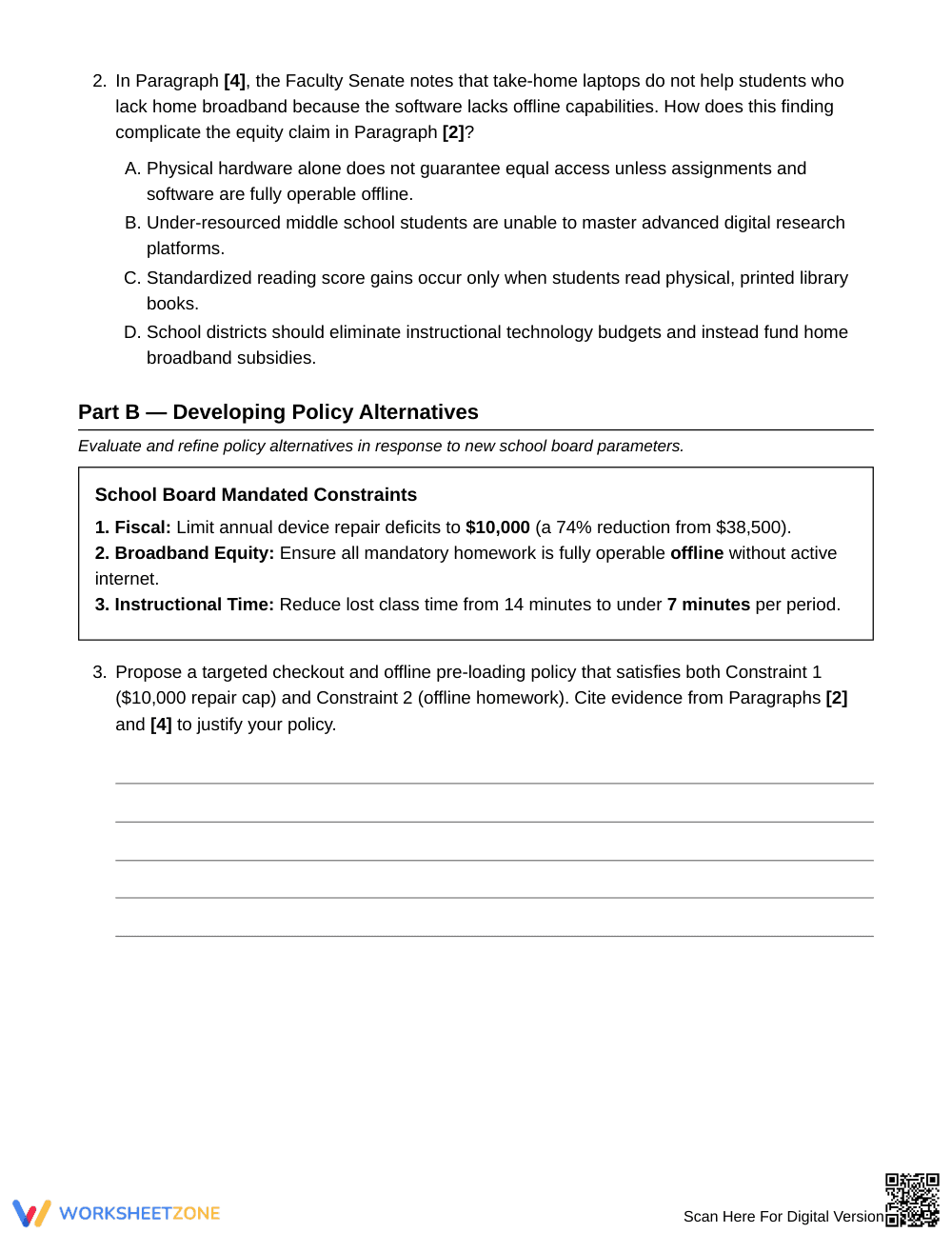
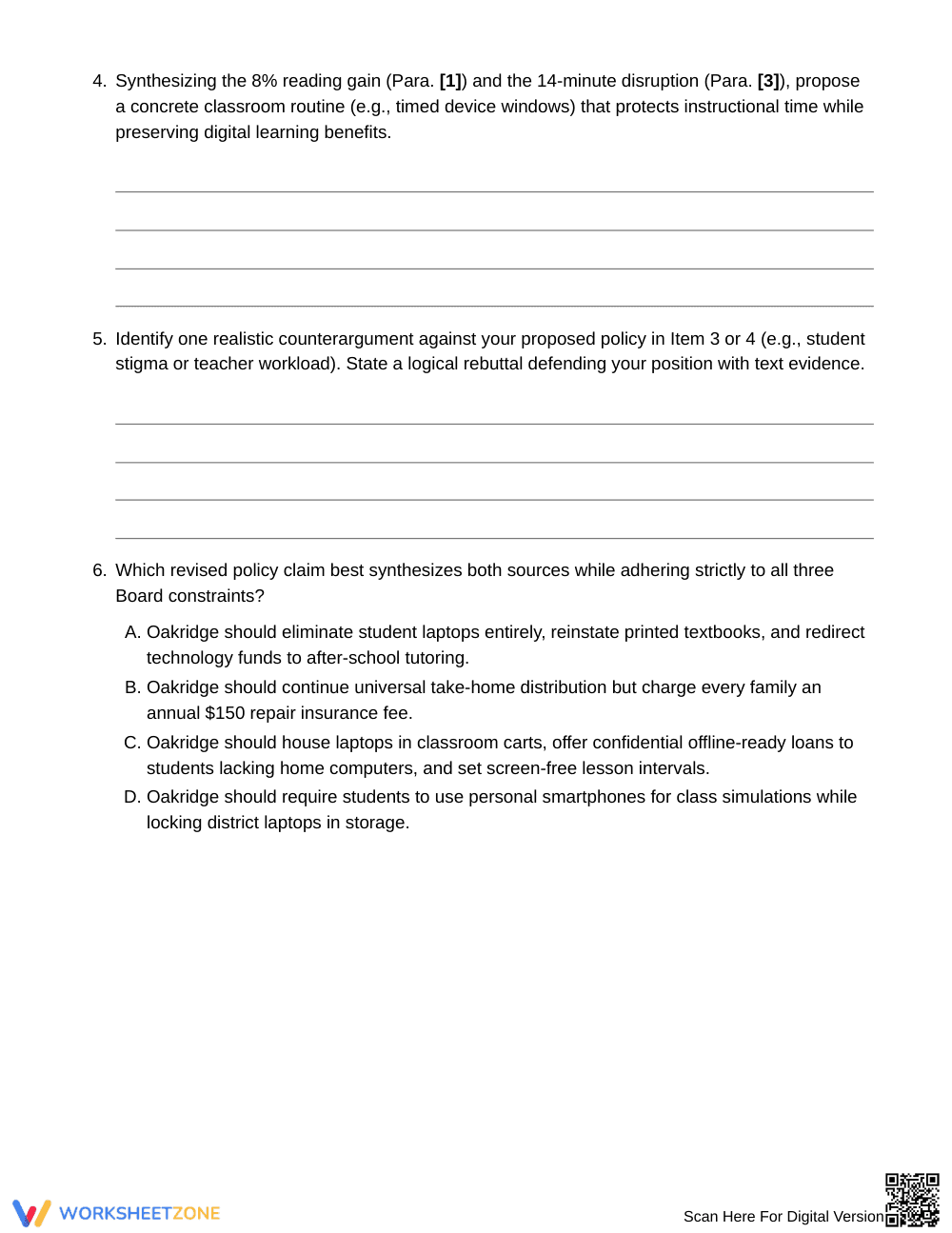
- Supported practice (Part B, Items 3–6): Learners evaluate three newly imposed school board constraints, develop actionable policy compromises, and address potential counterarguments.
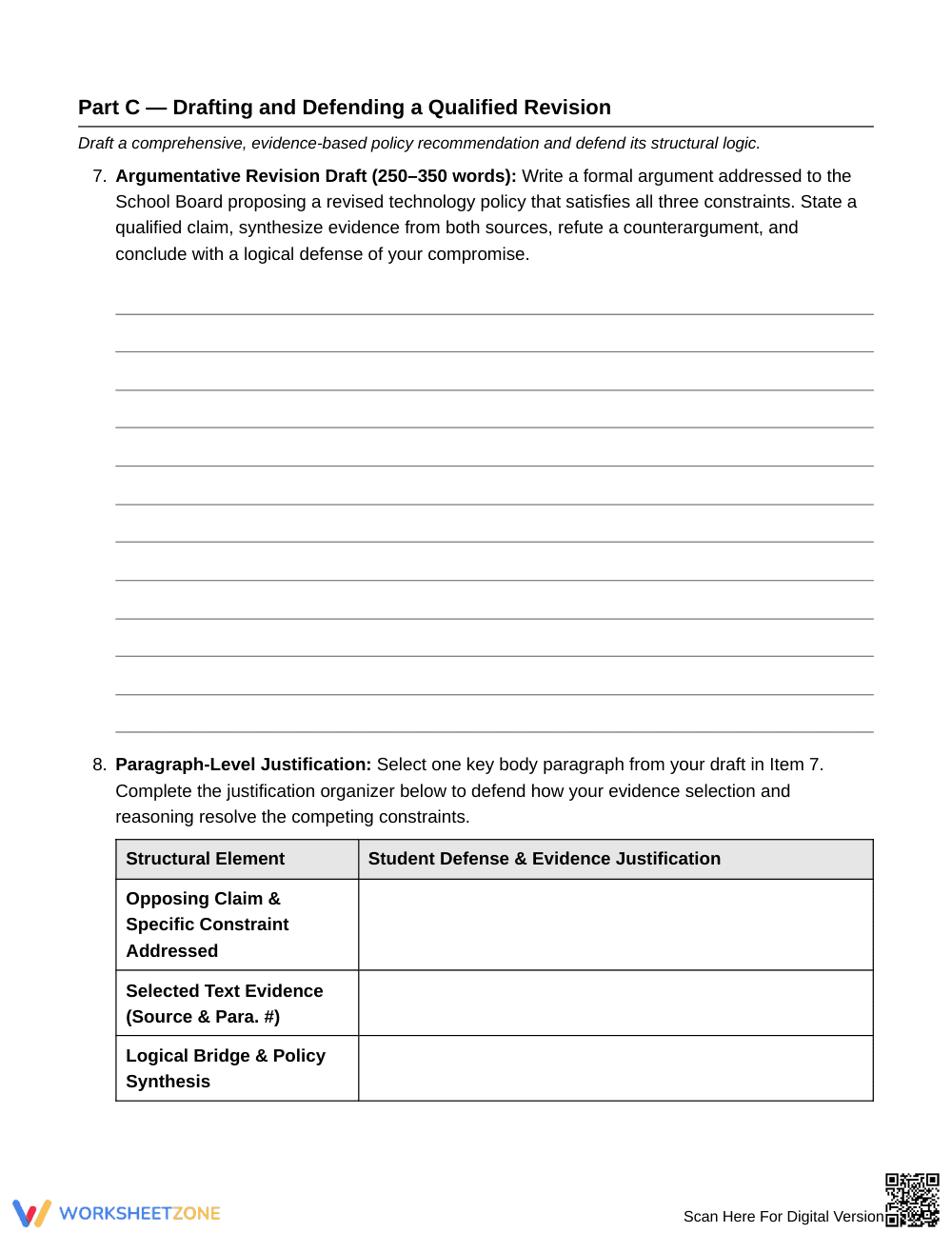
- Independent practice (Part C, Items 7–8): Writers produce a full 250–350 word qualified policy revision and justify their rhetorical choices in a structured paragraph-defense matrix.
This sequence mirrors the gradual-release model, shifting students from scaffolded source analysis to independent argumentative synthesis.
Standards Alignment
This worksheet directly targets `W.8.1.a`: "Introduce claim(s), acknowledge and distinguish the claim(s) from alternate or opposing claims, and organize the reasons and evidence logically." It also supports `RI.8.8` by requiring students to delineate and evaluate specific arguments and claims across dual informational texts. Both standard codes can be copied directly into lesson plans, IEP goals, or district curriculum mapping tools.
How to Use It
Use this resource after direct instruction on counterclaims and qualifying statements to transition students from theoretical understanding to applied synthesis. Alternatively, implement it as a structured mid-unit assessment for persuasive writing units. During Part B, circulate to observe how effectively students balance conflicting numbers (such as reducing a $38,500 deficit to $10,000 while maintaining access). The entire activity requires approximately 45 to 60 minutes of focused instructional time.
Who It's For
This lesson is designed for eighth-grade English language arts students developing argumentative sophistication. Built-in analytical prompts support struggling writers through structured inquiry, while the multi-variable policy scenario offers rigorous depth for advanced learners. Pair this packet directly with an anchor chart on claim-qualification language or a mentor text analysis lesson.
Eighth-grade students frequently struggle to move beyond binary, black-and-white thinking in argumentative writing. According to research on structured writing progression by Fisher & Frey (2014), middle school learners develop authentic reasoning skills most effectively when guided through purposeful tasks that demand the integration of counter-evidence. Aligning directly with standard W.8.1.a, this worksheet equips students to introduce claims, recognize counterarguments, and adjust their reasoning when logistical or financial constraints change. By confronting a simulated school board dilemma with 8 targeted tasks, students learn to formulate nuanced, qualified claims rather than stubborn, one-sided assertions. The gradual shift from source analysis to independent written defense solidifies critical thinking, ensuring students understand that academic argumentation requires continuous synthesis, logical qualification, and textual justification under real-world parameters. This evidence-centered approach empowers young writers to justify complex perspectives thoughtfully across secondary literacy coursework.


