

































Complete Repair Claims Worksheet | Grade 11 English III

Paste this activity's link or code into your existing LMS (Google Classroom, Canvas, Teams, Schoology, Moodle, etc.).
Students can open and work on the activity right away, with no student login required.
You'll still be able to track student progress and results from your teacher account.
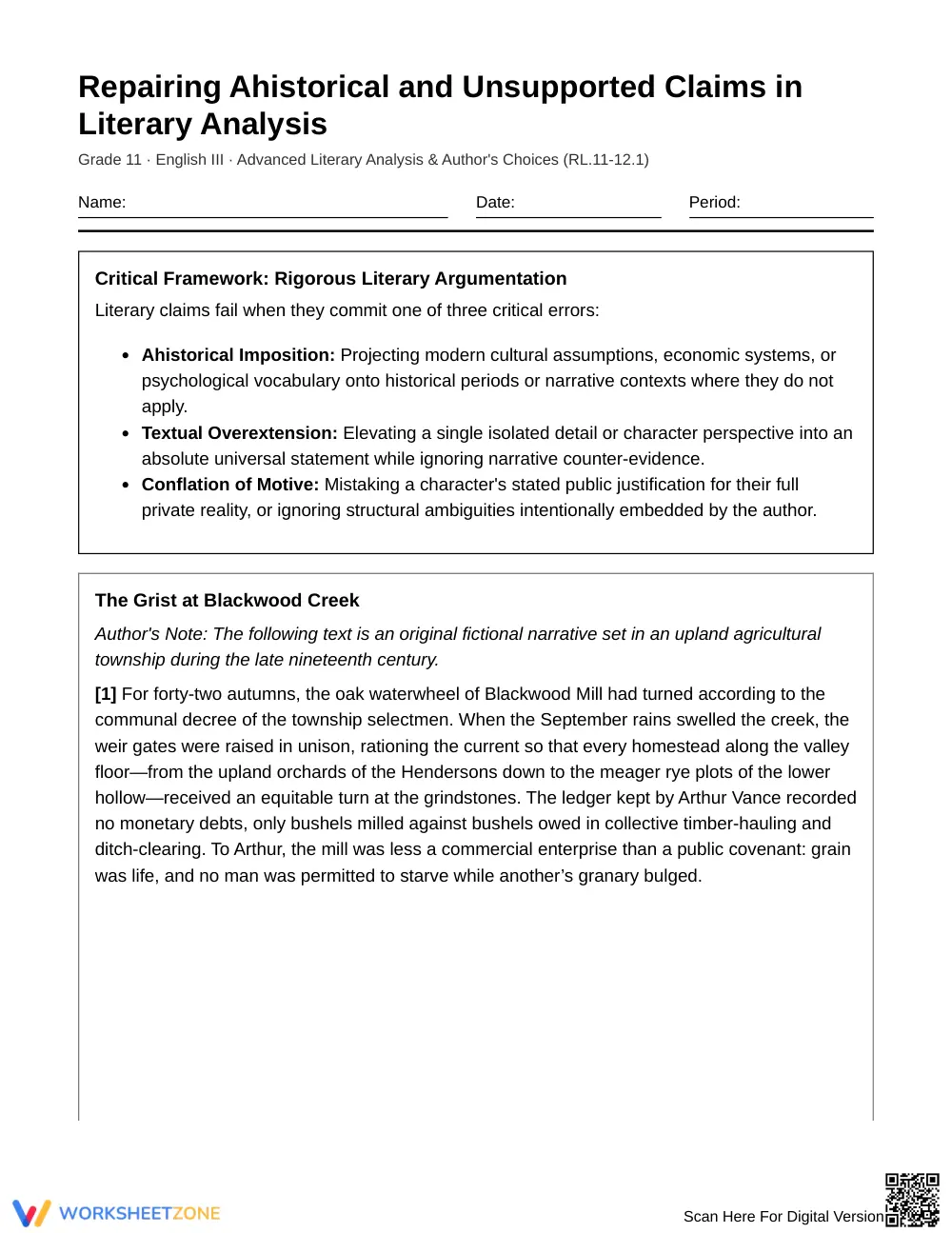
This Grade 11 literary analysis worksheet trains students to diagnose and repair flawed interpretive claims. Working with an original narrative passage, learners identify analytical errors like ahistorical assumptions and unsupported overextensions, refining their ability to construct defensible, text-anchored arguments.
At a Glance
- Grade: 11 · Subject: English III
- Standard:
RL.11-12.1— Cite strong and thorough textual evidence to support analysis and inferences.- Skill Focus: Repair an Ahistorical or Unsupported Claim
- Format: 6 pages · 10 problems · Answer key included · PDF
- Best For: Literary argumentation and essay revision
- Time: 45–60 minutes
What's Inside
The 6-page printable features an original five-paragraph historical narrative, a critical error framework, and an annotated worked model. Students complete 10 diagnostic and generative tasks across two distinct sections. A comprehensive 3-page answer key provides complete error classifications, textual explanations, and exemplar repaired claims for efficient grading.
Skill Progression
- Guided Practice: Students review error definitions and examine an annotated model deconstructing a flawed claim.
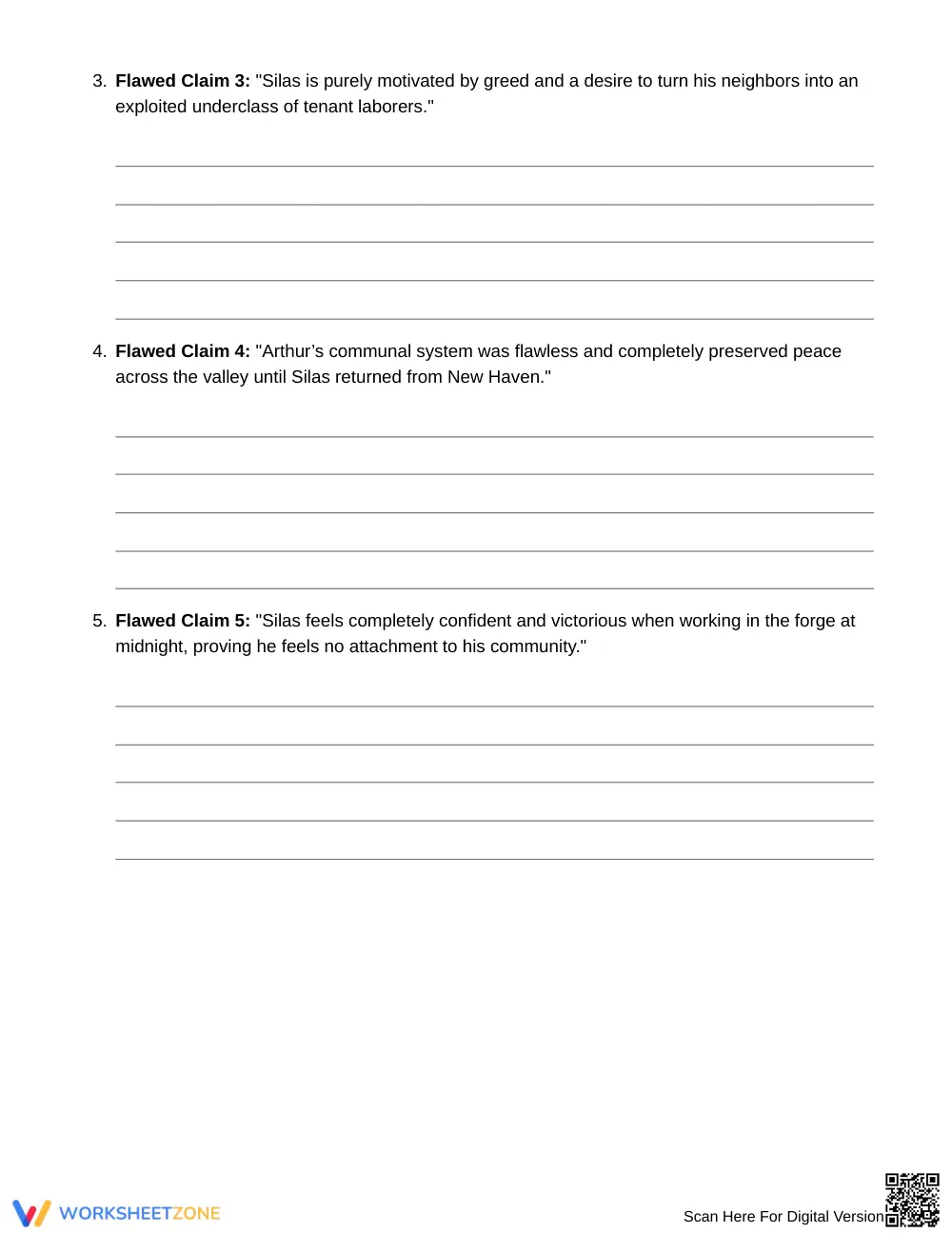
- Supported Practice (Tasks 1–5): Learners evaluate 5 flawed claims, categorizing each error type and explaining textual misalignments.
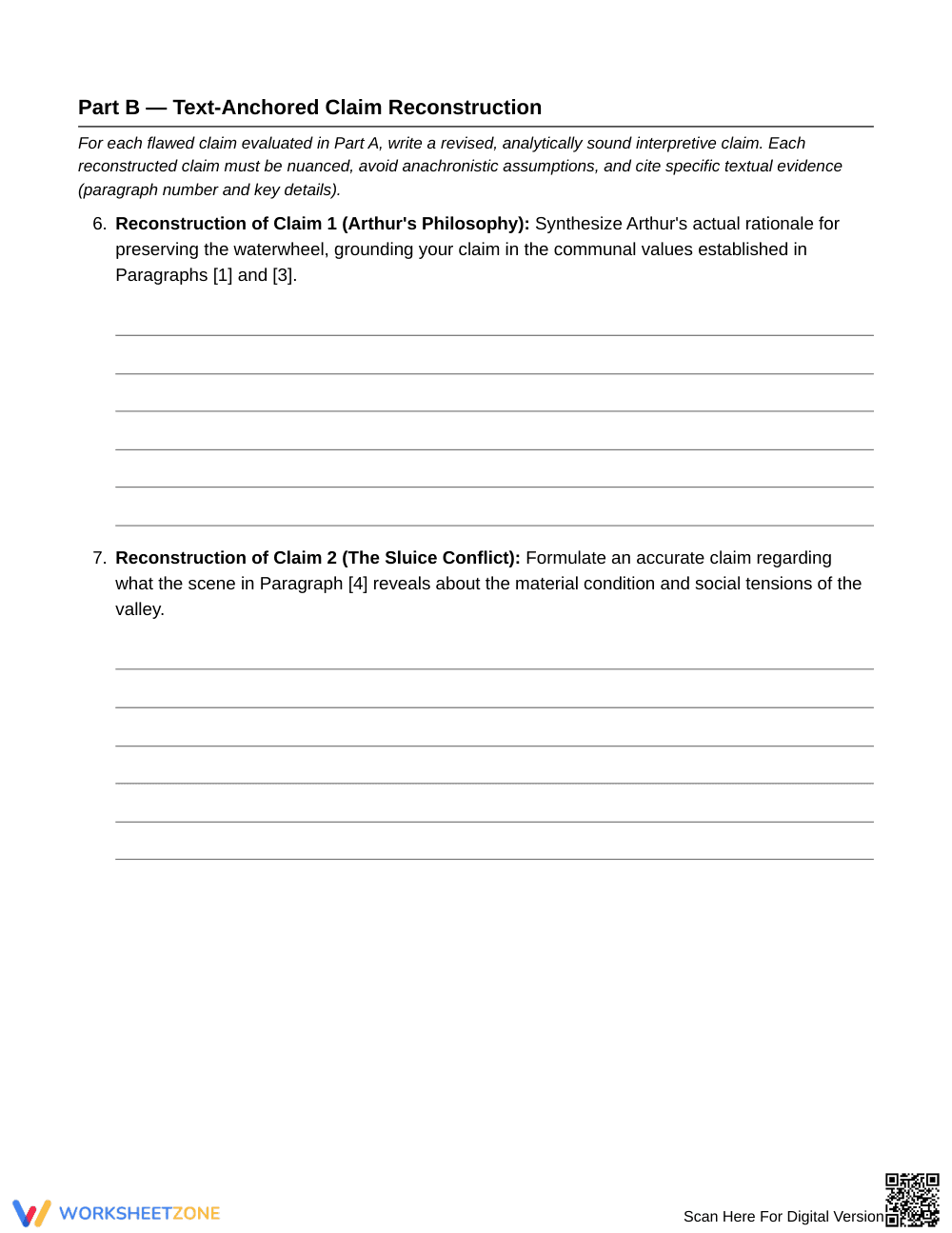
- Independent Practice (Tasks 6–10): Students synthesize passage evidence to reconstruct 5 nuanced, text-grounded analytical claims.
This gradual-release structure builds student competence from error identification to independent claim formulation.
Standards Alignment
This worksheet aligns directly with RL.11-12.1 by requiring students to cite strong and thorough textual evidence when analyzing complex themes. It also reinforces CCSS.ELA-LITERACY.W.11-12.1 by cultivating defensible argumentative claims. Both standard codes can be copied directly into lesson plans, IEP goals, or district curriculum mapping tools.
How to Use It
Use this resource after direct instruction on literary argumentation or as a targeted essay revision activity. Complete Part A collaboratively to check comprehension, then assign Part B for independent practice. Monitor students during Part A to verify they distinguish anachronisms from overgeneralizations. Typical completion time is 45 to 60 minutes.
Who It's For
Designed for Grade 11 English III and AP Literature students mastering evidence-based writing. It provides explicit scaffolds for developing writers while challenging advanced learners with nuanced textual analysis. Pair this worksheet with an anchor chart on historical context or a thesis-writing workshop.
Mastering the ability to evaluate and repair flawed textual claims under standard RL.11-12.1 is essential for advanced secondary literacy and college-level academic readiness. According to Fisher & Frey (2014), structured argumentation routines that require students to diagnose analytical misconceptions before producing revised text-based claims significantly enhance critical reasoning and reading comprehension. When learners actively identify interpretive fallacies—such as projecting contemporary social values onto historical settings or overextending isolated narrative details—they develop metacognitive vigilance over their own analytical writing. Grounding interpretive claims in thorough, verifiable textual evidence prevents the superficial assertions that frequently undermine student literary essays and research papers. By combining diagnostic error analysis with scaffolded claim reconstruction, this worksheet bridges the critical gap between passive reading and rigorous academic discourse, equipping eleventh-grade students with the analytical precision required across diverse postsecondary disciplines.


