




























Views
Downloads



Complete Reference Chains Worksheet | Grade 6 ELA

Paste this activity's link or code into your existing LMS (Google Classroom, Canvas, Teams, Schoology, Moodle, etc.).
Students can open and work on the activity right away, with no student login required.
You'll still be able to track student progress and results from your teacher account.
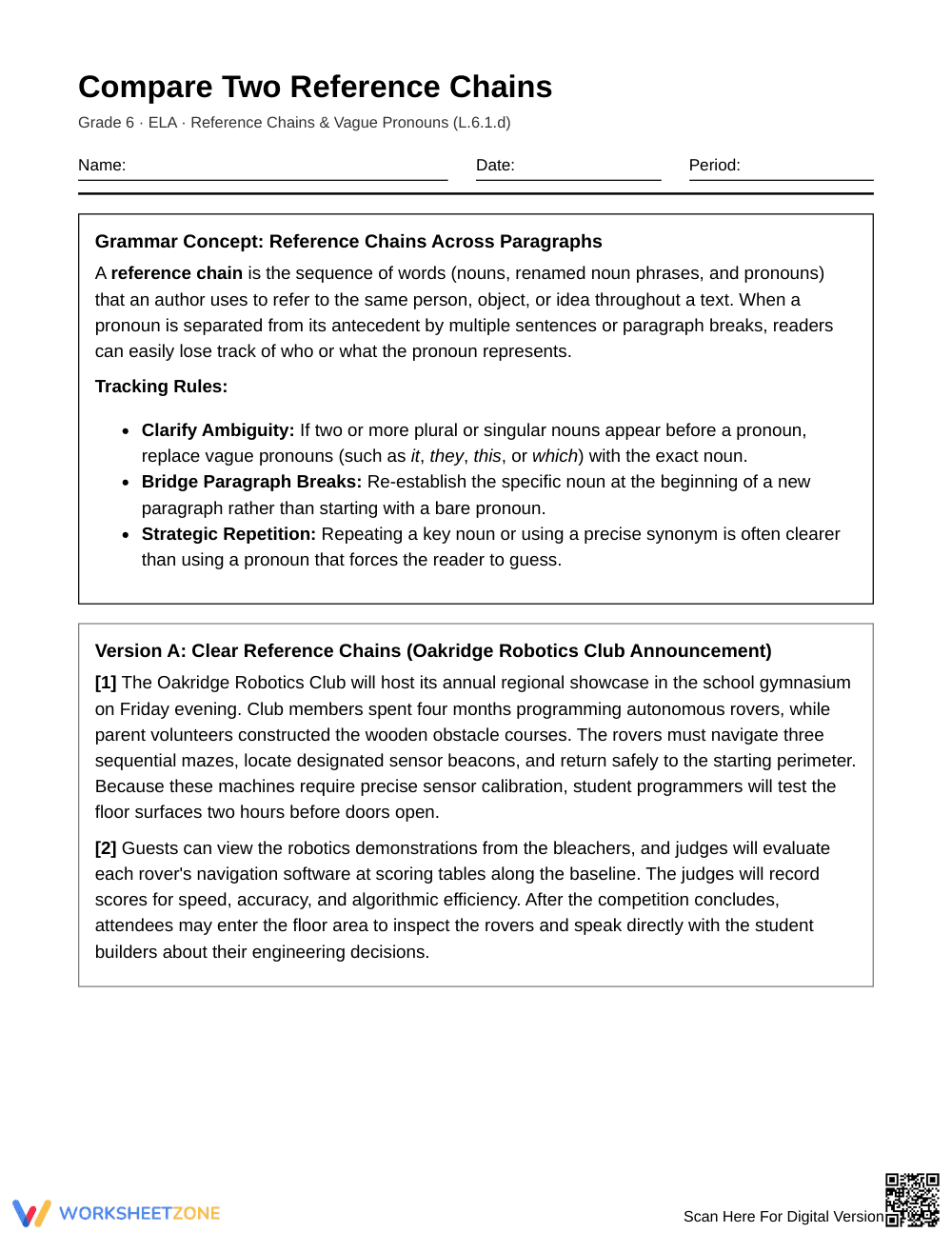
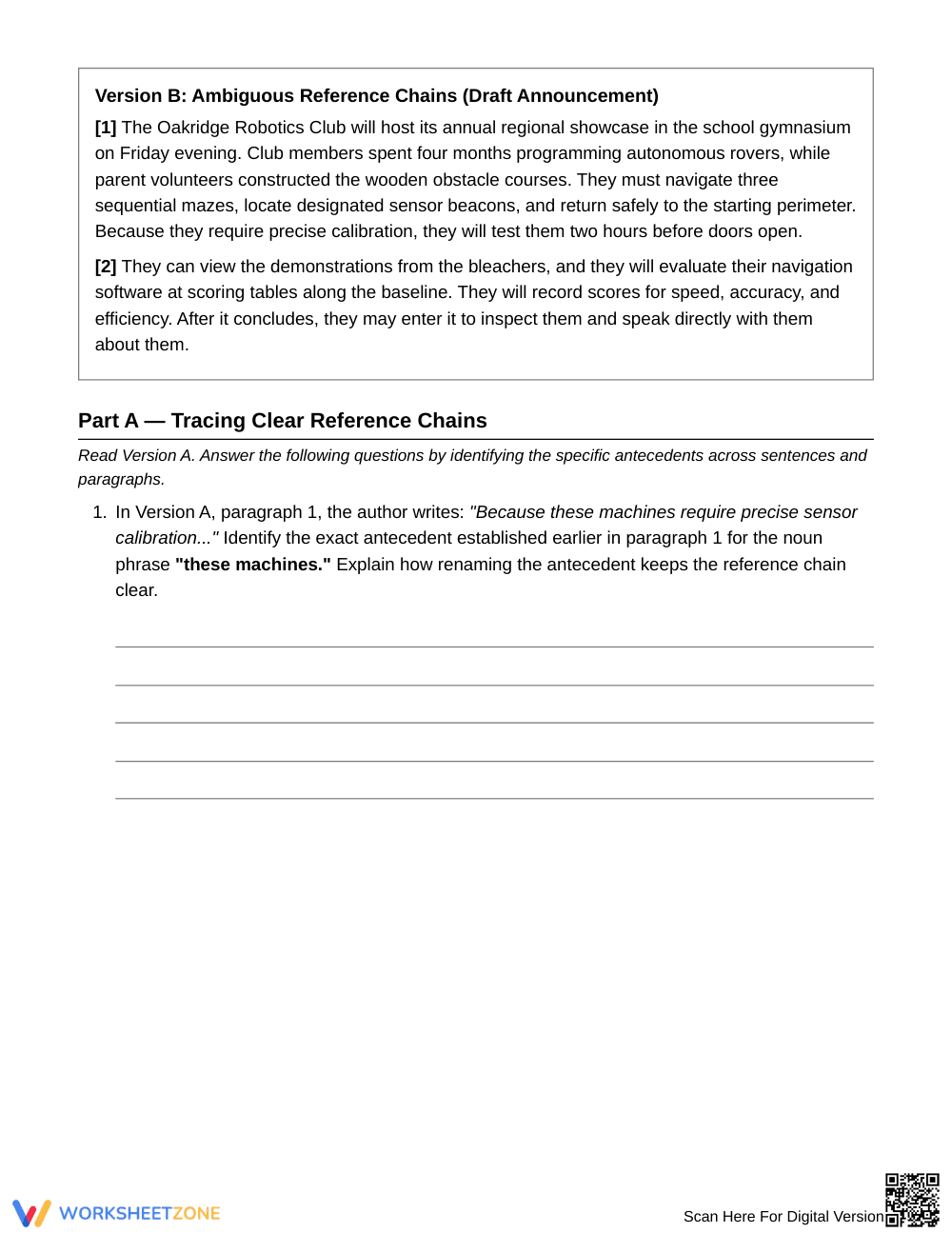
This Grade 6 ELA worksheet helps students analyze and repair vague pronoun references across paragraphs. By comparing two versions of a robotics club announcement, learners trace reference chains, identify ambiguous antecedents, and rewrite unclear sentences to ensure grammatical precision and cohesive writing.
At a Glance
- Grade: 6 · Subject: ELA
- Standard:
L.6.1.d— Recognize and correct vague pronouns with unclear antecedents across connected text- Skill Focus: Compare Two Reference Chains
- Format: 5 pages · 10 problems · Answer key included · PDF
- Best For: Grammar analysis and paragraph revision
- Time: 35–45 minutes
What's Inside
The 5-page activity provides a concise reference rule box, side-by-side comparative mentor texts, and 10 targeted analytical questions across three distinct sections. Students examine clear antecedent chains, diagnose and revise ambiguous phrasing, and evaluate strategic noun repetition. A comprehensive 2-page answer key provides complete model explanations and sample sentence revisions.
Skill Progression
- Guided practice (Part A, 2 tasks): Students identify explicit antecedents and renamed noun phrases in a well-constructed mentor text to observe how cohesive reference chains function across paragraph breaks.
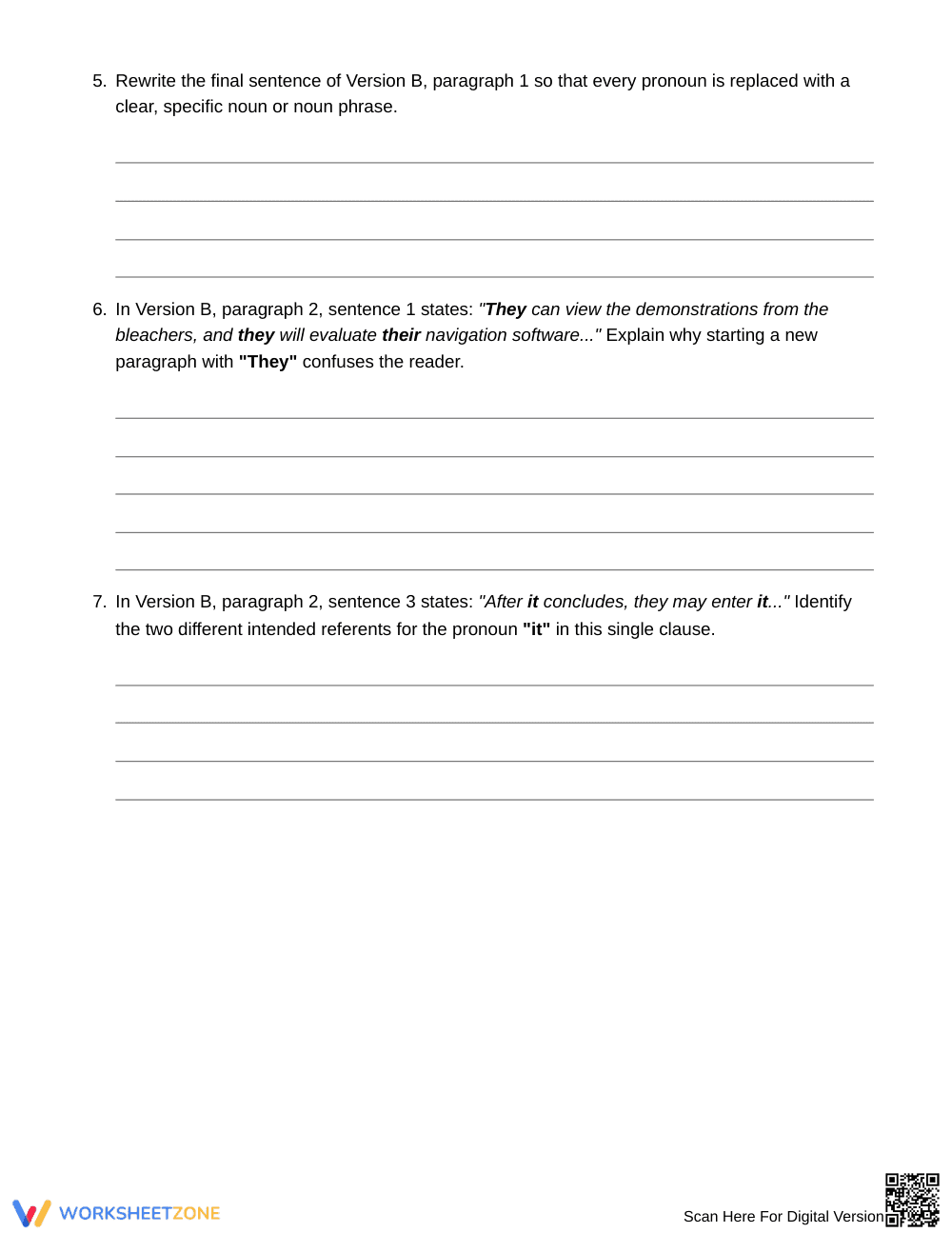
- Supported practice (Part B, 6 tasks): Learners diagnose competing noun antecedents in an ambiguous draft, explain breakdown points, and rewrite confusing clauses with precise nouns.
- Independent practice (Part C, 2 tasks): Students evaluate an editorial claim about noun repetition and formulate general rules for maintaining clarity across multi-paragraph compositions.
This structured progression uses the gradual-release framework to move students from passive recognition to active analytical revision.
Standards Alignment
This worksheet aligns directly with L.6.1.d: Recognize and correct vague pronouns (i.e., ones with unclear or ambiguous antecedents). Students evaluate multi-sentence discourse to eliminate confusing pronoun references across structural boundaries. Both standard codes can be copied directly into lesson plans, IEP goals, or district curriculum mapping tools.
How to Use It
Deploy this activity during the guided practice phase of an expository writing unit or after direct instruction on pronoun-antecedent agreement. As a formative assessment tip, check Part B, Question 5 to verify whether students can distinguish two separate referents assigned to the same pronoun. Students typically complete the 10 tasks in 35 to 45 minutes.
Who It's For
This resource is designed for sixth-grade English language arts students learning to eliminate vague pronouns in informational writing. It offers built-in scaffolding through mentor text comparison for striving writers, while providing rigorous revision challenges for advanced learners. Pair this printable worksheet with an anchor chart on cohesive devices or an interactive peer-editing workshop.
According to Fisher & Frey (2014), explicit instruction in text cohesion and reference tracking equips adolescent writers with the metacognitive tools needed to recognize semantic ambiguity. When middle school students analyze competing antecedents across paragraph boundaries, they develop a functional understanding of pronoun clarity that directly improves informational writing quality. Addressing standard L.6.1.d, this printable Grade 6 worksheet provides 10 scaffolded analytical tasks that guide learners to compare clear and ambiguous reference chains, diagnose vague pronouns such as "it" and "they," and justify strategic noun repetition. By evaluating how noun phrases bridge paragraph breaks, students transition from simple pronoun-antecedent agreement at the sentence level to sophisticated cohesion across extended texts. The integrated two-page answer key supports rigorous formative assessment and immediate corrective feedback during classroom writing instruction.


