
































Complete Qualified Verdict Worksheet | Grade 10 English II

Paste this activity's link or code into your existing LMS (Google Classroom, Canvas, Teams, Schoology, Moodle, etc.).
Students can open and work on the activity right away, with no student login required.
You'll still be able to track student progress and results from your teacher account.
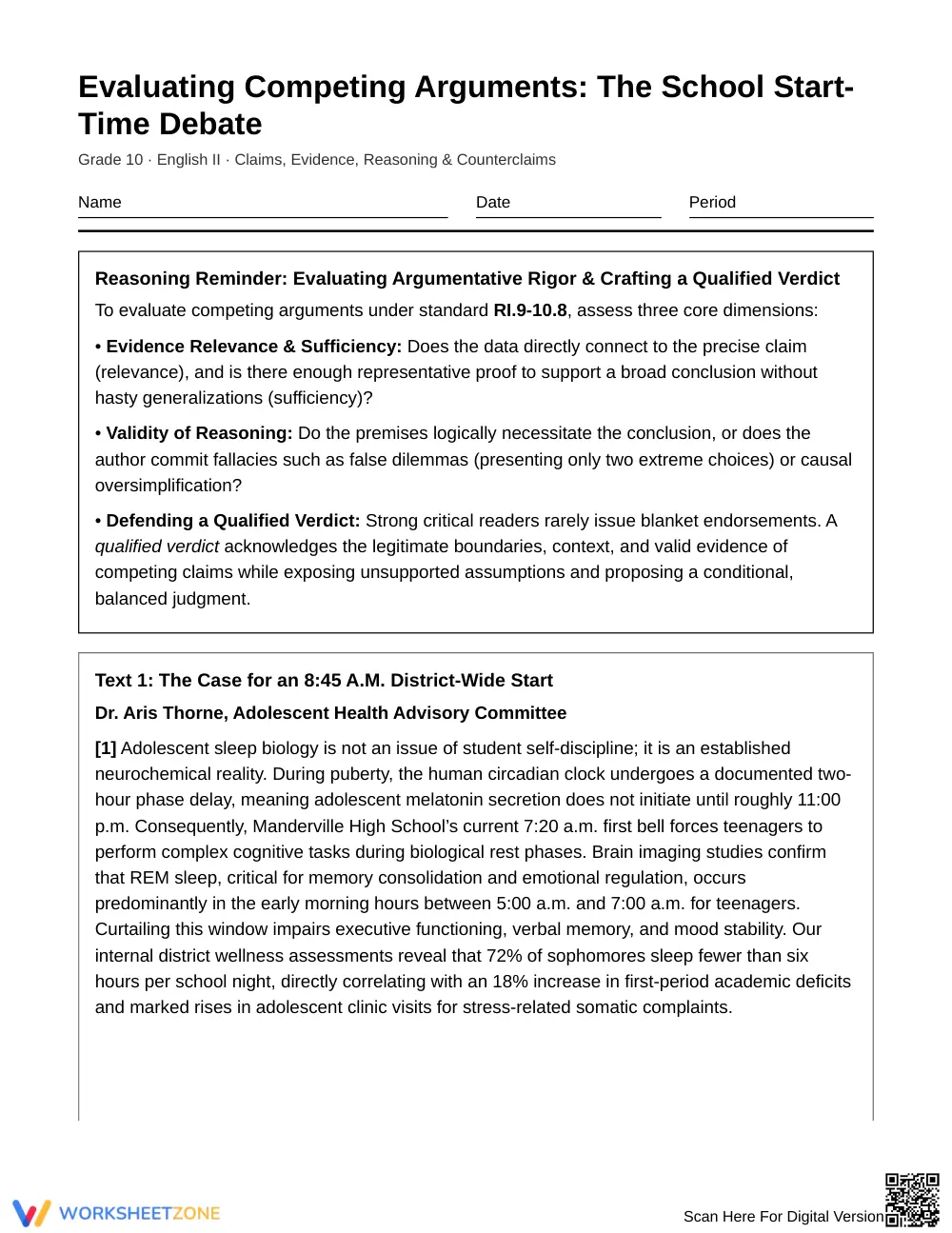
This Grade 10 English II worksheet equips students to evaluate competing arguments and defend a qualified verdict. Analyzing a realistic school start-time debate, learners assess evidence sufficiency, detect logical fallacies, address opposing claims, and formulate a balanced policy resolution grounded in textual proof.
At a Glance
- Grade: 10 · Subject: English II (Claims, Evidence, Reasoning & Counterclaims)
- Standard:
RI.9-10.8— Evaluate argument reasoning, evidence sufficiency, and logical fallacies across paired informational policy texts- Skill Focus: Defend a Qualified Verdict
- Format: 6 pages · 8 problems · Answer key included · PDF
- Best For: Advanced argumentative analysis, debate preparation, and text-based writing
- Time: 45–60 minutes
What's Inside
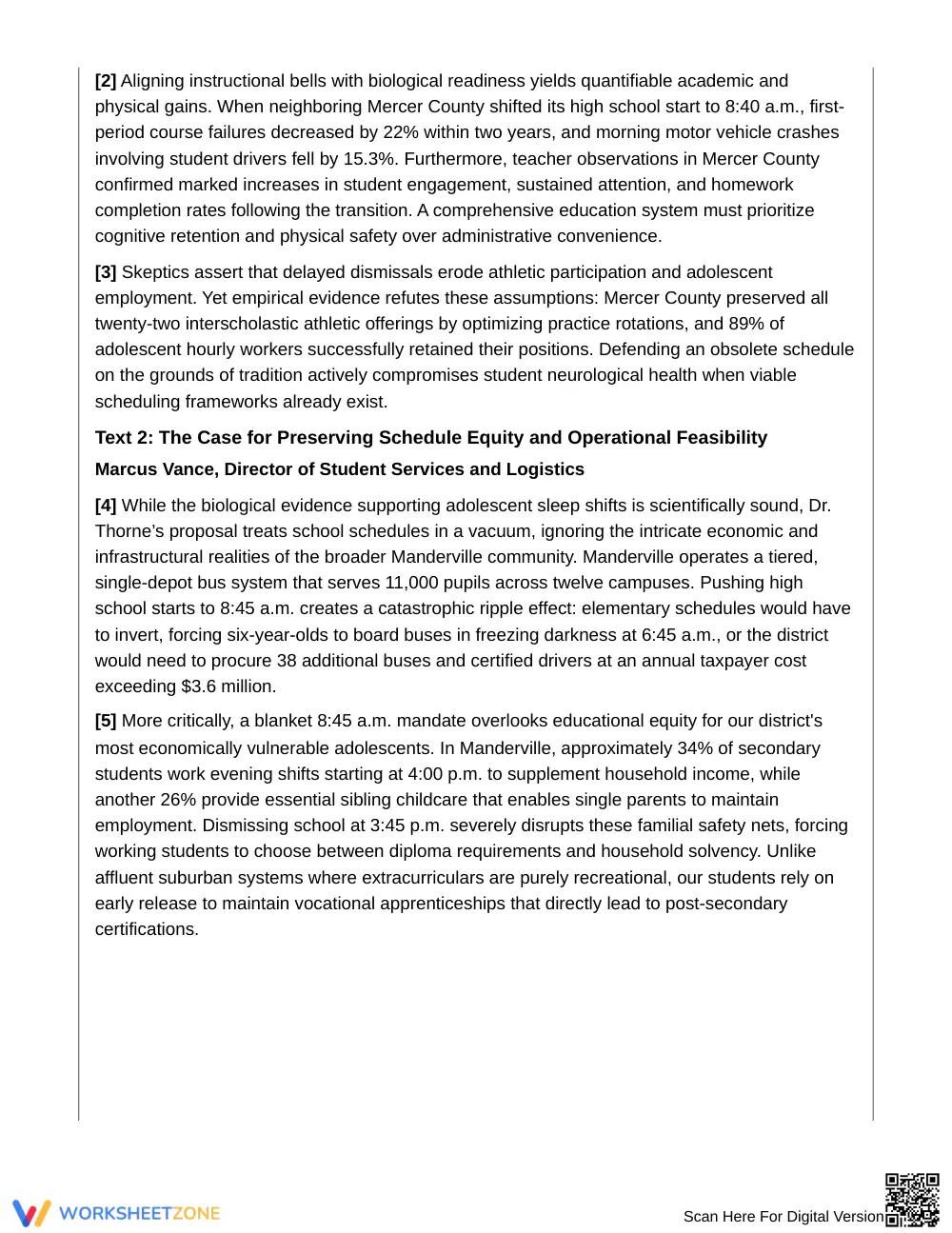
The 6-page worksheet centers on two competing informational texts debating high school start times. It features an anchor Reasoning Reminder defining evidence sufficiency, logical validity, and qualified verdicts, followed by 8 analytical tasks and an extensive 5-page answer key containing exemplar student responses.
Skill Progression
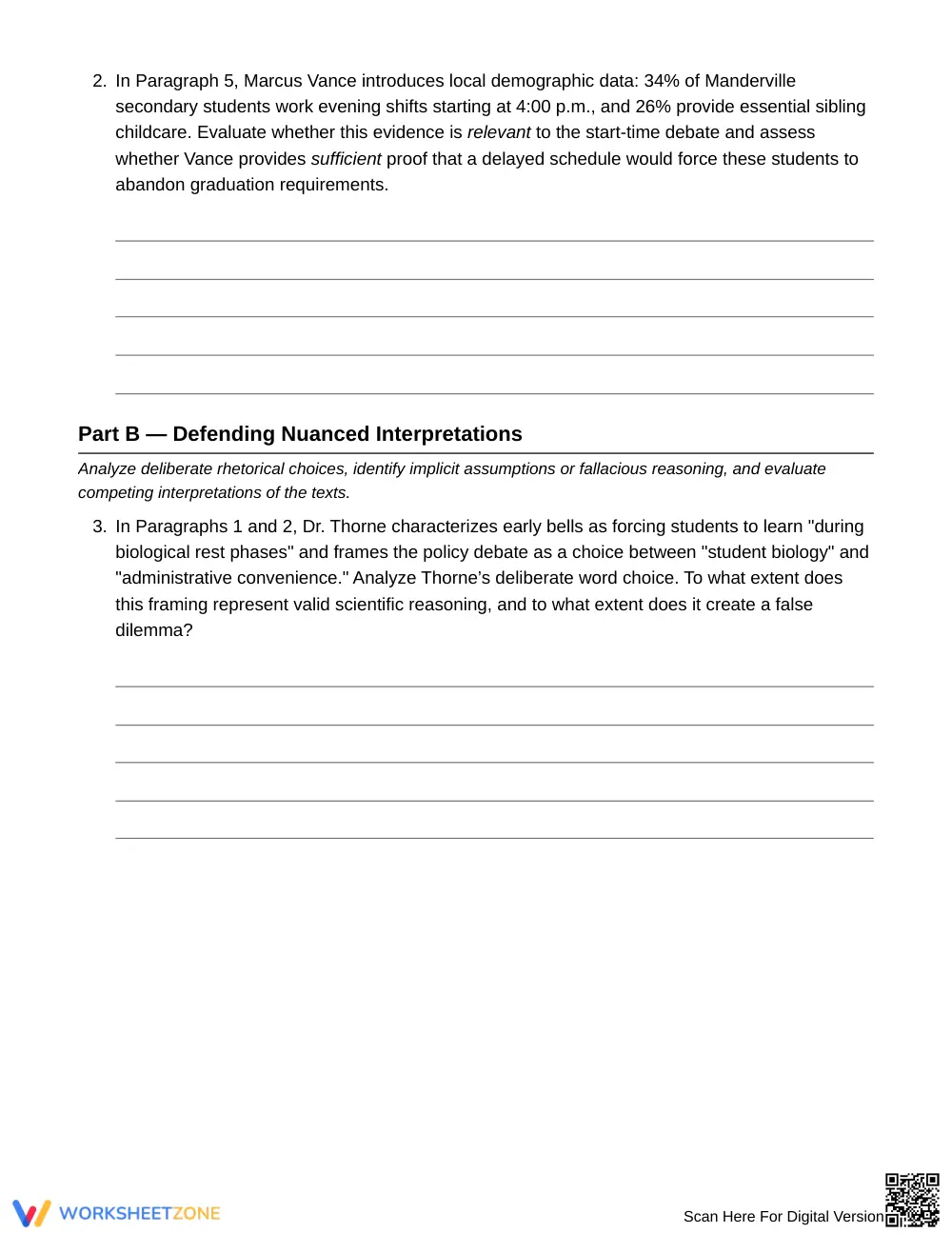
- Guided Practice (Tasks 1–2): Students evaluate data relevance and sufficiency through a multiple-choice question on comparative statistics and a scaffolded short-response prompt.
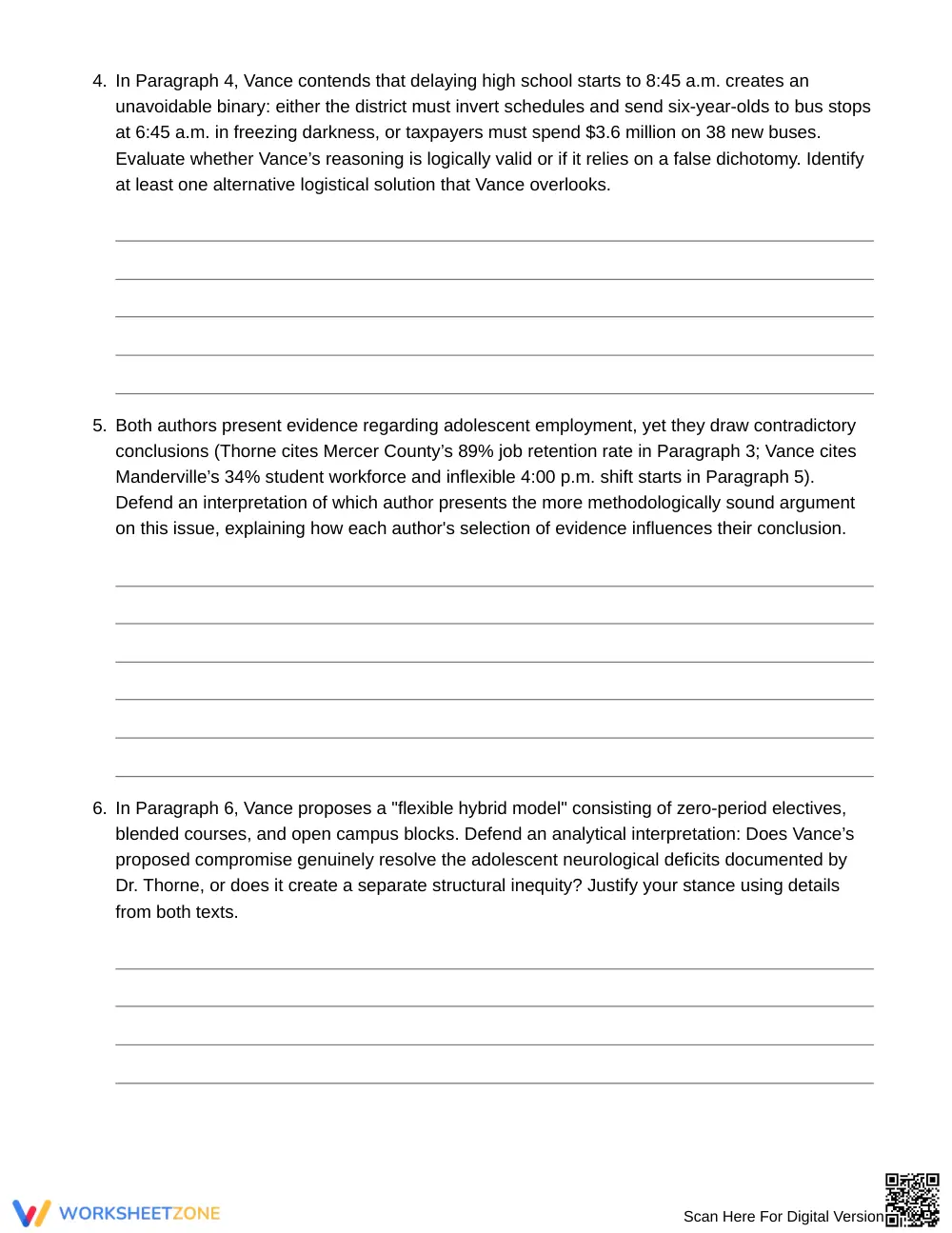
- Supported Practice (Tasks 3–6): Four analytical questions prompt learners to analyze rhetorical framing, detect false dilemmas, compare conflicting employment statistics, and assess proposed policy compromises.
- Independent Practice (Tasks 7–8): Students revise an incomplete rebuttal to eliminate straw man fallacies, then synthesize both texts to compose and defend a balanced, qualified verdict.
This sequence implements gradual release, moving students from guided evaluation to independent argumentative synthesis.
Standards Alignment
This activity aligns with primary standard `RI.9-10.8`: Delineate and evaluate the argument and specific claims in a text, assessing whether reasoning is valid and evidence is relevant and sufficient. The writing tasks also reinforce secondary standard `W.9-10.1` by requiring clear claims and counterclaims. Both standard codes can be copied directly into lesson plans, IEP goals, or district curriculum mapping tools.
How to Use It
Administer this worksheet after direct instruction on fallacies and argument evaluation. As a formative check, observe whether students identify Vance's busing dilemma as a false dichotomy before they draft their synthesis. Expect completion within 45 to 60 minutes during a single extended period or across two class blocks.
Who It's For
This resource serves Grade 10 English II learners preparing for state assessments or analytical writing. It supports on-level students through targeted prompts while challenging advanced students with rigorous synthesis. Pair it with an anchor chart on common logical fallacies or counterargument sentence frames.
Under standard RI.9-10.8, secondary students must delineate and evaluate the argument and specific claims in competing texts, assessing whether reasoning is valid and evidence is relevant and sufficient while identifying false dilemmas or unsupported assumptions. According to Fisher & Frey (2014), structured close reading of paired argumentative texts fosters sophisticated disciplinary literacy by moving learners past superficial binary judgments toward nuanced, evidence-based synthesis. This Grade 10 instructional resource operationalizes that research through an authentic policy debate regarding high school bell schedules. By requiring tenth graders to evaluate comparative statistics, expose logical fallacies, and defend a qualified verdict, the material develops mature analytical judgment and counterargumentation skills essential for college-level rhetoric. The systematic progression from evidence appraisal to synthesized resolution ensures students master complex informational analysis and formulate balanced, logically sound positions grounded in rigorous textual proof.


