


























Views
Downloads





Complete Qualified Reading Worksheet | Grade 10 English II
Paste this activity's link or code into your existing LMS (Google Classroom, Canvas, Teams, Schoology, Moodle, etc.).
Students can open and work on the activity right away, with no student login required.
You'll still be able to track student progress and results from your teacher account.
This Grade 10 literary analysis worksheet guides students in defending a qualified reading of complex texts. By evaluating nuanced motivations, environmental symbolism, and counterevidence across two paired passages, high school scholars move beyond simplistic summaries to construct sophisticated, evidence-based arguments that reflect genuine critical thinking.
At a Glance
- Grade: 10 · Subject: English II (Literary Analysis)
- Standard: Analyze complex central themes and defend qualified interpretations using thorough textual evidence
- Skill Focus: Theme & Central Idea: Defend a Qualified Reading
- Format: 6 pages · 8 problems · Full answer key included · Printable PDF
- Best For: Advanced literary analysis and text-dependent analytical writing practice
- Time: 45–60 minutes of active classroom work
What's Inside
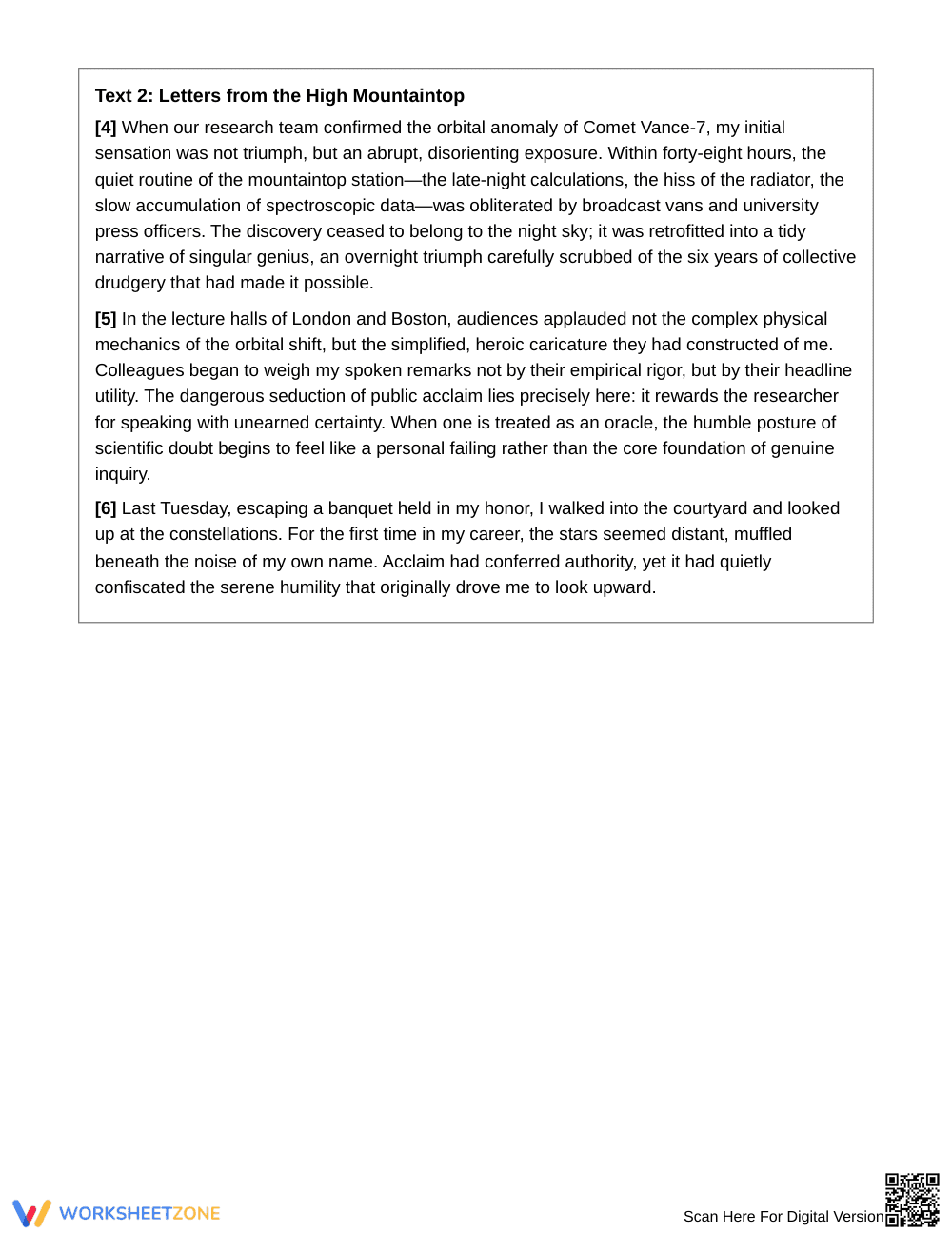
This 6-page instructional resource contains two original literary excerpts exploring the costs of public acclaim. A Reasoning Reminder introduces the concept of qualified interpretation before students complete 8 text-dependent prompts. The resource concludes with a complete 3-page answer key featuring model responses and analysis points.
Skill Progression
- Guided practice (Part A, 2 problems): Students locate explicit evidence showing how sudden recognition disrupts daily routines in both texts.
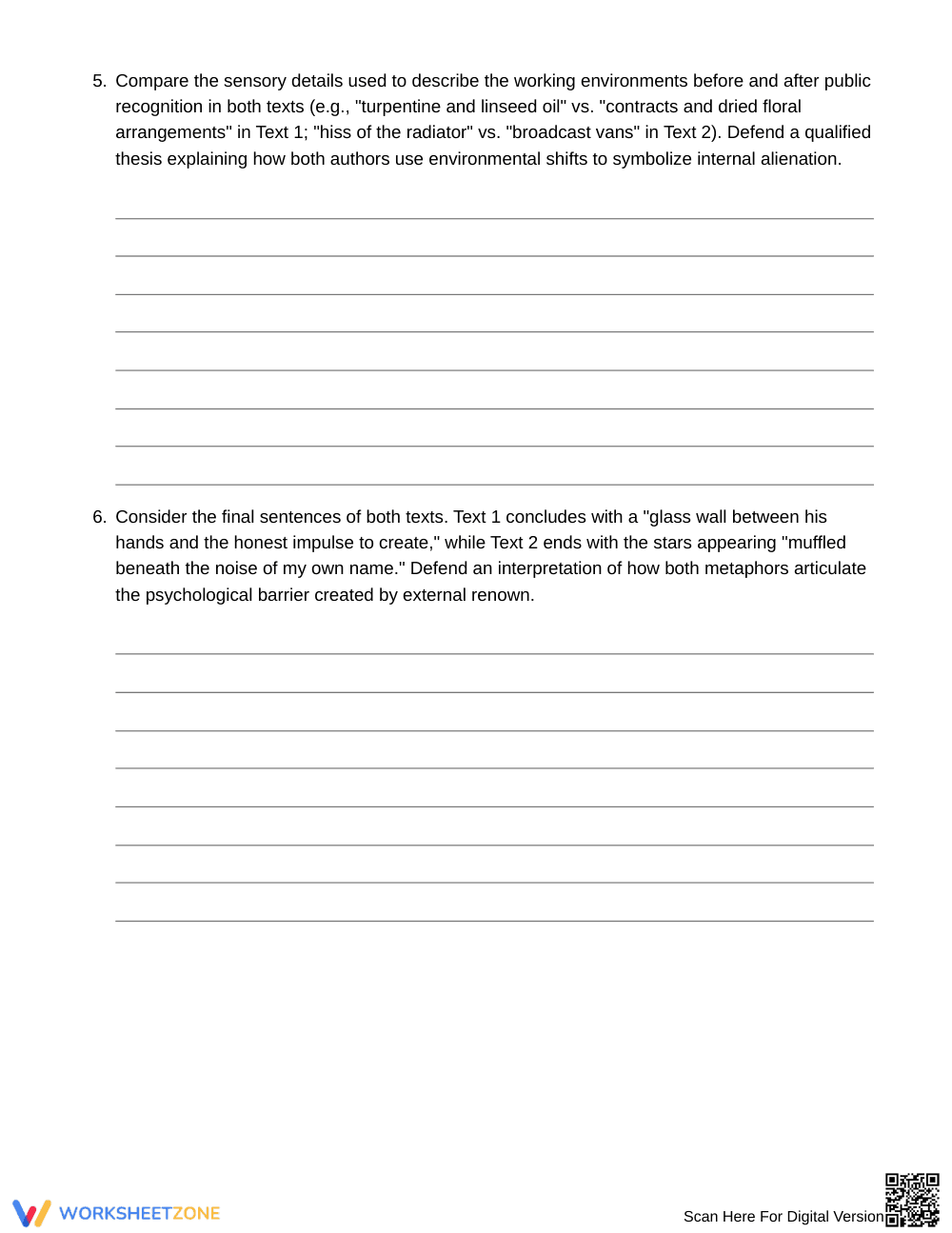
- Supported practice (Part B, 4 problems): Students defend nuanced interpretations using diction, commercial metaphors, and contrasting settings.
- Independent practice (Part C, 2 problems): Students independently dismantle simplistic claims by rebutting counterarguments and evaluating dual thematic outcomes.
This sequence implements the gradual release of responsibility model, transitioning students from textual observation to independent argumentation.
Standards Alignment
This worksheet aligns with Grade 10 standards for analyzing complex themes, examining authorial craft, and defending qualified arguments with textual evidence. It develops critical reasoning by training students to reconcile competing evidence rather than relying on absolute claims. Both standard descriptions can be copied directly into lesson plans, IEP goals, or district curriculum mapping tools.
How to Use It
Use this worksheet after direct instruction on thematic nuance. First, assign Parts A and B as paired analytical practice during close-reading lessons. Second, administer Part C as an individual formative assessment before students draft comparative essays. During instruction, verify that students analyze authorial diction rather than merely paraphrasing plot details. Expect completion within 45 to 60 minutes.
Who It's For
This material is designed for Grade 10 English II students preparing for advanced literary analysis. The opening reasoning reminder supports developing writers, while counterargument prompts challenge honors students. Pair this worksheet with an anchor chart on constructing defensible thesis statements.
Defending a qualified reading requires high school students to examine how conflicting evidence and deliberate authorial choices shape complex thematic claims. According to research by Fisher & Frey (2014) on close reading and text-dependent questioning, adolescent literacy development accelerates when instructional tasks require students to evaluate subtle nuances rather than extract surface-level main ideas. By structuring literary analysis into discrete stages—moving from foundational evidence retrieval to metaphorical analysis and counterargument rebuttal—this 6-page worksheet systematically operationalizes the gradual release of responsibility. Tenth-grade students engage directly with paired literary excerpts, analyzing how diction and environmental imagery reveal the hidden costs of public acclaim. This rigorous approach equips educators with measurable student work that substantiates Grade 10 literary analysis mastery, cultivating the critical thinking habits necessary for college-level rhetorical defense and nuanced textual argumentation across secondary English language arts curricula.


