
































Complete Plot Summary Repair Worksheet | Grade 9 English I

Paste this activity's link or code into your existing LMS (Google Classroom, Canvas, Teams, Schoology, Moodle, etc.).
Students can open and work on the activity right away, with no student login required.
You'll still be able to track student progress and results from your teacher account.
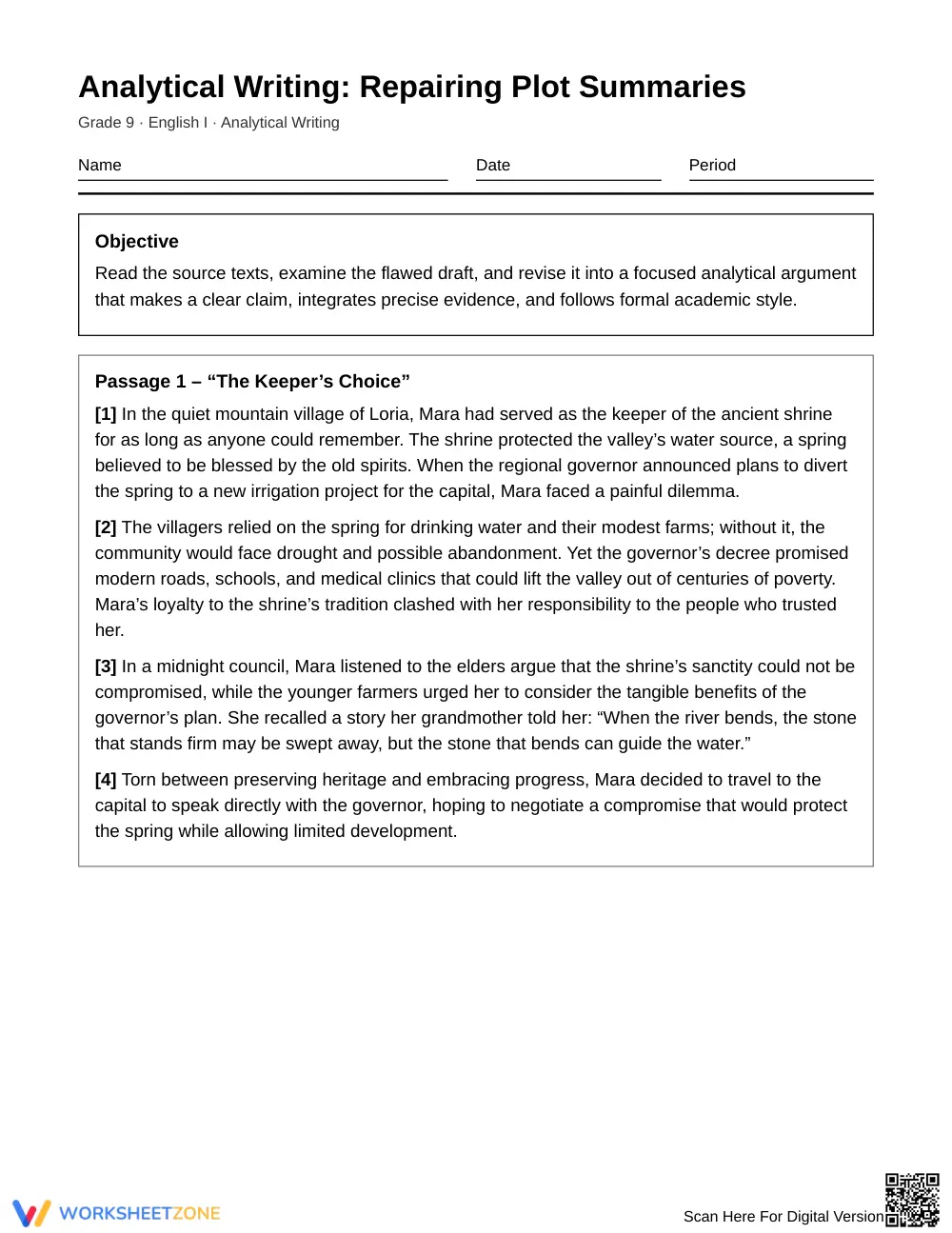
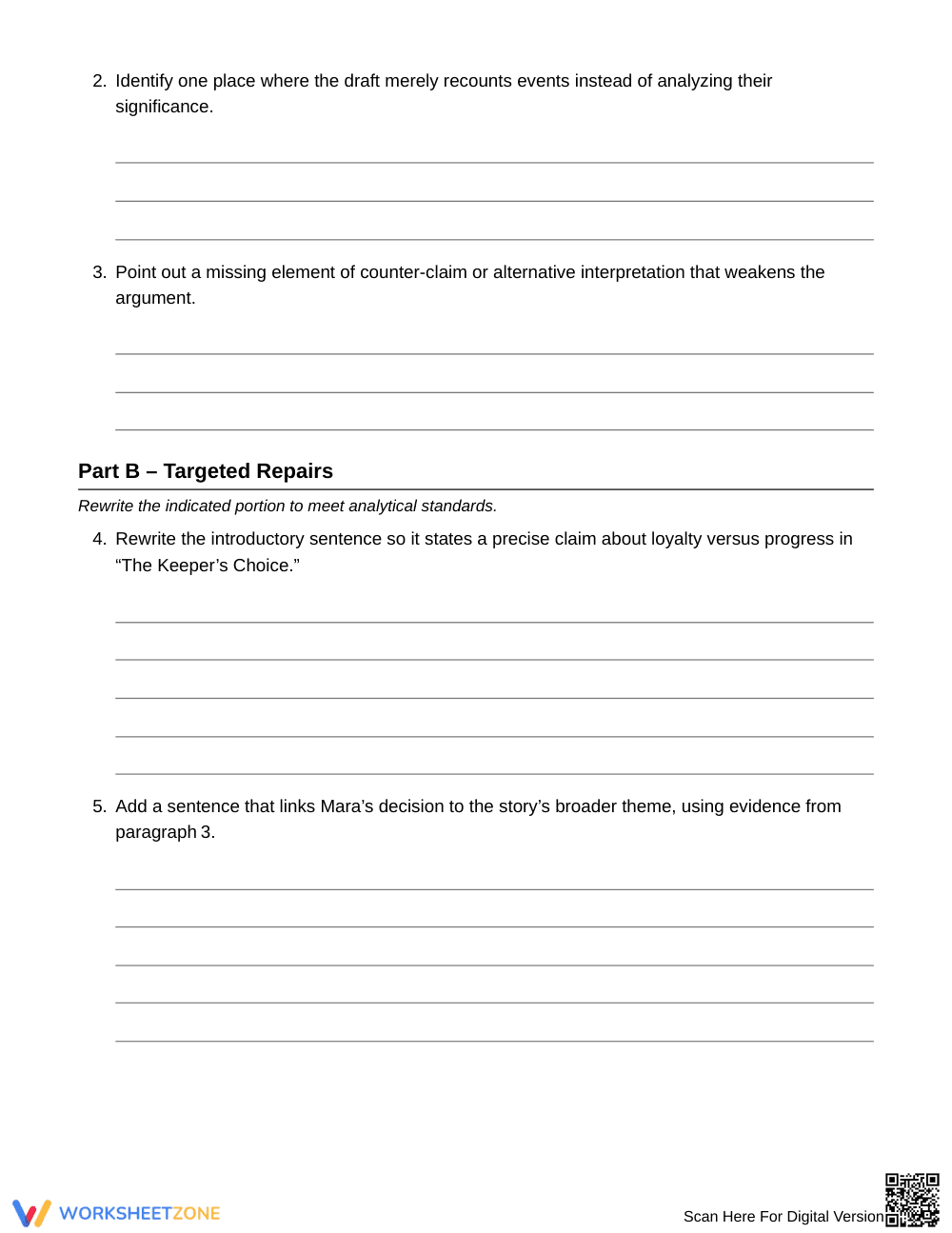
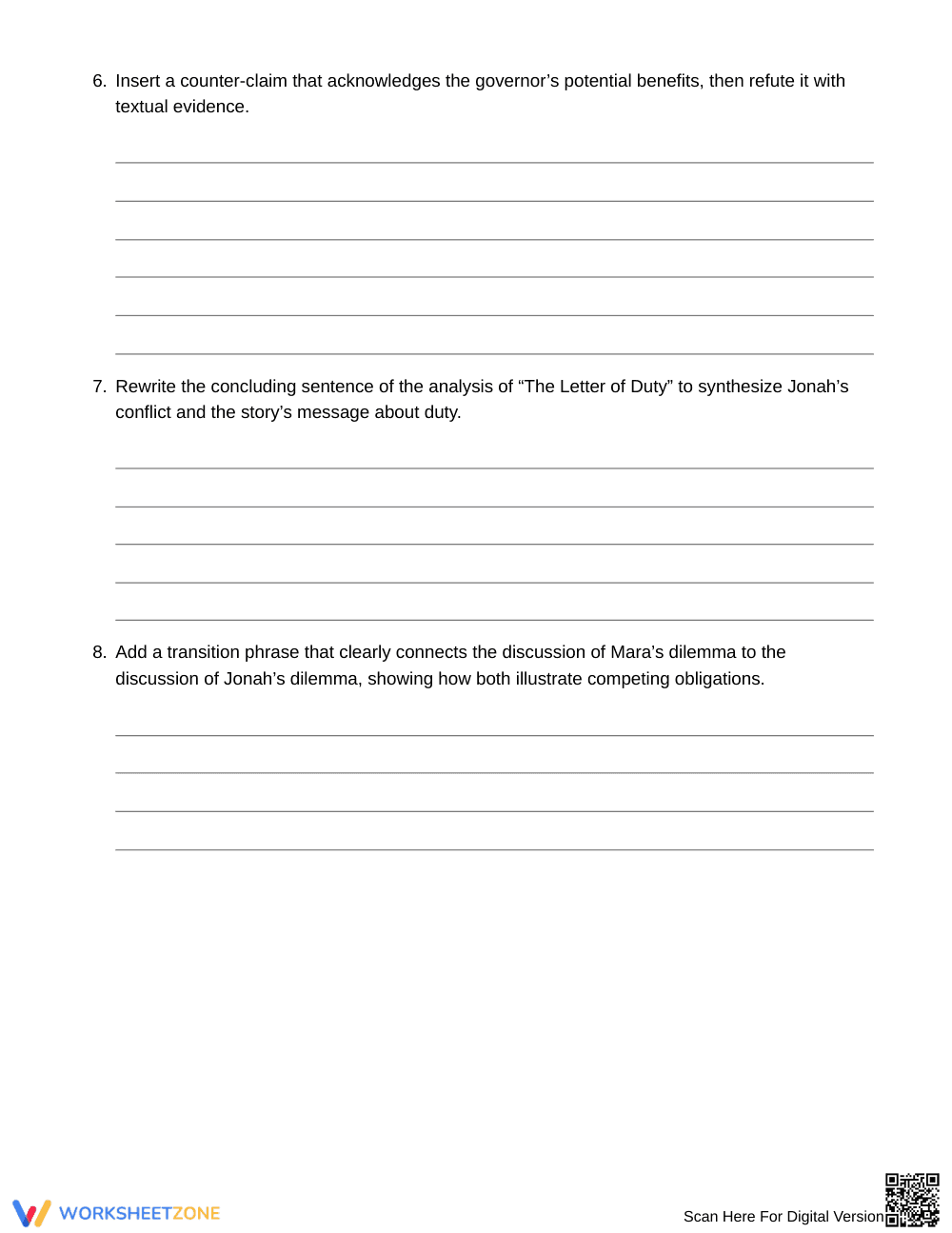
This Grade 9 analytical writing worksheet guides students to transform passive plot summaries into rigorous, claim-driven arguments. Through paired literary passages and a flawed student draft, learners diagnose summary traps, craft targeted textual revisions, and compose a cohesive analytical response supported by direct evidence and counter-claim refutation.
At a Glance
- Grade: 9 · Subject: English I
- Standard:
W.9-10.1— Write arguments to support claims using valid reasoning and relevant textual evidence.- Skill Focus: Repairing Plot Summaries into Analytical Arguments
- Format: 6 pages · 10 problems · Answer key included · PDF
- Best For: Analytical writing remediation and essay revision practice
- Time: 45–60 minutes
What's Inside
The 6-page printable resource includes two original anchor texts (“The Keeper’s Choice” and “The Letter of Duty”), a realistic student-written flawed draft, 10 structured analysis and writing tasks across three progressive sections, a student self-evaluation rubric, and a complete 3-page teacher answer key featuring annotated exemplar responses.
Mastery Evidence
The structured progression directly reflects assessment expectations for secondary argumentative writing. Part A requires students to diagnose unanchored summary statements and missing counter-arguments. Part B isolates targeted sentence-level repairs, including thesis formulation, textual citation, and transitional synthesis. Part C culminates in a multi-paragraph essay evaluated across a six-criterion mastery rubric (Approaching, Meeting, Exceeding) spanning claim clarity, textual evidence, logical reasoning, and counter-claim integration. Performance scores translate directly into standard-based gradebooks or IEP writing progress monitoring trackers.
Standards Alignment
The primary focus of this worksheet aligns with `W.9-10.1`: Write arguments to support claims in an analysis of substantive topics or texts, using valid reasoning and relevant and sufficient evidence. Students also apply reading comprehension skills under `RL.9-10.1` by citing strong and thorough textual evidence to support inferences. Both standard codes can be copied directly into lesson plans, IEP goals, or district curriculum mapping tools.
How to Use It
Deploy this resource during the drafting phase of a literary analysis unit or as a targeted remediation intervention after benchmark writing assessments. Teachers can use Part A as a formative check during guided instruction to evaluate whether students can distinguish recount from analysis before releasing them to write independently. Expect students to complete the 10 tasks in approximately 45 to 60 minutes.
Who It's For
This activity is designed for Grade 9 English I students needing explicit instruction on writing analytical commentary rather than plot retellings. It provides built-in scaffolds for developing writers while challenging advanced students through rigorous counter-argument requirements. Pair this resource with a direct instruction lesson on claim-evidence-reasoning structures or an analytical thesis anchor chart.
According to Fisher & Frey (2014), explicit instruction that guides students to deconstruct flawed non-examples significantly improves metacognitive monitoring and independent writing quality. This Grade 9 instructional resource targets standard W.9-10.1 by training learners to systematically identify superficial plot recaps, formulate defensible analytical claims, embed paragraph-cited textual evidence, and address counter-interpretations within comparative literary analysis. By moving through 10 sequential diagnostic, sentence-repair, and essay-composition tasks, secondary writers develop the critical distinction between describing what happens in a narrative and arguing how specific literary elements advance a central theme. The integrated multi-trait rubric reinforces rigorous academic writing conventions, ensuring students demonstrate measurable growth in argumentative coherence and evidence integration across high school English Language Arts curricula.


