

































Complete Nonlinear Narrative Worksheet | Grade 12 English IV

Paste this activity's link or code into your existing LMS (Google Classroom, Canvas, Teams, Schoology, Moodle, etc.).
Students can open and work on the activity right away, with no student login required.
You'll still be able to track student progress and results from your teacher account.
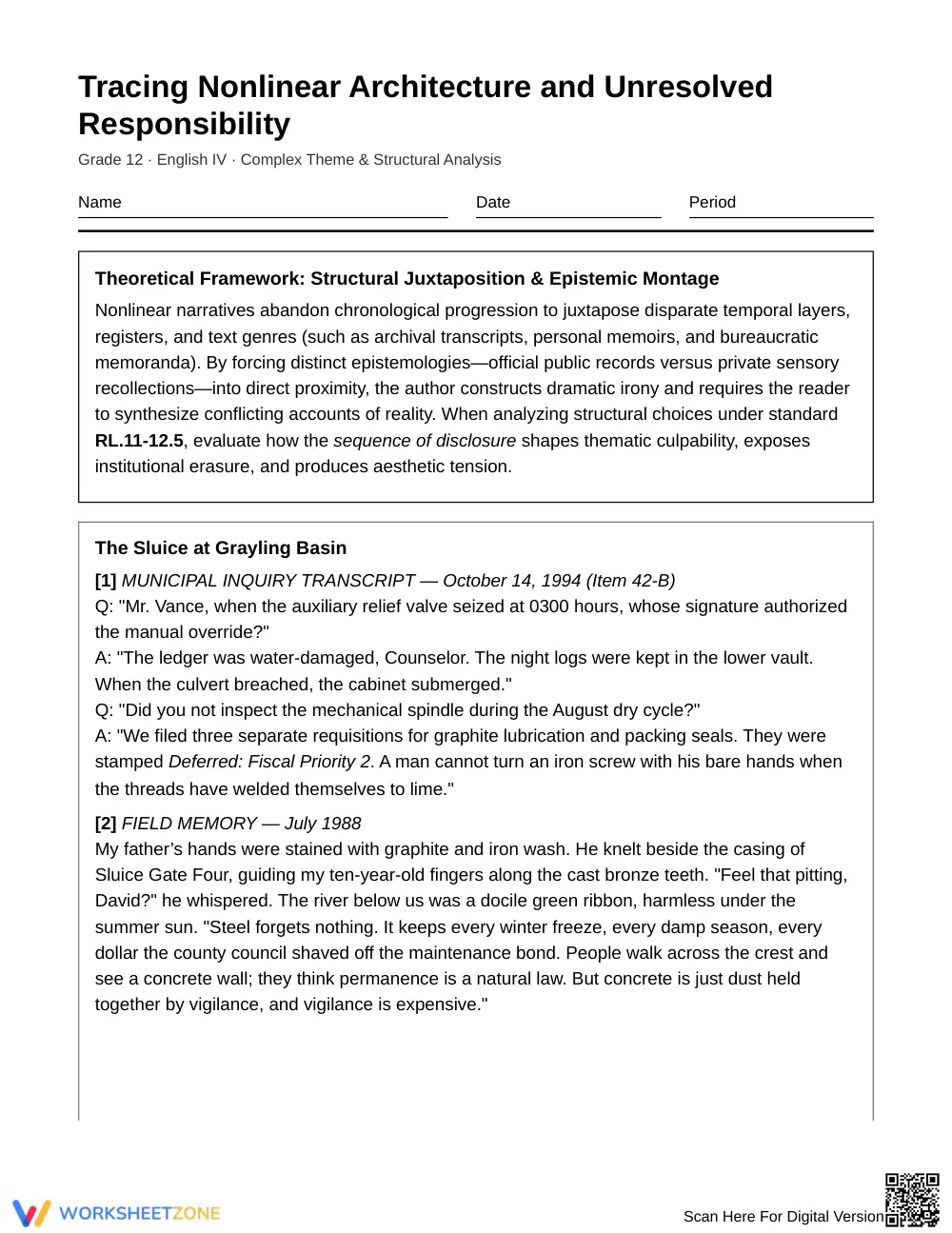
This Grade 12 English IV worksheet guides students to analyze how nonlinear text structures and temporal shifts establish thematic meaning. Working through an original multigenre narrative, students examine how juxtaposed public records and personal recollections generate dramatic irony, expose institutional culpability, and craft aesthetic tension.
At a Glance
- Grade: 12 · Subject: English IV
- Standard:
RL.11-12.5— Analyze how structural choices shape overall meaning and aesthetic impact- Skill Focus: Trace Meaning Across Nonlinear Sections
- Format: 6 pages · 10 problems · Answer key included · PDF
- Best For: College-prep structural analysis
- Time: 45–60 minutes
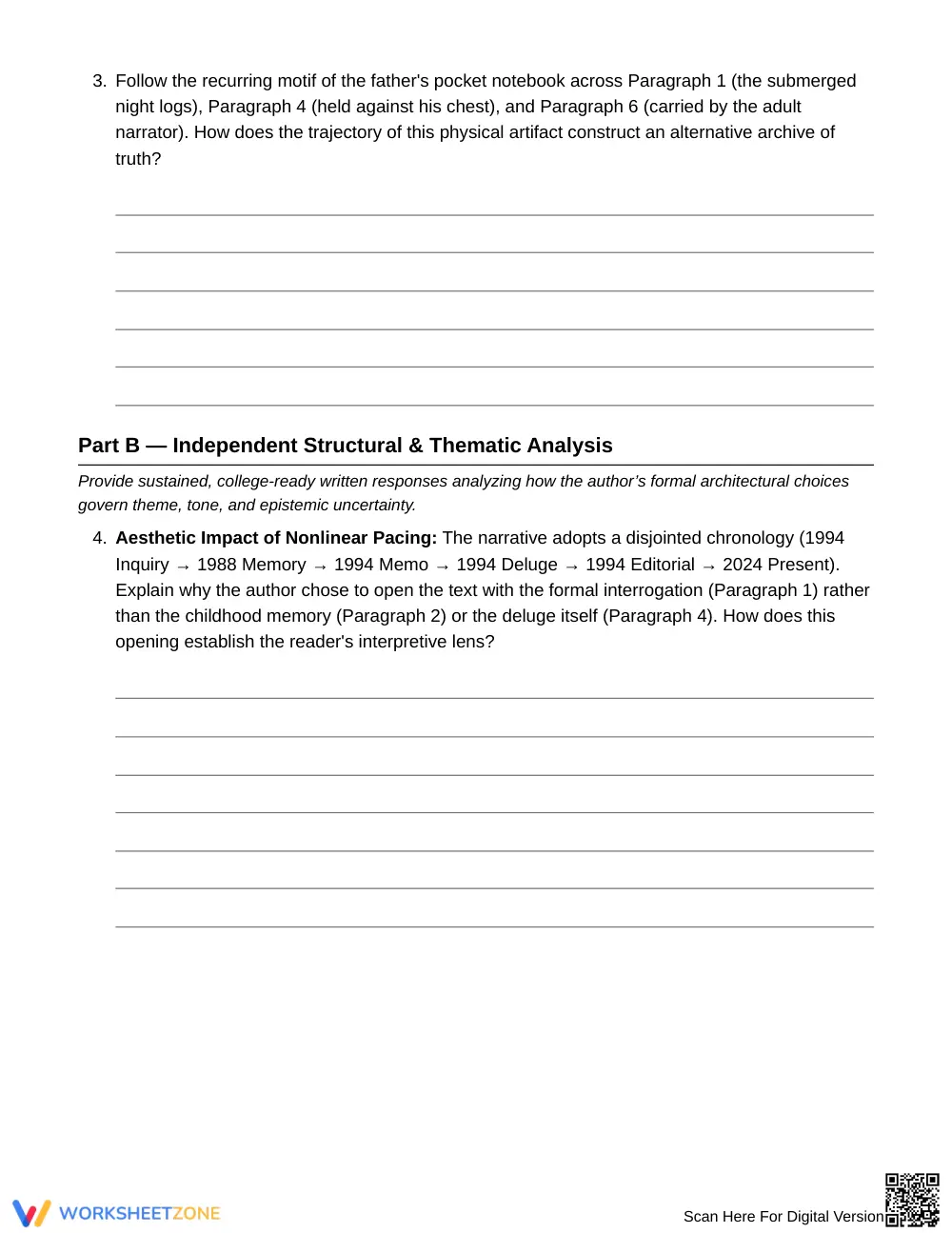
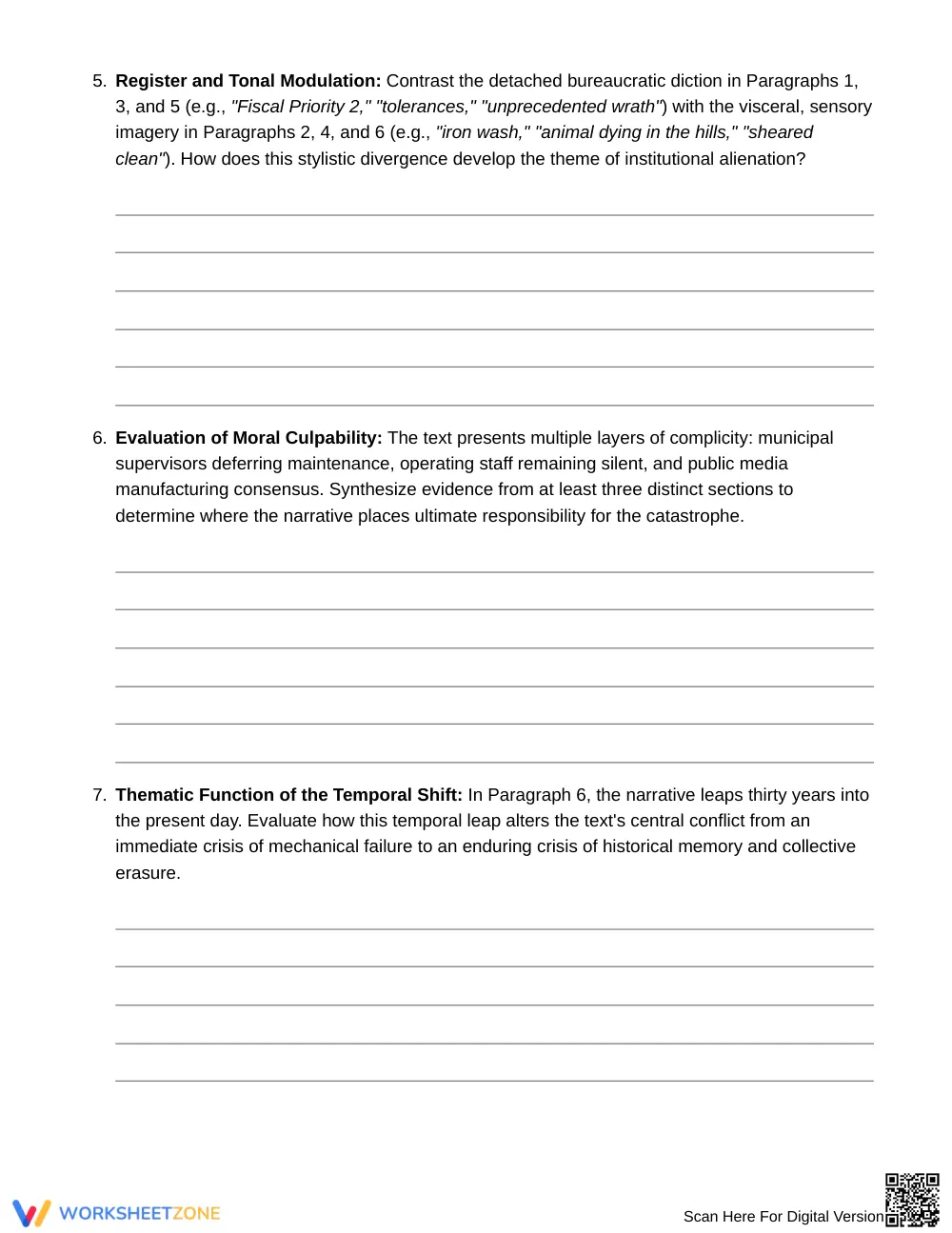
The printable packet features an original anchor text containing six distinct sections, including inquiry transcripts, internal memoranda, childhood memories, and editorials. Across 6 pages, students engage with a theoretical framework on structural montage, an annotated mentor model, 10 analytical problems, and an extensive 4-page answer key.
Skill Progression
- Guided Practice: A theoretical framework and modeled response deconstruct how juxtaposing memory and memoranda exposes institutional neglect through dramatic irony.
- Supported Practice: Part A provides 3 scaffolded tasks guiding students to trace recurring motifs and examine collisions between adjacent documents.
- Independent Practice: Parts B and C present 5 college-ready analytical prompts and 2 evaluative questions addressing pacing, register, and culpability.
This progression applies gradual-release methodology, moving students from guided mentor modeling to rigorous independent critique.
Standards Alignment
This worksheet aligns directly to RL.11-12.5: Analyze how an author’s choices concerning structure contribute to meaning and aesthetic impact. It additionally supports RL.11-12.1 through rigorous text-based evidentiary citations. Both standard codes can be copied directly into lesson plans, IEP goals, or district curriculum mapping tools.
How to Use It
Implement this packet following direct instruction on nonlinear architecture or within an advanced modernist literature unit. During guided work, observe whether students identify stylistic differences across genres rather than merely summarizing chronology. Expect student completion within 45 to 60 minutes.
Who It's For
Designed for Grade 12 English IV and Advanced Placement courses, this resource challenges advanced readers. Differentiate by using the mentor analysis as an anchor reference for emerging analysts before pairing with modernist short stories.
Instructional research by Fisher & Frey (2014) underscores that gradual-release frameworks increase student capacity to navigate complex, non-chronological literary texts. When analyzing multigenre documents or fragmented narratives under standard RL.11-12.5, twelfth-grade readers frequently struggle to bridge disparate registers without intentional scaffolding. This six-page instructional resource equips students to trace meaning across nonlinear sections by structuring an explicit sequence from modeled juxtaposition to independent structural synthesis. By isolating epistemic collisions—such as comparing bureaucratic memoranda to personal recollections—learners evaluate how authorial ordering governs tone, exposes culpability, and generates aesthetic tension. The embedded scaffolding ensures high school seniors move from identifying surface details to articulating rigorous, text-grounded literary arguments. Consequently, students cultivate the advanced analytical agility demanded by college literature seminars, AP English literature assessments, and contemporary rhetorical analyses across modern archival media.


