


























Views
Downloads


Complete Nonfiction Text Structure Worksheet | Grade 7 ELA
Paste this activity's link or code into your existing LMS (Google Classroom, Canvas, Teams, Schoology, Moodle, etc.).
Students can open and work on the activity right away, with no student login required.
You'll still be able to track student progress and results from your teacher account.
This nonfiction text structure worksheet strengthens seventh-grade reading comprehension by guiding students to analyze how authors organize informational articles. Working through an authentic passage, learners evaluate paragraph-level functions, identify structural transitions, and examine how sections develop central ideas across twelve analytical tasks.
At a Glance
- Grade: 7 · Subject: English Language Arts
- Standard:
RI.7.5— Analyze how a major section contributes to the whole and develops central ideas- Skill Focus: Nonfiction Organizational Patterns and Text Structure Analysis
- Format: 5 pages · 12 analytical problems · Complete answer key included · PDF document
- Best For: Core informational reading comprehension and structural analysis
- Time: 40–50 minutes of instructional time
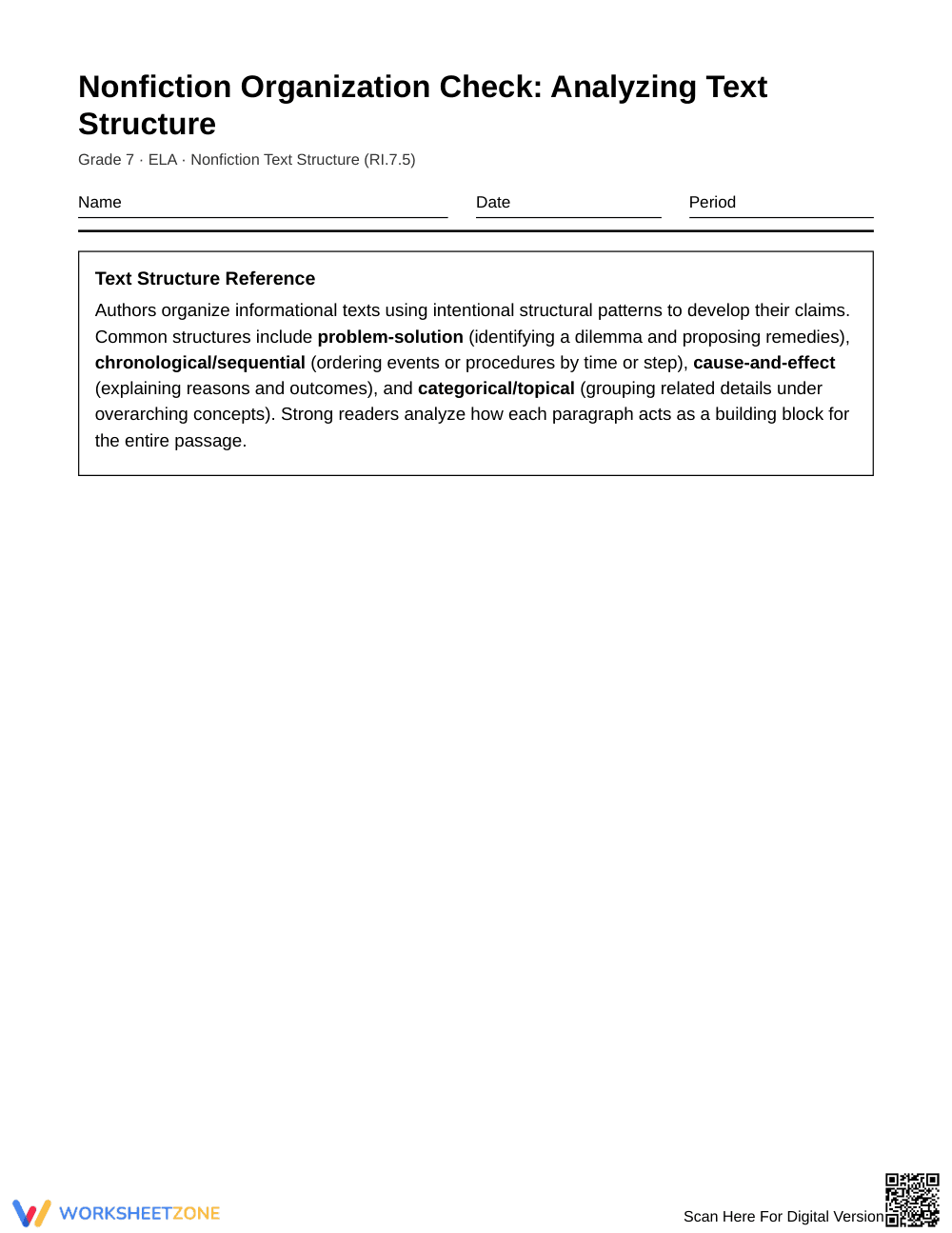
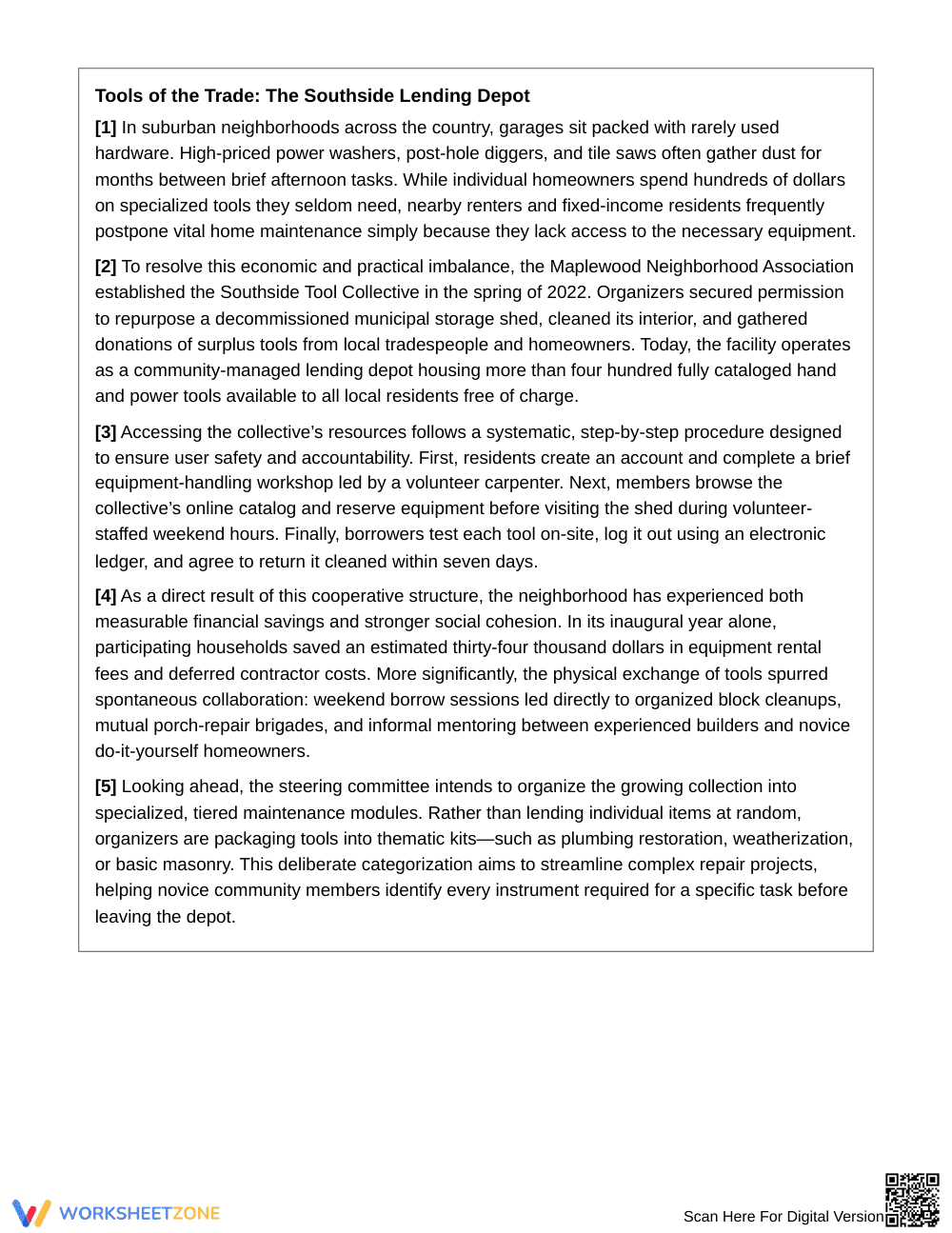
Inside this 5-page printable resource, students find a reference guide defining key organizational patterns, followed by an informational article titled 'Tools of the Trade: The Southside Lending Depot.' The twelve tasks combine multiple-choice checks with text-dependent analysis and extended synthesis prompts. A 3-page explanatory answer key provides sample responses and textual evidence.
Skill Progression
This resource uses a scaffolded three-tier architecture:
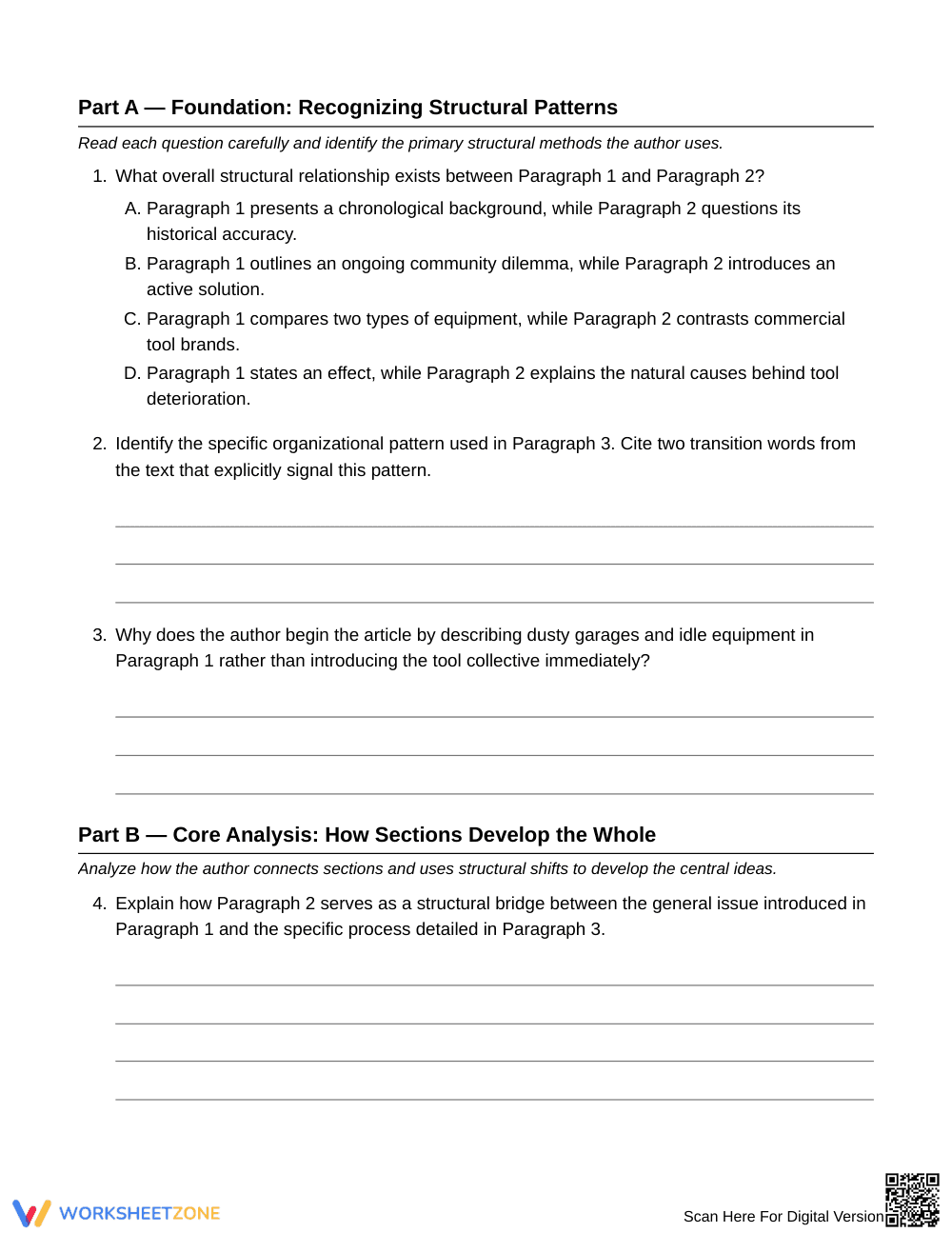
- Guided Practice (Part A, Tasks 1–3): Builds foundational recognition of structural relationships and transition words with reference support.
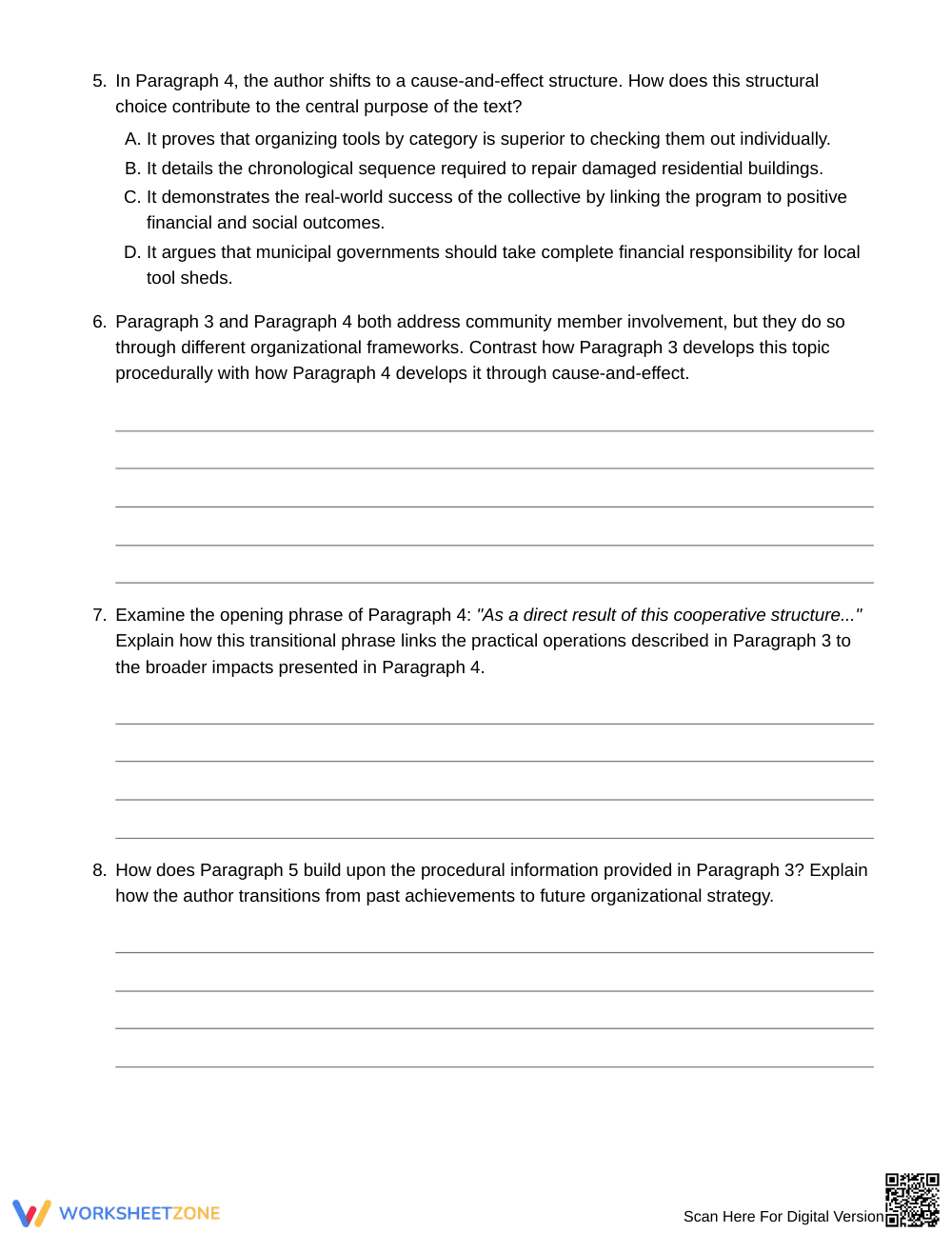
- Supported Practice (Part B, Tasks 4–9): Deepens analysis across six prompts as students evaluate paragraph bridges, structural shifts, and contrasting frameworks.
- Independent Practice (Part C, Tasks 10–12): Challenges students to critique structural alterations and draft an extended multi-paragraph synthesis.
This sequence follows an I Do, We Do, You Do gradual-release model, advancing learners from basic recognition to independent analysis.
Standards Alignment
This worksheet directly aligns with RI.7.5: Analyze how a particular sentence, paragraph, chapter, or section fits into the overall structure of a text and contributes to the development of ideas. Supporting standard RI.7.1 reinforces citing explicit textual evidence. Both standard codes can be copied directly into lesson plans, IEP goals, or district curriculum mapping tools.
How to Use It
Deploy this worksheet after direct instruction on text patterns. Use Part A for guided partner practice before having students complete Parts B and C independently during a 45-minute literacy block. During work time, observe whether students identify transitional phrases rather than merely summarizing content. Alternatively, use the resource as a targeted diagnostic assessment before end-of-unit testing.
Who It's For
This resource serves grade 7 ELA classes, advanced grade 6 readers, and grade 8 students needing intervention in structural analysis. Clear definitions and structured prompts support English learners and students with 504 or IEP accommodations. Pair this printable activity with an informational text structures anchor chart.
Mastering structural comprehension under standard RI.7.5 requires middle school readers to evaluate how individual paragraphs function as architectural components of an author's complete argument. According to research on explicit literacy instruction by Fisher & Frey (2014), reading achievement increases significantly when students engage in structured text analysis that moves systematically from pattern recognition to evaluating authorial design. This instructional resource operationalizes that methodology across twelve targeted tasks grounded in an authentic informational passage. Students examine organizational transitions, trace structural shifts between cause-and-effect and procedural frameworks, and critique how organizational sequences govern meaning. By requiring learners to cite specific textual evidence and explain structural relationships across five cohesive paragraphs, the worksheet bridges isolated skill drills and authentic analytical writing. Teachers receive a standards-aligned measurement tool that provides concrete diagnostic insight into student mastery of informational text architecture and organizational craft.


