

































Complete Inheritance Models Worksheet | Grade 10 Biology

Paste this activity's link or code into your existing LMS (Google Classroom, Canvas, Teams, Schoology, Moodle, etc.).
Students can open and work on the activity right away, with no student login required.
You'll still be able to track student progress and results from your teacher account.
This five-page biology worksheet guides tenth-grade students through defending non-Mendelian inheritance models using quantitative data. Across eight analytical tasks, learners evaluate empirical cross results, assign parental genotypes, and refute competing claims regarding codominance, X-linked traits, and recessive epistasis to achieve deep conceptual mastery.
At a Glance
- Grade: 10 · Subject: Biology
- Standard: Evaluate experimental cross data to defend complex non-Mendelian inheritance models against competing hypotheses
- Skill Focus: Defend an Inheritance-Model Choice
- Format: 5 pages · 8 multi-part problems · Comprehensive 2-page answer key included · PDF
- Best For: Post-lecture practice, collaborative lab stations, and exam preparation
- Time: 45–60 minutes
What's Inside
The worksheet begins with a diagnostic reference box defining codominance, sex-linked transmission, and recessive epistasis. Across five pages, students explore three synthetic biological datasets: isopod pigmentation, beetle wing reciprocal crosses, and a two-locus bioluminescence pathway. It features eight structured tasks blending evidence selection and genotypic modeling with an exhaustive two-page answer key.
Skill Progression
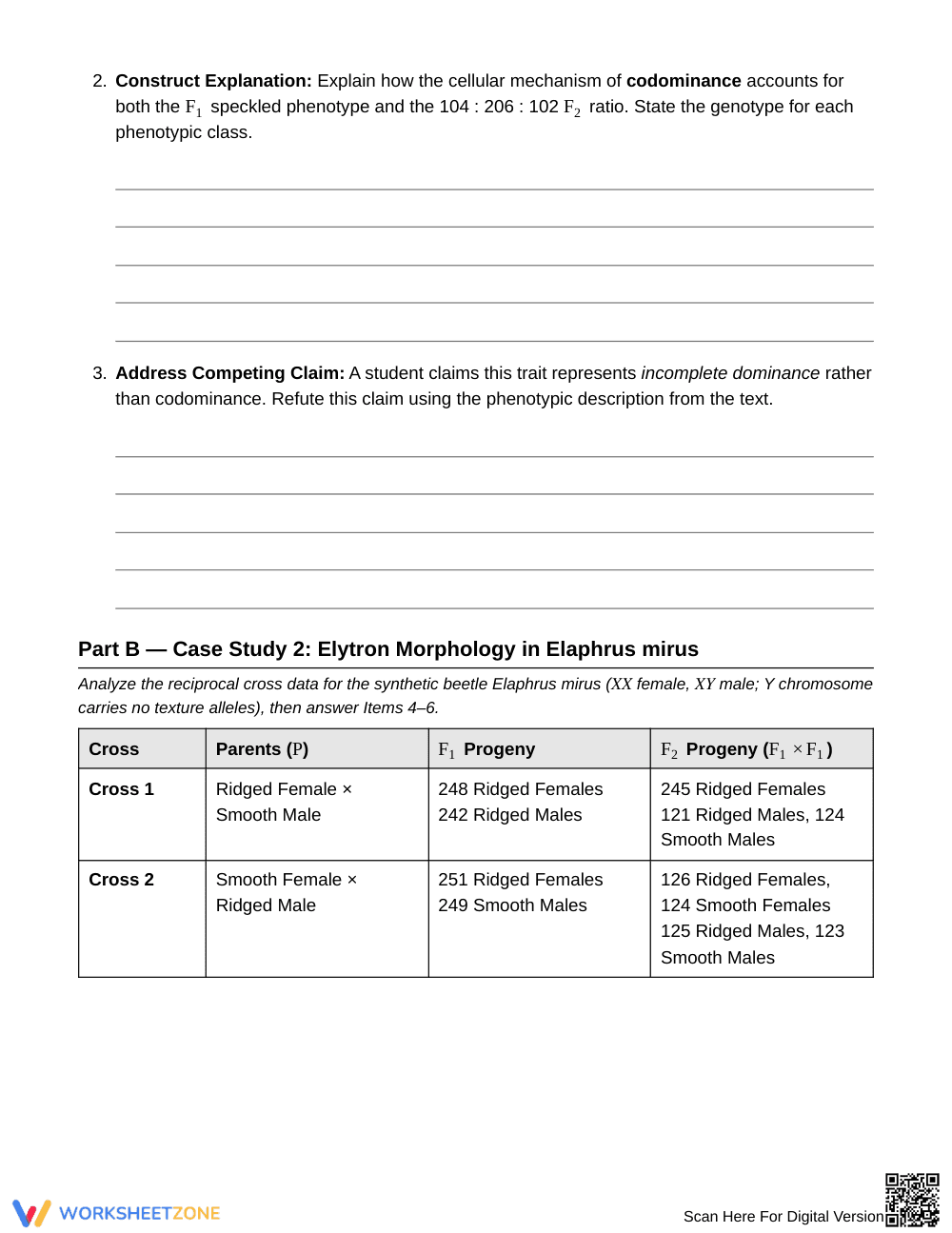
- Guided practice (Part A, Items 1–3): Students identify data refuting complete dominance, explain cellular codominance, and refute incomplete dominance using isopod ratios.
- Supported practice (Part B, Items 4–6): Students analyze beetle reciprocal crosses, assign sex-linked genotypes, and disprove autosomal sex-influenced inheritance hypotheses.
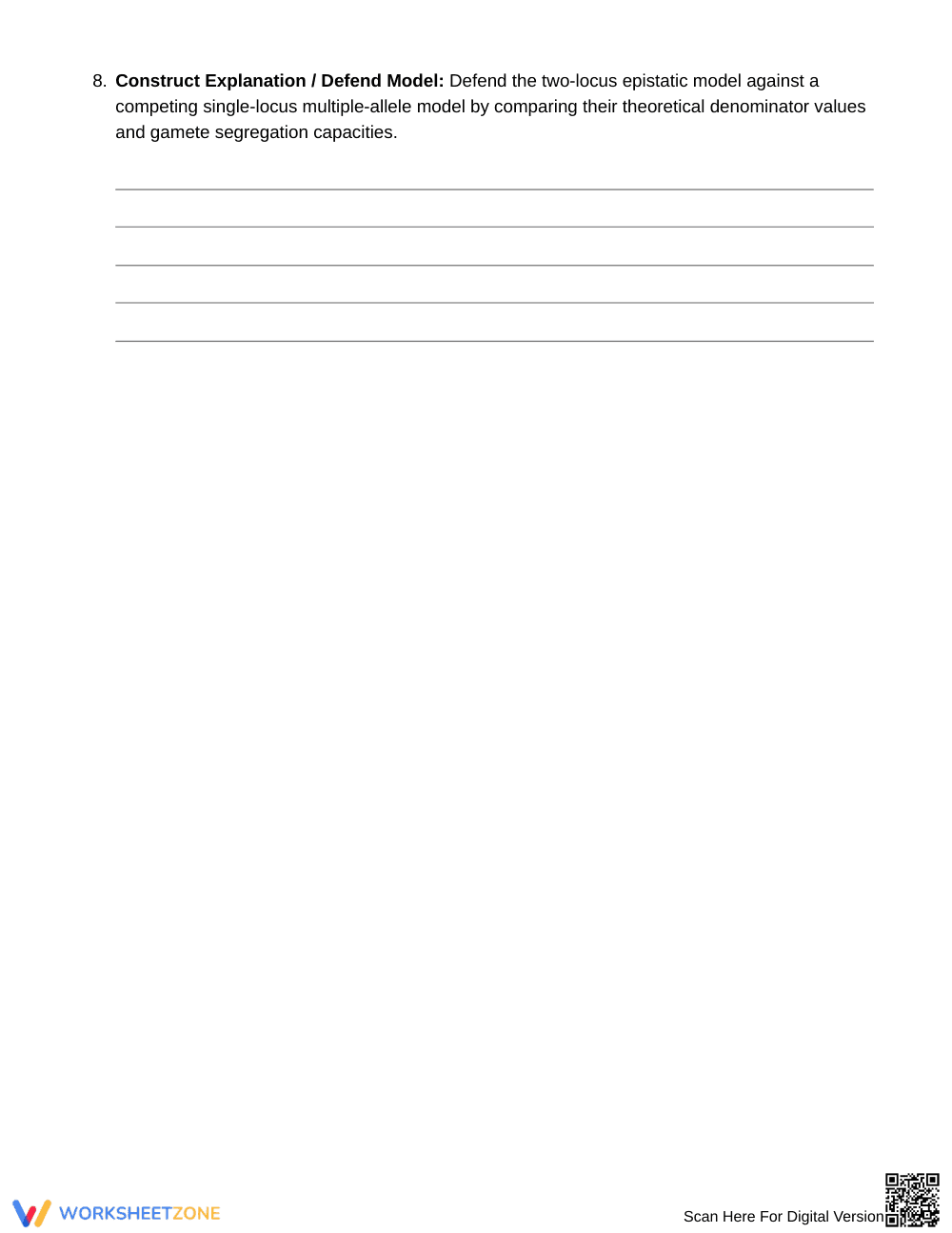
- Independent practice (Part C, Items 7–8): Students map a two-locus enzymatic pathway to a modified 9:3:4 ratio and defend recessive epistasis against single-locus models.
This sequence implements gradual release, transitioning students from guided ratio identification to independent argumentation.
Standards Alignment
This worksheet aligns with high school life science standards requiring students to defend explanations of how DNA and chromosomes determine trait inheritance. Learners use empirical cross data and mathematical ratios to justify non-Mendelian mechanisms. Both standard descriptions can be copied directly into lesson plans, IEP goals, or district curriculum mapping tools.
How to Use It
Assign this activity after direct instruction on non-Mendelian genetics for structured partner practice or unit review. As a formative assessment tip, observe whether students detect asymmetrical sex ratios in Part B reciprocal crosses, identifying male hemizygosity. Students typically finish the eight problems within 45 to 60 minutes.
Who It's For
This resource serves Grade 10 general and honors biology students mastering complex inheritance patterns. Provide emerging learners with Punnett square templates for scaffolding, while challenging advanced students to calculate chi-square statistics for the Part C data. Pair this resource with a pedigree analysis lab or chromosomal inheritance lesson.
High school biology curricula emphasize defending inheritance models using quantitative phenotypic ratios, reciprocal cross analysis, and biochemical pathways to explain genetic inheritance. According to research by Fisher & Frey (2014) on disciplinary literacy and instructional scaffolding, students achieve greater conceptual mastery when practice progresses deliberately from evidence identification to refuting competing claims. This 5-page worksheet provides eight structured tasks targeting codominance, sex-linked transmission, and recessive epistasis. By prompting learners to calculate phenotypic ratios, assign genotypes to hemizygous males, and trace biochemical enzymatic cascades, the resource bridges theoretical genetics and empirical analysis. The instructional materials include diagnostic pattern summaries and an exhaustive 2-page answer key that supports educators in evaluating student reasoning. This structured approach helps tenth-grade biology learners construct robust evidence-based arguments, resolve common misconceptions regarding non-Mendelian traits, and achieve measurable mastery in genetic inheritance analysis.


