




























Views
Downloads



Complete Figurative Meaning Worksheet | Grade 6 ELA

Paste this activity's link or code into your existing LMS (Google Classroom, Canvas, Teams, Schoology, Moodle, etc.).
Students can open and work on the activity right away, with no student login required.
You'll still be able to track student progress and results from your teacher account.
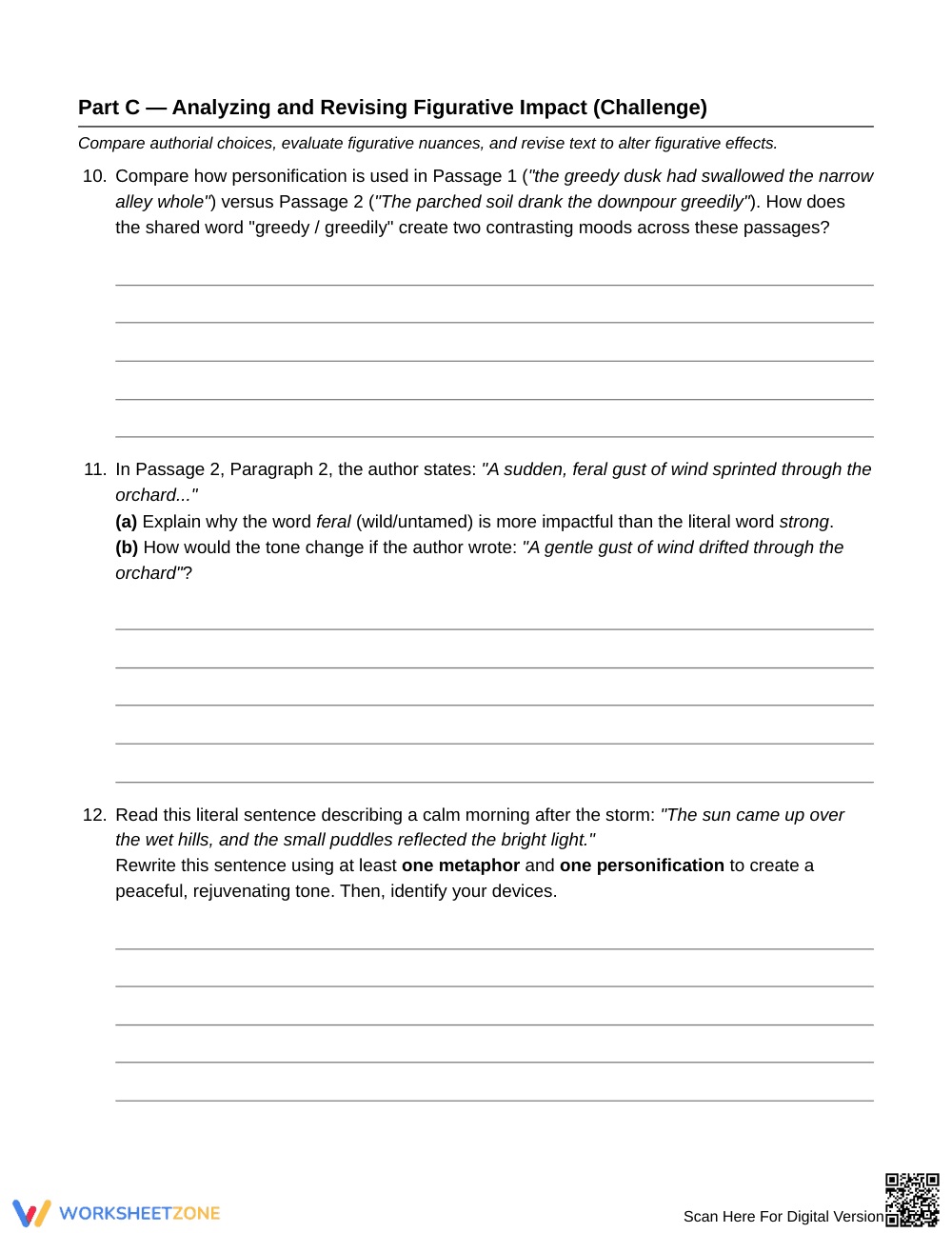
This Grade 6 ELA worksheet develops students' ability to interpret figures of speech in context and explain their impact on tone and meaning. Working through 12 structured tasks across two rich narrative passages, learners move from basic device identification to rigorous analytical explanations and creative revisions.
At a Glance
- Grade: 6 · Subject: ELA
- Standard:
L.6.5.a— Interpret figures of speech, including personification and metaphors, in context- Skill Focus: Figurative Meaning Check
- Format: 5 pages · 12 problems · Answer key included · PDF
- Best For: Close reading and figurative language analysis
- Time: 35–45 minutes
What's Inside
This 5-page printable resource features a dedicated figurative language reference box, two complete literary excerpts ("The Old Clockmaker's Workshop" and "The Approaching Summer Storm"), and 12 text-dependent tasks. A comprehensive 3-page answer key provides complete model responses, identified comparison elements, and detailed analytical rationales for straightforward grading and self-assessment.
Skill Progression
- Guided Practice (Part A — Foundation, 3 problems): Students identify specific figures of speech, including personification, similes, and metaphors, from passage excerpts using reference definitions.
- Supported Practice (Part B — Core, 6 problems): Learners interpret the deeper, nonliteral meanings of selected figurative expressions and explain their visual, auditory, and atmospheric effects.
- Independent Practice (Part C — Challenge, 3 problems): Students compare contrasting figurative choices, evaluate word impact, and rewrite literal sentences using original figurative devices.
This structured sequence follows a gradual-release model that builds analytical confidence before requiring independent creative application.
Standards Alignment
This resource aligns primarily with CCSS L.6.5.a: "Interpret figures of speech (e.g., personification) in context." It also reinforces CCSS RL.6.4 by requiring students to determine the meaning of words and phrases as they are used in a text, including figurative and connotative meanings. Both standard codes can be copied directly into lesson plans, IEP goals, or district curriculum mapping tools.
How to Use It
Use this worksheet after direct instruction on literary devices as a paired close-reading activity or as an independent mastery check. For a targeted formative check, observe Part B responses to ensure students explain underlying connotations rather than merely defining words literally. The full activity requires approximately 35 to 45 minutes of instructional time.
Who It's For
Designed for Grade 6 ELA classrooms, this resource supports general education students, developing readers needing structured textual evidence, and advanced learners ready for nuance analysis. It pairs effectively with a teacher-led anchor chart defining similes, metaphors, hyperbole, and personification.
According to Fisher & Frey (2014), gradual-release instructional frameworks significantly enhance middle school students' reading comprehension by establishing a clear instructional bridge between surface recognition and deeper textual analysis. In CCSS L.6.5.a instruction, interpreting figurative language in context requires students to evaluate authorial intent, figurative connotation, and descriptive nuance rather than simply memorizing isolated literary definitions. This Grade 6 ELA resource directly supports that cognitive progression across 12 structured tasks divided into foundation, core, and challenge tiers. By examining two descriptive narrative passages and analyzing how similes, metaphors, hyperbole, and personification shape mood and atmosphere, learners build durable close-reading strategies that transfer across diverse literary genres. The included 3-page answer key provides clear diagnostic benchmarks, ensuring educators can evaluate student understanding efficiently while reinforcing rigorous standards-based reading proficiency, analytical precision, and evidence-based literary analysis.


