




























Views
Downloads
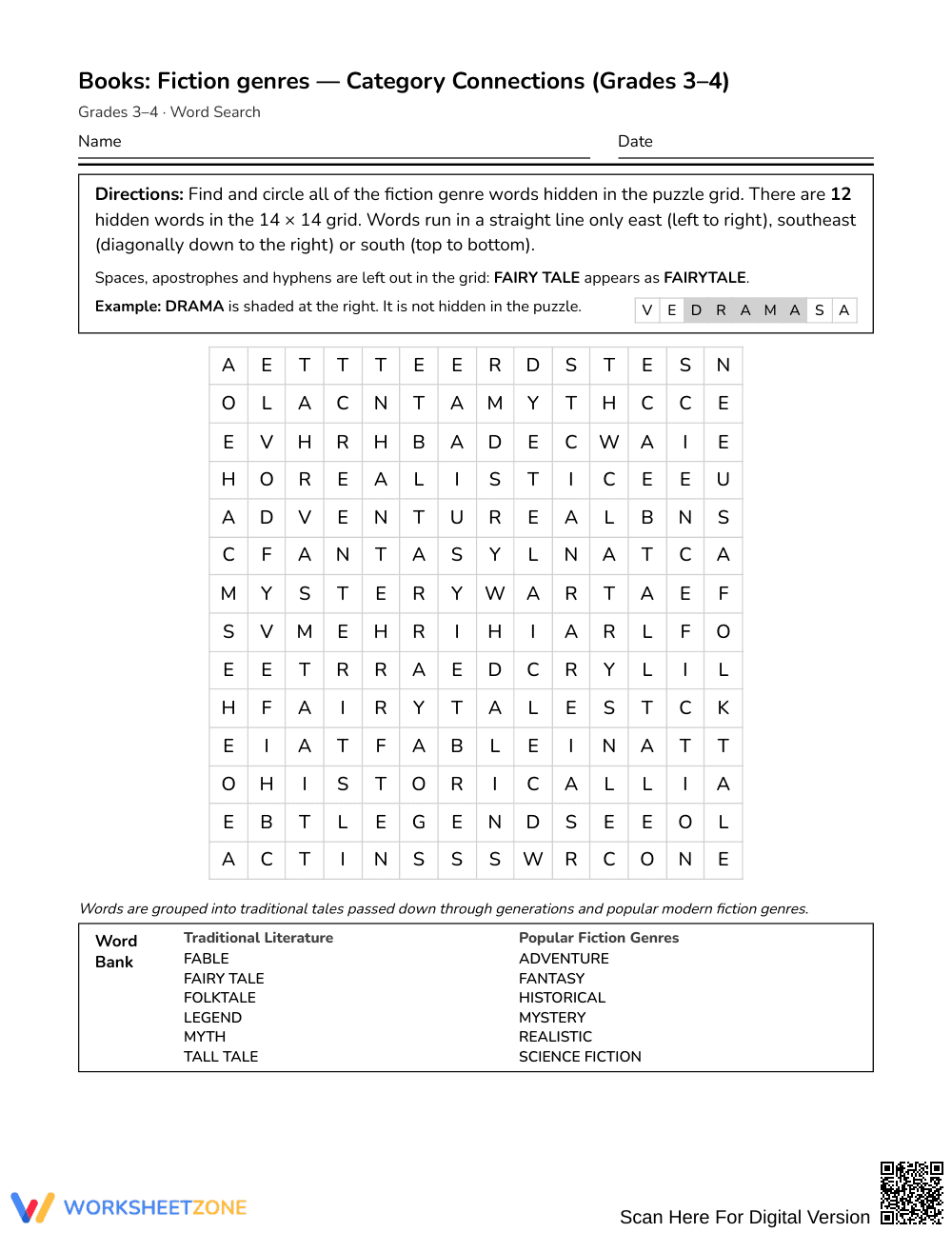

Complete Fiction Genres Word Search | Grades 3–4 ELA

Paste this activity's link or code into your existing LMS (Google Classroom, Canvas, Teams, Schoology, Moodle, etc.).
Students can open and work on the activity right away, with no student login required.
You'll still be able to track student progress and results from your teacher account.
This Grades 3–4 fiction genres word search introduces and reinforces key literary terminology through engaging puzzle-based vocabulary practice. Students locate 12 core reading terms divided into traditional literature and popular modern fiction, building genre awareness that strengthens reading comprehension and library navigation skills across elementary literacy blocks.
At a Glance
- Grade: Grades 3–4 · Subject: English Language Arts (ELA)
- Standard: Not standards-assessed — vocabulary enrichment
- Skill Focus: Fiction genres, traditional literature, and narrative categories
- Format: 1 student page · 12 hidden words · 3-page answer key included · PDF
- Best For: Independent literacy centers, genre unit review, and sub plans
- Time: 15–20 minutes of independent work
What's Inside
This single-page printable activity features a structured 12-word search designed to familiarize students with essential narrative types. The student page provides a clear word bank categorized into traditional literature and popular modern fiction genres, giving learners a thematic framework as they search. The resource also includes a comprehensive 3-page answer key that displays exact word placements, making student self-checking and grading swift and straightforward.
Puzzle Mechanics and Structure
The word search is built around an approachable 14 x 14 letter grid specifically calibrated for third and fourth graders. Hidden terms run in three predictable directions: East (left-to-right horizontal), South (top-to-bottom vertical), and Southeast (diagonal downward). By eliminating reverse or backward placements, the puzzle minimizes visual frustration while preserving engaging orthographic scanning. Students utilize the organized categorical word bank to track traditional forms like fables and myths alongside modern categories like fantasy and mystery.
Standards Alignment
This activity provides targeted vocabulary enrichment and is not aligned to an assessed state or national standard. It reinforces essential literacy domain vocabulary that supports wider reading comprehension and genre studies across Grades 3–4 curricula.
How to Use It
Implement this word search following direct instruction on literary genres or as an engaging entry task during a library media lesson. In an independent reading station, students complete the puzzle to review key genre terms before selecting independent reading books. For formative assessment, observe whether students identify words by category and ask them to name an example book for each term they locate. Most students finish within 15 to 20 minutes.
Who It's For
This resource is tailored for Grade 3 and Grade 4 students developing literacy vocabulary. It supports visual learners through pattern-finding and aids struggling readers through structured word-bank grouping. Pair this worksheet with a genre anchor chart or a hands-on classroom library book sort.
Academic vocabulary acquisition in literacy instruction depends heavily on meaningful exposure, categorized classification, and active engagement with domain-specific terms. Although this fiction genres word search serves as an unaligned vocabulary enrichment resource rather than a formal standards-assessed measure, it directly reinforces essential genre identification skills across third and fourth grade reading curricula. Research by Fisher & Frey (2014) emphasizes that intentional word study routines, coupled with structured organizational scaffolds like category grouping, significantly enhance student retention of specialized academic vocabulary. By identifying 12 core terms spanning traditional literature and modern fiction across an accessible 14 by 14 letter grid, students build critical schema that supports genre differentiation during independent book selection. This purposeful vocabulary reinforcement provides educators with an efficient instructional tool that bridges word recognition and literary comprehension without requiring additional preparatory materials or complex assessments.


