





























Complete Evidence Placement Worksheet | Grade 10 English II
Paste this activity's link or code into your existing LMS (Google Classroom, Canvas, Teams, Schoology, Moodle, etc.).
Students can open and work on the activity right away, with no student login required.
You'll still be able to track student progress and results from your teacher account.
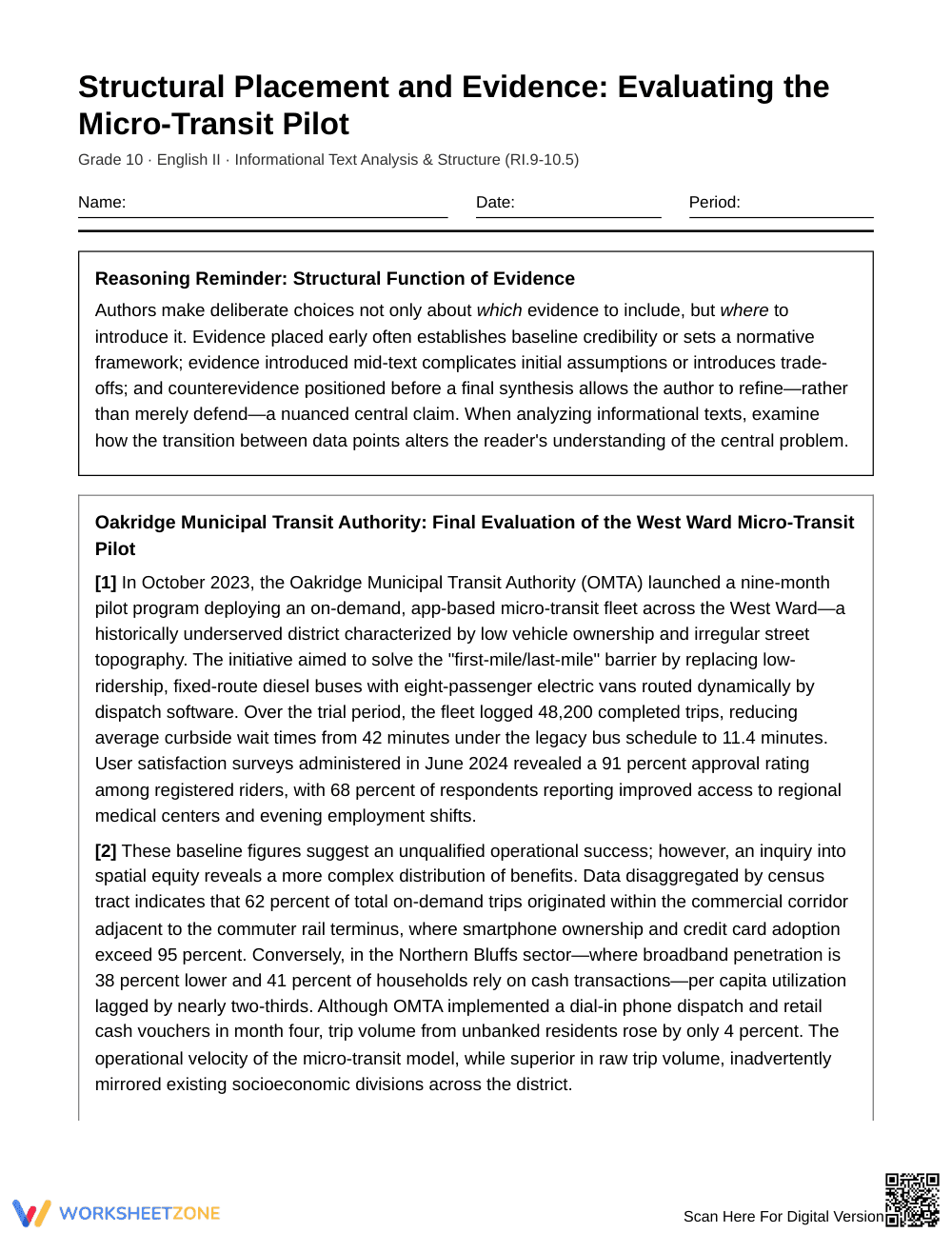
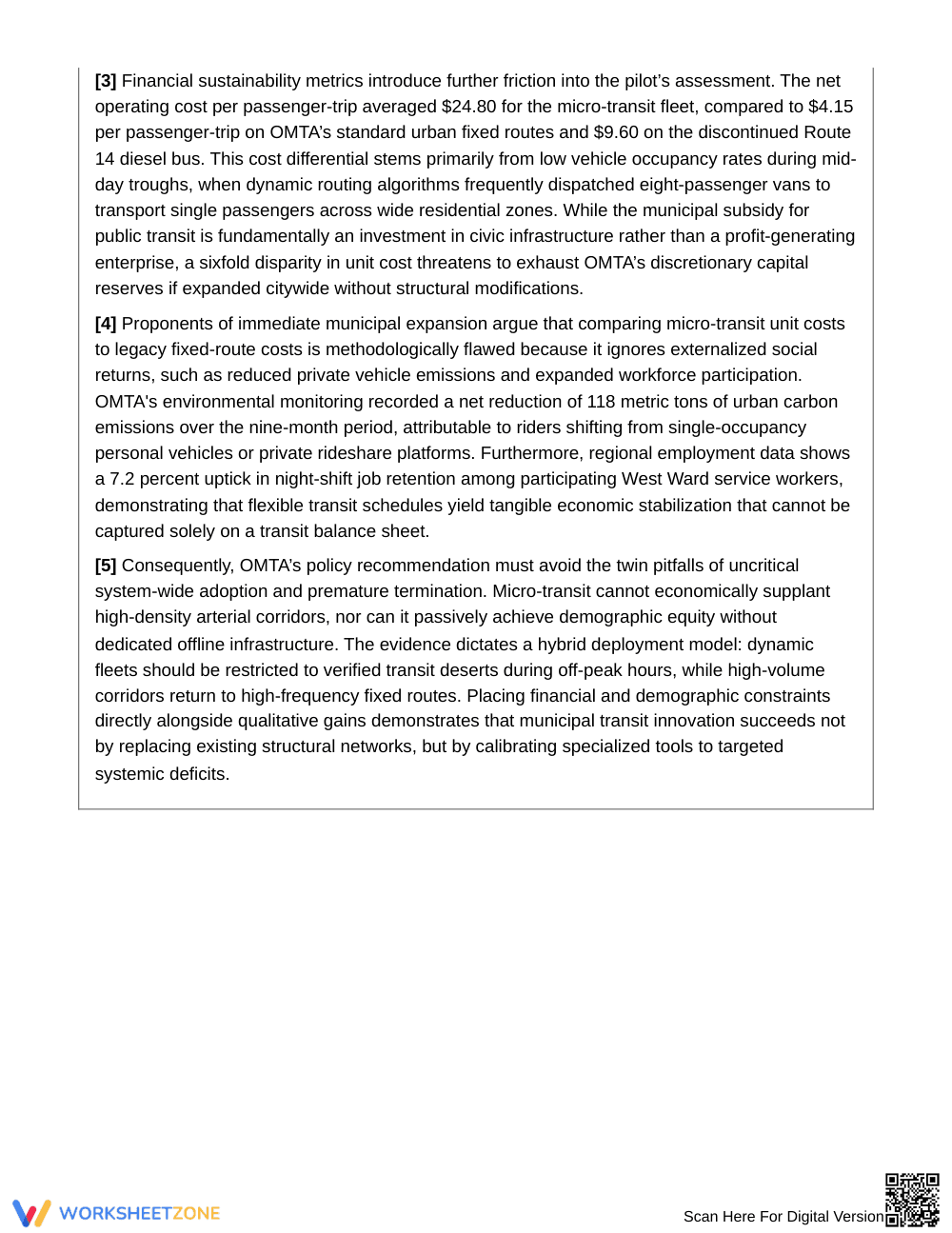
This rigorous Grade 10 English II worksheet trains students to analyze how authors sequence data, concessions, and counterarguments to build persuasive informational texts. By evaluating an authentic municipal transit report across 8 focused analytical tasks, high school learners discover how structural evidence placement directly shapes argument validity, authorial credibility, and reader comprehension.
At a Glance
- Grade: 10 · Subject: English II
- Standard:
RI.9-10.5— Analyze how an author develops and refines claims through specific structural choices.- Skill Focus: Defend the Placement of Evidence
- Format: 6 pages · 8 problems · Answer key included · PDF
- Best For: Close reading and argument structure analysis
- Time: 45–60 minutes
The 6-page printable activity features a complete informational case study evaluating an urban micro-transit pilot program, paired with an instructional reasoning reminder that frames structural evidence functions. Students complete 8 targeted items across three clearly labeled analytical tiers, concluding with a comprehensive 3-page answer key that models exemplar written defenses and structural text evaluations.
Skill Progression
- Guided Practice (Part A, Tasks 1–2): Students identify baseline metrics and structural functions in introductory sections with direct text references and multiple-choice evidence validation.
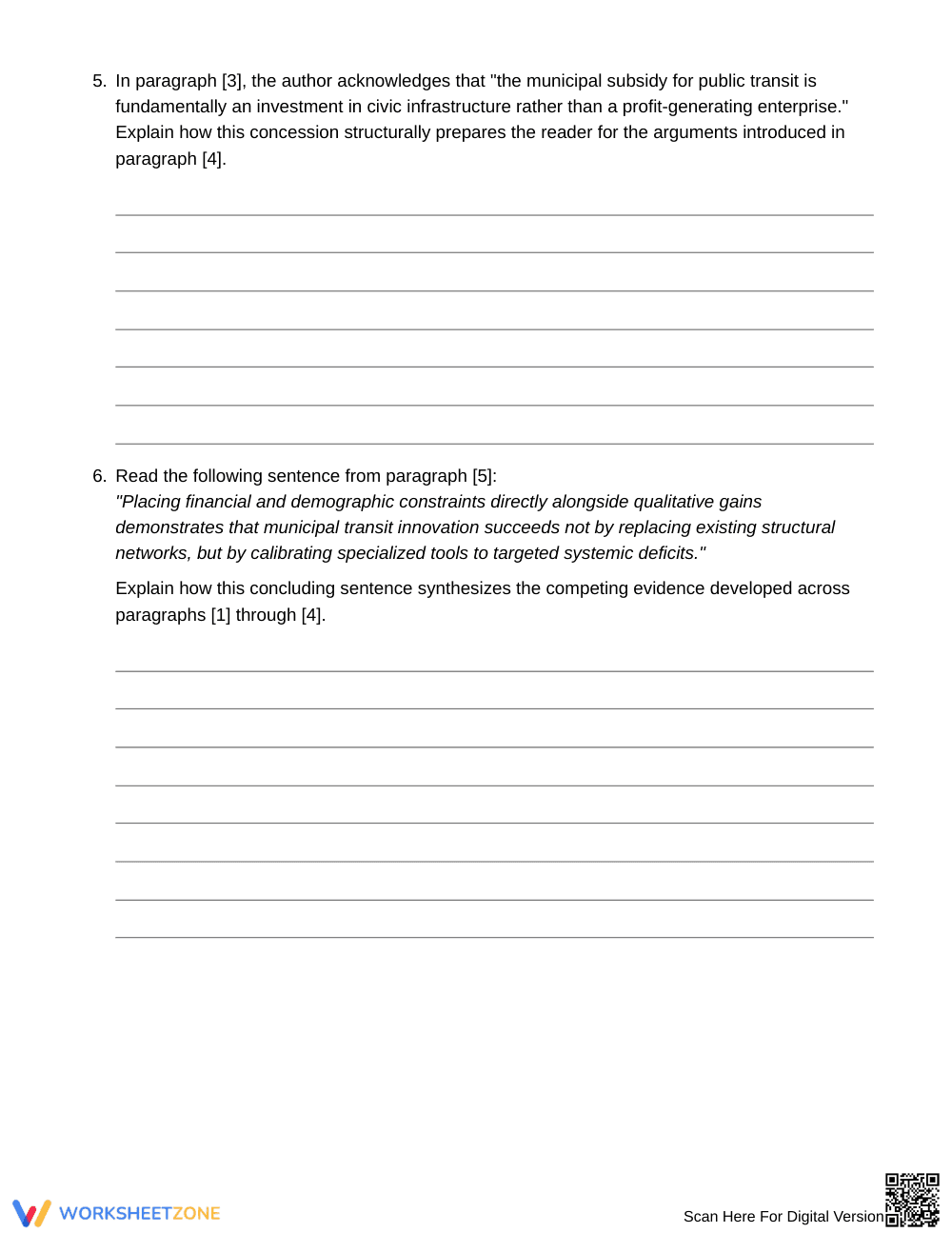
- Supported Practice (Part B, Tasks 3–6): Learners construct written defenses analyzing how transitional data shifts, concessions, and synthesis sentences refine the text's central evaluation.
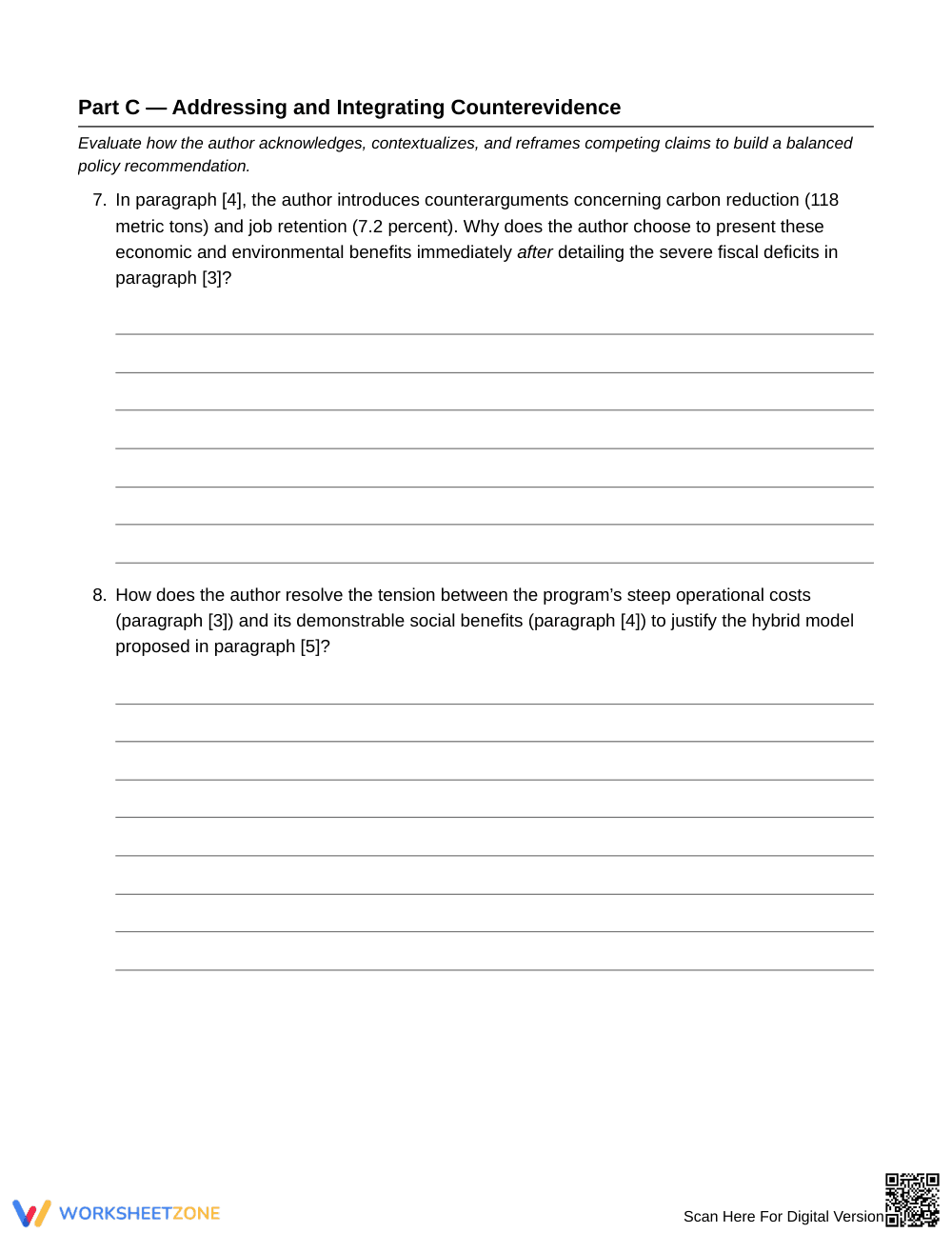
- Independent Practice (Part C, Tasks 7–8): High schoolers evaluate counterevidence integration and synthesize competing data points without prompts to justify complex policy conclusions.
This structured progression reflects the gradual release of responsibility model, shifting students systematically from explicit evidence identification to sophisticated rhetorical defense.
Standards Alignment
This resource directly targets Common Core State Standard RI.9-10.5: Analyze in detail how an author's ideas or claims are developed and refined by particular sentences, paragraphs, or larger portions of a text. As a supporting skill, it reinforces RI.9-10.1 by requiring students to cite strong and thorough textual evidence to support complex structural inferences. Both standard codes can be copied directly into lesson plans, IEP goals, or district curriculum mapping tools.
How to Use It
Deploy this worksheet after direct instruction on informational text structures or argument mapping. In a small-group rotation, assign Part A for collaborative text deconstruction before students write independent responses for Parts B and C over a 45- to 60-minute class period. For formative assessment, examine student answers on Task 4 to check whether learners grasp how tactical concessions function structurally before presenting counterevidence.
Who It's For
This instructional resource is tailored for Grade 10 English Language Arts students, honors cohorts, and advanced test-preparation groups mastering rhetorical analysis. Teachers can differentiate by providing sentence starters for Part B or using the text as an exemplar anchor reading alongside student-authored argumentative essays.
According to research by Fisher & Frey (2014) on close reading and complex informational text analysis, secondary students require explicit instruction in evaluating structural text architecture rather than treating evidentiary claims as isolated facts. Standard RI.9-10.5 requires Grade 10 learners to analyze in detail how authors organize sentences and paragraphs to develop and refine nuanced central claims. When students examine how positioning baseline operational data prior to demographic equity metrics alters reader perception, they build critical evaluative capacity necessary for college-level reading and analytical writing. This 6-page, 8-task worksheet implements structured text-dependent sequences that prompt high schoolers to explain why specific evidence appears at distinct transitional moments. By defending structural placement choices within a rigorous municipal case study, students gain measurable command over text organization, counterargument integration, and informational synthesis across complex non-fiction texts.


