





























Complete Evaluating Claims Worksheet | Grade 9 English I
Paste this activity's link or code into your existing LMS (Google Classroom, Canvas, Teams, Schoology, Moodle, etc.).
Students can open and work on the activity right away, with no student login required.
You'll still be able to track student progress and results from your teacher account.
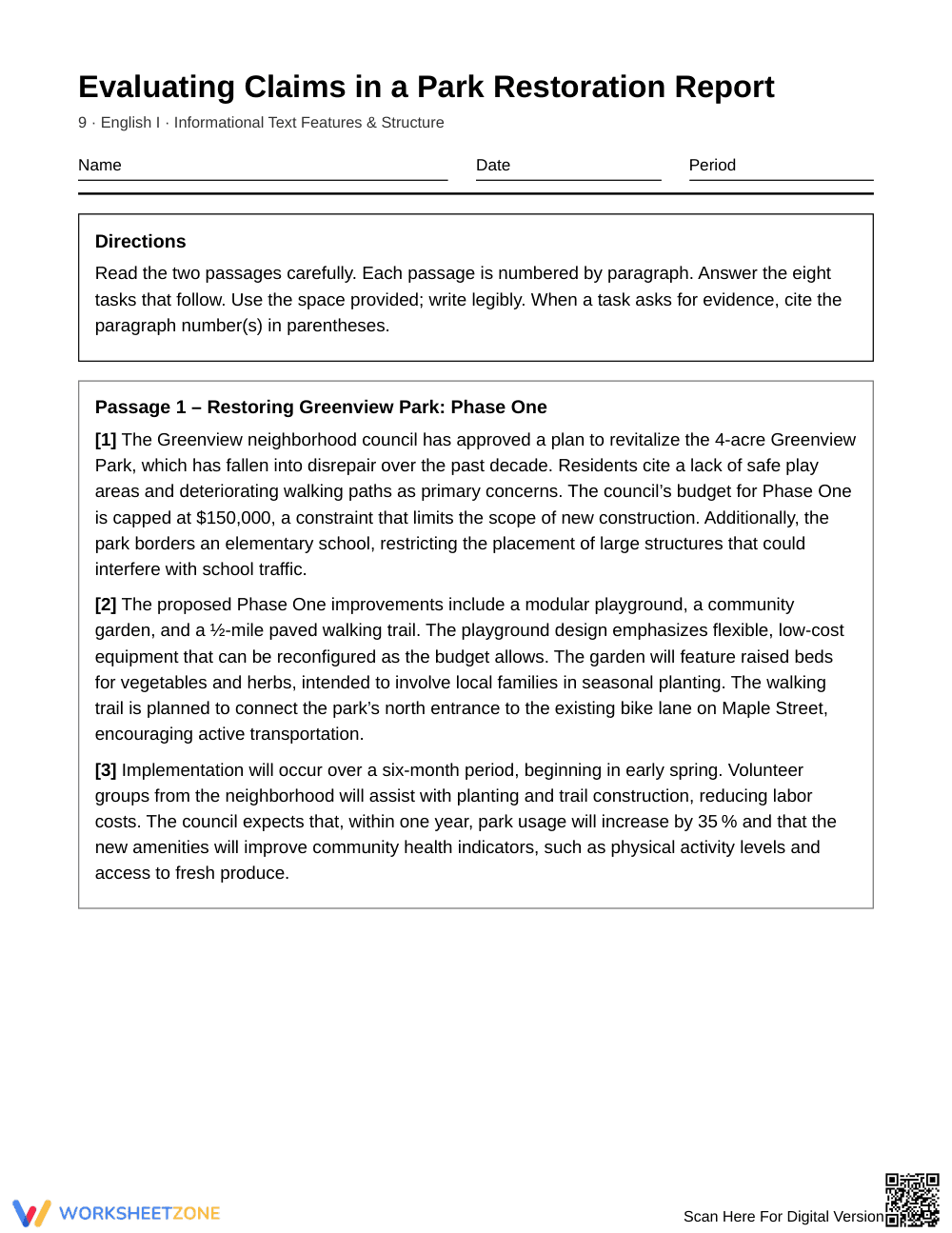
This Grade 9 informational text worksheet builds analytical reading skills by guiding students to evaluate multi-part reports, identify constraints, test alternatives, and defend qualified conclusions. Students engage with two paired informational passages to develop rigorous evidence-based reasoning across 8 focused analytical tasks.
At a Glance
- Grade: 9 · Subject: English I
- Standard: Informational Text — Delineate and evaluate claims, structure, and evidence in technical texts
- Skill Focus: Evaluating claims and informational structure
- Format: 5 pages · 8 problems · Answer key included · PDF
- Best For: Close reading and argument analysis
- Time: 40–50 minutes
What's Inside
This 5-page printable resource includes two numbered informational passages detailing a park restoration initiative. Across 8 structured analytical prompts, students evaluate budget constraints, test logistical alternatives, and draft evidence-supported conclusions. A complete 2-page answer key provides sample model responses and paragraph citation references.
Skill Progression
- Guided practice (Part A — 2 tasks): Students identify and list explicit operational and budget constraints within each passage.
- Supported practice (Part B — 4 tasks): Learners evaluate proposals, generate evidence-backed alternatives for funding and site design, and justify modifications with citations.
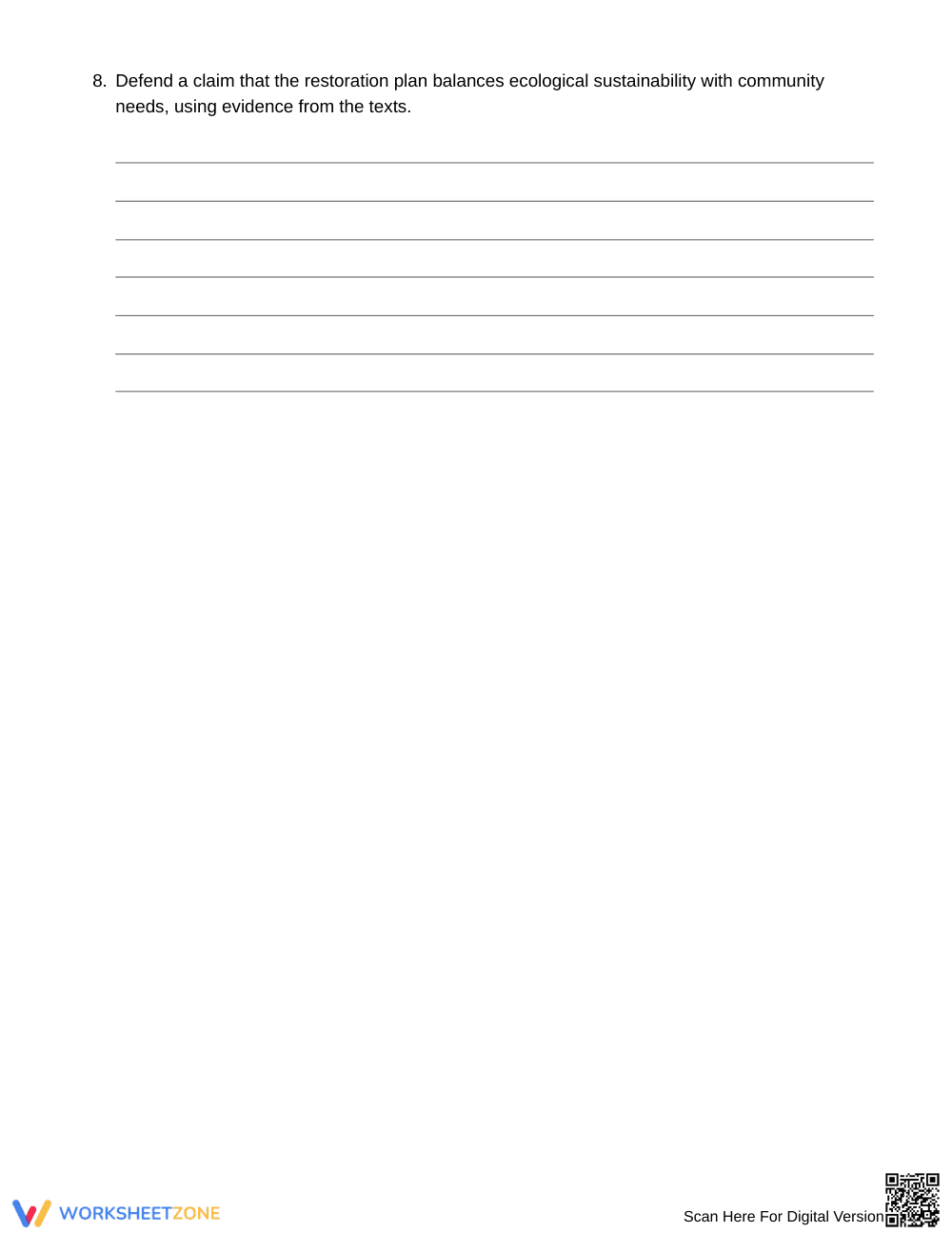
- Independent practice (Part C — 2 tasks): Students synthesize both texts to defend nuanced, qualified conclusions balancing community health and sustainability.
This sequence follows a gradual-release model, moving from constraint extraction to complex argumentative synthesis.
Standards Alignment
This resource aligns with high school informational text standards requiring students to delineate and evaluate arguments, assess evidence validity, and analyze structural claims across technical reports. Standard alignment descriptions can be copied directly into lesson plans, IEP goals, or district curriculum mapping tools.
How to Use It
Deploy this worksheet after direct instruction on evaluating structural claims or use it as a paired-text assessment. During independent work, conduct formative observations by checking whether students cite specific paragraph numbers in Part B rather than relying on general impressions. Expected completion time is 40 to 50 minutes.
Who It's For
This activity is designed for Grade 9 English I students analyzing informational texts. Numbered paragraphs support striving readers and English learners needing textual anchors, while open-ended prompts challenge advanced students. Pair this worksheet with an anchor chart on evaluating argumentative validity or a minilesson on rhetorical constraints.
According to Fisher & Frey (2014), structured close reading routines that require high school students to interrogate complex informational texts and cite explicit evidence accelerate academic literacy and analytical reasoning. When learners evaluate structural constraints and assess alternative policy proposals within non-fiction reports, they develop critical evaluative faculties essential for secondary academic discourse. This Grade 9 English I resource operationalizes these research-proven practices across 8 targeted tasks, progressing systematically from constraint identification to qualified argumentative defense. By anchoring student responses in two numbered technical passages and requiring paragraph citations, the activity reinforces evidentiary discipline and deep reading comprehension. Incorporating clear structural scaffolds alongside demanding evaluative tasks supports equitable access to complex materials while providing educators with reliable formative data on student mastery of claim evaluation and text synthesis.


